Orange Chromide
Pseudetroplus maculatus
The orange chromide is a peaceful, small Asian cichlid adaptable to fresh and brackish water. Best kept in groups in an 80L tank, it's known for strong parental care and a vibrant golden-orange coloration.
Water Temperature
22 - 28 °C
pH Value
7.5 - 8.5
Water type
Freshwater / Brackish
Tank level
Bottom and middle
Adult size
8 cm
Minimum tank volume
>= 100 L
Minimum group
>= 5
GH
10 - 25 dGH
KH
5 - 12 dKH
TDS
200 - 495 ppm
Conductivity
313 - 773 uS/cm

Species description
Geographical Origin and Habitat: Pseudetroplus maculatus is native to the coastal regions of southern India and Sri Lanka. It inhabits a wide variety of biotopes, including slow-moving rivers, brackish estuaries, coastal lagoons, canals, and paddy fields. This adaptability allows it to thrive in both fully fresh water and brackish conditions, often characterized by sandy bottoms and dense riparian vegetation.
Taxonomy and Morphology: It belongs to the family Cichlidae, subfamily Etroplinae. It features a body that is strongly compressed laterally and almost circular or oval in shape. The head is small with a terminal mouth. It reaches a maximum adult length of about 8-10 centimeters. It is distinguished from African and American cichlids by its Asian origins and particularly robust anal fin spines.
Social Behavior: It is a gregarious species that prefers to live in groups, especially outside the breeding period. It displays a generally peaceful temperament for a cichlid, although it becomes markedly territorial and aggressive during nesting and defense of the offspring. It shows a fascinating symbiotic cleaning behavior with its larger congener, Etroplus suratensis.
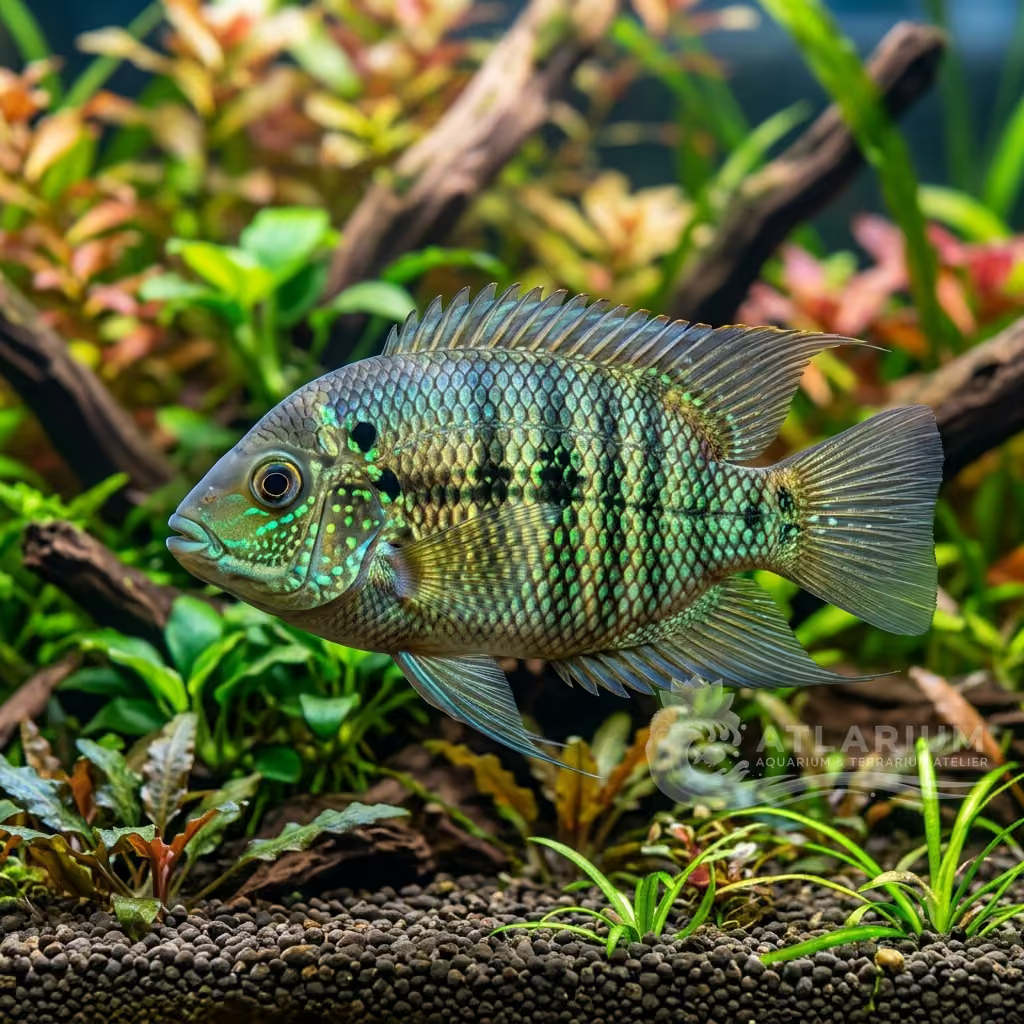
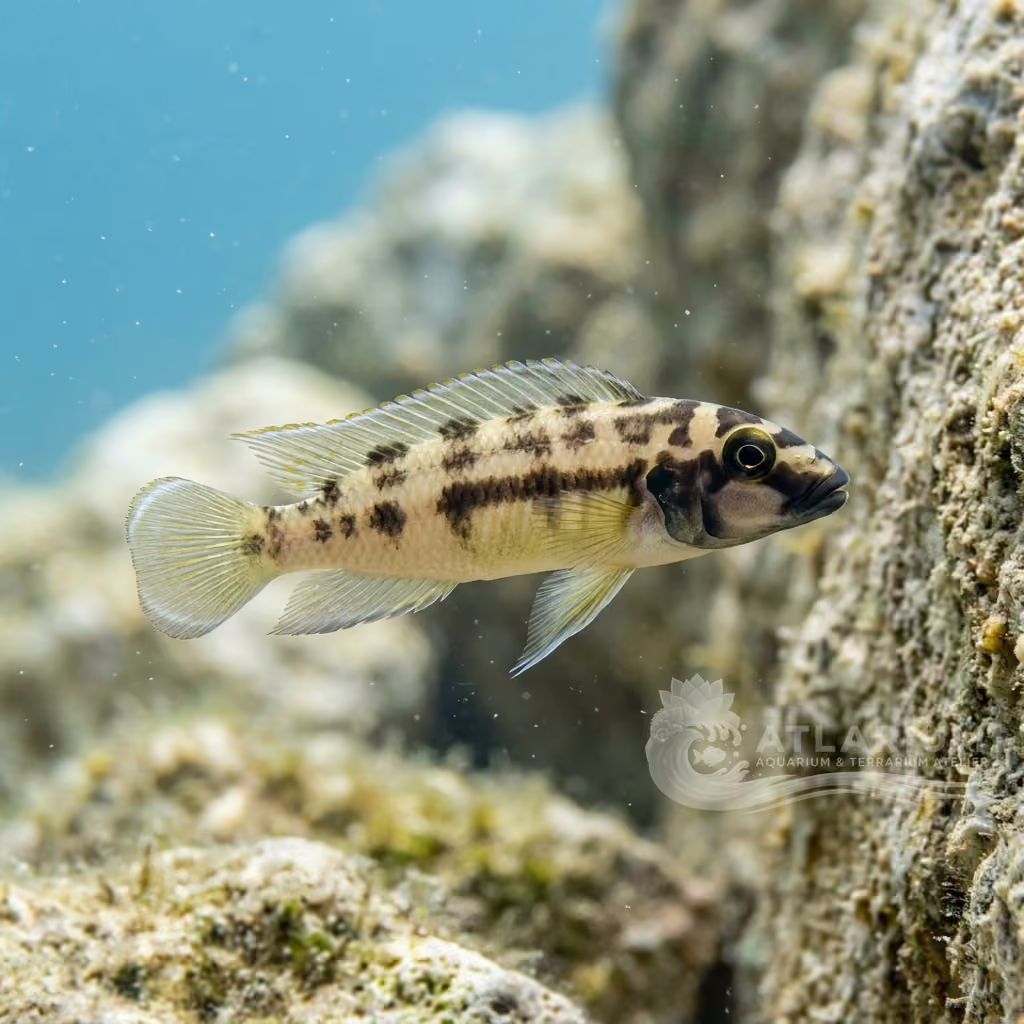
Coloration and Sexual Dimorphism: The wild variety has a yellowish coloration with rows of small red dots and three large dark spots on the flanks. The most common aquarium variety is uniform golden orange. Sexual dimorphism is minimal: adult metals may exhibit slightly larger sizes, more pointed dorsal and anal fins, and more intense colorations during the breeding season.

Care, breeding and tankmates
Aquarium Setup: It requires an aquarium of at least 80-100 liters for a pair or a small group. The bottom must consist of fine sand or rounded gravel, as they love to dig during breeding. Numerous hiding places formed by rocks, driftwood, and terracotta pots must be provided. Sturdy plants like Anubias and Vallisneria are recommended, protected at the base to prevent them from being uprooted.
Diet and Feeding: It is an opportunistic omnivore. In nature, it feeds on algae, organic debris, small invertebrates, and other fish eggs. In the aquarium, it must be fed a varied diet including high-quality flake or pellet food, supplemented with frozen foods (such as bloodworms, brine shrimp, and mysis) and plant matter like spirulina or blanched vegetables.
Water Quality: Very adaptable but prefers hard to moderately hard water. Temperature: 20-28°C, pH: 7.5-8.5, GH: 10-25. Although it can live in fresh water, the addition of marine salt to create a light brackish environment (specific gravity 1.002-1.005) promotes optimal health, reduces stress, and significantly intensifies livery colors.
Compatibility and Cohabitation: It can be placed in community aquariums with peaceful medium-sized fish. Excellent tankmates are other brackish water fish like archerfish (Toxotes), bumblebee gobies (Brachygobius), or robust freshwater fish like barbs and danios. Avoid cohabitation with very small or excessively aggressive species.
Aquarium Breeding: Monogamous species that forms stable pairs. Breeding occurs on a flat substrate (rocks or broad leaves). Both parents actively participate in cleaning the site, fanning the eggs (100 to 300), and actively caring for the fry. The young initially feed on the skin mucus produced by the parents before switching to brine shrimp nauplii.
Risks and Diseases: It is sensitive to water value fluctuations and nitrate accumulation. It can easily contract Ichthyophthirius (white spot disease) if subjected to sudden temperature changes. The absence of salt in the water can predispose it to skin fungal infections and fin rot. Maintain regular water changes.

Geographic origin and distribution
Pseudetroplus maculatus is native to the coastal regions of southern India and Sri Lanka. It inhabits a wide variety of biotopes, including slow-moving rivers, brackish estuaries, coastal lagoons, canals, and paddy fields. This adaptability allows it to thrive in both fully fresh water and brackish conditions, often characterized by sandy bottoms and dense riparian vegetation.
Origin
Tropical oceans and reefsAfrica and MadagascarSouth and Southeast AsiaEast Asia

Fish profile
- Temperament
- Semi-aggressive
- Outside of breeding, they are relatively peaceful and inquisitive fish that make excellent additions to a brackish setup. When a pair decides to breed, they become highly protective and will aggressively chase away any fish that comes near their nest. They are intelligent, interactive fish that recognize their owners.
- Diet
- Omnivore
- Orange chromides are omnivores that naturally graze on algae, zooplankton, and small insects. In captivity, they eagerly accept high-quality pellets, spirulina flakes, and frozen foods like bloodworms and brine shrimp. A diet rich in both vegetable matter and protein is necessary to maintain their bright orange coloration.
- Life expectancy
- 5-8 years
- Adult size
- 8 cm
- Sex ratio
- Pair
- There are no obvious external sexual differences, though males may become slightly larger and more intensely colored during spawning. It is best to purchase a group of six or more juveniles and let them naturally pair off. Once a pair forms, they can be quite intolerant of other chromides in smaller tanks.
- Feeding frequency
- Twice daily
- They should be fed one to two times a day, offering only what they can consume in a few minutes. Regular feeding helps curb any minor aggression within the group. Providing occasional live foods can help induce spawning behaviors.
- Bioload
- Low to Medium
- The Orange chromide produces a moderate to high bioload, especially when kept in breeding pairs or groups. As cichlids, they are somewhat messy eaters and have robust metabolisms. Strong filtration and regular weekly water changes are essential to keep nitrate levels low and maintain their health.
- Flow
- Strong
- They originate from coastal estuaries and lagoons where water flow is generally slow to moderate. A gentle current from a filter output is sufficient, and overly turbulent water should be avoided. They prefer calm areas where they can easily hover and defend their territories.
- Jump risk
- No
- Reproduction
- Oviparous
- Breeding is quite common and fascinating, as they are biparental substrate spawners. A pair will clean a flat rock or pit in the sand where the female lays the eggs, and both parents aggressively defend the fry. Uniquely, the fry feed on a nutritious mucus secreted by the parents' skin during their first few weeks.
- Compatibility & tankmates
- Community
- They are generally peaceful for cichlids but can become aggressively territorial when breeding. They are best kept in a brackish community tank with active fish of similar size, such as Monos, Scats, or Archerfish. Very small fish may be harassed, and highly aggressive cichlids will outcompete them.
- Tank level
- Middle/Bottom
- They spend the majority of their time in the middle and lower levels of the aquarium. They appreciate a tank decorated with plenty of smooth rocks, driftwood, and hardy plants like Java fern to define territories. They need open swimming space but will retreat to cover if startled.

Scientific Parameters & Models
FishBase
Window to the official scientific data of the species
FishBase v25.04Data synced on: 06/15/2026
- Trophic level
- 2.7 ± 0.1 se
- Resilience
- High (less than 15 months)
- Generation time
- 0.9 years
- Phylogenetic uniqueness (PD50)
- 1
- Bayesian Length-Weight
- a = 0.0138, b = 2.9
- VulnerabilityLow vulnerability (12 / 100)

Related species
Recommendations grouped by close relatives, companion choices, and similar care.