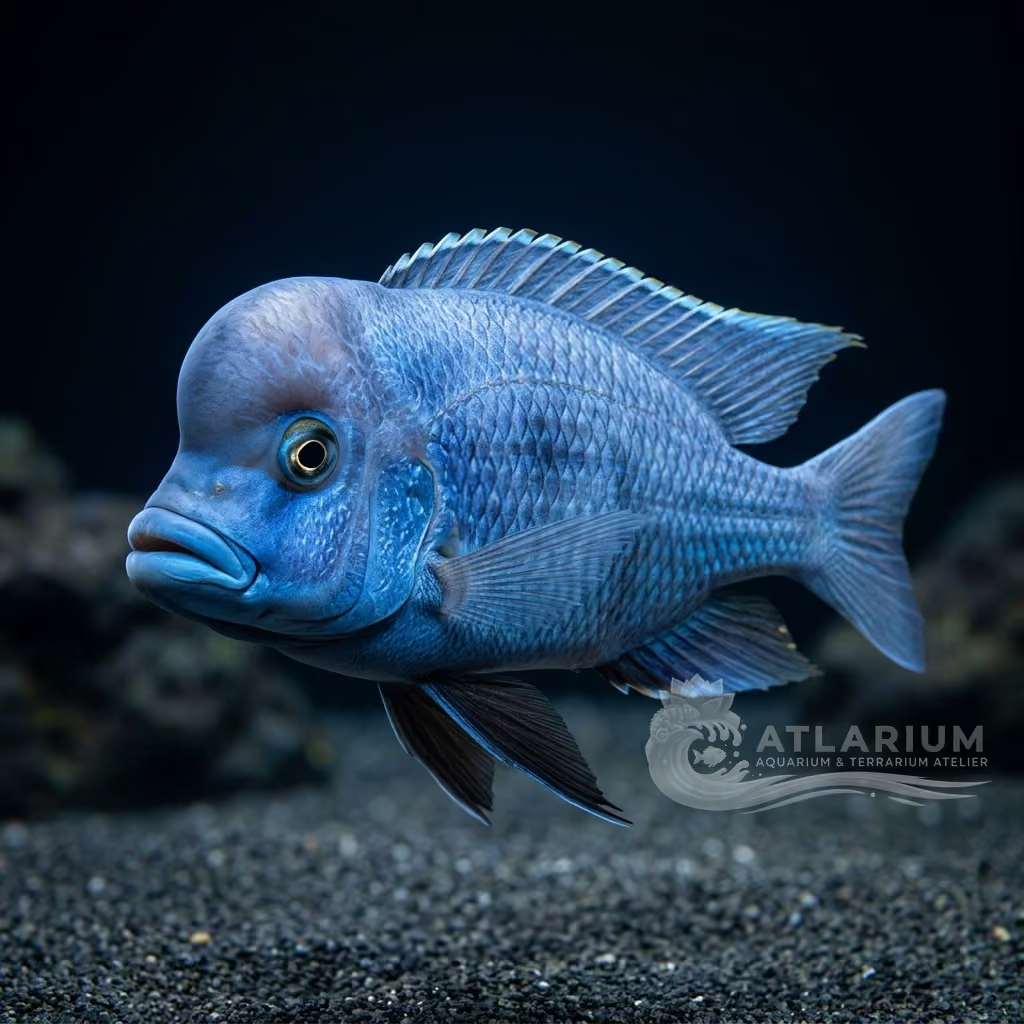
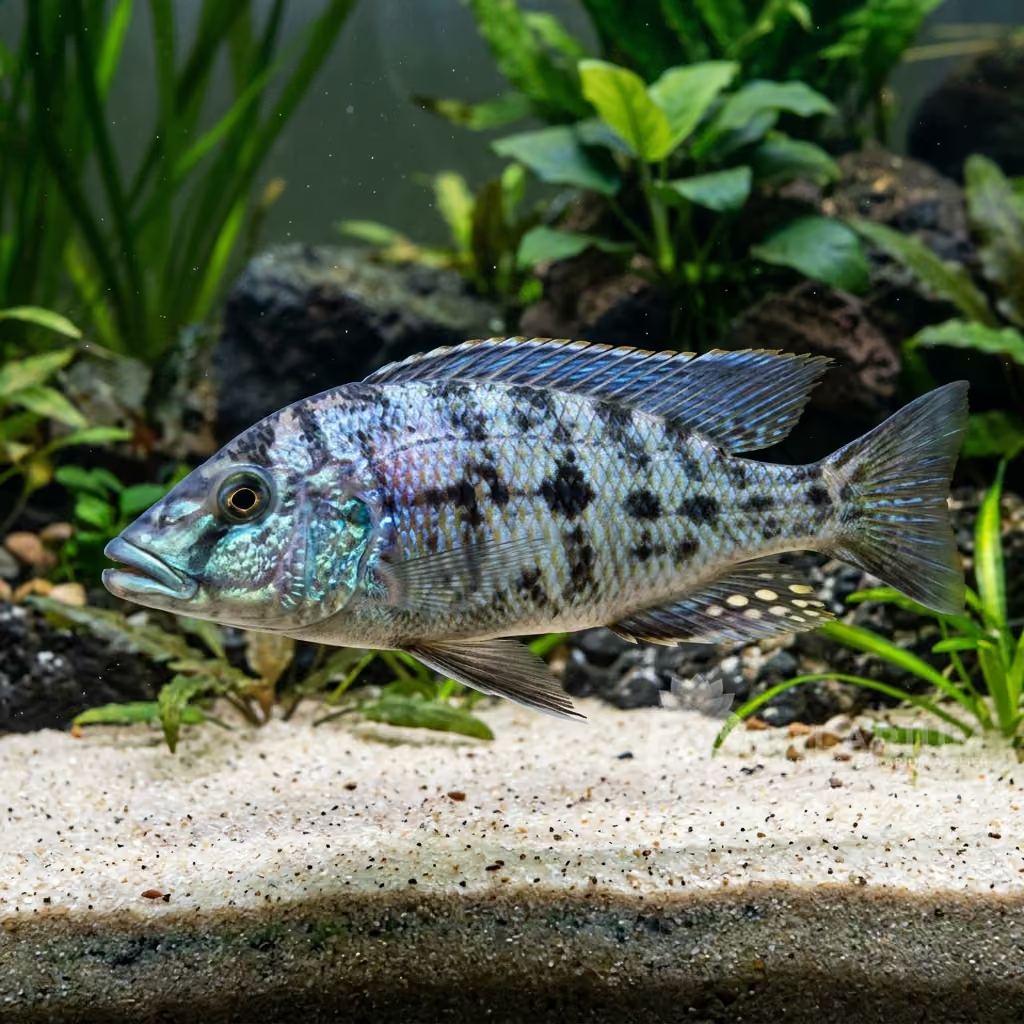
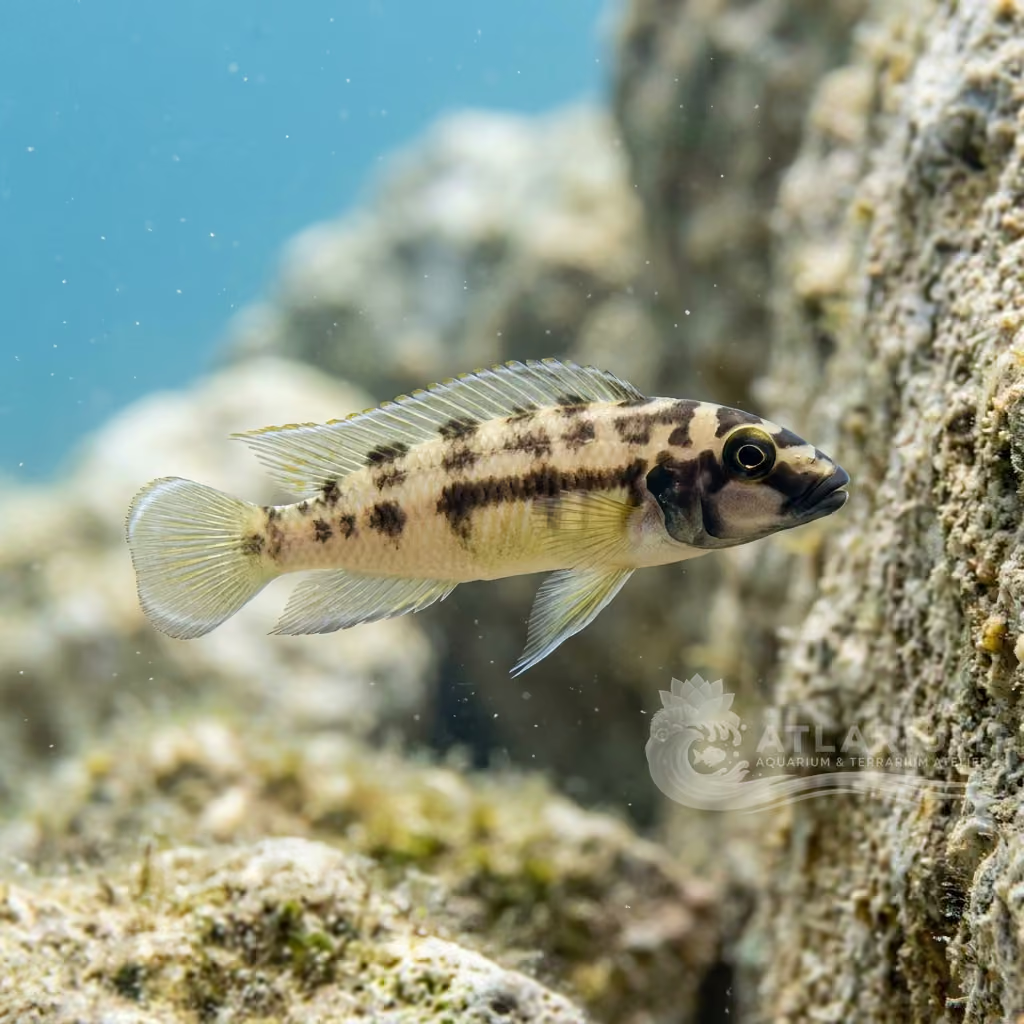
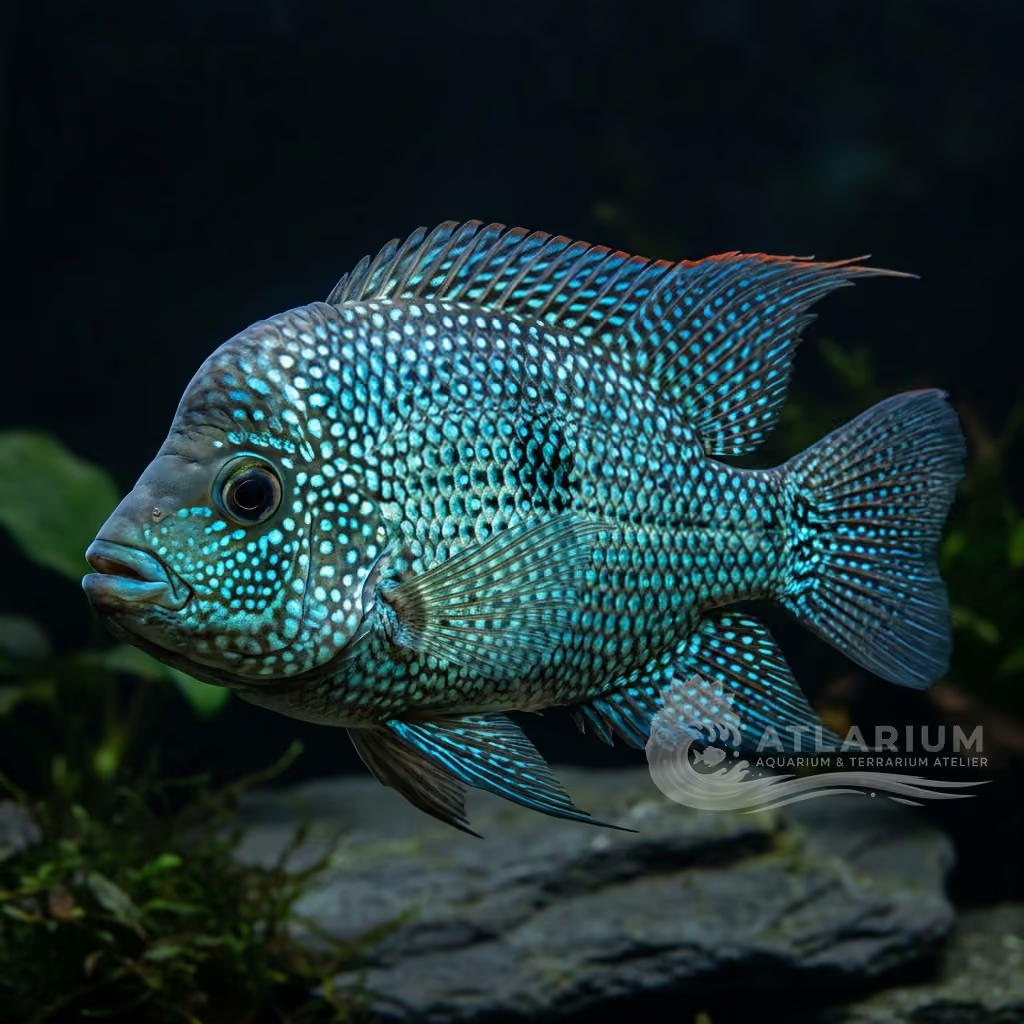
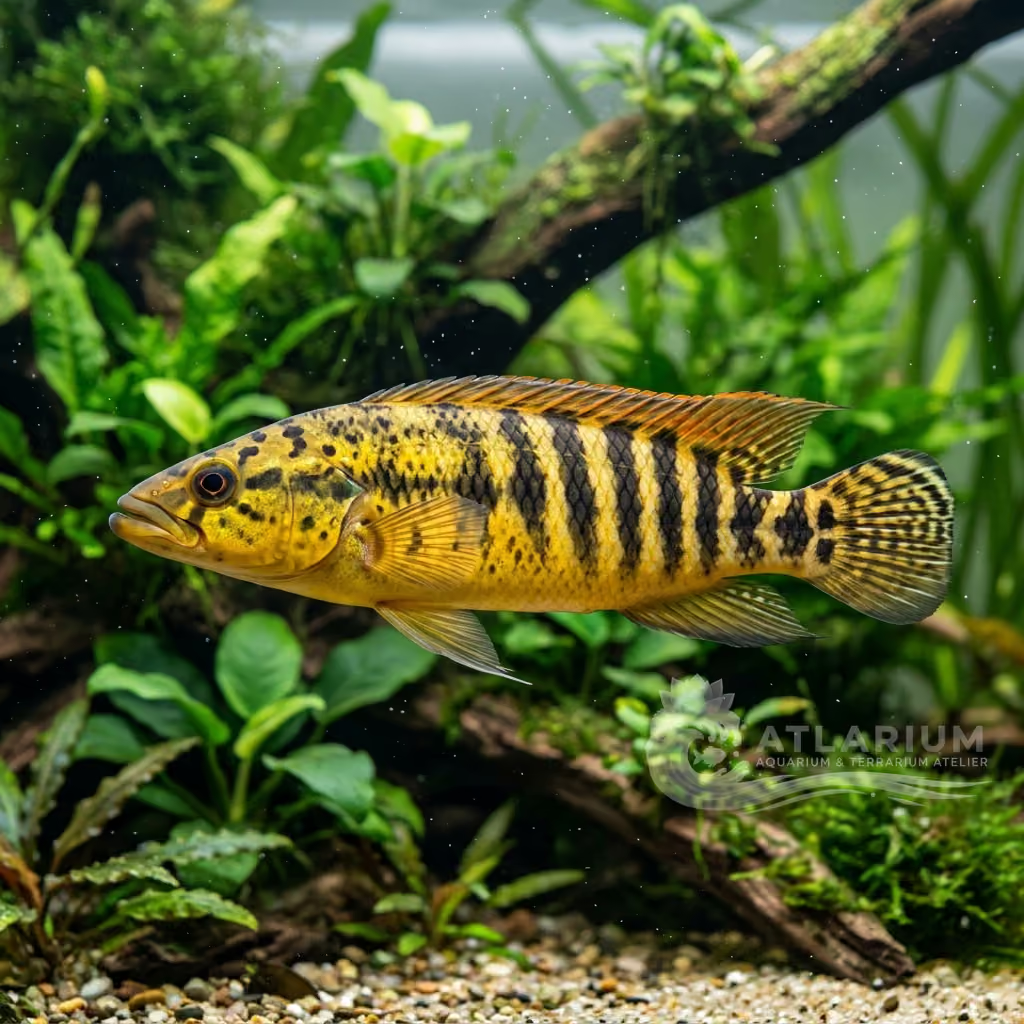
Flavescent Peacock
Aulonocara stuartgranti
Aulonocara stuartgranti is a Lake Malawi cichlid restricted to the lake and documented between Ngara and Chizi Point. It is a freshwater, benthopelagic sand-invertebrate feeder with conspicuous widened head canals. FishBase records a maximum of 11.8 cm total length for a male or unsexed specimen; colour and trade locality labels should not substitute for taxonomic identity.
Water Temperature
24 - 28 °C
pH Value
7.8 - 8.6
Water type
Freshwater
Tank level
Bottom and middle
Adult size
13 cm
Minimum tank volume
>= 180 L
Minimum group
>= 1
GH
10 - 25 dGH
KH
5 - 12 dKH
TDS
200 - 495 ppm
Conductivity
313 - 773 uS/cm

Species description
Geographic Origin and Habitat: Aulonocara stuartgranti is endemic to Lake Malawi in eastern Africa. FishBase records it along the coast between Ngara and Chizi Point and classifies it as freshwater and benthopelagic. Specialist locality accounts place it in intermediate sand-and-rock habitat, but locality labels in trade should not be treated as a substitute for a confirmed collecting site or for the identity of every colour form.
Taxonomy and Morphology: Meyer and Riehl described A. stuartgranti in 1985 from Mpanga Rocks near Chilumba; Eschmeyer's Catalog of Fishes treats the name as valid in Cichlidae, Pseudocrenilabrinae, order Cichliformes. FishBase reports 11.8 cm TL for a male or unsexed specimen. Widened cranial lateral-line canals and visible head pores are a documented Aulonocara feature linked to near-substrate prey detection.
Social Behaviour: No single social pattern applies to every individual. FishBase reports that some members of a population hide permanently in caves while others school over sand. Social pressure in captivity therefore cannot be inferred from a peaceful-versus-aggressive label alone. Space, sight lines, sex composition, feeding access and observed chasing determine whether a particular arrangement remains workable and whether separation is needed.
Colouration and Sexual Dimorphism: Geographic and trade forms are common in the aquarium literature, so blue, yellow, orange or red patterning should not be used alone to assign a locality or verify lineage. FishBase's size record is male or unsexed, not a sex comparison. The sources reviewed here do not supply a diagnostic colour rule for sexing every individual; assess sex and provenance through reliable source information, not colour names alone.

Care, breeding and tankmates
Aquarium Setup: The current record sets a 180 L minimum, while one specialist registry gives 160 L and 110 cm as a lower reference. Neither figure guarantees that every social arrangement will work. Provide open, fine sandy floor for benthic foraging, structured cover and broken sight lines, while keeping enough uninterrupted space to move away from conflict. Secure rockwork independently of sand-sifting activity and retain a practical separation plan.
Diet and Feeding: FishBase describes feeding on sand-dwelling invertebrates, and experiments document capture of live invertebrate prey close to sandy substrate. Use varied foods of suitable size that reflect this evidence, then adjust amount and frequency from appetite, body condition and water testing. Do not make floating flakes, one pellet formula, live prey, a fasting day or a timed feeding rule into a taxon-wide requirement. Uneaten food and persistent feeding change need investigation.
Water Quality: FishBase gives a tropical 22–26 °C entry, while the existing catalog range is 24–28 °C; the reviewed evidence does not resolve that context difference into one universal target. Stable, tested freshwater conditions, oxygenation and control of nitrogen waste are more defensible than abrupt adjustment to a single number. Use circulation that keeps the system clean without eliminating all quieter sand areas, and acclimate changes gradually rather than chasing a profile label.
Compatibility and Cohabitation: Do not use a general ‘peaceful Peacock’ label as a tankmate guarantee. FishBase documents both cave-hiding individuals and schools over sand, while maternal mouthbrooding can make the female's condition and social pressure important. Select companions only where size, feeding access, floor area, cover and escape routes remain adequate. Continual chasing, injury, exclusion or missed feeding is evidence that the arrangement must be changed or fish separated.
Aquarium Breeding: This is a maternal mouthbrooder, so breeding is a welfare issue rather than a production routine. A carrying female may reduce feeding and be vulnerable to social pressure, but holding duration, brood size and success cannot be promised from this card. Avoid unnecessary disturbance, maintain stable measured water and prepare to separate fish if observed harassment creates a welfare risk. Do not strip, medicate or isolate by default without a case-specific reason and competent advice.
Risks and Disease: No taxon-specific disease or treatment protocol was established by the sources reviewed. Prevention includes quarantine of new stock where practical, stable measured water, hygiene and assessment of abnormal appetite, respiration, posture, lesions or social withdrawal. These signs do not diagnose a cause. Isolate only when it reduces risk and can be done safely; treatment should follow identification of the problem and qualified aquatic-health advice, never a universal medication regimen.

Geographic origin and distribution
This species originates from: Africa (Endemico del Lago Malawi).
Origin
Africa and Madagascar

Fish profile
- Temperament
- Semi-aggressive
- FishBase records population-level variation: some individuals hide permanently in caves, whereas others form large schools over sand. That observation does not prove an unconditional peaceful or aggressive temperament in captivity. Social risk should be assessed from sex, local form, tank footprint, cover, competitor density and observed chasing, with a means to separate fish if persistent exclusion or injury develops.
- Diet
- Omnivore
- FishBase identifies sand-dwelling invertebrates as food, and experimental work confirms detection and capture of live invertebrate prey near sandy substrate. Offer varied, appropriately sized foods that reflect that evidence and adjust portions to body condition, intake and measured water quality. Neither source establishes one commercial diet, a mandatory live-food programme or a universal recipe for every life stage and aquarium.
- Life expectancy
- 5-12 years
- Adult size
- 13 cm
- Sex ratio
- Harem
- The current harem scalar is a management convention, not a taxon-specific guarantee established by the reviewed sources. Maternal mouthbrooding makes the female's condition and social pressure important, while colour, size and trade labels alone may not reliably establish sex or provenance. Do not assume that one male with several females will be safe in every footprint; observe individual behaviour and retain a separation option.
- Feeding frequency
- Twice daily
- The sources reviewed do not validate a fixed number of meals, a fasting day or a time-to-finish rule for this species. Set portions and frequency according to size, body condition, appetite, reproductive state and the system's capacity to process waste. Remove uneaten food and investigate persistent appetite or body-condition changes with water testing and appropriate health assessment rather than treating a schedule as therapy.
- Bioload
- Medium
- A roughly 12–13 cm cichlid that consumes invertebrate-based foods needs filtration and maintenance sized for its actual feeding and waste, but no reviewed source quantifies a species-specific medium bioload or a fixed turnover and water-change schedule. Use measured ammonia, nitrite and nitrate, stocking, food input and system volume to set maintenance. A categorical bioload label is only a starting prompt, not a substitute for testing.
- Flow
- Stagnant
- No reviewed source supplies a taxon-specific aquarium flow rate. The feeding study notes that self-generated and background hydrodynamic noise can affect lateral-line prey detection, but it does not prescribe still, weak or strong filtration flow for home aquaria. Provide circulation that maintains oxygenation and waste control while retaining calmer usable sand areas; judge changes from fish behaviour and measured water conditions.
- Jump risk
- Yes
- No reviewed taxon-specific source establishes a quantified tendency for A. stuartgranti to jump. A fitted cover is a sensible general containment precaution for an active aquarium fish, especially during maintenance or conflict, but it must not be presented as evidence that this species is a documented specialist jumper. Check openings around equipment and make escape prevention part of ordinary system design.
- Reproduction
- Oviparous
- Aulonocara stuartgranti is documented as a maternal mouthbrooder. That reproductive mode supports planning for a female carrying eggs or young orally and for potentially changing social pressure, but it does not guarantee breeding in a particular aquarium. Exact clutch size, holding time, success and intervention needs vary with provenance, condition, disturbance and husbandry; avoid presenting one commercial breeding routine as universal.
- Compatibility & tankmates
- With caution
- A universal community list is not established by the reviewed evidence. The species' sand-associated foraging, individual variation and maternal mouthbrooding mean that social outcomes depend on available floor area, cover, sex composition, size differences and observed competition. Avoid combinations that prevent feeding or continual retreat, and plan a way to separate fish if chasing, injury, failed feeding or exclusion becomes persistent.
- Tank level
- Middle/Bottom
- FishBase classifies A. stuartgranti as benthopelagic and describes feeding on sand-dwelling invertebrates. In an aquarium, that supports access to the bottom and open sand as well as usable water above it; it does not confine the fish to one fixed layer. A depth label cannot replace attention to the individual fish's use of cover, open space, feeding response and interactions with other occupants.

Scientific Parameters & Models
FishBase
Window to the official scientific data of the species
FishBase v25.04Data synced on: 06/15/2026
- Trophic level
- 3.5 ± 0.37 se
- Resilience
- Medium (1.4 - 4.4 years)
- Phylogenetic uniqueness (PD50)
- 0.5
- Bayesian Length-Weight
- a = 0.01445, b = 2.99
- VulnerabilityLow vulnerability (10 / 100)

Related species
Recommendations grouped by close relatives, companion choices, and similar care.