Calvus cichlid
Altolamprologus calvus
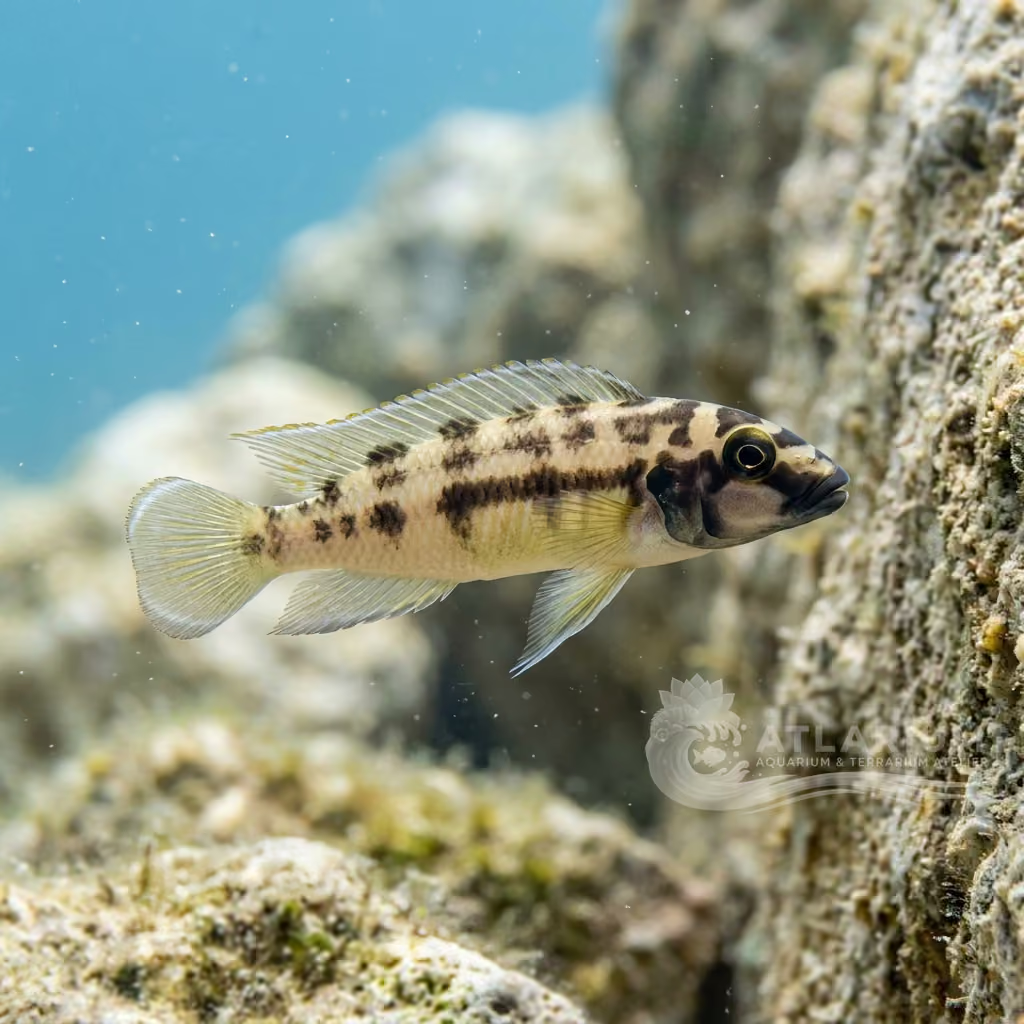
Altolamprologus calvus is a freshwater cichlid endemic to southwestern Lake Tanganyika. Its deeply compressed body lets it work narrow rock cracks and shallow caves; FishBase describes it as a stalker feeding mainly on shrimps and other crustaceans. The documented maximum is 13.5 cm total length. FishBase displays a global Near Threatened status (2025) as context, not as a claim about any aquarium specimen or trade source.
Water Temperature
23 - 25 °C
pH Value
8 - 9
Water type
Freshwater
Tank level
Bottom and middle
Adult size
13.5 cm
Minimum tank volume
>= 180 L
Minimum group
>= 1
GH
9 - 19 dGH
KH
5 - 10 dKH
TDS
200 - 400 ppm
Conductivity
313 - 625 uS/cm

Species description
Geographic Origin and Habitat: Altolamprologus calvus is a freshwater cichlid endemic to Lake Tanganyika and reported from its southwestern part. FishBase classifies it as benthopelagic and associates it with rocky habitat, narrow cracks and shallow caves. Those documented use-sites make the arrangement of the lower rocky zone relevant to behaviour and refuge. They do not show that every depth, shoreline or local microhabitat in the lake is interchangeable for this species.
Taxonomy and Morphology: The accepted name is Altolamprologus calvus (Poll, 1978), with Lamprologus calvus Poll, 1978 as the basionym. The taxonomic sources place it in Cichlidae, subfamily Pseudocrenilabrinae and tribe Lamprologini; the stored subfamily is Pseudocrenilabrinae, not the tribe. Its deeply laterally compressed body is linked to entry into narrow cracks and shallow caves. FishBase reports a maximum of 13.5 cm total length for male or unsexed fish.
Social Behaviour: The direct species account describes A. calvus as a stalker cruising rocky habitat 30–100 cm from the substrate. This supports close-to-rock foraging and shelter use, not a claim that it is motionless or nocturnal. Territory, crevice access, feeding and individual behaviour can change interactions. A shared lake origin does not demonstrate social compatibility, and small animals can be relevant to predation risk when the documented crustacean diet is considered.
Colouration and Sexual Dimorphism: The reviewed material supports the compressed body and the reported total-length maximum, but not one universal colour morph, a fixed male-to-female size ratio, or a diagnostic fin difference. Trade names and photographs can reflect local or selected appearances rather than a taxon-wide rule. Do not infer sex, age, health or provenance from colour alone. Where management depends on sex, use an appropriate method and keep the identification limit separate from visible appearance.

Care, breeding and tankmates
Aquarium Setup: Build around stable rockwork with narrow cracks and shallow caves, the documented use-sites for this species. Keep refuges accessible, avoid unstable stacks and detritus traps, and retain enough open access to observe feeding and conflict. The evidence describes a rocky benthopelagic cichlid, not a generic open-water fish. It does not establish one universal tank volume, lighting level or substrate; those choices need assessment of the actual system and animals.
Diet and Feeding: FishBase reports a diet mainly of shrimps and other crustaceans. Use that evidence to select suitable animal-prey foods and observe whether each fish obtains them in a mixed aquarium. The account does not establish a fixed portion, texture or feeding frequency, and does not make fish fry the principal documented prey. Adjust feeding from intake, body condition, competition and uneaten food, especially where the rocky layout can retain debris.
Water Quality: FishBase reports freshwater reference values of 23–25 °C, pH 8.0–9.0 and dH 9–19. Treat this as a source-bound envelope, not a rapid-acclimation recipe, treatment, or proof that a single hardness product is required. Keep conditions stable and interpret measured values with the whole system. The consulted account does not validate universal KH, TDS, conductivity, nitrate or water-change targets for every aquarium or population.
Compatibility and Cohabitation: Evaluate tankmates in the real layout rather than from a fixed list of Lake Tanganyika species. Body size, shared crevice use, feeding access, refuge and individual territorial behaviour all matter for a rocky stalker that takes crustaceans. Do not assume that a smaller animal is safe or that another cichlid from the lake is automatically compatible. Separate or revise the arrangement when conflict, injury or suppressed feeding shows the setup is failing.
Aquarium Breeding: FishBase reports a female guarding approximately 200 eggs. That observation supports careful protection of a secure reproductive site, but not a shell-only method, fixed pair or harem, sexing shortcut, or guaranteed hatch and survival outcome. Breeding management should respond to observed compatibility, space, refuge and water conditions. Minimise disturbance and do not force a social arrangement from a general profile or a trade description.
Risks and Disease: No taxon-specific disease cause or treatment protocol was confirmed in the consulted sources. Do not use this card to diagnose a lesion, refusal to feed, respiratory sign or loss, or to medicate every fish. Start from observed signs, measured water conditions, diet and husbandry context; obtain qualified aquatic-animal assessment when signs persist, spread or cause losses. Prevention, control and any treatment must fit the diagnosed problem, host, system and product or veterinary direction.

Geographic origin and distribution
This species originates from: Africa (Endemico del Lago Tanganica).
Origin
Africa and Madagascar

Fish profile
- Temperament
- Semi-aggressive
- Altolamprologus calvus is documented as a stalker in rocky habitat rather than as an open-water schooling fish. Its use of cracks, caves and a narrow zone near the substrate makes space and shelter relevant to interactions. The reviewed sources do not establish a universal temperament label, a fixed aggression ranking or a guarantee of peaceful cohabitation. Assess individual territorial behaviour and the actual layout rather than treating the catalog label as a compatibility verdict.
- Diet
- Carnivore
- The direct species account reports a diet mainly of shrimps and other crustaceans, supporting the carnivore profile. Offer foods and portions appropriate to an individual that takes animal prey, then observe intake and body condition. The consulted evidence does not establish one mandatory branded food, a plant-food prohibition or fish fry as the principal documented prey. Any feeding change should account for water quality, competing fish and the animal's condition.
- Life expectancy
- 10-15 years
- Adult size
- 13.5 cm
- Sex ratio
- Harem
- The reviewed sources do not establish a universal pair, harem or group ratio for Altolamprologus calvus. Do not translate a catalog scalar into a guaranteed social arrangement. Use observed sexing confidence, territorial behaviour, available rock structure, cover and the capacity to separate incompatible individuals when planning a group. Breeding observations may inform a particular aquarium, but they do not prove the same ratio is safe or productive in every system.
- Feeding frequency
- Twice daily
- No taxon-specific feeding frequency was established by the consulted sources. Plan portions from the documented carnivorous diet, the fish's condition and what it actually consumes, while preventing uneaten food from remaining in the rocky layout. This is a husbandry observation, not a universal once- or twice-daily rule. A juvenile, an adult, a breeding fish and a fish under clinical assessment can require different management; investigate persistent refusal or loss of condition.
- Bioload
- Medium
- No direct taxon-specific waste-production measurement was identified in the reviewed evidence. The profile's medium bioload is therefore a management label, not a published physiological rate. The documented carnivorous diet and rocky layout make removal of uneaten food and routine water-quality observation relevant, but they do not establish a universal filter, water-change volume or stocking density. Adjust management to feeding, measured water quality, tank volume and the whole community.
- Flow
- Stagnant
- The reviewed species account describes a stalker cruising rocky habitat 30–100 cm from the substrate, but does not report a preferred current velocity. That habitat observation should not be converted into a claim that the species requires stagnant, moderate or strong flow. Arrange circulation so the system remains oxygenated and debris can be managed without removing the protected rock-use opportunities documented for the fish. Confirm suitability from behaviour and water-quality monitoring.
- Jump risk
- Yes
- No taxon-specific jump frequency or trigger was found in the sources consulted. The existing jump-risk scalar is a precautionary catalog label, not evidence that every Calvus cichlid jumps. A secure cover can be considered as part of a safe aquarium design, particularly where startling or conflict is observed, but it does not replace assessment of gaps, equipment routes and the individual fish. Do not infer a health or temperament diagnosis from a single escape attempt.
- Reproduction
- Oviparous
- FishBase reports female guarding of about 200 eggs, so reproductive care should preserve a secure site and avoid treating the former detailed shell-only scenario as universal. The cited material does not establish a fixed sex ratio, the exact spawning shelter, a fertilisation sequence or a reliable production outcome for every population. Condition, pair compatibility, space and disturbance can alter results. Observe an established group rather than forcing a breeding arrangement from a general profile.
- Compatibility & tankmates
- Peaceful
- Compatibility is conditional, not a species-list promise. Altolamprologus calvus uses rocky structure and takes crustacean prey; the direct account does not validate every formerly named companion or prove safety for smaller animals. Evaluate body size, access to cover, competing territories, feeding speed and individual aggression in the actual aquarium. Avoid assuming that a shared Lake Tanganyika origin settles compatibility, and intervene on observed conflict rather than relying on a generic peaceful label.
- Tank level
- Middle/Bottom
- FishBase classifies Altolamprologus calvus as benthopelagic and describes it as stalking through rocky habitat 30–100 cm from the substrate. It should therefore not be presented as an exclusively surface-dwelling fish. Rock cracks and shallow caves are documented use-sites, while the exact aquarium level remains dependent on layout and behaviour. Keep the lower rocky zone usable and observe where the individual chooses to forage and shelter rather than imposing a rigid vertical-zone rule.

Scientific Parameters & Models
FishBase
Window to the official scientific data of the species
FishBase v25.04Data synced on: 06/15/2026
- Trophic level
- 3.4 ± 0.4 se
- Resilience
- Medium (1.4 - 4.4 years)
- Phylogenetic uniqueness (PD50)
- 0.75
- Bayesian Length-Weight
- a = 0.01445, b = 2.99
- VulnerabilityLow vulnerability (10 / 100)

Related species
Recommendations grouped by close relatives, companion choices, and similar care.