Paraguay Mouthbrooder
Bujurquina vittata
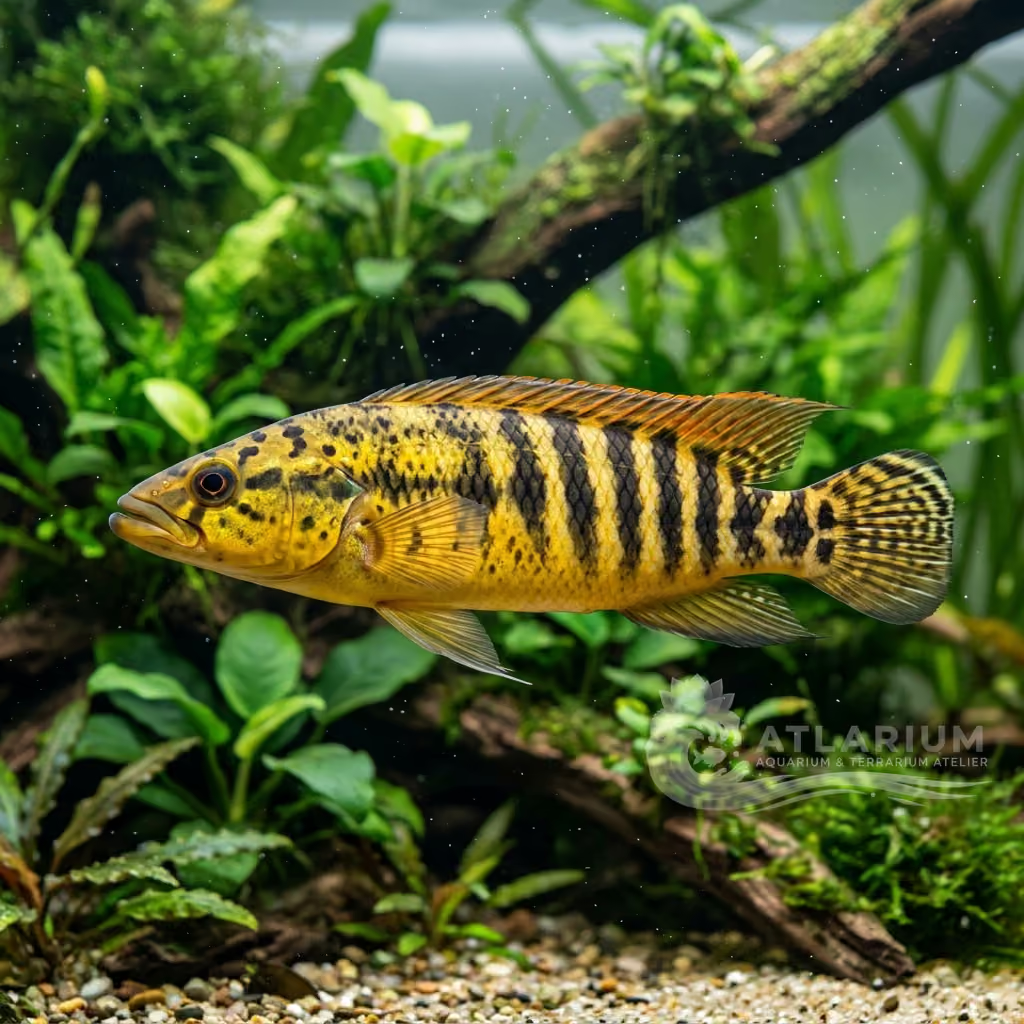
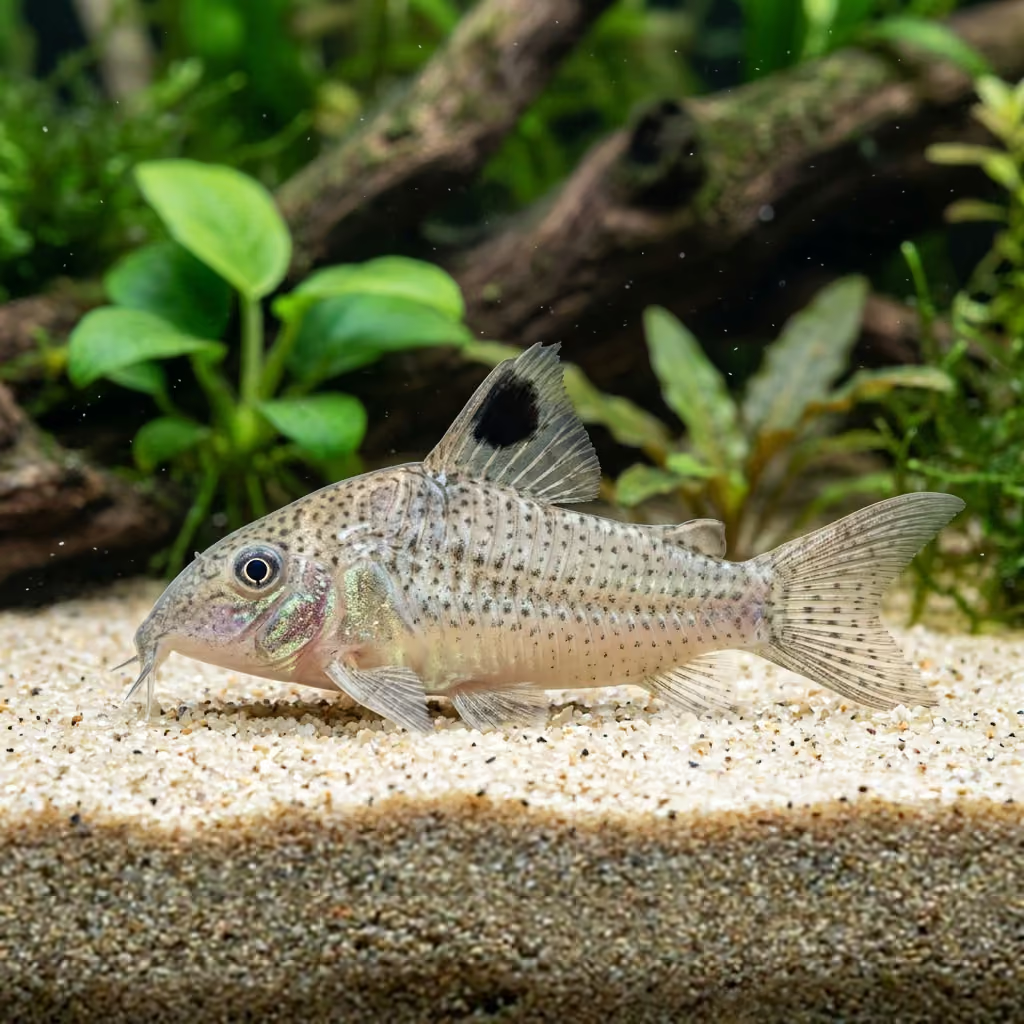
The unusual and fascinating 'Paraguay Mouthbrooder' (10-12 cm). Unusual South American dwarf cichlid. Characterized by a very particular diagonal black band (vittata) on the forehead. Despite its small size and peaceful nature, it stands out for the extraordinary biparental mouthbrooding reproduction, a phenomenon typical of African cichlids but very rare in South America.
Water Temperature
22 - 28 °C
pH Value
6 - 7.5
Water type
Freshwater
Tank level
Bottom and middle
Adult size
12 cm
Minimum tank volume
>= 100 L
Minimum group
>= 1
GH
2 - 12 dGH
KH
1 - 6 dKH
TDS
40 - 240 ppm
Conductivity
63 - 375 uS/cm

Species description
Geographical Origin and Habitat: Native to the Paraná and Paraguay River basins (Brazil, Paraguay, northern Argentina). Inhabits moderate current areas rich in wood and smooth rocks.
Taxonomy and Morphology: Bujurquina Vittata. Medium-sized South American cichlid (10-12 cm / 4-4.7 inches). Until a few decades ago mistakenly placed in the Aequidens genus. The forehead of adult males becomes protruding and stocky.
Social Behavior: Relatively peaceful but territorial. Outside the reproductive period it is shy and tolerant; during brood care it becomes a fighter that fearlessly attacks larger fish.
Coloration and Sexual Dimorphism: Silvery-gray coat spotted by a clear and thick curved band ("vittata") that starts from the nape to end on the rear flank. Fins often pinkish. Larger males with very elongated and pointed dorsal and anal fins.

Care, breeding and tankmates
Aquarium Setup: At least 100-120 cm (40-48 inches). Requires fine sand on the bottom and smooth rounded stones the size of a fist, or large leaves, fundamental for their unique reproductive habits.
Diet and Feeding: Robust omnivore. Does not eat plants but digs. Provide a balanced diet with protein granules for cichlids, chopped earthworms, krill and vegetable supplements (peas, spirulina).
Water Quality: Being native also to northern Argentina, it withstands cool temperatures (22-26°C / 71-79°F) and seasonal fluctuations better than equatorial Amazonian cichlids. pH 6.0-7.5, medium or low hardness.
Compatibility and Cohabitation: Coexists with robust South American Characins (Buenos Aires Tetras), large Corydoras or peaceful Plecostomus. Avoid pairing with Apistogramma or Ramirezi, which would be territorially overwhelmed.
Aquarium Breeding: Their most amazing trait: they are *late biparental mouthbrooders*. They lay on a movable stone or leaf (which they drag away if threatened). After hatching, BOTH the male and female take turns taking the larvae in their mouths to incubate them for another two weeks.
Risks and Diseases: Very robust species, but prone to "Hole in the Head" (Hexamita) if fed with beef hearts or overly polluting foods in waters lacking water changes.

Geographic origin and distribution
Native to the Paraná and Paraguay River basins (Brazil, Paraguay, northern Argentina). Inhabits moderate current areas rich in wood and smooth rocks.
Origin
Tropical oceans and reefsExtra-Amazon South AmericaAfrica and MadagascarEast Asia

Fish profile
- Temperament
- Semi-aggressive
- Bujurquina vittata is generally a peaceful and mild-tempered cichlid, especially when compared to larger South American species. However, they are still cichlids and will display territorial behavior, particularly when selecting a mate and defending a nesting site. During the breeding phase, they can become quite protective, though they rarely cause serious harm to tank mates unless confined in too small a space. In non-breeding periods, they remain calm and relatively unassuming.
- Diet
- Omnivore
- This species is omnivorous and accepts a wide variety of foods, making them relatively easy to feed in captivity. Their diet should consist of high-quality cichlid flakes or pellets as a staple, supplemented with live or frozen foods such as brine shrimp, bloodworms, and daphnia. Offering foods high in protein, such as blackworms, is highly beneficial, especially when conditioning a pair for breeding. A varied diet will also help maintain their coloration and general health.
- Life expectancy
- 5-8 years
- Adult size
- 12 cm
- Sex ratio
- 1:1 ratio
- This species is best kept in bonded pairs, which exhibit excellent cooperative behaviors. It is generally recommended to start with a group of 5 to 6 juveniles to allow pairs to form naturally as they mature. Once a pair is established, the remaining individuals should be removed to prevent territorial conflicts, particularly in smaller aquariums. If keeping a single specimen is preferred, it can adapt well, but breeding behaviors will not be observed.
- Feeding frequency
- Twice daily
- It is recommended to feed Bujurquina vittata twice a day in small portions that they can consume within a few minutes. Young, growing juveniles can benefit from more frequent feedings of three times a day to support their growth rate. Overfeeding must be avoided, as uneaten food will quickly decay and degrade the water quality, increasing the biological load. Fasting the fish for one day per week can also help keep their digestive system healthy.
- Bioload
- Medium
- Bujurquina vittata is a medium-sized cichlid that produces a moderate amount of biological waste. To maintain optimal water quality, a high-efficiency filtration system is necessary, preferably utilizing both mechanical and biological media. Regular weekly water changes of 20-30% are highly recommended to prevent the buildup of nitrates and other organic toxins, to which this species can be sensitive. Providing a sandy substrate will also prevent waste from getting trapped and facilitate cleaning.
- Flow
- Stagnant
- In their natural habitat, Bujurquina vittata inhabits slow-moving rivers, tributaries, and flooded plains. Consequently, they prefer an aquarium with moderate to weak water flow that mimics these calm environments. Strong currents should be avoided, as they can cause physical exhaustion and make spawning more difficult. Utilizing spray bars or adjustable filter outlets can help distribute the water current evenly without creating turbulent zones.
- Jump risk
- Yes
- While not active jumpers by nature, Bujurquina vittata can jump if startled, threatened, or during spawning pursuits. To ensure their safety, a tight-fitting lid or canopy is essential on the aquarium to prevent accidental escapes. Stress, poor water quality, or sudden changes in lighting can also trigger jumping behavior in these fish. Maintaining adequate cover and hiding spaces within the tank will help reduce their overall stress levels and startle responses.
- Reproduction
- Oviparous
- Bujurquina vittata is a biparental delayed mouthbrooder, exhibiting a highly fascinating reproductive strategy. The pair will typically spawn on a removable substrate, such as a fallen leaf or a flat stone, which they may move to different spots. After the eggs hatch, both parents take turns carrying the larvae and young fry in their mouths for protection. Breeding can be stimulated by providing warm, clean water and a rich protein diet, although the parents can easily eat their brood if they feel stressed or disturbed.
- Compatibility & tankmates
- Community
- They are excellent candidates for community aquariums containing other peaceful, medium-sized fish. Suitable tank mates include peaceful characins, larger tetras, peaceful cichlids, and various bottom-dwelling catfish like Corydoras or Loricariids. Extremely small fish or shrimp should be avoided, as they may be viewed as food by mature specimens. During spawning, they will defend their territory, so providing sufficient space and physical barriers is key to maintaining harmony.
- Tank level
- Middle/Bottom
- Bujurquina vittata primarily occupies the bottom and middle zones of the aquarium. They are closely associated with the substrate, where they spend time sifting through sand in search of food or preparing spawning sites. It is essential to configure the tank with flat stones, broad-leafed plants, and driftwood in these lower levels to simulate their natural habitat. They rarely venture to the surface unless enticed by food during feeding sessions.

Scientific Parameters & Models
FishBase
Window to the official scientific data of the species
FishBase v25.04Data synced on: 06/15/2026
- Trophic level
- 3.5 ± 0.6 se
- Resilience
- Medium (1.4 - 4.4 years)
- Phylogenetic uniqueness (PD50)
- 0.5
- Bayesian Length-Weight
- a = 0.02188, b = 3.05
- VulnerabilityLow vulnerability (10 / 100)

Related species
Recommendations grouped by close relatives, companion choices, and similar care.