Bacopa sp. "Japan"
Bacopa sp. "Japan"
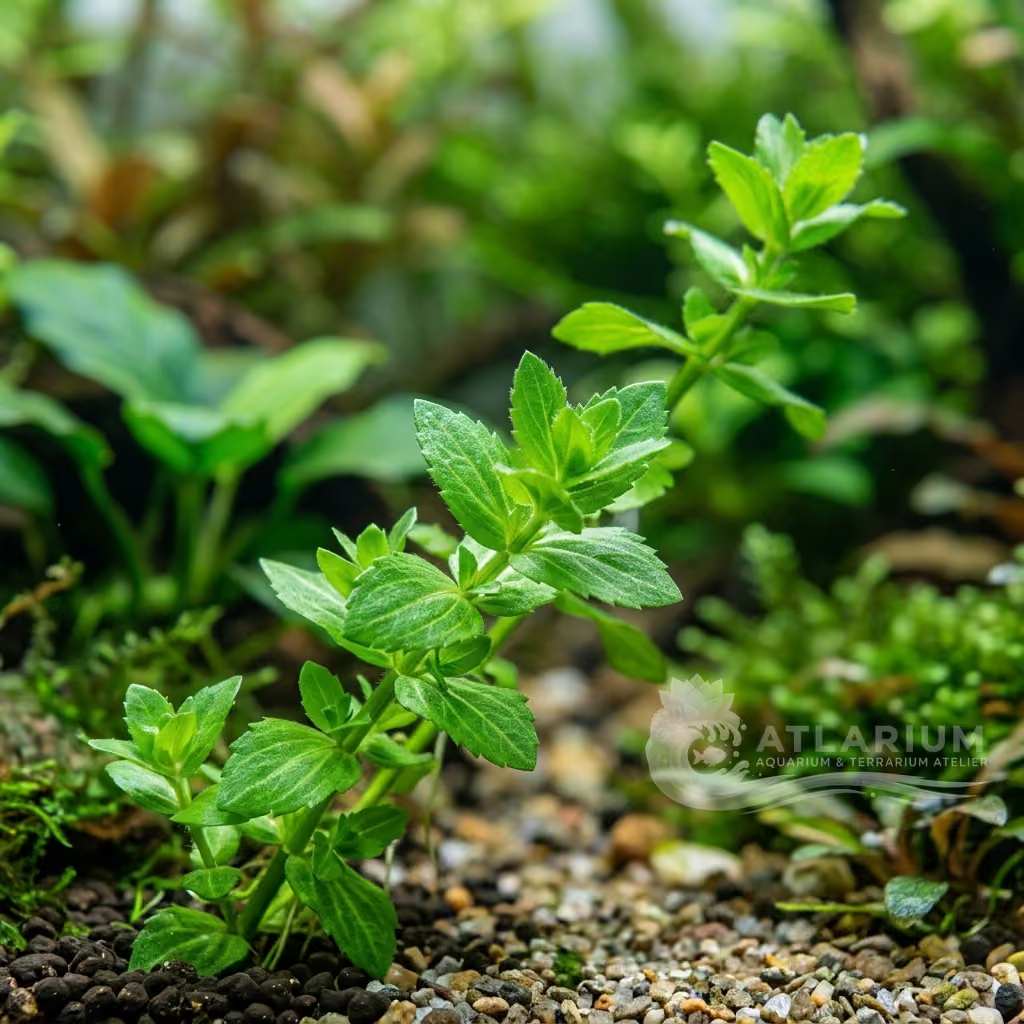
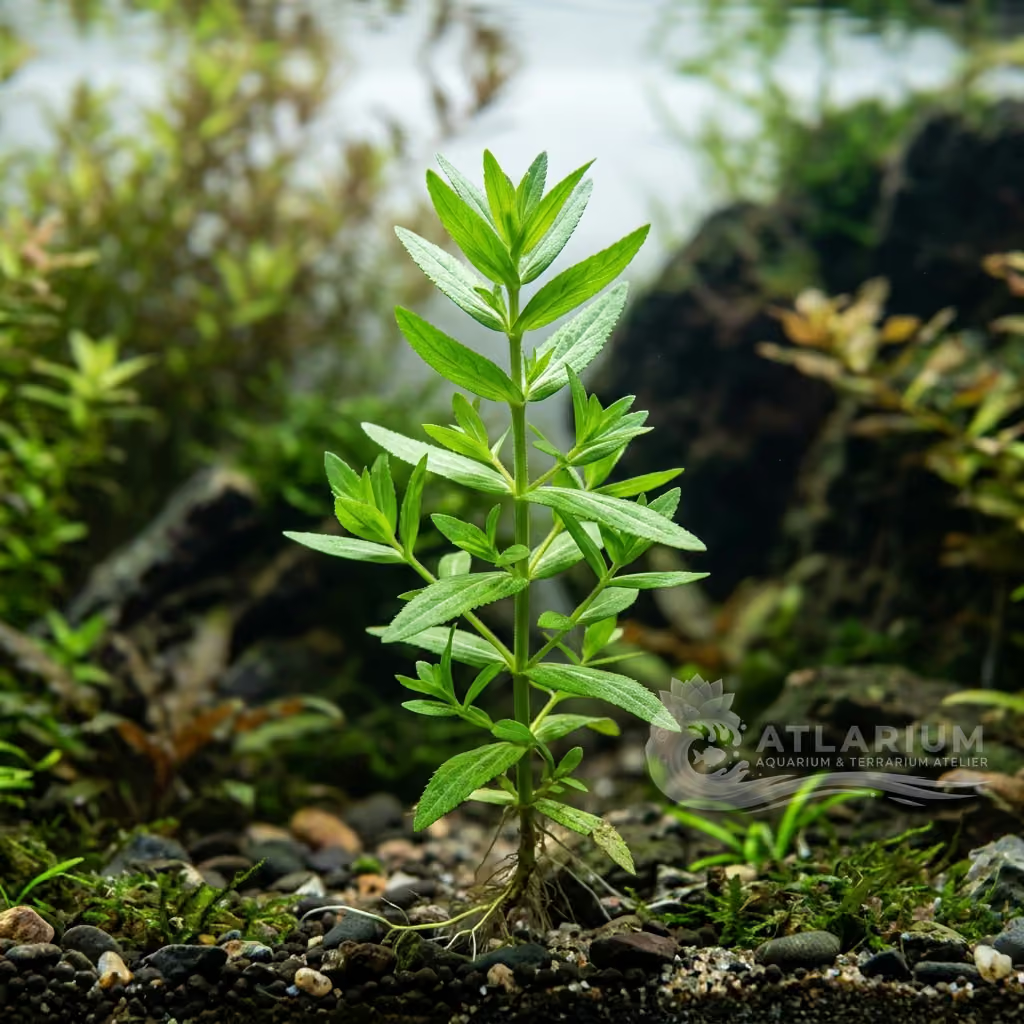
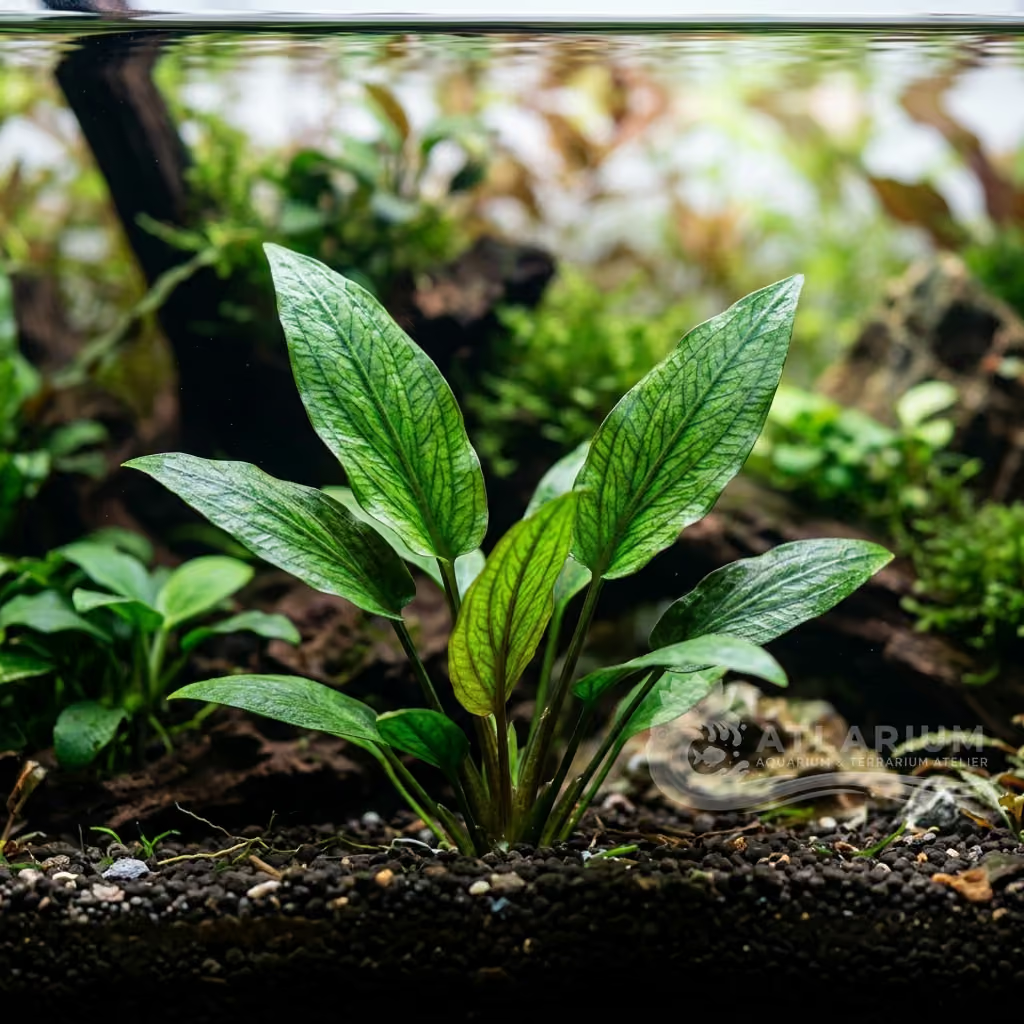
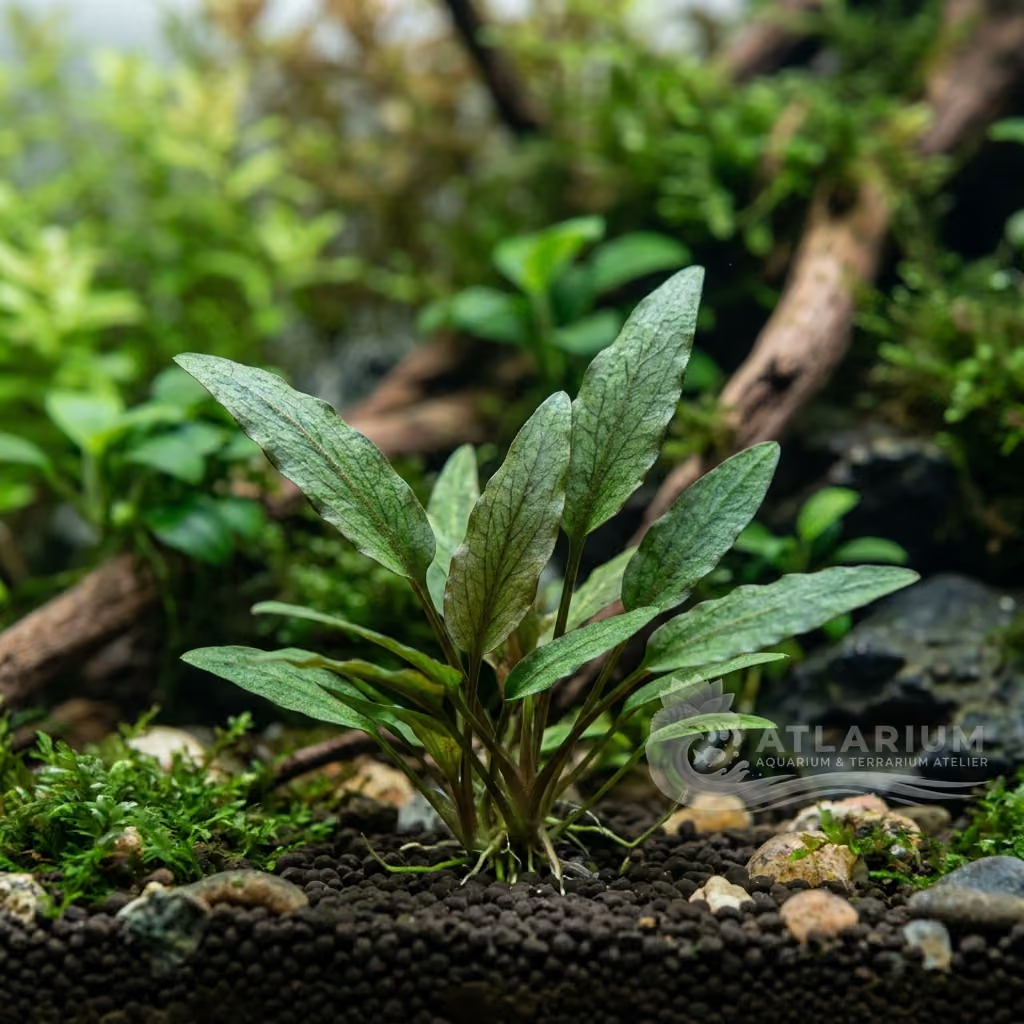
A rare dwarf and creeping Bacopa variety originating from Japan. Its moderate growth rate is perfect for designing dense, lush foreground bushes.
Water Temperature
20 - 28 °C
pH Value
6 - 7.5
Water type
Freshwater
Light
Medium - High
CO2
Medium - High
Expected height
15 cm
Expected width
10 cm
GH
4 - 15 dGH
KH
2 - 10 dKH

Species description
Geographical Origin and Habitat: This cultivar of Bacopa, designated "Japan" due to its popularity in the Japanese aquascaping market, finds its biological roots in the tropical and subtropical regions of East Asia. It naturally grows along the muddy banks of shallow ponds, rice paddies, and slow-moving streams. Adapted to seasonal water level changes, it transitions easily between emerged growth in wet soils and fully submerged conditions in home aquariums.
Taxonomy & Genetics: Belonging to the family Plantaginaceae and the genus Bacopa, this specific plant has not yet been formally described at the species level, hence the placeholder Bacopa sp. "Japan". Genetically, it stands out for its prostrate and compact growth habit compared to other Bacopa species. This growth form is preserved by professional growers through vegetative propagation.
Physical Structure: The plant has creeping or upright stems that are thin but highly flexible. Under high light intensity, it exhibits a strong creeping growth habit, spreading horizontally along the substrate and producing rootlets at each leaf node. Leaves are small, sessile, elliptical to rounded, and grow in opposite pairs. The root system is delicate but effective at securing the plant.
Color & Texture: Leaves are a bright, light green, almost lime-colored under intense lighting. The foliage has a soft, fleshy texture but is firm enough to resist damage from minor physical forces. The leaf surface is smooth with a slightly velvety feel. This combination of color and texture makes it an excellent plant for creating visual transitions between the foreground and midground.

Care, breeding and tankmates
Lighting & CO2: Requires moderate to strong lighting. High light levels promote its creeping and compact growth form, whereas low light causes the stems to stretch vertically. CO2 injection is recommended to achieve a lush, bushy appearance, though it can survive in low-tech setups with slower growth.
Nutrition & Substrate: Thrives in a fertile substrate rich in iron and microelements. Since it roots along its creeping stems, a specialized aquarium soil or root tabs will accelerate carpeting. Dosing liquid fertilizers containing potassium and phosphates prevents lower leaf loss and supports steady growth.
Water Chemistry: This adaptable plant tolerates soft to moderately hard water (KH 2-12 dKH) with a pH range of 6.0 to 7.5. The ideal water temperature is between 15°C and 28°C. Sudden shifts in water parameters should be avoided to prevent stress and stunted growth.
Space Management & Placement: Best suited for the midground or foreground, where it can be used to form low mounds or frame the base of rocks and wood. Its semi-creeping nature makes it highly suitable for nano aquariums and detailed layouts.
Pruning: Trim vertical stems to encourage lateral branching and bushy growth. The trimmed tops can be replanted directly into the substrate. Regular pruning is necessary to maintain the desired height and prevent the lower stems from rotting due to lack of light.
Risks & Diseases: The main risk is self-shading if the bushes grow too dense, which leads to rotting of the lower stems. Soft leaves can be targeted by herbivorous snails or fish. Nutrient deficiencies will quickly show as pale leaves and slowed growth.

Geographic origin and distribution
This cultivar of Bacopa, designated "Japan" due to its popularity in the Japanese aquascaping market, finds its biological roots in the tropical and subtropical regions of East Asia. It naturally grows along the muddy banks of shallow ponds, rice paddies, and slow-moving streams. Adapted to seasonal water level changes, it transitions easily between emerged growth in wet soils and fully submerged conditions in home aquariums.
Origin
East AsiaSelective breeding and cultivars

Plant profile
- Placement
- Midground
- This versatile stem plant can be placed in the midground or background. Its creeping tendency allows it to be guided over hardscape or maintained as a low cluster. It is excellent for softening the edges of rocks.
- Botanical form
- Stem
- It possesses somewhat smaller and more fragile leaves compared to standard Bacopa caroliniana. The leaves are ovate and light green, growing on flexible stems. Its graceful appearance makes it ideal for detailed midground work.
- Growth
- Medium
- The growth rate is moderate, making it a very manageable plant for aquascaping. With CO2 and high light, it grows more vigorously and exhibits a more creeping habit. In lower-tech setups, it grows straight up but slower.
- Substrate
- Medium
- Bacopa sp. "Japan" benefits significantly from a well-structured, moderately fertile substrate to support its delicate but vigorous rooting system. An active aqua soil helps maintain an acidic pH while providing a gentle, consistent supply of nutrients directly to the roots. Although it can adapt to sand or gravel, regular root feeding will prevent stunting and encourage bushier, lateral growth.
- Column fertilization
- Recommended
- Regular dosing of a complete liquid fertilizer ensures optimal leaf size and color. It primarily relies on the water column for its nutrient needs. A lack of nutrients will result in stunted, pale growth.
- Root fertilization
- Recommended
- While it feeds mainly from the water column, a good quality substrate will encourage stronger root growth. Root tabs can provide a slow-release nutrient source. They are not strictly necessary if column dosing is adequate.
- Trimming
- Regular
- Frequent trimming is recommended to maintain a dense, bushy appearance. Trim the plant at nodes to encourage the growth of multiple side shoots. The trimmed tops can be used to expand the cluster.
- Propagation
- Cuttings
- It is easily propagated through cuttings. Snip the healthy top portions and plant them into the substrate. Roots will form quickly at the nodes.
- Sensitivity
- Moderate
- It can be delicate when initially planted and may experience slight melting. It does not tolerate severe shading well. Consistent CO2 levels and good flow are important to prevent algae.
- Layout role
- Midground, Foreground, Nano, group
- It serves as an excellent midground transitional plant. Its bright green coloration and fine texture provide a refreshing contrast. It is highly valued for its natural, slightly wild look.

Related species
Recommendations grouped by close relatives, companion choices, and similar care.