

SOS Aquarium
Diseases
Database of fish pathologies, symptoms, and treatments.
Copy the link or share this page so you can easily find it again.
SOS Aquarium
Diseases
Database of fish pathologies, symptoms, and treatments.
 ContagiousMarineParasite
Black Ich / Tang Disease
Pathophysiological Overview This condition represents a highly virulent, systemic pathology deeply rooted in acute immunological distress. Microscopic analysis typically reveals profound tissue necrosis and cellular degradation at the epithelial level. Epidemiological Factors Transmission is significantly enhanced in closed-system aquatic or terrarium environments with elevated bioloads. Pathogenic proliferation is logarithmic once the primary host defenses are breached. Lifecycle & Virulence The disease progression is characterized by a rapid onset, leveraging host stress pathways to bypass primary mucus or epidermal barriers.
 ContagiousMarineParasite
Brooklynella (Clownfish Disease)
Ciliate Pathology and Cytotoxicity Brooklynella hostilis is an aggressive, bean-shaped, ciliated protozoan notorious for decimating captive marine populations, earning the colloquial moniker 'Clownfish Disease' due to its disproportionate lethality in Amphiprioninae. Unlike Cryptocaryon or Amyloodinium, Brooklynella reproduces via simple binary fission directly on the host, bypassing an environmental encysted stage. This direct reproductive cycle allows the parasite population to multiply exponentially within hours on a single host. The ciliate feeds ruthlessly on the epidermal cells and blood cells, causing intense irritation that triggers the host’s goblet cells to secrete massive, lethal quantities of opaque mucus.
 ContagiousFreshwaterParasite
Camallanus Worms
Nematode Biology and Parasitism Camallanus cotti and related species are formidable, blood-feeding nematode parasites that aggressively infect the lower intestines and rectum of freshwater teleosts, particularly livebearers (Poeciliidae), cichlids, and anabantoids. Unlike many parasitic nematodes, Camallanus features a direct or facultative indirect life cycle. Viviparous females expel fully formed, free-living, first-stage larvae ($L_1$) directly into the water column. These larvae can be ingested by intermediate hosts (copepods or crustacean larvae) or ingested directly by a susceptible fish. Upon ingestion, the larvae molt and migrate to the intestine, where they utilize a heavily sclerotized, jaw-like buccal capsule to anchor deep into the mucosal lining, feeding continuously on the host's blood.
 ContagiousFreshwaterParasite
Chilodonellosis
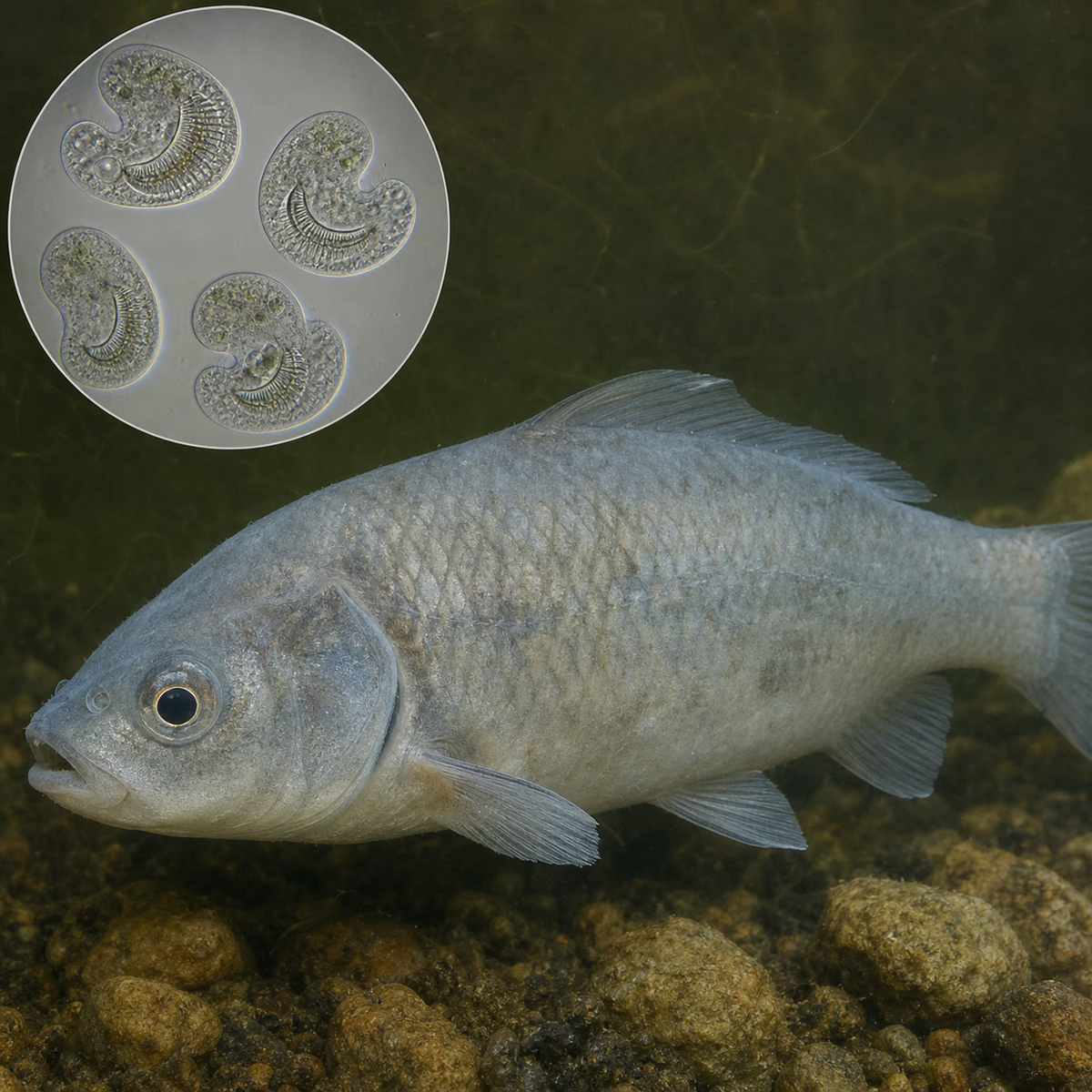
Chilodonellosis is a skin and gill disease caused by Chilodonella ciliates. It can multiply rapidly on stressed fish and cause major respiratory damage, especially in dense or young groups. Because it may also be found on deteriorating tissue, site, burden and lesions must agree.
 ContagiousSemi-aquatic · TerrariumFungus
Chytrid Fungus
Pathophysiological Overview This condition represents a highly virulent, systemic pathology deeply rooted in acute immunological distress. Microscopic analysis typically reveals profound tissue necrosis and cellular degradation at the epithelial level. Epidemiological Factors Transmission is significantly enhanced in closed-system aquatic or terrarium environments with elevated bioloads. Pathogenic proliferation is logarithmic once the primary host defenses are breached. Lifecycle & Virulence The disease progression is characterized by a rapid onset, leveraging host stress pathways to bypass primary mucus or epidermal barriers.
 ContagiousFreshwaterBacteria
Columnaris disease
Microbiology of Flavobacterium columnare Columnaris is a highly contagious, acutely fatal disease caused by the Gram-negative aerobic bacterium Flavobacterium columnare. Its filamentous, cotton-like epidermal appearance can be mistaken for fungal infection. The bacterium has strong affinity for gill and skin tissue, where gliding motility supports dense biofilm formation. Chondroitinases and proteases digest epithelial and dermal layers, causing rapid widespread necrosis. Epidemiology Virulence is strongly temperature-dependent, with explosive outbreaks typically when water exceeds $25^{\circ}C$; high organic load and elevated pH further worsen pathogenesis.
 FreshwaterBacteria
Dropsy
Pathophysiology of Dropsy Dropsy is not a singular pathogen but rather a clinical manifestation of severe systemic disease, primarily characterized by pronounced edema and ascites. The condition arises from a catastrophic failure of the teleost osmoregulatory system, specifically involving renal or hepatic dysfunction. In freshwater environments, fish are hyperosmotic relative to their surroundings, necessitating constant water excretion via the kidneys. When internal organs are compromised—frequently by Gram-negative bacteria such as Aeromonas hydrophila or Pseudomonas fluorescens—fluid accumulation rapidly outpaces excretion. This internal hydrostatic pressure forces the scales outward, resulting in the pathognomonic 'pinecone' appearance. Etiological Factors The etiology is multifactorial but overwhelmingly bacterial in origin. Opportunistic pathogens colonize the host following an immunosuppressive event, often mediated by environmental stressors such as chronic ammonia toxicity, sudden thermal shifts, or prolonged poor water quality. Virulence factors of Aeromonas species include aerolysins, hemolysins, and proteases that cause severe tissue necrosis, particularly in the nephronic tubules and hepatic parenchyma, culminating in multi-organ failure.
 FreshwaterParasite
Epistylis
Protozoology and Symbiotic Mechanics Epistylis is a genus of peritrichous, ciliated protozoans that are fundamentally distinct from the parasitic ciliate Ichthyophthirius multifiliis (Ich). While often visually confused with Ich, Epistylis organisms are structurally unique: they are colonial and anchor themselves to the host’s epithelium via a rigid, non-contractile, calcified stalk. From the apex of this stalk, a bell-shaped zooid utilizes its cilia to filter-feed on waterborne bacteria and organic detritus. Crucially, Epistylis is primarily an epibiont (a commensal organism) rather than an obligate tissue parasite. However, the calcified stalk pierces the host's epidermal layer. In water heavily laden with organic pollutants and high bacterial counts (specifically Aeromonas spp.), these puncture wounds act as direct vectors for lethal systemic bacterial septicaemia. The morbidity associated with Epistylis is almost exclusively due to these secondary bacterial infections.
 Freshwater · MarineBacteria
Fin Rot
Bacterial Pathophysiology Fin Rot is not a singular pathogen, but rather an opportunistic polymicrobial infection primarily caused by ubiquitous, gram-negative, motile rod-shaped bacteria—most notably Aeromonas hydrophila, Pseudomonas fluorescens, and occasionally Flexibacter species. Mechanisms of Virulence: These pathogens are universally present in all aquatic environments. They rely entirely on pre-existing physical trauma or severe immunosuppression in the host to breach the integumentary barrier. Once attached, they secrete powerful extracellular proteases and hemolysins that rapidly digest the structural collagen and soft connective tissue between the fin rays (lepidotrichia).
 ContagiousFreshwater · MarineParasite
Gill Flukes
Morphology and Parasitic Lifecycle Gill flukes are microscopic, oviparous (egg-laying) monogenean trematodes primarily belonging to the genus Dactylogyrus. They are obligate ectoparasites armed with a specialized posterior attachment organ called an opisthaptor, which is equipped with an array of sharp hooks and marginal hooklets. The fluke uses the opisthaptor to severely lacerate the delicate epithelial tissue of the gill lamellae, feeding on the resulting blood, mucus, and cellular debris. The destruction of lamellar integrity induces rapid hyperplasia (cell proliferation) and excessive mucus production as the host attempts to isolate the parasite, ironically resulting in severe respiratory suffocation. Dactylogyrus produces highly resilient eggs that drop into the substrate. After incubating for 2 to 4 days (temperature dependent), free-swimming oncomiracidia hatch and actively seek a new host, completing the cycle within days.
 ContagiousFreshwater · MarineParasite
Gyrodactylosis
Gyrodactylosis is an infestation mainly of skin and fins by Gyrodactylus monogeneans. Unlike common egg-laying gill flukes, many Gyrodactylus are live-bearing and transmit directly between hosts, enabling rapid growth. Genus identification guides management, while species identification may require specialist morphology or molecular methods.
 Freshwater · MarineParasite
Hole in the Head (HITH)
Etiology of Hexamitiasis / Spironucleosis Hole in the Head (HITH) disease, frequently synonymous with Head and Lateral Line Erosion (HLLE) in marine contexts, is a multi-factorial syndrome in freshwater cichlids (notably Symphysodon and Astronotus spp.). The primary parasitic agent is the flagellated protozoan Spironucleus vortens (formerly classified as Hexamita). These diplomonad flagellates reside primarily in the intestinal tract, where they interfere with nutrient absorption, particularly essential trace minerals and vitamins (e.g., Vitamin C and Phosphorus). Systemic Impact As the parasitic load increases, systemic nutrient deprivation causes the cartilage and sensory tissues of the cephalic pores and the lateral line to undergo severe necrosis. The destruction of this sensory epithelium creates the deep, cavernous pitting pathognomonic of HITH. Secondary bacterial and fungal pathogens rapidly colonize these necrotic pits, exacerbating tissue loss.
 MarineEnvironmental (Water Quality)
Hole in the Head / HLLE
Pathophysiological overview Head and Lateral Line Erosion (HLLE) is a chronic, non-infectious syndromic condition primarily affecting marine teleosts, particularly Acanthuridae and Pomacanthidae. It is characterized by progressive macroscopic degeneration and pitting of epidermal and dermal tissue along cephalic sensory canals and the neuromasts of the lateral-line system. Etiological mechanisms Veterinary evidence supports multifactorial environmental and dietary triggers. Controlled studies have implicated fine-particulate extruded activated carbon: its dust may mechanically abrade delicate neuromast tissue or selectively adsorb essential trace elements, contributing to lesions.
 ContagiousFreshwaterParasite
Ich / white spot disease
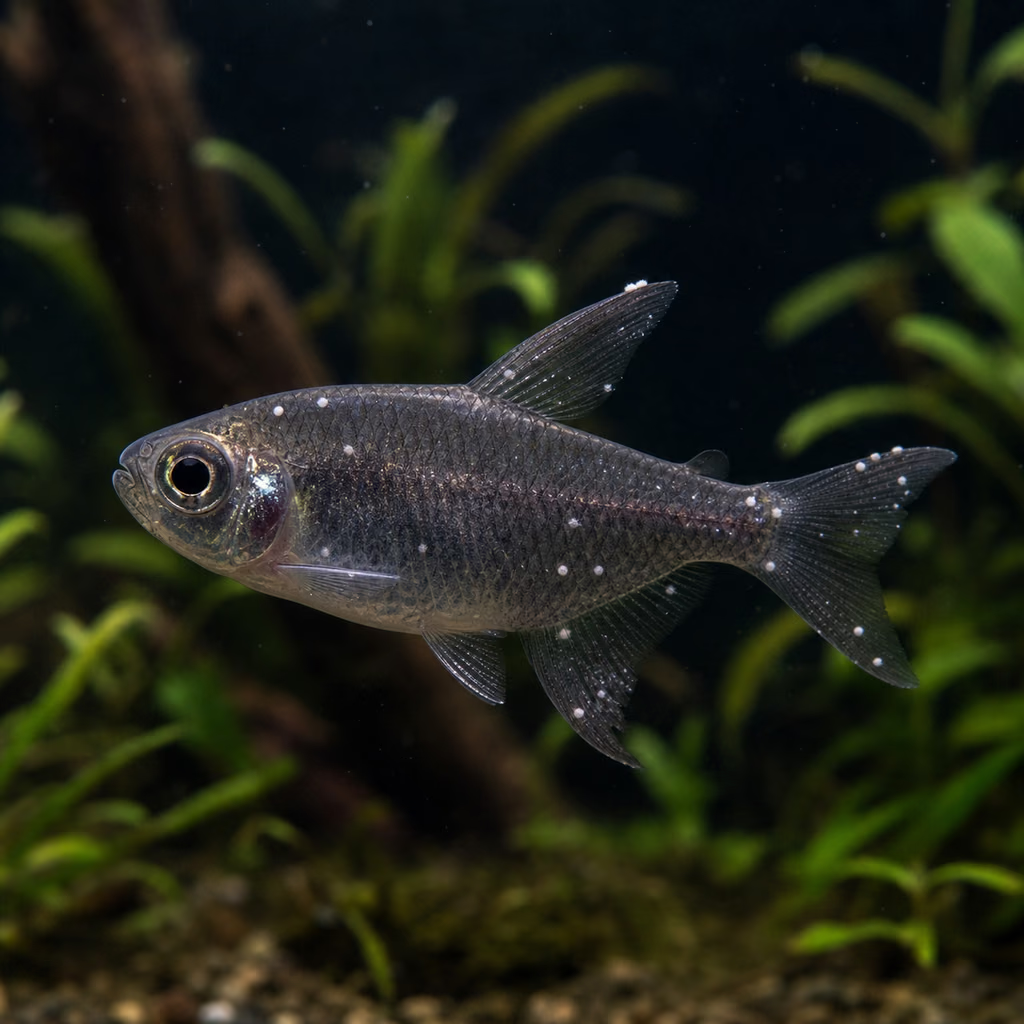
Parasitology and Life Cycle Ichthyophthirius multifiliis ("Ich") is a highly destructive obligate holotrich ciliate protozoan parasite of freshwater teleost fish. It invades epithelial tissue of the gills, skin, eyes or fins, leaving a small wound and a visible white spot or nodule where each parasite encysts. Life-cycle dynamics: its temperature-modulated, multi-stage cycle includes the feeding parasitic trophont beneath the host epithelium, the encysted reproductive tomont and the highly mobile ciliated infectious theront. Because the trophont embeds directly beneath the epidermis, it is protected from waterborne therapies; only the free-swimming theront stage is vulnerable.
 ContagiousFreshwaterParasite
Ichthyobodosis
Ichthyobodosis is a skin and gill parasitosis caused by the small flagellate Ichthyobodo necator, historically called Costia. It is difficult to recognise without microscopy and can become severe in fry or debilitated fish. Grey mucus and flashing describe injury, not the agent.
 Terrarium · Semi-aquaticEnvironmental (Water Quality)
Impaction
Pathophysiological Overview This condition represents a highly virulent, systemic pathology deeply rooted in acute immunological distress. Microscopic analysis typically reveals profound tissue necrosis and cellular degradation at the epithelial level. Epidemiological Factors Transmission is significantly enhanced in closed-system aquatic or terrarium environments with elevated bioloads. Pathogenic proliferation is logarithmic once the primary host defenses are breached. Lifecycle & Virulence The disease progression is characterized by a rapid onset, leveraging host stress pathways to bypass primary mucus or epidermal barriers.
 ContagiousMarineParasite
Marine Velvet
Dinoflagellate Pathogenesis Marine Velvet is arguably the most destructive and rapidly fatal parasitic disease in marine aquaculture, caused by the parasitic dinoflagellate Amyloodinium ocellatum. Unlike ciliates, Amyloodinium possesses chloroplasts (though non-functional in this parasitic stage) and attaches directly to the host's gill and skin epithelium utilizing highly specialized root-like structures called rhizoids. These rhizoids aggressively penetrate host cells, secreting lytic enzymes that dissolve the cytoplasm, allowing the parasite to absorb the liquefied cellular contents. The lifecycle mirrors Cryptocaryon but operates at a hyper-accelerated rate. The parasitic trophont feeds for just 2 to 6 days before dropping off as a tomont. Division inside the tomont cyst produces up to 256 dinospores within 2 to 4 days. These dinospores are highly motile, swimming toward light (phototaxis) to intercept hosts in the water column.
 ContagiousMarineParasite
Marine white spot disease
Life cycle of Cryptocaryon irritans Marine ich is a disease caused by the halophilic ciliated protozoan Cryptocaryon irritans. Its multi-stage life cycle requires strict eradication protocols. 1. Trophont: parasitic stage embedded in mucosal epithelium and gills, protected from treatments; it feeds for 3-7 days. 2. Protomont: the mature trophont leaves the epithelium and falls to the substrate. 3. Tomont: it encysts on rock or substrate and divides rapidly, producing up to 1,000 daughter cells. It may remain dormant for up to 72 days and resist medicines. 4. Theront: infectious free-swimming stage. This is the only stage vulnerable to medicinal intervention. It must find a host within 24-48 hours.
 Terrarium · Semi-aquaticEnvironmental (Water Quality)
Metabolic Bone Disease (MBD)
Pathophysiological Overview Metabolic Bone Disease (MBD), scientifically termed nutritional secondary hyperparathyroidism (NSHP), is a profound systemic derangement of calcium and phosphorus homeostasis. It is a leading cause of morbidity in captive reptiles and amphibians, precipitating severe osteodystrophy, pathological fractures, and structural collapse of the skeletal architecture. Endocrine Disruption The condition is fundamentally driven by inadequate cutaneous UVB-mediated synthesis of cholecalciferol (Vitamin D3). In the absence of D3, active intestinal absorption of dietary calcium fails. Consequently, the parathyroid glands hypertrophy, secreting excess parathyroid hormone (PTH) to aggressively extract calcium from bone matrices to maintain critical serum calcium levels.
 FreshwaterBacteria
Motile aeromonad septicemia
Motile aeromonad septicaemia is a systemic bacterial syndrome of fish associated mainly with the motile Aeromonas complex. These bacteria are common in aquatic environments and become pathogenic in susceptible hosts; recovery from a superficial lesion alone does not prove septicaemia. Diagnosis requires compatible signs and properly collected internal samples.
 Terrarium · Semi-aquaticBacteria
Mouth Rot (Infectious Stomatitis)
Pathophysiological Overview This condition represents a highly virulent, systemic pathology deeply rooted in acute immunological distress. Microscopic analysis typically reveals profound tissue necrosis and cellular degradation at the epithelial level. Epidemiological Factors Transmission is significantly enhanced in closed-system aquatic or terrarium environments with elevated bioloads. Pathogenic proliferation is logarithmic once the primary host defenses are breached. Lifecycle & Virulence The disease progression is characterized by a rapid onset, leveraging host stress pathways to bypass primary mucus or epidermal barriers.
 Freshwater · MarineBacteria
Mycobacteriosis
Fish mycobacteriosis pathobiology Fish mycobacteriosis, colloquially “fish TB”, is an insidious, chronic and often difficult-to-treat bacterial infection, caused predominantly by the acid-fast mycobacterium Mycobacterium marinum. It may present as a chronic or acute systemic granulomatous disease in aquarium fish. These organisms have lipid-rich cell walls containing mycolic acids, which contribute to resistance to disinfectants, environmental degradation and broad-spectrum antibiotics. The bacterium replicates within macrophages and can form caseous granulomas in visceral organs. CRITICAL ZOONOTIC WARNING: M. marinum is zoonotic and may cause aquarium granuloma in people. Wear gloves when handling fish, water or contaminated equipment and seek medical advice for persistent skin lesions after exposure.
 Semi-aquaticBacteria
Red Leg Syndrome
Pathophysiological Overview This condition represents a highly virulent, systemic pathology deeply rooted in acute immunological distress. Microscopic analysis typically reveals profound tissue necrosis and cellular degradation at the epithelial level. Epidemiological Factors Transmission is significantly enhanced in closed-system aquatic or terrarium environments with elevated bioloads. Pathogenic proliferation is logarithmic once the primary host defenses are breached. Lifecycle & Virulence The disease progression is characterized by a rapid onset, leveraging host stress pathways to bypass primary mucus or epidermal barriers.
 Terrarium · Semi-aquaticBacteria
Respiratory Infection (RI)
Pathophysiological Overview This condition represents a highly virulent, systemic pathology deeply rooted in acute immunological distress. Microscopic analysis typically reveals profound tissue necrosis and cellular degradation at the epithelial level. Epidemiological Factors Transmission is significantly enhanced in closed-system aquatic or terrarium environments with elevated bioloads. Pathogenic proliferation is logarithmic once the primary host defenses are breached. Lifecycle & Virulence The disease progression is characterized by a rapid onset, leveraging host stress pathways to bypass primary mucus or epidermal barriers.
 FreshwaterOOMYCETE
Saprolegniasis
Saprolegniasis is an aquatic oomycete disease, chiefly involving Saprolegnia, that colonises eggs or damaged tissue. Oomycetes are not true fungi despite producing cotton-like growth. Infection is often secondary to trauma, cold stress, poor water quality or another disease, so predisposition must be identified.
 Terrarium · Semi-aquaticBacteria
Scale Rot
Pathophysiological Overview This condition represents a highly virulent, systemic pathology deeply rooted in acute immunological distress. Microscopic analysis typically reveals profound tissue necrosis and cellular degradation at the epithelial level. Epidemiological Factors Transmission is significantly enhanced in closed-system aquatic or terrarium environments with elevated bioloads. Pathogenic proliferation is logarithmic once the primary host defenses are breached. Lifecycle & Virulence The disease progression is characterized by a rapid onset, leveraging host stress pathways to bypass primary mucus or epidermal barriers.
 FreshwaterParasite
Tetrahymenosis
Tetrahymenosis includes infections by Tetrahymena ciliates, opportunists able to colonise skin and lesions and, in some hosts, invade muscle, eye or body cavity. Finding ciliates on a moribund fish does not automatically prove primary invasion. Distinguishing superficial from systemic disease changes prognosis and management.
 ContagiousFreshwaterParasite
Trichodiniasis
Trichodiniasis is a skin and gill parasitosis caused by heavy burdens of Trichodina and related ciliates. Small numbers may occur without obvious disease; injury develops when multiplication, stress and stocking exceed host capacity. Burden must therefore be assessed rather than diagnosing from one cell.
 MarineParasite
Uronema
Pathophysiological Overview Uronema marinum is an opportunistic, free-living scuticociliate protozoan responsible for devastating systemic infections (scuticociliatosis) in captive marine teleosts. Unlike obligate parasites (e.g., Cryptocaryon irritans), Uronema lacks an encysted stage and can proliferate independently on detritus and decaying organic matter. It rapidly infiltrates the epithelium, proceeding to deep muscular and organ tissue necrosis, often leading to acute renal and osmotic failure. Cellular Mechanisms The pathogen utilizes potent cytolytic enzymes (including metalloproteases) to break down host extracellular matrices, literally feeding on the resulting necrotic detritus. This leads to profound osmoregulatory failure and rapid mortality, particularly in susceptible genera like Chromis and Amphiprion.
 ContagiousFreshwaterParasite
Velvet disease
Dinoflagellate pathobiology Velvet disease, scientifically called piscinoodiniosis in freshwater, is caused by the parasitic dinoflagellate Piscinoodinium pillulare. This organism can be substantially more lethal than ich. Photosynthetic autotrophy: It is unusual among fish pathogens because it contains chloroplasts and may use photosynthesis for supplementary energy while embedded in host tissue, accelerating pathology in brightly lit aquaria. Dinospores attach to the host through root-like rhizocysts that penetrate deeply into epithelial cells.