

Columnaris disease
Flavobacterium columnare
Microbiology of Flavobacterium columnare
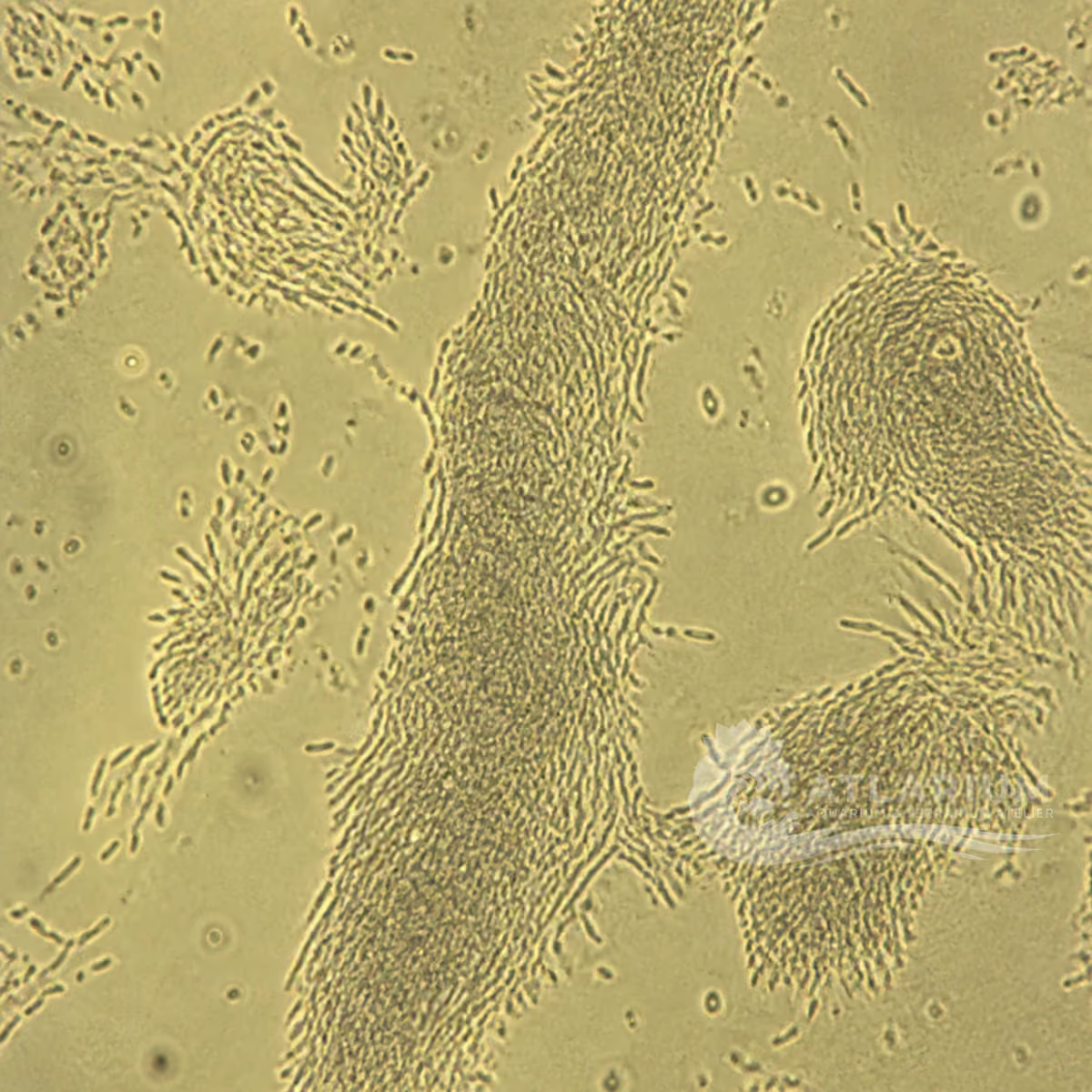
Columnaris is a highly contagious, acutely fatal disease caused by the Gram-negative aerobic bacterium Flavobacterium columnare. Its filamentous, cotton-like epidermal appearance can be mistaken for fungal infection. The bacterium has strong affinity for gill and skin tissue, where gliding motility supports dense biofilm formation. Chondroitinases and proteases digest epithelial and dermal layers, causing rapid widespread necrosis.
Epidemiology
Virulence is strongly temperature-dependent, with explosive outbreaks typically when water exceeds $25^{\circ}C$; high organic load and elevated pH further worsen pathogenesis.
Diagnostic profile
Contagious
Observe and distinguish
Identification and context
Immediate triage
For Columnaris disease, stabilize oxygenation and water quality, document signs and isolate only when safe for the host. Do not start medication blindly.
Hosts and context
Microbiology of Flavobacterium columnare
Columnaris is a highly contagious, acutely fatal disease caused by the Gram-negative aerobic bacterium Flavobacterium columnare. Its filamentous, cotton-like epidermal appearance can be mistaken for fungal infection. The bacterium has strong affinity for gill and skin tissue, where gliding motility supports dense biofilm formation. Chondroitinases and proteases digest epithelial and dermal layers, causing rapid widespread necrosis.
Epidemiology
Virulence is strongly temperature-dependent, with explosive outbreaks typically when water exceeds $25^{\circ}C$; high organic load and elevated pH further worsen pathogenesis.
Signs and progression
Clinical pathology
- Saddleback lesions: pale, depigmented or necrotic bands across the dorsal ridge.
- Filamentous tufts: white or grey cotton-like growths mainly on mouth, fins and gills.
- Gill necrosis: rapid loss of gill lamellae causing severe hypoxia.
- Fin rot: fraying and disintegration of fin rays with a hyperaemic base. Mortality can be acute.
Verify before intervening
Confirmation and decisions
Differential diagnosis
Main differentials: mouth trauma, fungal or oomycete growth, fin rot and other bacterial ulcers. Priority changes with host, site and progression.
Agent, mechanism and cycle
Precipitating factors
- Thermal stress: rapid rises or sustained high temperature, especially above $25^{\circ}C$.
- High organic matter: excess dissolved organic carbon (DOC) supports proliferation.
- Mechanical trauma: net or aggression abrasions provide an entry route.
- Overcrowding: high stocking density facilitates horizontal transmission.
Transmission and contagion
Precipitating factors
- Thermal stress: rapid rises or sustained high temperature, especially above $25^{\circ}C$.
- High organic matter: excess dissolved organic carbon (DOC) supports proliferation.
- Mechanical trauma: net or aggression abrasions provide an entry route.
- Overcrowding: high stocking density facilitates horizontal transmission.
Sampling and confirmation
Confirm clinically and sample before antimicrobials; cytology, culture and susceptibility or molecular methods require professional interpretation.
Proportionate actions
Management and monitoring
Host support
For Columnaris disease, stabilize oxygenation and water quality, document signs and isolate only when safe for the host. Do not start medication blindly.
Documented treatment options
Documented options to verify for Columnaris disease: immediate environmental support and any medicine only through an evidence-based recommendation, official label and host assessment.
Contextual prognosis
Seek veterinary help for Columnaris disease with respiratory distress, hemorrhage, loss of balance, failure to feed, rapid progression or mortality.
Biosecurity
Prevent Columnaris disease with proportionate quarantine, separate tools, daily observation and stable parameters; avoid routine drug prophylaxis without an indication.
When to seek veterinary help
Seek veterinary help for Columnaris disease with respiratory distress, hemorrhage, loss of balance, failure to feed, rapid progression or mortality.
Biological identity
Linked organisms in the Micro World
Learn how to recognize them and what role they may play in the aquarium.
Academic and scientific references
- Merck Veterinary Manual: Bacterial Diseases of Fishmerckvetmanual.comProfessional manualEvidence: MediumSupports: overview, differential diagnosis, management contextLimits: General guidance must be interpreted for the host, aquarium system and local regulation.Accessed: August 20, 2026
- An Overview of Vaccine Development Strategies for Columnaris Disease in Fishpubmed.ncbi.nlm.nih.govPrimary researchEvidence: MediumSupports: evidence contextLimits: Study findings apply to the reported taxa, methods and conditions; transfer to other aquaria is an inference.Accessed: August 20, 2026
- Reproducible challenge model to investigate the virulence of Flavobacterium columnarepubmed.ncbi.nlm.nih.govPrimary researchEvidence: MediumSupports: evidence contextLimits: Study findings apply to the reported taxa, methods and conditions; transfer to other aquaria is an inference.Accessed: August 20, 2026
- Comparative genomics provides insights into key virulence factors in Flavobacterium columnarepubmed.ncbi.nlm.nih.govPrimary researchEvidence: MediumSupports: evidence contextLimits: Study findings apply to the reported taxa, methods and conditions; transfer to other aquaria is an inference.Accessed: August 20, 2026