Bacopa monnieri 'Compact'
Bacopa monnieri
A genetically specialized cultivar of Bacopa monnieri, selected for incredibly short internodes that force the plant to grow as a dense, creeping bush.
Water Temperature
15 - 28 °C
pH Value
6 - 8
Water type
Freshwater
Light
Medium
CO2
Low
Expected height
10 cm
Expected width
10 cm
GH
4 - 20 dGH
KH
2 - 30 dKH

Species description
Geographical Origin and Habitat: Bacopa monnieri "Compact" does not exist in the wild marshlands of Asia or the Americas. It is a highly specialized, genetically isolated mutation of the classic Bacopa monnieri, discovered and selectively bred in premium aquatic plant nurseries (specifically Tropica in Denmark). While its wild ancestor is an amphibious weed that shoots aggressively toward the water surface, this commercial cultivar was genetically selected for an anomaly in its cellular internodes, forcing the plant to drastically alter its biological growth habit while retaining the absolute indestructibility of the original wild species.
Taxonomy & Genetics: Taxonomically, it remains Bacopa monnieri, but it is commercially recognized as the "Compact" or "Dwarf" cultivar. The defining genetic mutation of this variant restricts vertical elongation. Instead of growing tall, the distance between each set of leaves (the internode) is microscopically short. This genetic mutation completely suppresses the plant's instinct to breach the water surface, commanding it instead to crawl, creep, and densely bush along the substrate.
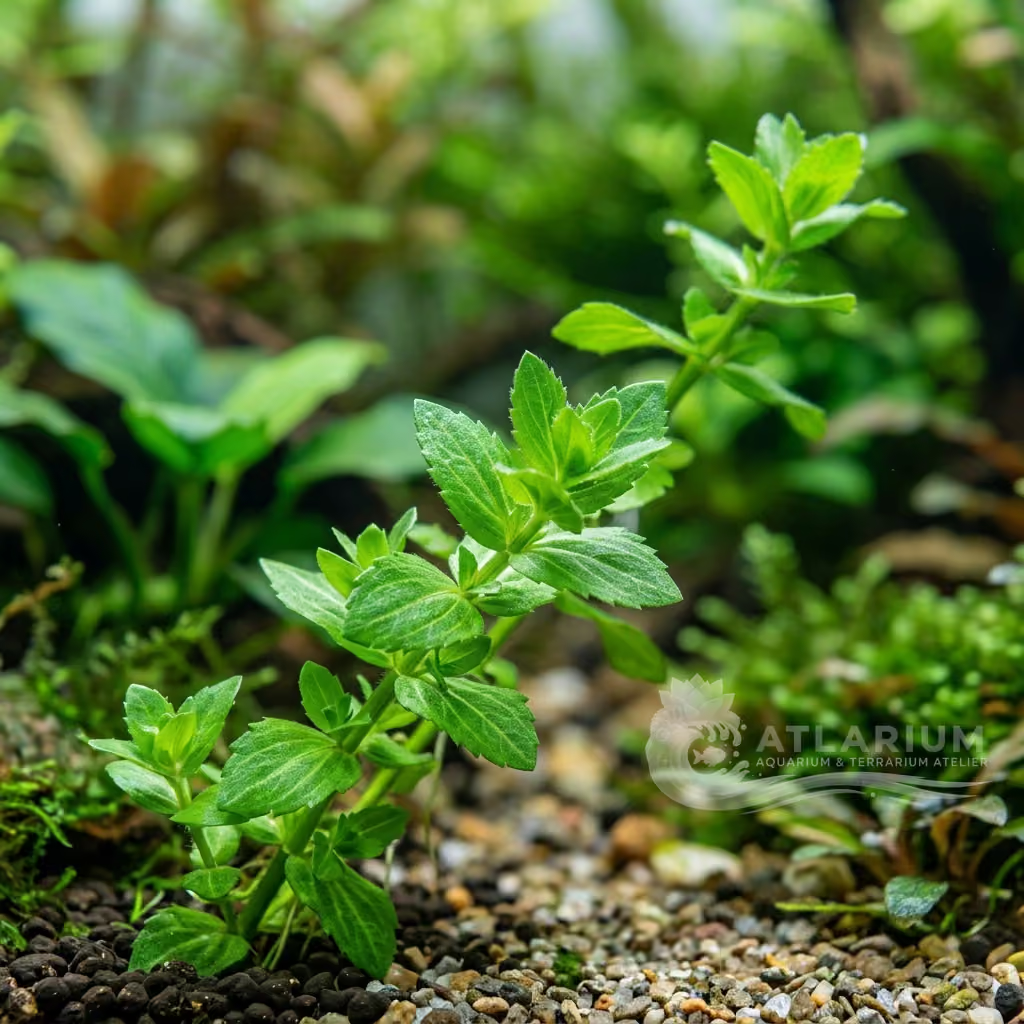
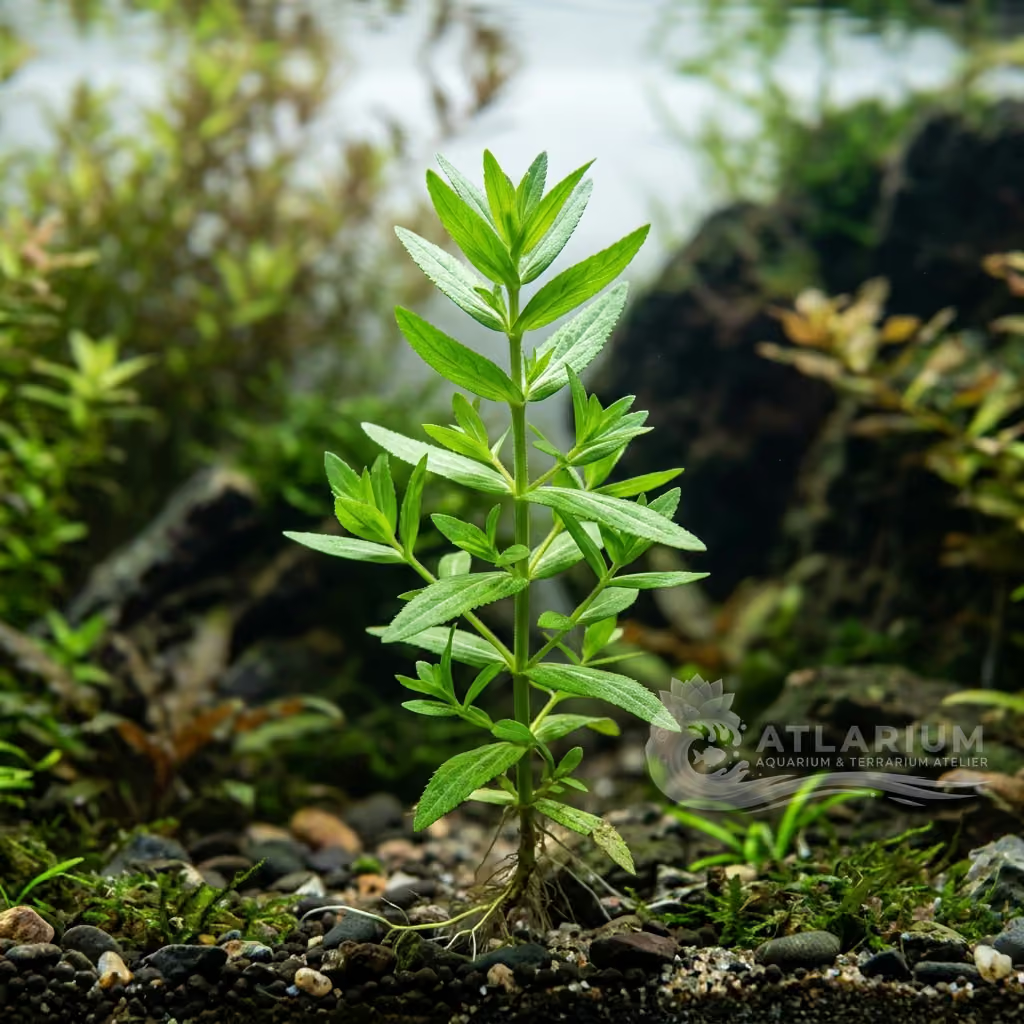
Physical Structure: The architecture of the "Compact" variant is incredibly dense and horizontal. It produces thick, fleshy stems that violently refuse to grow straight up. Instead, the stems crawl across the aquasoil, sending out tiny white rootlets at every node to anchor itself horizontally. The leaves are perfectly teardrop-shaped and fleshy, exactly like standard B. monnieri, but because the internodes are so short, the leaves are packed incredibly tightly together, creating a solid, impenetrable, cushion-like bush rather than a tall ladder.
Color & Texture: The entire dense bush is universally colored a highly vibrant, completely solid, opaque lime-green. The "Compact" mutation completely refuses to change color: no matter how intense the lighting or how heavily it is fertilized, it will stubbornly remain bright green and will never blush red or orange. The texture is notoriously fleshy, succulent, and rigid, making this creeping bush completely immune to being uprooted or damaged by aggressive bottom-dwelling fish like Corydoras or Plecos.

Care, breeding and tankmates
Lighting & CO2: It is an extremely versatile, low-tech friendly carpeting plant. It will easily survive and grow in dense bushes under low lighting. However, to force the plant to crawl aggressively across the substrate and form a true, dense foreground carpet, high-intensity LED lighting is heavily recommended. CO2 injection is absolutely not required for its survival, but injecting pressurized CO2 will massively accelerate its extremely slow creeping growth rate and force the bush to become impossibly thick.
Nutrition & Substrate: Because the "Compact" variant crawls horizontally and roots at every single leaf node, it is heavily dependent on substrate nutrition compared to standard vertical Bacopa. It MUST be planted in a high-quality, nutrient-dense aquasoil to form a proper carpet. If planted in sterile, inert gravel or sand, it will stubbornly refuse to crawl and will instead try to grow weakly upward or simply stagnate. It is an aggressive root feeder that constantly pulls macronutrients from the soil to fuel its creeping stems.
Water Chemistry: It inherited the absolute, bulletproof indestructibility of its wild ancestors. It thrives effortlessly in standard tropical temperatures (22-28°C) but is completely comfortable in unheated cold-water tanks. It entirely ignores chaotic fluctuations in pH, severe ammonia spikes, or extreme water hardness. It is arguably the easiest, most unkillable foreground/carpeting plant available in the entire global aquarium hobby, making it the perfect choice for absolute beginners attempting their first aquascape.
Space Management & Placement: Due to its crawling mutation and strict refusal to grow tall, it must be utilized exclusively as a foreground carpet or a midground detailing bush. You must plant the stems individually, laying them at a slight angle directly into the aquasoil in the very front of the aquarium. It will slowly creep outward, forming a pristine, incredibly dense, bright green cushion that perfectly transitions the sandy foreground into the taller midground rocks and wood.
Pruning: Pruning is a very simple but highly rewarding process. Because the internodes are so tight, you must use sharp, curved aquascaping scissors to simply give the bush a "haircut," snipping off the top 1-2 cm of the creeping stems to force them to branch horizontally. The cut tops can be immediately replanted back into the substrate to rapidly expand the carpet. Never pull the plant up to prune it, as the horizontal roots grip the aquasoil fiercely and will rip up the entire layout.
Risks & Diseases: It is entirely immune to biological diseases or melting. The only minor risk is extreme shading. Because the leaves are packed so densely together on the creeping stems, if the bush becomes too thick (over 3-4 cm tall), the bottom layers buried in the dense cushion will be starved of light, rot, and release the stems from the substrate. To prevent this, routinely trim the top of the bush to keep it low, flat, and allow light to penetrate the entire cushion.

Geographic origin and distribution
Bacopa monnieri "Compact" does not exist in the wild marshlands of Asia or the Americas. It is a highly specialized, genetically isolated mutation of the classic Bacopa monnieri, discovered and selectively bred in premium aquatic plant nurseries (specifically Tropica in Denmark). While its wild ancestor is an amphibious weed that shoots aggressively toward the water surface, this commercial cultivar was genetically selected for an anomaly in its cellular internodes, forcing the plant to drastically alter its biological growth habit while retaining the absolute indestructibility of the original wild species.
Origin
Selective breeding and cultivarsExtra-Amazon South AmericaCentral America and CaribbeanNorth AmericaSouth and Southeast AsiaAustralia, New Guinea, and Oceania

Plant profile
- Placement
- Foreground
- It is an excellent choice for the foreground or front-midground of the aquarium. Unlike the standard upright form, it tends to creep along the substrate when provided with strong light. Grouping multiple stems closely together creates a beautiful, low-growing green carpet or dense bush.
- Botanical form
- Stem
- This cultivar is characterized by shorter internodes and a tendency to grow laterally rather than vertically. The leaves are small, rounded, fleshy, and bright green. It forms dense, mat-like structures that hug the substrate when grown under optimal conditions.
- Growth
- Slow
- Its growth rate is relatively slow to moderate, making it a very manageable foreground plant. Once established, it steadily spreads horizontally, rooting at the nodes. It does not require frequent trimming, unlike many fast-growing carpet plants.
- Substrate
- High
- Bacopa monnieri 'Compact' demands a high-quality, nutrient-dense substrate to sustain its tight, low-growing, and densely foliated appearance. It develops a vigorous and widespread root system that anchors firmly into fine-grained aqua soil, aggressively absorbing essential macronutrients to support its condensed internodes. A substrate depth of 4 to 6 centimeters is crucial to accommodate its extensive root mass and prevent the dense clumps from lifting off the bottom. Regular substrate fertilization or a rich base layer is strongly advised, as nutrient depletion will cause it to lose its characteristic compact form and turn leggy.
- Column fertilization
- Recommended
- It readily absorbs nutrients through its leaves, responding well to liquid fertilizers. Regular dosing of potassium and trace elements keeps the small leaves looking healthy and vibrant. Maintaining good water flow ensures nutrients reach the dense lower foliage.
- Root fertilization
- Required
- Because it crawls and roots along the bottom, a nutrient-rich substrate significantly boosts its growth. Root tabs placed in the path of its spreading stems provide excellent localized nutrition. Strong root development anchors the carpet firmly to the ground.
- Trimming
- Regular
- Trimming is easy: simply cut the stems that are growing out of bounds or too tall. Snipping the tips encourages even more lateral branching, resulting in a thicker carpet. The trimmed pieces can be replanted into bare areas to fill out the patch.
- Propagation
- Cuttings
- Propagation is straightforward; any stem cutting with a few leaves can be replanted. Because it roots at every node touching the substrate, division is very easy. Simply pull up a section, cut it, and replant.
- Sensitivity
- LOW
- It is very forgiving and resilient, tolerating a wide range of water parameters. It is less prone to melting than delicate carpeting plants like HC Cuba. Ensure it is not heavily shaded by taller plants, as low light will cause it to stretch upwards.
- Layout role
- Midground, Foreground, Nano
- It serves as a fantastic, easy-care carpeting or foreground bush plant. Its slightly larger, rounded leaves contrast beautifully with fine-textured foreground grasses. It is ideal for transitioning from the substrate to taller midground plants.

Image gallery
Licensed images linked to the species or, when marked, to the closest representative taxon.

Related species
Recommendations grouped by close relatives, companion choices, and similar care.