Encyclopaedia

FishFreshwaterEasy
©AI Generated·Proprietary

Bloodfin tetra

Aphyocharax anisitsi

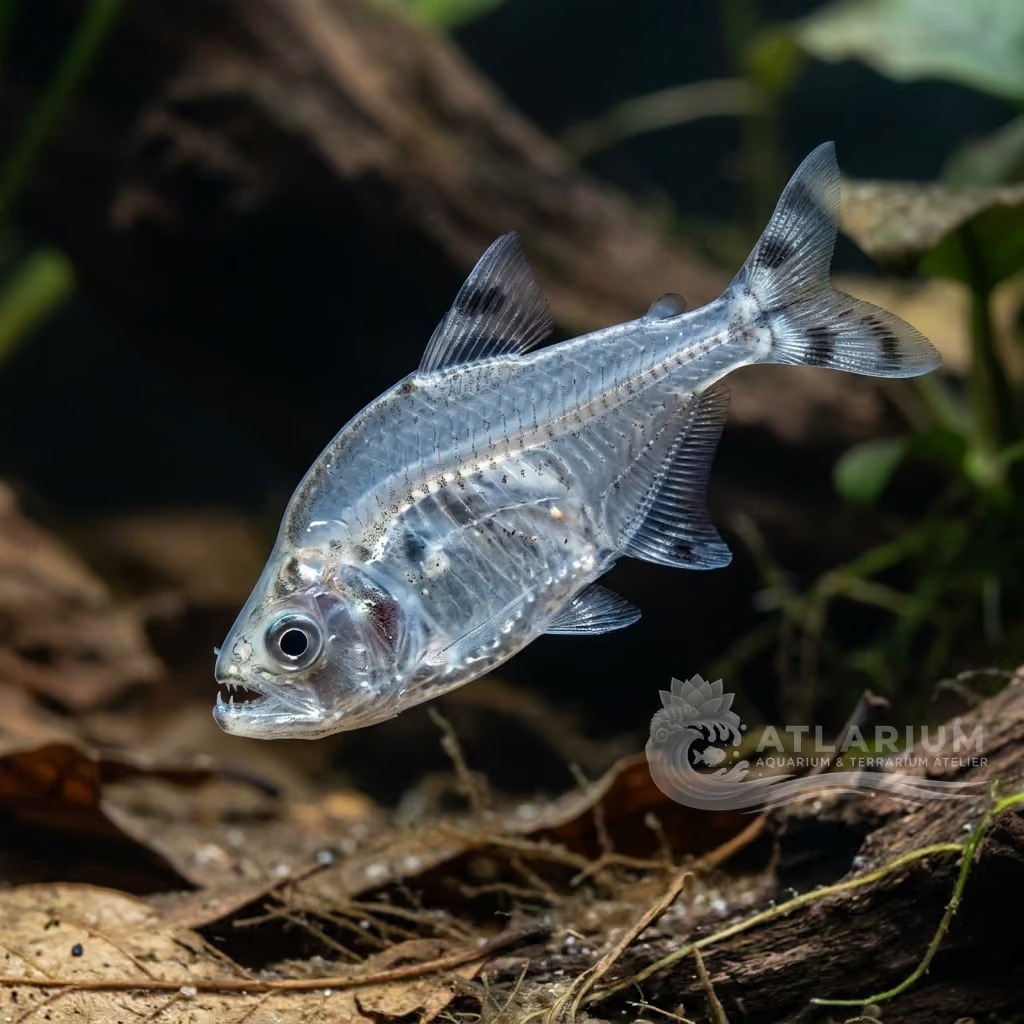
A tetra with a brilliant silver body and fins tinted in deep blood-red — spectacular in large schools under sidelight. Native to the Paraná basin and Argentina, it is one of the hardiest and longest-lived tetras: it can exceed 8 years with proper care and tolerates unusually low temperatures for a tropical (down to 18 °C). A fast, tireless swimmer, it enlivens the upper water column with ceaseless activity. A solid classic of fishkeeping, suitable for beginners and experts alike.

Taxonomy
Class:Actinopteri
Order:Characiformes
Family:Characidae
Genus:Aphyocharax
Species:Aphyocharax anisitsi

Share

Check out Bloodfin tetra on Atlarium

PracticeRecognition quizzesPhotos, names, origins, and puzzles to review Atlas species.Open quizzes
Water Temperature

18 - 28 °C

pH Value

6 - 8

Water type

Freshwater

Tank level

Surface and middle

Adult size

5 cm

Minimum tank volume

>= 80 L

Minimum group

>= 6

GH

5 - 25 dGH

KH

2 - 12 dKH

TDS

95 - 495 ppm

Conductivity

148 - 773 uS/cm

Species description

Geographical Origin and Habitat: Wide distribution in the Rio Paraná basin (southern Brazil, Argentina). Thrives in flooded alluvial plains, cold streams with moderate current, rich in shadows created by dense vegetation.
Taxonomy and Morphology: Bloodfin Tetra (Aphyocharax anisitsi). Fascinating small Characin of incredible agility. "Bullet" body, long and thin, made to make quick horizontal dashes in schools.
Social Behavior: Lively schooling fish in all respects. A group of less than 8 individuals leads to isolation and extreme shyness. When in a school, it darts in the mid-upper levels compacting immediately at the first alarm signal.
Coloration and Sexual Dimorphism: Essential and stunning style: metallic silver almost diaphanous body, abruptly interrupted by fiery blood red anal and caudal fins ("Bloodfin"). Females are slightly more swollen at the belly, males possess a microscopic imperceptible anal bristle.

Care, breeding and tankmates

Aquarium Setup: Long tank (at least 80-100 cm / 32-40 inches). It is the perfect species for the cold water aquarium without an internal heater. Plants must line the sides and the back so as not to hinder the central swimming space. Absolutely cover the tank (they jump!).
Diet and Feeding: Omnivore and greedy. Accepts dry foods right away (flakes and microgranules), but the blood red color will fade without a strong support of live or freeze-dried brine shrimp and tubifex to increase carotenoids.
Water Quality: Indestructible. Tolerant to an immense range of temperatures (lives serenely even at 18°C / 64°F) and hardnesses (up to 25 GH). Preferable not to keep them at Discus temperatures (30°C / 86°F) as it dramatically shortens their life expectancy.
Compatibility and Cohabitation: They represent a wonderful alternative to Cardinal Tetras in "Amazon-like" layouts at milder temperatures. Can be paired with "cold" Corydoras (C. paleatus, C. aeneus), Otocinclus, and small peaceful Cichlids (Gymnogeophagus).
Aquarium Breeding: Relatively easy among Tetras. One morning, the gravid females alongside the males dart into the dense vegetation scattering up to 300 transparent, non-adhesive eggs. Remove the parents instantly to prevent them from eating the eggs.
Risks and Diseases: The lack of straight space results in lethargy. They can contract Ich in case of heavy untreated temperature changes, although their baseline resistance is superior to that of 90% of other tropical characins.

Geographic Origin and Distribution

Wide distribution in the Rio Paraná basin (southern Brazil, Argentina). Thrives in flooded alluvial plains, cold streams with moderate current, rich in shadows created by dense vegetation.

Origin

Extra-Amazon South AmericaEast Asia

Fish profile

Temperament
Peaceful
Bloodfin tetras are generally peaceful, energetic, and highly active schooling fish that bring constant movement to the aquarium. They are not aggressive by nature, but their fast-swimming style can sometimes stress very shy or slow-moving tank mates. If kept in too small a group, they may exhibit mild fin-nipping behavior due to frustration or boredom. When housed in an adequate shoal, their focus remains on each other, resulting in peaceful coexistence with other community species.
Diet
Omnivore
In their natural habitat, bloodfin tetras are opportunistic omnivores feeding on small insects, crustaceans, and plant matter. In captivity, they are unfussy eaters that will readily accept high-quality dried flakes, granules, or micro-pellets. To encourage vibrant coloration and optimal health, their diet should be regularly supplemented with live or frozen foods. Offerings such as daphnia, brine shrimp, and bloodworms are highly beneficial and eagerly consumed.
Life expectancy
5-10 years
In a well-maintained home aquarium, the bloodfin tetra is a remarkably hardy and long-lived species. They typically live between five and eight years under optimal care, with some individuals reaching up to ten years. Achieving this maximum lifespan requires consistent water quality, a stress-free environment in a proper school, and a varied, high-quality diet. Their lifespan can be significantly shortened by poor water conditions or the stress of being kept in numbers too small.
Sex ratio
Group
When stocking bloodfin tetras, there is no strict male-to-female ratio required, as they do not form harems or territorial pairs. Instead, they should be purchased as a mixed-sex group of at least six, and ideally ten or more, individuals. Keeping them in a larger group helps distribute any minor conspecific aggression and ensures they display natural shoaling behavior. In larger groups, males will engage in harmless sparring and showing off their vibrant red fins without causing injury.
Feeding frequency
Twice daily
Bloodfin tetras should be fed small amounts once or twice daily, providing only what they can fully consume within two to three minutes. Because they are active swimmers with fast metabolisms, regular feeding keeps their energy levels high and colors vibrant. Care should be taken not to overfeed, as uneaten food will sink to the bottom and quickly degrade water quality. Occasional fasting for one day a week can also help maintain their digestive health.
Bioload
Low to Medium
An individual bloodfin tetra has a relatively low biological waste impact due to its small adult size of around two inches. However, because they are schooling fish that must be kept in groups of at least six to eight individuals, their cumulative bioload is low-medium. To keep the water parameters stable and prevent waste accumulation, a reliable filter system with mechanical and biological filtration is recommended. Regular water changes of ten to fifteen percent weekly or twenty percent biweekly are essential to maintain low nitrate levels.
Flow
Strong
These tetras prefer a moderate water flow that mimics the gently moving waters of their native river basins. While they are strong swimmers that can handle moderate to strong currents, they should also have access to calm areas where they can rest. A standard filter outlet or spray bar can easily generate the desired circulation without exhausting the fish. Integrating tall plants and decorations helps break up the current, creating ideal low-flow resting zones.
Jump risk
Yes
Due to their highly active and sometimes skittish nature, bloodfin tetras carry a high risk of jumping out of the aquarium. They can easily leap out of the water if startled by sudden movements, lights turning on, or during playful chases. It is highly recommended to equip their tank with a tight-fitting cover or lid without any gaps. Floating plants can also help cover the water surface, providing a natural barrier and making the fish feel more secure.
Reproduction
Oviparous
Reproduction of bloodfin tetras is relatively straightforward and achievable for hobbyists. They are egg-scatterers that spawn in groups or pairs, often leaping slightly out of the water to deposit eggs on plants. A separate breeding tank equipped with spawning mops or fine-leaved plants like Java moss is necessary to protect the eggs. The parents must be removed immediately after spawning, as they will readily consume their own eggs and fry, which hatch in about twenty-four to thirty-six hours.
Compatibility & tankmates
Peaceful
The bloodfin tetra is an excellent candidate for a community aquarium with other active and peaceful species of similar size. Ideal tank mates include other hardy tetras, rasboras, corydoras catfish, danios, and peaceful dwarf cichlids. However, they should not be housed with slow-moving or long-finned species, such as angelfish or guppies, as the tetras may nip at their fins. Extremely small shrimp might also be viewed as food, though adult dwarf shrimp are usually safe in well-planted tanks.
Tank level
Top/Middle
Bloodfin tetras are active swimmers that primarily occupy the middle and upper levels of the water column. They are rarely seen resting on the bottom, preferring instead to navigate open spaces and dart among floating or tall plants near the surface. Providing a tank with plenty of open swimming area in these upper zones is crucial to accommodate their energetic behavior. High-growing stem plants and floating vegetation can offer security without obstructing their preferred swimming paths.

Window to the official scientific data of the species

Data synced on: 06/15/2026

Scientific Parameters & Models

Trophic level
3.2 ± 0.37 se
Resilience
Medium (1.4 - 4.4 years)
Phylogenetic uniqueness (PD50)
0.5005
Bayesian Length-Weight
a = 0.01122, b = 3.04
VulnerabilityLow vulnerability (10 / 100)

Image gallery

Licensed images linked to the species or, when marked, to the closest representative taxon.

Related species

Recommendations grouped by close relatives, companion choices, and similar care.

Variants and close relatives

Same atlas type, nearby scientific identity, genus, or family.

Goldencrown tetra

Goldencrown tetra

Aphyocharax alburnus

View details->
Amazon red-tail tetra

Amazon red-tail tetra

Aphyocharax dentatus

View details->
Dawn tetra

Dawn tetra

Aphyocharax nattereri

View details->
Buenos Aires Tetra

Buenos Aires Tetra

Hyphessobrycon anisitsi

View details->
Blind Cave Tetra

Blind Cave Tetra

Astyanax mexicanus

View details->
Blackline Tetra

Blackline Tetra

Hyphessobrycon scholzei

View details->
Luetken's Tetra

Luetken's Tetra

Hyphessobrycon luetkenii

View details->
Mayan Tetra

Mayan Tetra

Hyphessobrycon compressus

View details->
Head-and-tail Light Tetra

Head-and-tail Light Tetra

Hemigrammus ocellifer

View details->
Silvertip tetra

Silvertip tetra

Hasemania nana

View details->
Bass Tetra

Bass Tetra

Hemigrammus marginatus

View details->
Black Phantom Tetra

Black Phantom Tetra

Hyphessobrycon megalopterus

View details->
Pink-tailed Chalceus

Pink-tailed Chalceus

Chalceus macrolepidotus

View details->
Lemon tetra

Lemon tetra

Hyphessobrycon pulchripinnis

View details->
Balbus Tetra

Balbus Tetra

Hyphessobrycon balbus

View details->
Cochu's Blue Tetra

Cochu's Blue Tetra

Boehlkea fredcochui

View details->

Recommended companions

Compatible cards from coherent ecosystems with matching parameters.

Azolla caroliniana
Plant

Azolla caroliniana

Azolla caroliniana

View details->
Azolla mexicana
Plant

Azolla mexicana

Azolla mexicana

View details->
Acorus gramineus 'Pusillus'
Plant

Acorus gramineus 'Pusillus'

Acorus gramineus 'Pusillus'

View details->
Orange dwarf crayfish (CPO)
Invertebrate

Orange dwarf crayfish (CPO)

Cambarellus patzcuarensis "Orange"

View details->
Bacopa sp. "Japan"
Plant

Bacopa sp. "Japan"

Bacopa sp. "Japan"

View details->
Anubias barteri var. nana 'Round Leaf'
Plant

Anubias barteri var. nana 'Round Leaf'

Anubias barteri var. nana 'Round Leaf'

View details->
Anubias congensis
Plant

Anubias congensis

Anubias congensis

View details->
Anubias gigantea
Plant

Anubias gigantea

Anubias gigantea

View details->
Anubias lanceolata
Plant

Anubias lanceolata

Anubias lanceolata

View details->
Anubias minima
Plant

Anubias minima

Anubias minima

View details->
Ramshorn Snail
Invertebrate

Ramshorn Snail

Planorbella duryi

View details->
Anubias
Plant

Anubias

Anubias barteri

View details->
Anubias nana
Plant

Anubias nana

Anubias barteri var. nana

View details->
Montezuma dwarf crayfish
Invertebrate

Montezuma dwarf crayfish

Cambarellus montezumae

View details->
Green babaulti shrimp
Invertebrate

Green babaulti shrimp

Caridina cf. babaulti "Green"

View details->
White Pearl Shrimp
Invertebrate

White Pearl Shrimp

Neocaridina zhangjiajiensis var. White

View details->

Similar care

Cards with similar requirements, difficulty, habitat, and husbandry profile.

Bronze cory

Bronze cory

Corydoras aeneus

View details->
Yellow tetra

Yellow tetra

Hyphessobrycon bifasciatus

View details->
Langean's Tetra

Langean's Tetra

Hyphessobrycon langeanii

View details->
January tetra

January tetra

Hemigrammus hyanuary

View details->
Ulrey's tetra

Ulrey's tetra

Hemigrammus ulreyi

View details->
Flame tetra

Flame tetra

Hyphessobrycon flammeus

View details->
Gold Barb

Gold Barb

Barbodes semifasciolatus

View details->
Blueberry Tetra

Blueberry Tetra

Hyphessobrycon wadai

View details->
Zebrafish

Zebrafish

Danio rerio

View details->
Black neon tetra

Black neon tetra

Hyphessobrycon herbertaxelrodi

View details->
Black skirt tetra

Black skirt tetra

Gymnocorymbus ternetzi

View details->
One-line Tetra

One-line Tetra

Hemigrammus unilineatus

View details->
Rosy Barb

Rosy Barb

Pethia conchonius

View details->
Smudge Spot Cory

Smudge Spot Cory

Corydoras similis

View details->
Amapá tetra

Amapá tetra

Hyphessobrycon amapaensis

View details->
Ecuador tetra

Ecuador tetra

Hyphessobrycon ecuadoriensis

View details->
Last updated: 06/30/2026
Bloodfin tetra (Aphyocharax anisitsi) Care Guide & Tank Setup | Atlarium