Encyclopaedia

FishFreshwaterEasy
©AI Generated·Proprietary

Yellow tetra

Hyphessobrycon bifasciatus

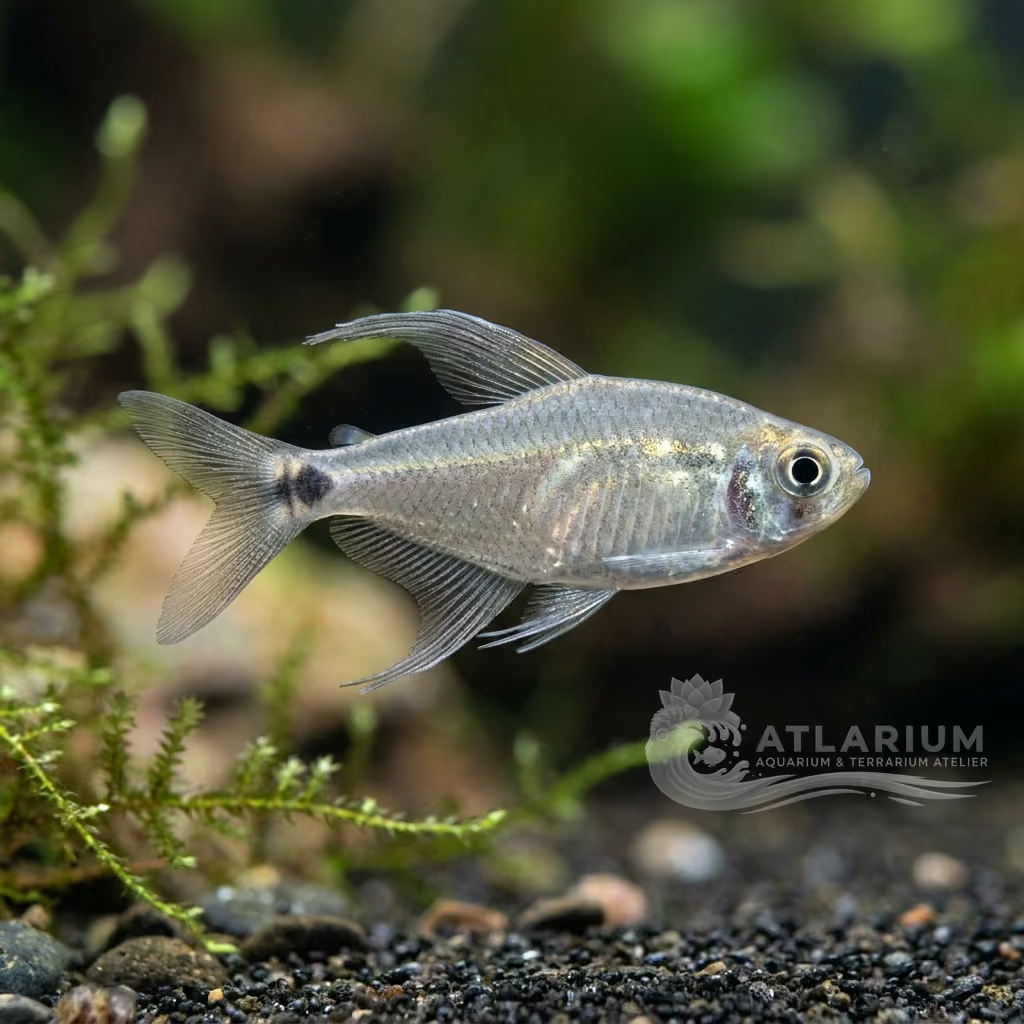
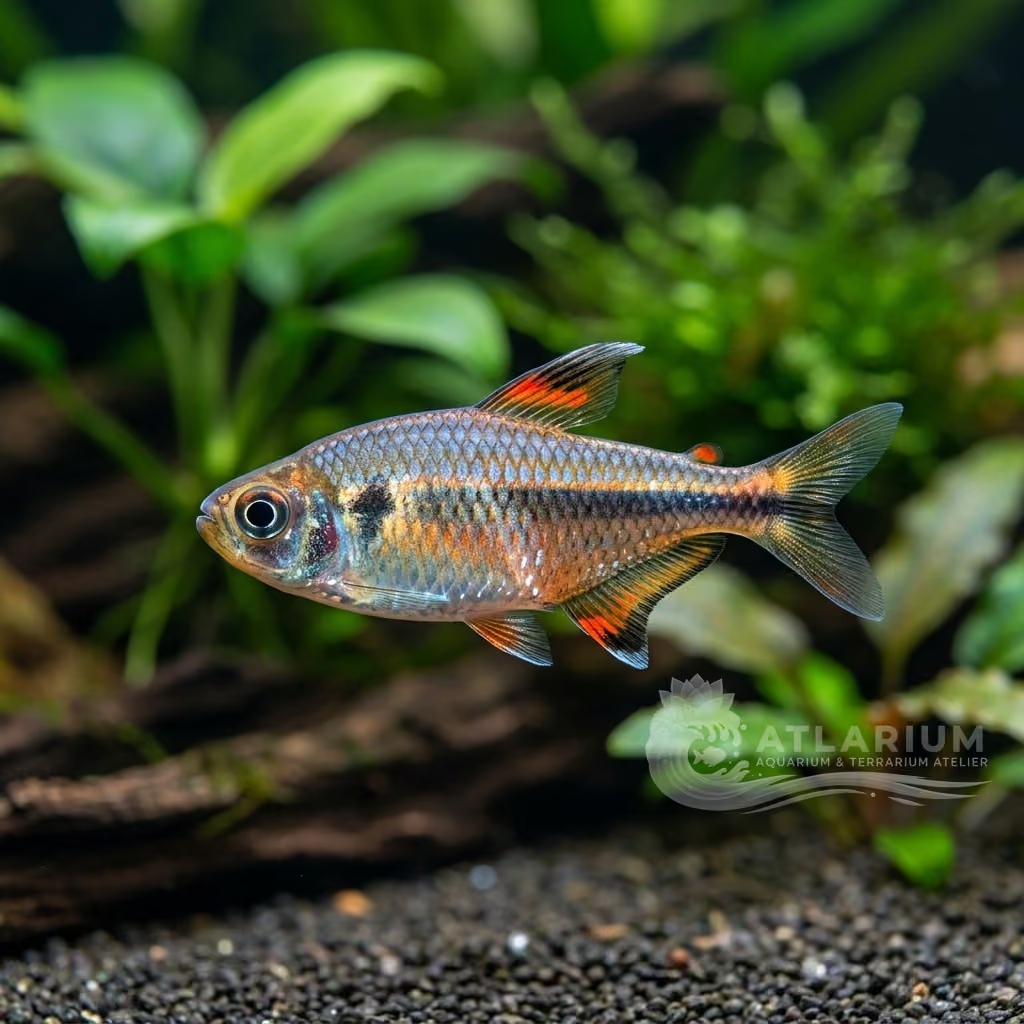
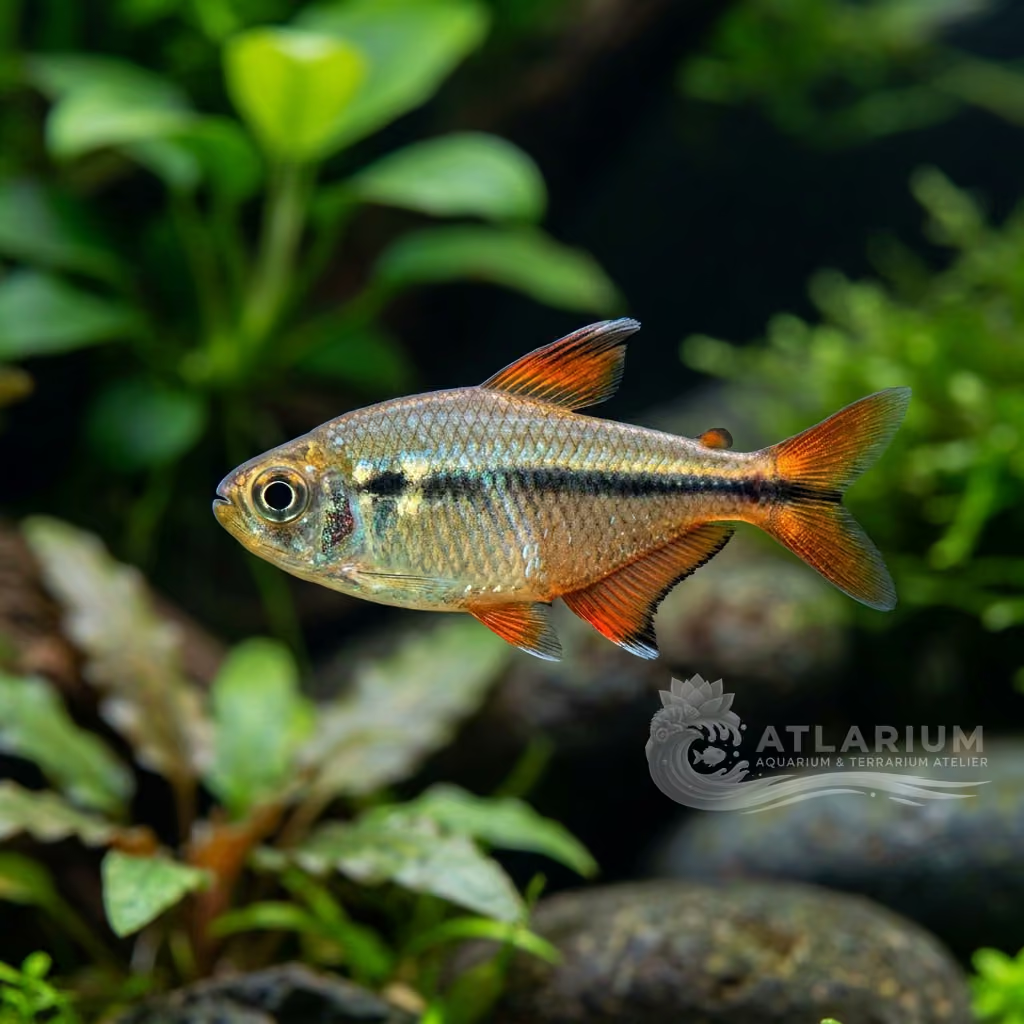
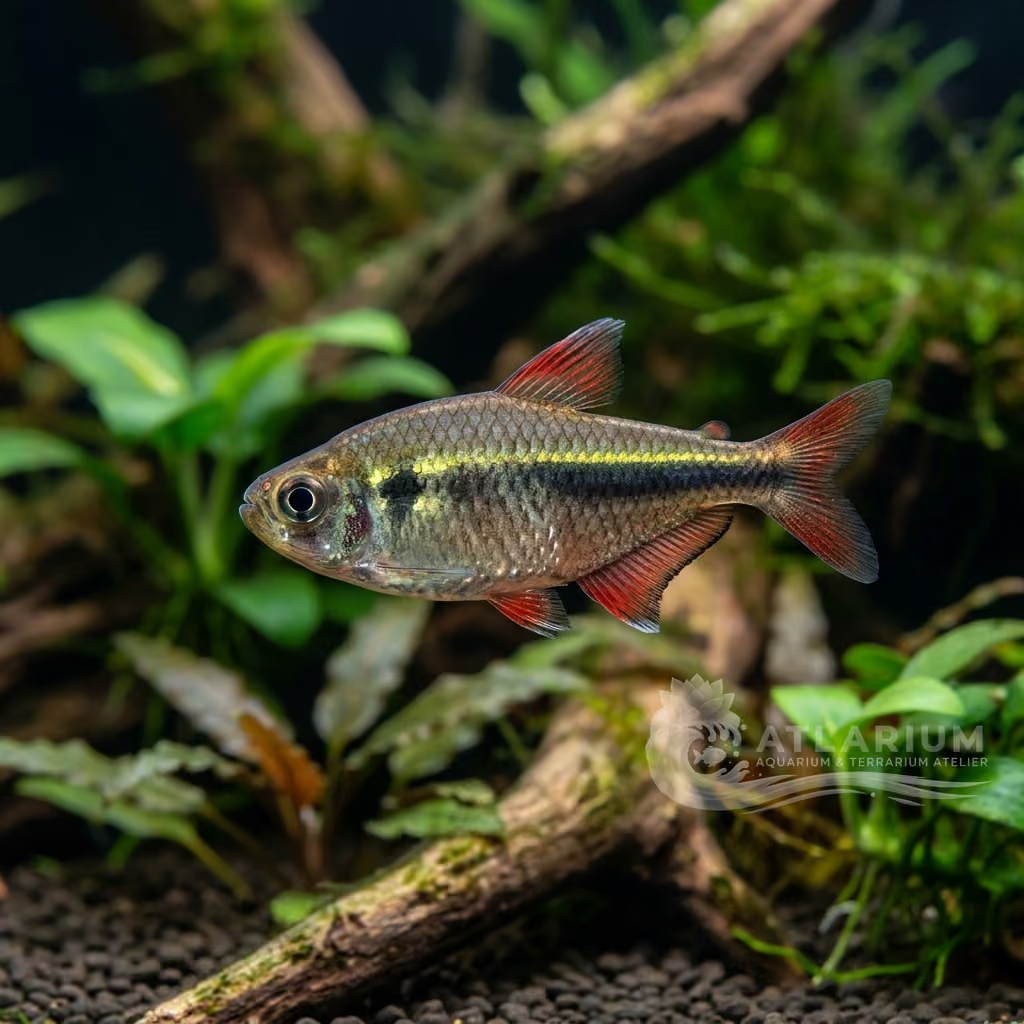
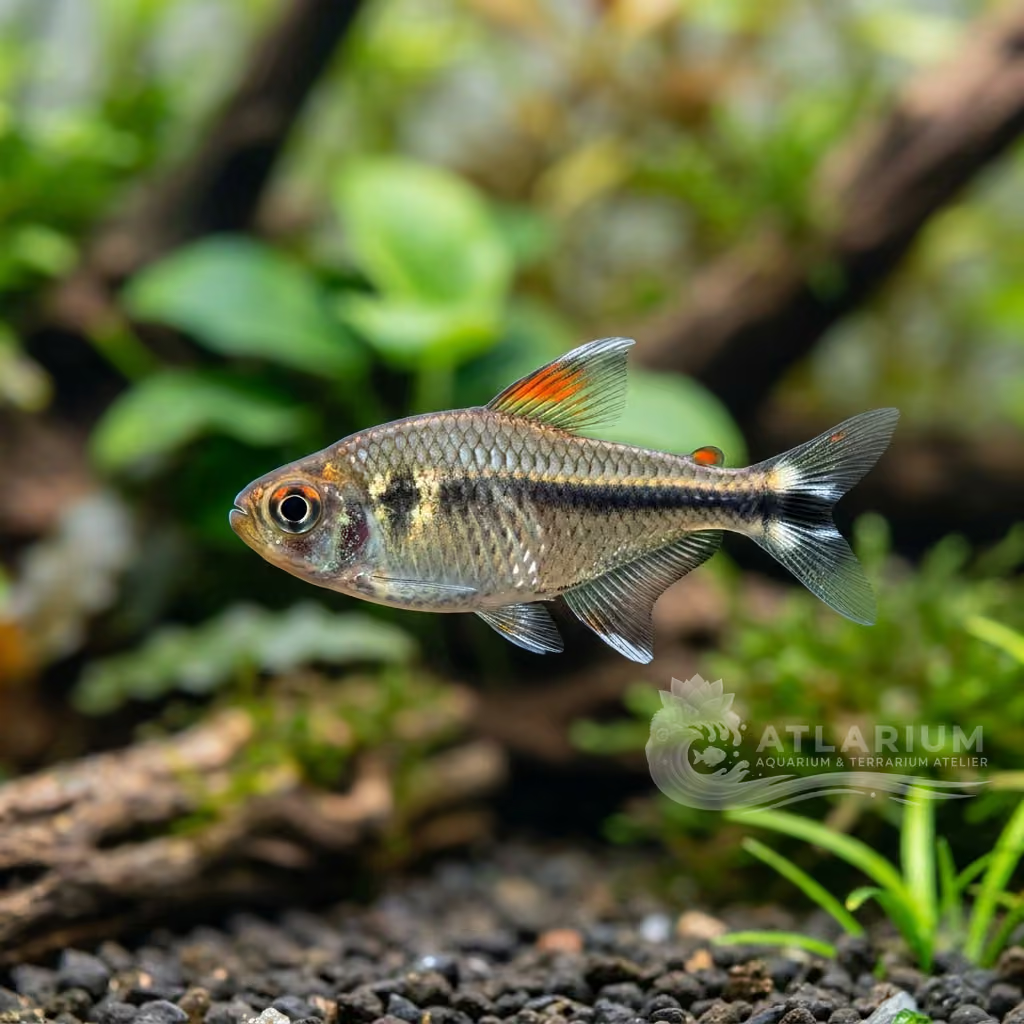
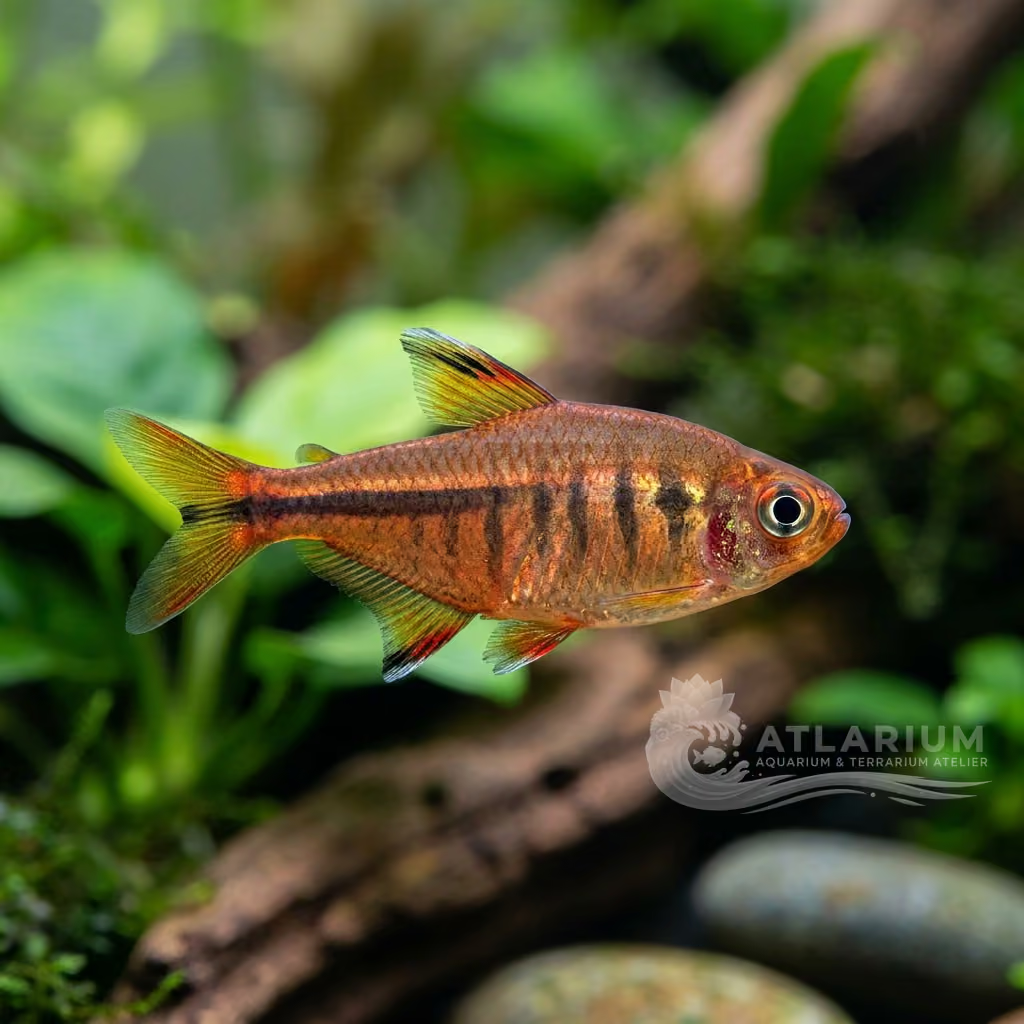
A tetra with golden-yellow hues glowing on fins and silver body, with two thin dark lateral bands. Native to coastal river systems of southeastern Brazil, it is a robust, adaptable tetra that tolerates a wide parameter range. Peculiarity: wild specimens may show golden coloration caused by a trematode parasite of the natural biotope — a harmless, purely aesthetic phenomenon absent in captive-bred specimens. Prefers slightly cooler temperatures (20–25 °C) than the tropical average. Breeding among the easiest for characids.

Taxonomy
Class:Actinopteri
Order:Characiformes
Family:Characidae
Genus:Hyphessobrycon
Species:Hyphessobrycon bifasciatus

Share

Check out Yellow tetra on Atlarium

PracticeRecognition quizzesPhotos, names, origins, and puzzles to review Atlas species.Open quizzes
Water Temperature

21 - 26 °C

pH Value

5.5 - 7.5

Water type

Freshwater

Tank level

Middle

Adult size

4.7 cm

Minimum tank volume

>= 55 L

Minimum group

>= 6

GH

7 - 40 dGH

KH

3 - 20 dKH

TDS

135 - 800 ppm

Conductivity

211 - 1,250 uS/cm

Species description

Geographical Origin and Habitat: Endemic to the highly varied river basins of southeastern Brazil, specifically the coastal drainages and the massive Paraná River system. Hyphessobrycon bifasciatus (the Yellow Tetra) naturally colonizes an incredibly wide range of habitats, from slow-moving, deeply shaded blackwater swamps heavily choked with vegetation, to clear, sunlit, fast-flowing streams running over rocky and sandy substrates.
Taxonomy and Morphology: Scientifically classified within the Characidae family, it belongs to the massive Hyphessobrycon genus. Taxonomically, its specific name "bifasciatus" directly translates to "two-banded," which perfectly references the two distinct vertical dark marks located just behind its gills. Morphologically, it possesses a deep, slightly stocky, laterally compressed body, distinguishing it from the sleek, torpedo-shaped tetras. It possesses the classic characin adipose fin.
Social Behavior: They are exceptionally peaceful, highly active, and strictly obligate schooling fish. To feel psychologically secure and display natural behavior, they must be kept in a massive group (absolute minimum 8-10, ideally 15+). When kept in inadequate numbers, they become fearful, wash out their colors, and hide constantly. Within a large school, they are confident mid-water dwellers, constantly engaging in harmless, rapid-fire hierarchical chasing.
Coloration and Sexual Dimorphism: Sexual dimorphism is subtle; fully mature females are noticeably larger, broader, and possess a significantly deeper, plumper belly, especially when gravid. The coloration gives the fish its common name. The base body is an iridescent, translucent, metallic silvery-yellow or brilliant gold. The defining features are the two vertical dark bars (fasciae) behind the operculum (gill cover) and a stunning flash of brilliant red in the upper half of the iris.

Care, breeding and tankmates

Aquarium Setup: The aquarium architecture must provide a secure, heavily structured environment to bring out their glowing yellow coloration. A minimum 60-liter tank is required for a school. The layout MUST include dense thickets of tall background plants (like Vallisneria or Amazon Swords) and extensive driftwood tangles to provide secure hiding places. However, the entire central water column must remain completely wide open, as they are tireless, active swimmers.
Diet and Feeding: In their natural Brazilian tributaries, they are ravenous, opportunistic omnivores, feeding constantly on terrestrial insects, aquatic larvae, microscopic crustaceans, and soft plant matter. In captivity, they are phenomenally unfussy eaters. They readily accept high-quality flakes and micro-pellets. However, for optimal health and to intensely enhance their metallic yellow coloration, their diet MUST be heavily supplemented with frozen bloodworms, daphnia, and spirulina.
Water Quality: Originating from highly variable coastal drainages, they are incredibly hardy, forgiving, and highly adaptable. They thrive in standard tropical temperatures (20-26°C) and can easily adapt to a wide range of water parameters, making them excellent for beginner aquarists. They tolerate slightly acidic to slightly alkaline water (pH 6.0 - 7.5). Because they are highly active, they produce a moderate bio-load and require efficient biological filtration.
Compatibility and Cohabitation: They are the quintessential, ultra-peaceful community fish. They can be housed with virtually any peaceful, similarly sized species. Excellent tankmates include other South American characins (Neon Tetras, Rummy-nose Tetras), dwarf cichlids (Apistogramma, Rams), peaceful barbs, and bottom-dwellers (Corydoras, Plecos). You MUST avoid housing them with massive, aggressive predators (like Oscars or large Angelfish) which will easily swallow them whole.
Aquarium Breeding: Breeding is exceptionally easy, making them ideal for beginners attempting tetra breeding. They are prolific egg-scatterers. To induce breeding, condition a pair with live foods and move them to a separate, dimly lit breeding tank filled with fine-leaved plants (like Java Moss). Following a frantic, high-speed courtship through the plants, the female scatters hundreds of adhesive eggs. The adults are ravenous egg-eaters and MUST be removed immediately post-spawning.
Risks and Diseases: Physically, they are virtually indestructible and highly disease-resistant if kept in a properly maintained aquarium. The greatest risk is keeping them in small numbers (under 6), which leads to severe psychological stress, a compromised immune system, and extreme lethargy. Medically, they are susceptible to standard freshwater diseases like Ich (white spot) if subjected to severe, sudden temperature drops or profound neglect of water quality.

Geographic Origin and Distribution

Endemic to the highly varied river basins of southeastern Brazil, specifically the coastal drainages and the massive Paraná River system. Hyphessobrycon bifasciatus (the Yellow Tetra) naturally colonizes an incredibly wide range of habitats, from slow-moving, deeply shaded blackwater swamps heavily choked with vegetation, to clear, sunlit, fast-flowing streams running over rocky and sandy substrates.

Origin

Extra-Amazon South America

Fish profile

Temperament
Peaceful
This is a highly peaceful and somewhat shy species that thrives in a calm environment. They are a schooling fish that relies on the presence of conspecifics to feel safe and exhibit their best behavior. When kept in sufficiently large groups, they are active and inquisitive without ever bothering tank mates.
Diet
Omnivore
This species is an opportunistic omnivore that will easily accept a wide variety of aquarium foods. A staple diet of high-quality flakes or pellets should be provided daily. For optimal health and coloration, supplement with frozen or live foods such as bloodworms and brine shrimp.
Sex ratio
School
Maintaining a proper sex ratio is less critical for this species compared to some others, as they are a schooling fish. Keeping them in groups of at least eight to ten individuals ensures natural behavior and reduces stress. Having a mix of males and females can help diffuse any minor squabbles among displaying males.
Feeding frequency
Twice daily
These active fish benefit from multiple small feedings throughout the day rather than one large meal. Feeding them two to three times daily with amounts they can consume in under two minutes is ideal. This schedule helps prevent bloating and keeps water parameters stable by reducing uneaten food.
Bioload
Low
This species produces a very minimal bioload due to its small physical size. It is highly suitable for smaller aquariums or heavily planted setups. However, standard filtration and regular water changes remain essential.
Flow
Strong
Originating from slow-moving tributaries and forested pools, they prefer gentle to moderate water currents. High flow environments can quickly exhaust these fish and cause them significant stress. A sponge filter or a baffled hang-on-back filter provides the perfect amount of water movement.
Jump risk
No
Reproduction
Oviparous
They are egg scatterers that do not provide any parental care to their offspring after spawning. To encourage breeding, a separate tank with soft, slightly acidic water and fine-leaved plants is required. Once eggs are laid and fertilized, the adult fish must be removed promptly to prevent them from eating the eggs.
Compatibility & tankmates
Community
This species is exceptionally peaceful and does well in community tanks with other small, non-aggressive fish. They should never be kept with large or boisterous species that might view them as food. Ideal tank mates include small rasboras, Corydoras catfish, and peaceful dwarf cichlids.
Tank level
Middle
This species primarily occupies the middle region of the aquarium water column during normal activities. They are active swimmers that appreciate ample open swimming space in the center of the tank. They will frequently dart in and out of plant thickets or hardscape for cover when resting.

Window to the official scientific data of the species

Data synced on: 06/15/2026

Scientific Parameters & Models

Trophic level
2.9 ± 0.3 se
Resilience
High (less than 15 months)
Phylogenetic uniqueness (PD50)
0.5
Bayesian Length-Weight
a = 0.01202, b = 3.09
VulnerabilityLow vulnerability (10 / 100)

Image gallery

Licensed images linked to the species or, when marked, to the closest representative taxon.

Related species

Recommendations grouped by close relatives, companion choices, and similar care.

Variants and close relatives

Same atlas type, nearby scientific identity, genus, or family.

Lemon tetra

Lemon tetra

Hyphessobrycon pulchripinnis

View details->
Blueberry Tetra

Blueberry Tetra

Hyphessobrycon wadai

View details->
Mayan Tetra

Mayan Tetra

Hyphessobrycon compressus

View details->
Flame tetra

Flame tetra

Hyphessobrycon flammeus

View details->
Serpae Tetra (Red Minor Tetra)

Serpae Tetra (Red Minor Tetra)

Hyphessobrycon eques

View details->
Blackline Tetra

Blackline Tetra

Hyphessobrycon scholzei

View details->
Balbus Tetra

Balbus Tetra

Hyphessobrycon balbus

View details->
Franke's Tetra

Franke's Tetra

Hyphessobrycon frankei

View details->
Luetken's Tetra

Luetken's Tetra

Hyphessobrycon luetkenii

View details->
Loreto Tetra

Loreto Tetra

Hyphessobrycon loretoensis

View details->
Buenos Aires Tetra

Buenos Aires Tetra

Hyphessobrycon anisitsi

View details->
Mutabilis Tetra

Mutabilis Tetra

Hyphessobrycon mutabilis

View details->
Black neon tetra

Black neon tetra

Hyphessobrycon herbertaxelrodi

View details->
Black Phantom Tetra

Black Phantom Tetra

Hyphessobrycon megalopterus

View details->
Diancema Tetra

Diancema Tetra

Hyphessobrycon

View details->
Reticulated Tetra

Reticulated Tetra

Hyphessobrycon reticulatus

View details->

Recommended companions

Compatible cards from coherent ecosystems with matching parameters.

Bucephalandra pygmaea "Bukit Kelam / Sintang"
Plant

Bucephalandra pygmaea "Bukit Kelam / Sintang"

Bucephalandra pygmaea "Bukit Kelam / Sintang"

View details->
Bucephalandra pygmaea "Kapit"
Plant

Bucephalandra pygmaea "Kapit"

Bucephalandra pygmaea "Kapit"

View details->
Bucephalandra sordidula
Plant

Bucephalandra sordidula

Bucephalandra sordidula

View details->
Bucephalandra sp. "Bodok"
Plant

Bucephalandra sp. "Bodok"

Bucephalandra sp. "Bodok"

View details->
Bucephalandra sp. "Braun-rot narrow"
Plant

Bucephalandra sp. "Braun-rot narrow"

Bucephalandra sp. "Braun-rot narrow"

View details->
Bucephalandra sp. "Braun-rot" ("Serimbu")
Plant

Bucephalandra sp. "Braun-rot" ("Serimbu")

Bucephalandra sp. "Braun-rot"

View details->
Bucephalandra sp. "Gunung Sumpit"
Plant

Bucephalandra sp. "Gunung Sumpit"

Bucephalandra sp. "Gunung Sumpit"

View details->
Bucephalandra sp. "Kedagang"
Plant

Bucephalandra sp. "Kedagang"

Bucephalandra sp. "Kedagang"

View details->
Barbula sp.
Plant

Barbula sp.

Barbula sp.

View details->
Amblystegiaceae sp. "Manaus"
Plant

Amblystegiaceae sp. "Manaus"

Amblystegiaceae sp. "Manaus"

View details->
Arrowhead Anubias
Plant

Arrowhead Anubias

Anubias hastifolia

View details->
Azolla caroliniana
Plant

Azolla caroliniana

Azolla caroliniana

View details->
Azolla mexicana
Plant

Azolla mexicana

Azolla mexicana

View details->
Ammannia latifolia
Plant

Ammannia latifolia

Ammannia latifolia

View details->
Bacopa sp. "Japan"
Plant

Bacopa sp. "Japan"

Bacopa sp. "Japan"

View details->
Bolbitis heteroclita
Plant

Bolbitis heteroclita

Bolbitis heteroclita

View details->

Similar care

Cards with similar requirements, difficulty, habitat, and husbandry profile.

Ulrey's tetra

Ulrey's tetra

Hemigrammus ulreyi

View details->
Silvertip tetra

Silvertip tetra

Hasemania nana

View details->
Amapá tetra

Amapá tetra

Hyphessobrycon amapaensis

View details->
Bloodfin tetra

Bloodfin tetra

Aphyocharax anisitsi

View details->
Langean's Tetra

Langean's Tetra

Hyphessobrycon langeanii

View details->
Epicharis Tetra

Epicharis Tetra

Hyphessobrycon epicharis

View details->
Vilma's Tetra

Vilma's Tetra

Hyphessobrycon vilmae

View details->
Dawn tetra

Dawn tetra

Aphyocharax nattereri

View details->
Black skirt tetra

Black skirt tetra

Gymnocorymbus ternetzi

View details->
Glowlight tetra

Glowlight tetra

Hemigrammus erythrozonus

View details->
Checker Barb

Checker Barb

Oliotius oligolepis

View details->
Agulha Tetra

Agulha Tetra

Hyphessobrycon agulha

View details->
January tetra

January tetra

Hemigrammus hyanuary

View details->
One-line Tetra

One-line Tetra

Hemigrammus unilineatus

View details->
Ecuador tetra

Ecuador tetra

Hyphessobrycon ecuadoriensis

View details->
Flag Tetra

Flag Tetra

Hyphessobrycon heterorhabdus

View details->
Last updated: 06/30/2026
Yellow tetra (Hyphessobrycon bifasciatus) Care Guide & Tank Setup | Atlarium