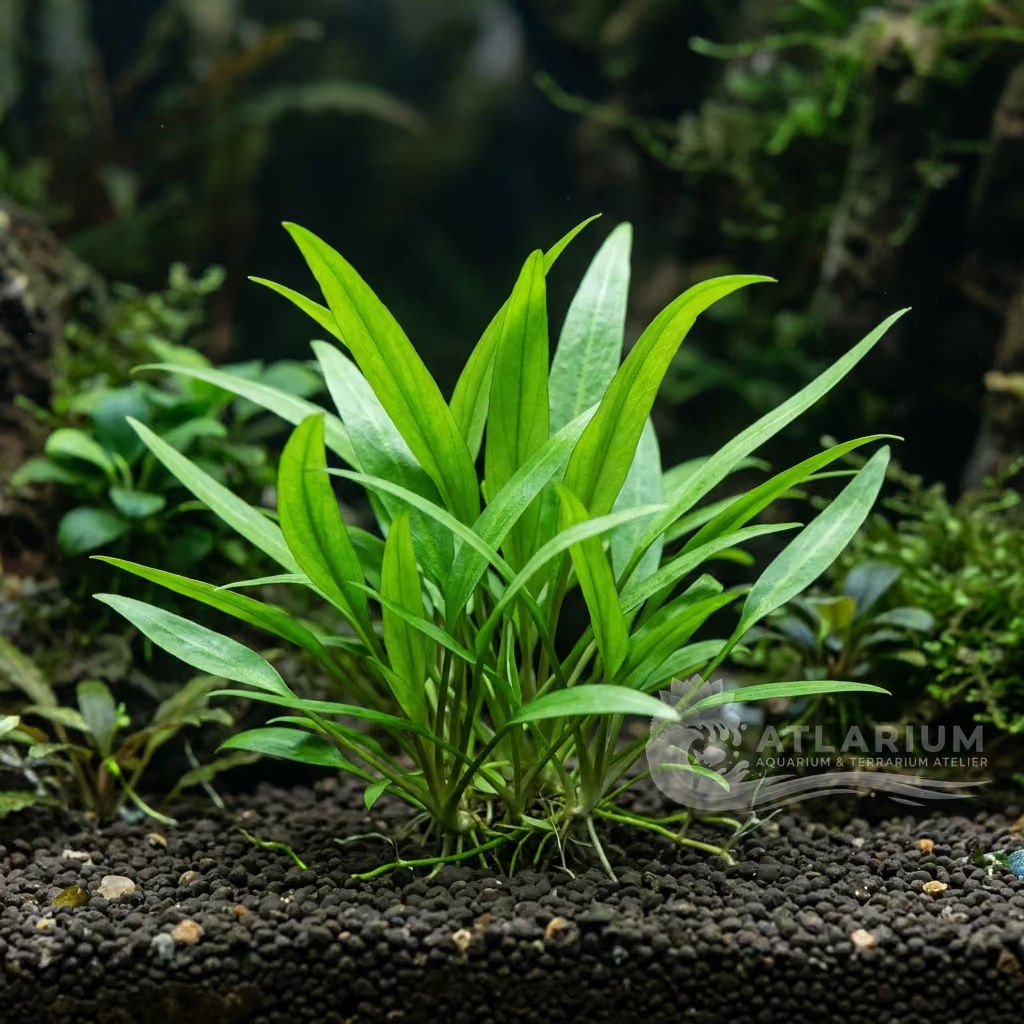
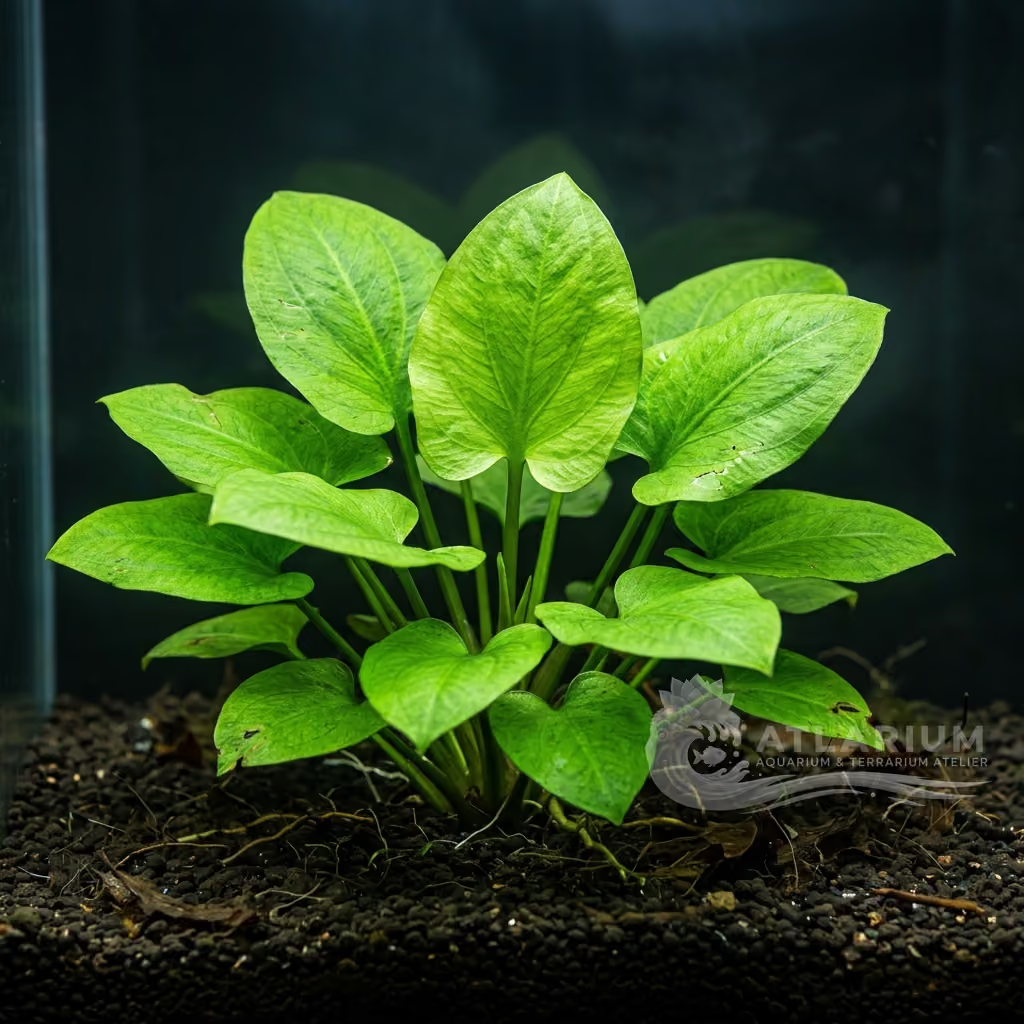
Bucephalandra sp. "Sungai Ayak"
Bucephalandra sp. "Sungai Ayak"
An incredibly textured micro-rheophyte from the isolated Sungai Ayak region. It flawlessly adapts to shaded aquarium environments while clinging to stones.
Water Temperature
20 - 26 °C
pH Value
6 - 7.5
Water type
Freshwater
Light
Low
CO2
Low
Expected height
5 cm
Expected width
5 cm
GH
4 - 20 dGH
KH
0 - 10 dKH

Species description
Geographical Origin and Habitat: Endemic exclusively to the deeply isolated, fast-flowing jungle streams of the Sungai Ayak region in West Kalimantan, Borneo (Indonesia). Bucephalandra "Sungai Ayak" is a highly specialized, incredibly textured micro-rheophyte. It evolved to permanently weld its thick woody root system onto large, moss-covered boulders directly in the splash zones of pounding rapids. It is an extreme amphibious survivor, perfectly adapted to pristine, highly oxygenated blackwater that undergoes violent monsoon flooding and extreme seasonal droughts beneath the dense Bornean rainforest canopy.
Taxonomy & Genetics: Like many hyper-localized variants, it lacks a formal scientific species designation within the Araceae family and is traded globally under the name of its specific collection site, "Sungai Ayak." Taxonomically, it is highly prized for its unique genetic leaf morphology and extreme texture. While other Bucephalandra variants are known for metallic colors or broad leaves, the "Sungai Ayak" variant is celebrated for its perfectly balanced, deeply rippled leaf structure and incredibly tough, prehistoric appearance.
Physical Structure: The structural architecture of "Sungai Ayak" is characterized by a thick, incredibly rigid woody rhizome that strictly crawls horizontally across the hardscape, locking on with aggressive, thick white roots. It vehemently refuses to grow vertical stems. The defining feature is its leaves: they are small to medium-sized (typically 2 to 4 cm in length), strictly tear-drop shaped (obovate), and feature beautifully ruffled, intensely rippled margins. The plant naturally branches repeatedly, growing in highly organized, dense clumps that form a stunning creeping bush.
Color & Texture: The coloration is highly sophisticated, dark, and subtly metallic. Depending on the lighting spectrum, the thick, leathery leaves shift between a deep, moody forest green, a glowing dark emerald, and a subtle, dark bluish-green on the newer growth. It generally lacks the extremely vibrant reds or purples seen in "Kedagang." The exceptionally tough, stiff leaves are heavily encrusted with microscopic, iridescent silver dots (stomata). Under high-intensity LED lighting, the deeply rippled texture of the plant is spectacularly highlighted.

Care, breeding and tankmates
Lighting & CO2: It is an extremely adaptable, slow-growing epiphyte. If placed in a shaded, low-light tank, it will easily survive and maintain its deep emerald green coloration. To unlock its subtle bluish iridescence and silver spotting, it demands medium to high-intensity LED lighting. Because intense light invites devastating algae onto slow-growing leaves, injecting pressurized CO2 is highly recommended to massively accelerate its metabolism and force the production of its perfectly shaped, deeply rippled leaves.
Nutrition & Substrate: Like all elite Bucephalandra, "Sungai Ayak" is a strict, obligate epiphyte. It MUST NEVER be buried in aquasoil, sand, or gravel; burying the massive woody rhizome will instantly suffocate and rot the plant. It feeds exclusively from the water column. It must be physically attached to hardscape (wood or porous rock) using cyanoacrylate superglue or cotton thread. To fuel its dense, glittering, textured leaves, aggressively dose the water column with a premium, iron-rich liquid micro-fertilizer.
Water Chemistry: Originating from the torrential rapids of Borneo, it demands immaculate water quality and extremely high dissolved oxygen. It prefers soft, slightly acidic water (pH 6.0 - 6.8) and cooler tropical temperatures (20-25°C). The single most critical environmental requirement is violent, relentless water flow. It must be placed directly in the path of a powerhead or strong filter return. Without intense water flow, detritus will settle on its heavily rippled leaves, suffocating the plant and inviting Black Beard Algae.
Space Management & Placement: Due to its perfectly balanced leaf size, elegant dark coloration, and dense creeping habit, "Sungai Ayak" is an elite focal point for meticulous aquascapes. It is exceptionally well-suited as a powerful foreground accent in larger setups or a dominant centerpiece in nano-tanks. It should be glued to the prominent peaks of Seiryu stone or wedged into the main forks of sprawling driftwood, creating a dark, sparkling, heavily textured cascade. Never hide it as a background plant.
Pruning: Pruning is a surgical, extremely rare procedure due to its agonizingly slow growth rate. If propagation is absolutely required, use ultra-sharp spring scissors to cleanly sever the creeping woody rhizome. Ensure the cut segment contains at least 4 healthy, metallic rippled leaves and several robust white gripping roots. Use cyanoacrylate gel to instantly glue the priceless clone to a new piece of hardscape. Never tear the rippled leaves or pull the rhizome by hand, as this will destroy the entire plant.
Risks & Diseases: The absolute greatest threat to this highly textured variant is "Buce Melt." Any sudden, massive fluctuation in water chemistry—especially an ammonia spike, a CO2 crash, or extreme temperature swings—will cause the plant to panic and violently dissolve its priceless metallic leaves into a slimy mush overnight. The second greatest threat is its slow growth; if water flow is inadequate, the deeply rippled leaves act as traps for detritus, quickly becoming permanently encrusted with suffocating Green Spot Algae (GSA).

Geographic origin and distribution
Endemic exclusively to the deeply isolated, fast-flowing jungle streams of the Sungai Ayak region in West Kalimantan, Borneo (Indonesia). Bucephalandra "Sungai Ayak" is a highly specialized, incredibly textured micro-rheophyte. It evolved to permanently weld its thick woody root system onto large, moss-covered boulders directly in the splash zones of pounding rapids. It is an extreme amphibious survivor, perfectly adapted to pristine, highly oxygenated blackwater that undergoes violent monsoon flooding and extreme seasonal droughts beneath the dense Bornean rainforest canopy.
Origin
South and Southeast Asia

Plant profile
- Placement
- Epiphyte
- Due to its relatively compact size, Bucephalandra sp. "Sungai Ayak" is ideally suited for the foreground or midground areas of the aquascape. It serves as an excellent transitional plant when attached to the base of hardscape materials, seamlessly blending wood and stone with the surrounding flora. In smaller nano tanks, it can easily function as a captivating focal point due to its unique leaf textures and subtle iridescence. Positioning it in a partially shaded area can also help protect its slow-growing foliage from intense light and subsequent algae growth.
- Botanical form
- Epiphyte, Stem
- Bucephalandra sp. "Sungai Ayak" exhibits a creeping rhizomatous growth habit, from which tough, somewhat leathery leaves emerge in a dense, rosette-like fashion. Depending on the specific lighting conditions and water chemistry, its foliage can display a beautiful range of colors, from dark emerald green to striking metallic blue or reddish-purple hues. Underwater, the plant frequently produces small, elegant white or pinkish spathes, a characteristic feature that highlights its membership in the Araceae family. The dense, clumping nature of its growth creates a highly textured and natural appearance in the aquarium.
- Growth
- Very slow
- The growth rate of Bucephalandra sp. "Sungai Ayak" is famously slow, making it an excellent choice for low-maintenance aquariums that require infrequent trimming. Under typical conditions, aquarists may only observe the emergence of one or two new leaves per month. Providing high lighting, CO2 injection, and a rich nutrient profile can moderately increase this pace, but it remains a slow grower by nature. This gradual development ensures that once it is placed in an aquascape, it maintains its intended shape and proportion for a very long time.
- Substrate
- None
- As a classic epiphyte, Bucephalandra sp. "Sungai Ayak" does not require a deep or nutrient-rich soil substrate for its root development. Its specialized rhizome must never be completely buried in the substrate, as this will inevitably lead to rot and plant death. Instead, it thrives when its roots can grip onto porous surfaces like lava rock, dragon stone, or natural driftwood. If placed near the substrate, only the fine anchoring roots should touch the soil, leaving the main rhizome safely exposed to the flowing water.
- Column fertilization
- Recommended
- Because its roots are primarily adapted for anchoring rather than deep nutrient extraction, Bucephalandra sp. "Sungai Ayak" relies heavily on water column fertilization. Dosing a well-balanced liquid fertilizer ensures that the plant has constant access to the macronutrients and micronutrients necessary for healthy leaf formation. Iron is particularly important to dose regularly, as it helps bring out the vibrant, iridescent colors hidden within the foliage. However, aquarists must dose carefully, as over-fertilizing a tank with slow-growing plants can quickly lead to aggressive algae outbreaks.
- Root fertilization
- None
- Root fertilization using tabs or a nutrient-rich aquasoil is generally unnecessary for the successful cultivation of Bucephalandra sp. "Sungai Ayak". Its epiphyte nature means it is usually grown attached to hardscape, far above any substrate nutrient layers. Even if grown close to the substrate where fine roots might penetrate the soil, the plant's primary uptake mechanism remains its leaves and exposed root surface. Therefore, hobbyists should focus their efforts on maintaining a nutrient-rich water column rather than investing in substrate enhancements for this specific species.
- Trimming
- Occasional
- Trimming is rarely needed due to its exceptionally slow growth rate. When pruning is necessary to shape the plant or remove old leaves, use sharp aquascaping scissors to cut the stem or leaf close to the rhizome. Avoid damaging the main rhizome during maintenance. Regular removal of any decaying matter will keep the plant looking pristine and prevent localized algae.
- Propagation
- Rhizome division
- Propagating Bucephalandra sp. "Sungai Ayak" is a simple and straightforward process that involves dividing its creeping rhizome. Using a sharp, sterilized cutting tool, an aquarist can sever a healthy portion of the rhizome, ensuring that the cut piece retains several healthy leaves and a viable root structure. This new cutting can then be securely attached to a new piece of hardscape using cyanoacrylate superglue or tied down with cotton thread or fishing line. Given time, the cut section will heal, establish a new holdfast, and begin slowly producing new vegetative growth.
- Sensitivity
- Moderate
- This plant is highly sensitive to sudden, drastic fluctuations in water parameters, which can lead to rapid melting. It is also susceptible to spot algae if exposed to excessively high light without adequate CO2. Providing a stable environment with consistent maintenance is critical for its long-term health. Avoid moving the plant frequently once it has attached to a surface.
- Layout role
- Epiphyte, Midground, Nano
- In the aquascape, it serves as an excellent detail plant for hardscape transitions. Its unique texture and dark coloration provide excellent contrast against bright green stem plants or light-colored rocks. It is frequently used to add a natural, aged look to driftwood branches. Its compact nature makes it suitable for nano tanks as well as larger, intricate layouts.

Image gallery
Licensed images linked to the species or, when marked, to the closest representative taxon.

Related species
Recommendations grouped by close relatives, companion choices, and similar care.