Spiny Talking Catfish
Acanthodoras spinosissimus
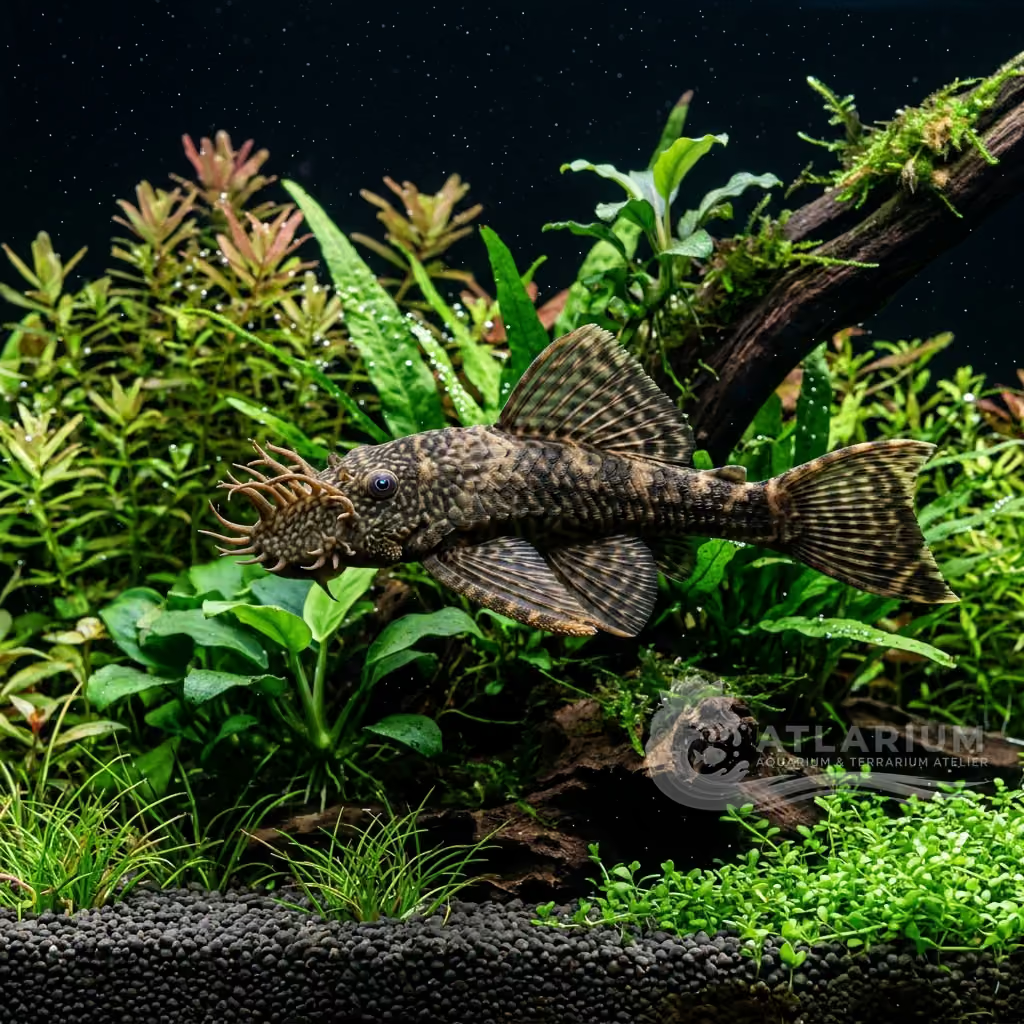
A floating fortress bristling with spines: every lateral plate of this squat Doradid has massive backward-pointing spikes. Produces deep croaking noises by locking its pectoral bones.
Water Temperature
22 - 27 °C
pH Value
6 - 7.5
Water type
Freshwater
Tank level
Bottom
Adult size
14 cm
Minimum tank volume
>= 150 L
Minimum group
>= 4
GH
2 - 15 dGH
KH
2 - 10 dKH
TDS
50 - 325 ppm
Conductivity
78 - 508 uS/cm

Species description
Geographical Origin and Habitat: Common in the Amazon and Essequibo rivers (Brazil, Guyana). It is commonly found in slow and stagnant forest streams, often buried in soft mud or under inextricable tangles of submerged leaves and roots.
Taxonomy and Morphology: Talking Catfish (Acanthodoras spinosissimus). "Twin" and massive species of the genus. The adjective "spinosissimus" is indicative: the lateral plates are even more serrated and protruding, capable of cutting like blades. Produces loud "croaks" (grunts).
Social Behavior: Totally peaceful if not bothered. Its survival strategy is the "bunker": it does not attack, it wedges itself into rocky crevices or wood erecting its spiny pectorals like wedges. Absolutely nocturnal.
Coloration and Sexual Dimorphism: Similar to A. cataphractus but often darker and with less defined lateral bands (more fragmented or dotted). Dark white/pinkish belly. Adult females unmistakably swollen compared to males.

Care, breeding and tankmates
Aquarium Setup: 100 cm (40 inches) tank, densely planted and shaded by intricate roots. Demands darkness and, imperatively, fine sand: it will dig the bottom until only its mouth and eyes emerge during the day, feeling safe.
Diet and Feeding: Ravenous nocturnal scavenger. Waking up in the dark, it sifts the bottom feeding on every leftover: live tubifex, bloodworms, debris, and sinking granules. Important to ensure food is not consumed by diurnal fish.
Water Quality: Very resistant to chemical variations (within reasonable limits) and temporary hypoxia. It is essential to keep the water tannic and clean, with a moderate or slow flow so as not to disturb its diurnal aestivation.
Compatibility and Cohabitation: Matches perfectly with Dwarf Cichlids (Apistogramma, Microgeophagus), small Tetras and Hatchetfish. It does not actively defend itself if bitten: its armor deters any predator, but annoying fish (like large Loaches) can stress it.
Aquarium Breeding: Almost impossible or fortuitous in the home aquarium. Substrate spawners: they clean holes or ravines and the larvae are microscopic, immediately requiring infusoria and rotifers for growth.
Risks and Diseases: "Net" danger: use only and exclusively glass/plastic containers to catch it, to avoid irreparable injuries (to the person and the fish). Sensitive to Copper and Ich medications.

Geographic origin and distribution
Common in the Amazon and Essequibo rivers (Brazil, Guyana). It is commonly found in slow and stagnant forest streams, often buried in soft mud or under inextricable tangles of submerged leaves and roots.
Origin
Tropical oceans and reefsAmazon, Orinoco, and Guianas

Fish profile
- Temperament
- Peaceful
- Acanthodoras spinosissimus is a peaceful, shy, and largely nocturnal species that remains inactive and hidden during daylight hours. They do not exhibit territorial aggression toward other fish, including their own species, making them excellent community residents. However, they are opportunistic feeders with wide mouths and will consume small fish or fry if given the chance. They are also known for their ability to produce audible croaking sounds when stressed, which is a defensive mechanism.
- Diet
- Omnivore
- This species is an omnivorous bottom feeder that is not overly picky about its food. In the aquarium, they will readily accept high-quality sinking catfish pellets, tablets, and wafers, as well as live or frozen foods like bloodworms, tubifex, and brine shrimp. Since they are nocturnal, it is best to feed them after the aquarium lights have been turned off to ensure they get their share of food. Providing some vegetable matter in their diet is also beneficial to mimic their natural foraging habits.
- Life expectancy
- 8-15 years
- Adult size
- 14 cm
- Sex ratio
- Group
- While these catfish can be kept singly, they are gregarious by nature and thrive when housed in a small group of 4 to 6 individuals. Keeping them in a group helps reduce their natural shyness and encourages more natural behaviors, even if they remain hidden during the day. There is no strict male-to-female ratio required, as they are not aggressive toward conspecifics and do not form exclusive territories. A larger tank with multiple hiding spots is necessary when keeping multiple specimens to prevent competition for caves.
- Feeding frequency
- Once daily
- Acanthodoras spinosissimus should be fed once daily, preferably in the evening or at night when they are naturally active and foraging. Overfeeding should be avoided, as they are opportunistic eaters that can easily become overweight due to their low activity levels during the day. Providing food 5 to 6 times a week is often sufficient, allowing for a fasting day to help keep their digestive system healthy. Monitoring their body shape is a good way to adjust the feeding quantity.
- Bioload
- Medium
- Acanthodoras spinosissimus has a moderate biological load due to its robust body size of up to 15 cm and a hearty appetite for protein-rich foods. A high-quality filtration system is essential to manage waste, especially since they forage in the substrate, which can stir up debris. Regular weekly water changes and vacuuming of the substrate are recommended to prevent the accumulation of toxic compounds like nitrates. Maintaining clean, well-oxygenated water is key to keeping this species healthy over the long term.
- Flow
- Moderate
- In their natural habitats, these catfish are found in slow-moving rivers, swamps, and quiet tributaries, meaning they prefer weak to moderate water flow in the aquarium. High, turbulent flow should be avoided, as it can cause stress and make it difficult for them to swim and forage. A gentle current created by a standard filter outlet or spray bar is ideal for replicating their native environment. Ensuring there are calm areas near their hiding spots will allow them to rest comfortably.
- Jump risk
- No
- Reproduction
- Oviparous
- Breeding Acanthodoras spinosissimus in the home aquarium is extremely rare and considered very difficult. In the wild, they are believed to deposit eggs in pits dug into the sandy substrate, with reports suggesting that both parents may guard the nest and eggs. To trigger spawning, hobbyists often attempt to simulate the rainy season with large, cool water changes and increased live food feeding. However, successful raising of the fry in captivity is rarely documented, and most specimens in the trade are wild-caught.
- Compatibility & tankmates
- Peaceful
- These catfish are highly compatible with peaceful, medium to large-sized tankmates such as larger tetras, barbs, cichlids, and other non-aggressive catfish. Because they have very wide mouths, they should not be kept with tiny fish or small shrimp, which could be mistaken for a nocturnal snack. They are completely peaceful toward their own kind and other bottom dwellers, provided there are enough hiding spots for everyone. Avoid active, aggressive species that might outcompete them for food or stress them during the night.
- Tank level
- Bottom
- Acanthodoras spinosissimus is a strictly bottom-dwelling species that spends almost all of its time on or near the substrate. They will occupy caves, crevices under driftwood, and hollow pipes during the day to feel secure. At night, they venture out to forage along the sandy bottom, using their sensitive barbels to search for food. They rarely swim into the middle or upper sections of the water column unless they are extremely stressed or feeding.

Scientific Parameters & Models
FishBase
Window to the official scientific data of the species
FishBase v25.04Data synced on: 06/15/2026
- Trophic level
- 2.4 ± 0.1 se
- Resilience
- High (less than 15 months)
- Phylogenetic uniqueness (PD50)
- 0.625
- Bayesian Length-Weight
- a = 0.01072, b = 2.95
- VulnerabilityLow vulnerability (10 / 100)

Related species
Recommendations grouped by close relatives, companion choices, and similar care.