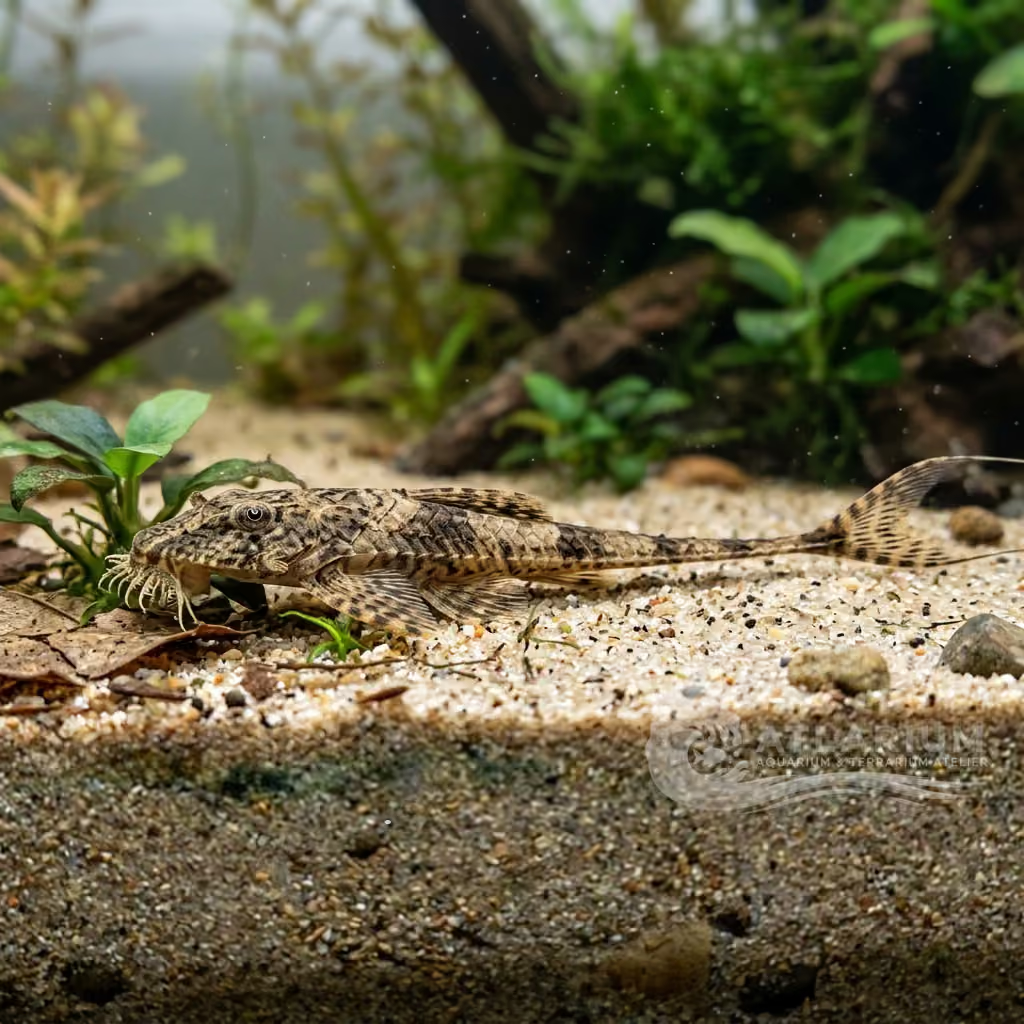
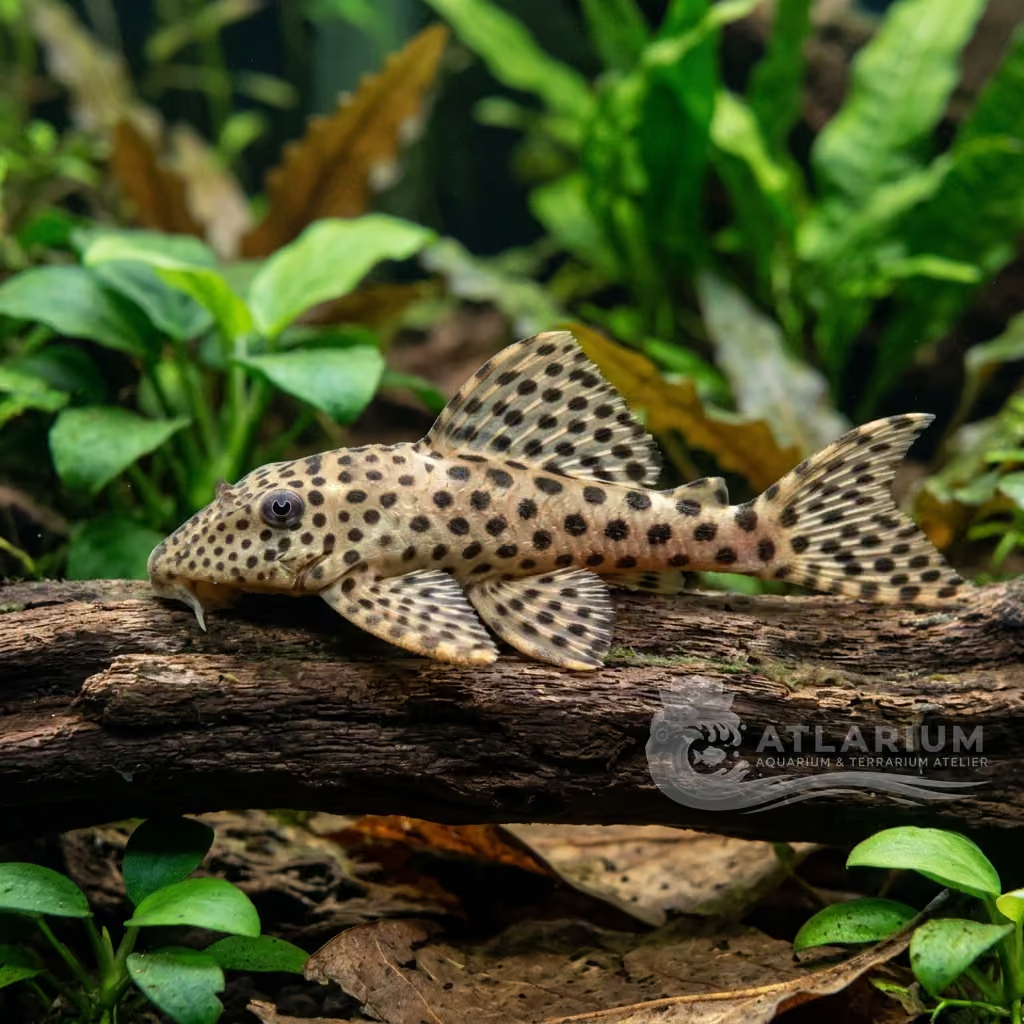
Common Bristlenose Pleco
Ancistrus cf. cirrhosus
The quintessential stainless scavenger, the 'Common Bristlenose' is a chimera of breeding strains, indestructible, overly prolific, and a tireless consumer of slimy algae.
Water Temperature
22 - 28 °C
pH Value
6 - 7.5
Water type
Freshwater
Tank level
Bottom and middle
Adult size
15 cm
Minimum tank volume
>= 80 L
Minimum group
>= 1
GH
2 - 15 dGH
KH
3 - 15 dKH
TDS
60 - 375 ppm
Conductivity
94 - 586 uS/cm

Species description
Geographical Origin and Habitat: Widely distributed in the Paraná River Basin. The commonly marketed specimen ("cf." cirrhosus) is a multigenerational domestic hybrid that adapts to almost all flowing freshwater biotopes.
Taxonomy and Morphology: Common Bristlenose Pleco (Ancistrus cf. cirrhosus). The average aquarist calls it "The cleaner". Compressed body, wide fins to resist current, and the unmistakable branched fleshy appendages ("bristles") on the snout.
Social Behavior: Peaceful, but territorial with conspecifics (especially male versus male). During the day it loves to hide hanging upside down under roots or holed up in coconut shells, activating vigorously at dusk.
Coloration and Sexual Dimorphism: Spotted brown or grayish color. Highly dimorphic as an adult: the male develops a majestic "bush" of tentacles (bristles) on the snout that extends to the center of the head; the female lacks them or has only sketches along the lip.

Care, breeding and tankmates
Aquarium Setup: Minimum 80 cm (32 inches) aquarium. Mandatory massive presence of real woods (Bogwood, Mopani) which the animal constantly scrapes to extract lignin, essential for its digestion. Likes shady ravines formed by rocks.
Diet and Feeding: Herbivore/Algae eater. Diligently cleans glass and wood from green and coating algae (not brush algae). Diet must be heavily supplemented with raw zucchini rounds, cucumber, peeled peas and spirulina wafers. Avoid hyper-protein foods.
Water Quality: The King of hardiness. Tolerant to pH and hardness fluctuations. It is however a fierce devourer and produces very long and abundant feces: efficient filtration and oxygenation (current in the tank) are a priority.
Compatibility and Cohabitation: Compatible with almost all community fish (Tetras, Rasboras, Dwarf Cichlids, Guppies, Corydoras). Keep only one male per aquarium (or two if the tank exceeds 120 cm / 48 inches) to avoid bloody nocturnal territorial disputes.
Aquarium Breeding: Incredibly easy. They reproduce spontaneously in terracotta tubes or half coconut shells. The male takes care of the eggs (amber color) and the fry for two weeks, fanning without feeding.
Risks and Diseases: Dies from wasting (constipation or malnutrition) if real wood and vegetable fibers (zucchini) are not provided. Handle in plastic containers: the interopercular spines (on the sides of the mouth) painfully tear nets.

Geographic origin and distribution
Widely distributed in the Paraná River Basin. The commonly marketed specimen ("cf." cirrhosus) is a multigenerational domestic hybrid that adapts to almost all flowing freshwater biotopes.
Origin
Selective breeding and cultivarsExtra-Amazon South AmericaTropical oceans and reefs

Fish profile
- Temperament
- Semi-aggressive
- The Common Bristlenose Pleco is generally a peaceful and passive species, making it an excellent candidate for community tanks. They ignore most other fish and focus on grazing, though they can display mild territoriality toward conspecifics, especially between rival males. These minor conflicts are usually restricted to pushing matches over choice caves and rarely result in injuries if sufficient space is provided. They are not aggressive toward other bottom-dwellers unless defending a clutch of eggs.
- Diet
- Herbivore
- While primarily herbivorous, these catfish are opportunistic omnivores that require a varied diet to thrive. Their main nutrition should consist of high-quality sinking algae wafers and fresh vegetables like zucchini, cucumber, and blanched spinach. Crucially, they must have access to natural driftwood in the aquarium, as they rasp on it to obtain lignin, which is essential for their digestive health. They will also benefit from occasional protein supplements, such as frozen bloodworms or brine shrimp, fed once or twice a week.
- Life expectancy
- 5-10 years
- Adult size
- 15 cm
- Sex ratio
- Harem
- When keeping multiple Bristlenose Plecos, a harem ratio of one male to two or three females is ideal to minimize territorial disputes. Adult males are highly territorial, particularly over breeding caves, and keeping multiple males in small aquariums can lead to aggressive squabbles. If multiple males are housed together, a spacious tank with numerous caves and physical barriers is necessary to establish separate territories. For general community tanks, keeping a single individual or a bonded male-female pair is also a very successful approach.
- Feeding frequency
- Twice daily
- It is recommended to feed the Common Bristlenose Pleco once daily, preferably in the evening since they are naturally nocturnal and more active after the lights go out. Fresh vegetables can be left in the tank for up to 24 hours, but any uneaten portions must be removed promptly to prevent water fouling. Providing small, consistent daily portions of sinking food ensures they receive adequate nutrition without overloading the aquarium's filtration. Fasting the fish for one day a week can also help keep their digestive system active and clean.
- Bioload
- Medium
- The Common Bristlenose Pleco has a medium to high biological load compared to other small community fish due to its continuous grazing habits and high-fiber diet. They consume large amounts of algae, vegetables, and driftwood, which results in a significant volume of solid waste. To manage this bioload, a robust filtration system with a turnover rate of at least 4 to 5 times the tank volume per hour is highly recommended. Regular weekly water changes of 20% to 30% are also essential to maintain low nitrate levels and prevent waste buildup.
- Flow
- Stagnant
- This species prefers moderate to strong water flow, reflecting the conditions of their native riverine habitats in South America. They thrive in environments with excellent water circulation and high oxygenation, which can be achieved using powerheads or spray bars. Good current not only mimics their natural ecosystem but also helps keep the substrate clean of detritus. If the flow is too weak, the water may lose critical dissolved oxygen, which can cause these catfish to gather near the filter outflow.
- Jump risk
- No
- Reproduction
- Oviparous
- Breeding the Common Bristlenose Pleco is relatively easy and frequently occurs spontaneously in the home aquarium. They are cave spawners, with the male selecting a suitable tight cave, cleaning it, and inviting a female to lay a clutch of yellow-orange eggs. Once spawning is complete, the female is expelled, and the male takes sole responsibility for fanning and guarding the eggs until they hatch in about 4 to 5 days. The male continues to protect the fry until they absorb their yolk sacs and begin free-swimming, at which point they can be fed crushed algae wafers or baby brine shrimp.
- Compatibility & tankmates
- Community
- The Common Bristlenose Pleco is highly compatible with a wide range of peaceful community fish, including tetras, rasboras, corydoras, and livebearers. They also coexist peacefully with dwarf cichlids, gouramis, and most freshwater shrimp, as they lack the predatory drive to hunt them. However, they should not be housed with large, aggressive tankmates like large cichlids that might harass them or see them as prey. Their bony armor provides some protection, but a stress-free environment with peaceful companions is always best.
- Tank level
- Middle/Bottom
- This species is primarily a bottom-dwelling fish that spends the majority of its time on the substrate, rocks, and driftwood. However, they are active crawlers and will regularly scale the aquarium glass and broad-leaved plants to graze on biofilm and algae. They rarely swim in open water, preferring to remain in contact with surfaces where they feel secure. Providing plenty of ground-level hiding spaces and flat surfaces is crucial to accommodate their natural resting and feeding behaviors.

Related species
Recommendations grouped by close relatives, companion choices, and similar care.