Encyclopaedia

FishFreshwaterEasy

Napo Corydoras

Corydoras napoensis

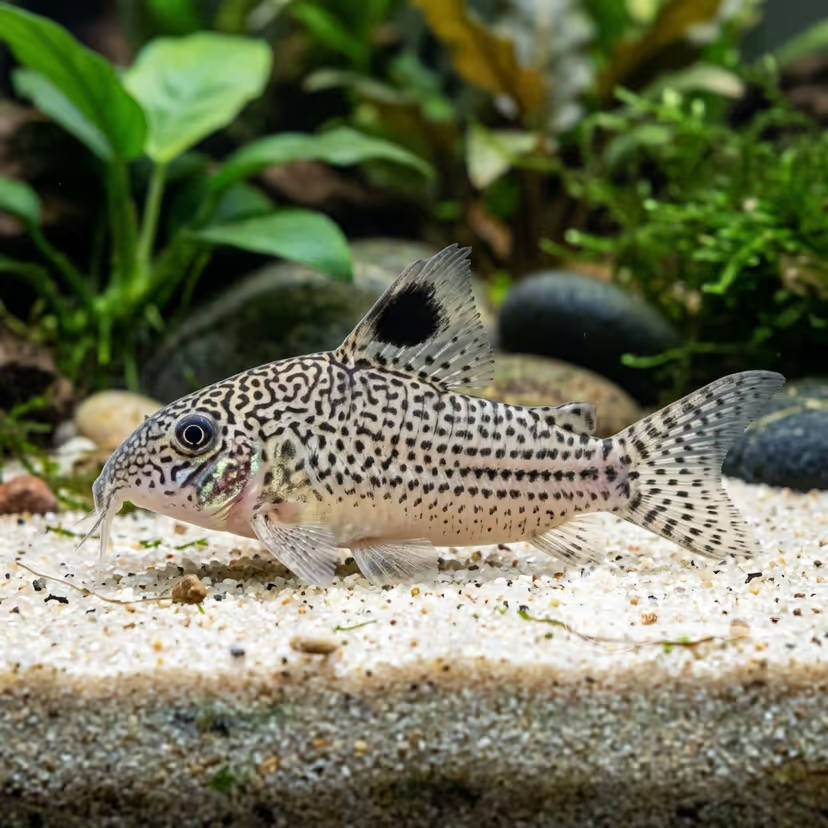
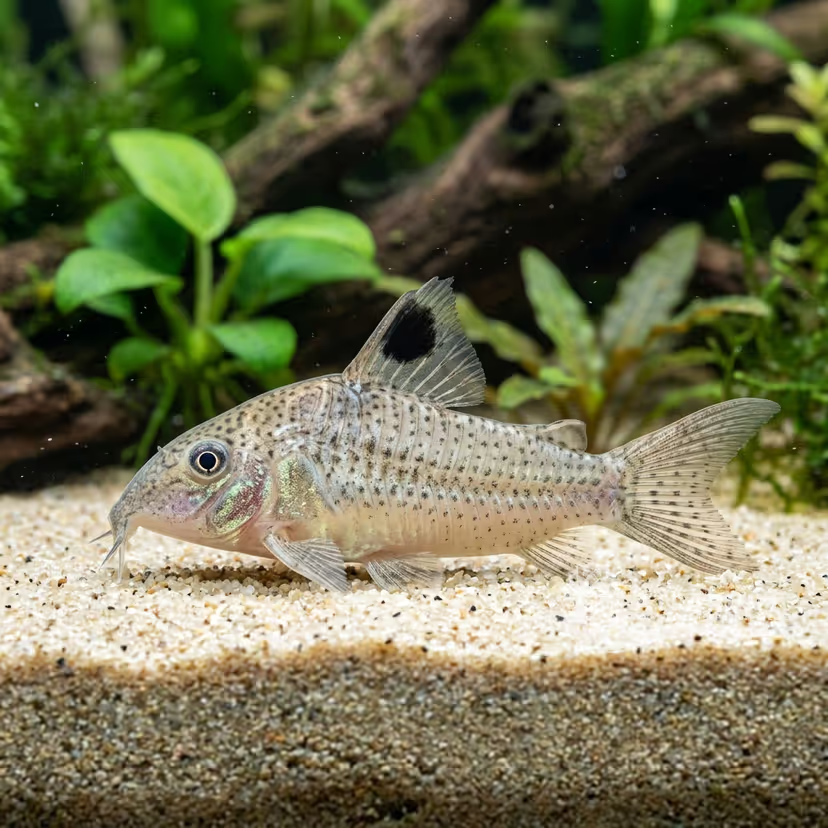
A member of the elegant 'Elegans Group'. A micro-Corydoras with a streamlined, torpedo-shaped body. Males flaunt an incredible and intricate lattice of gold, metallic green, and iridescent black. An aerodynamic jewel.

Taxonomy
Class:Actinopteri
Order:Siluriformes
Family:Callichthyidae
Subfamily:Corydoradinae
Genus:Corydoras
Species:Corydoras napoensis

Share

Check out Napo Corydoras on Atlarium

PracticeRecognition quizzesPhotos, names, origins, and puzzles to review Atlas species.Open quizzes
Water Temperature

22 - 26 °C

pH Value

6 - 7.5

Water type

Freshwater

Tank level

Bottom and middle

Adult size

5 cm

Minimum tank volume

>= 60 L

Minimum group

>= 6

GH

2 - 15 dGH

KH

1 - 7 dKH

TDS

40 - 295 ppm

Conductivity

63 - 461 uS/cm

Species description

Geographical Origin and Habitat: Napo River basin in Ecuador and Peru. Inhabits moderate-flowing rivers, often in sediment-laden whitewater, with soft bottoms and fallen logs.
Taxonomy and Morphology: Napo Corydoras (Corydoras napoensis). Also belongs (like C. elegans) to the group of Corydoras that like to swim in the water column and not just stay on the bottom.
Social Behavior: Accentuated gregariousness. They form very cohesive groups that hover in mid-water or rest on large leaves at mid-height (e.g. Echinodorus or Anubias).
Coloration and Sexual Dimorphism: Chromatically splendid males: gray with marked black stripes and reticulations, an obvious black spot on the dorsal fin (with a white edge) and intense golden reflections on the snout. Females are drab and stocky.

Care, breeding and tankmates

Aquarium Setup: Minimum 60 cm (24 inches) tank. In addition to the usual obligation of the sand bottom (no sharp gravel), it particularly appreciates a layout rich in broad-leaved plants on which to "land" and rest.
Diet and Feeding: Benthic-pelagic. They often grab food while it falls in mid-water, before it touches the bottom. Pellets, fine sinking flakes and frozen food (brine shrimp, daphnia) are the ideal nourishment.
Water Quality: Require oxygenated and clean waters. Moderately tolerant of GH and pH, they are instead extremely sensitive to high nitrates or organic muddy deposits on the bottom.
Compatibility and Cohabitation: Excellent inhabitant for peaceful South American community tanks, will never show aggression towards Dwarf Cichlids, Tetras, Otocinclus or shrimp.
Aquarium Breeding: Extremely fecund. Males engage in frantic chases towards females following massive changes with colder water (by 2-4°C / 4-7°F). Eggs typically laid on the walls of the tank in large quantities.
Risks and Diseases: They are sensitive to medicines containing Copper (used against snails or ectoparasites), which are very often lethal at normal dosages.

Geographic Origin and Distribution

Napo River basin in Ecuador and Peru. Inhabits moderate-flowing rivers, often in sediment-laden whitewater, with soft bottoms and fallen logs.

Origin

Extra-Amazon South America

Fish profile

Temperament
Semi-aggressive
These catfish are incredibly docile, peaceful, and non-aggressive, making Corydoras napoensis perfect community tank residents. They are somewhat shy by nature and heavily rely on the presence of a school to feel secure and display their natural behaviors. Providing plenty of hiding spots such as caves, driftwood, and dense vegetation will make them feel more comfortable. They never bother other fish and often completely ignore species occupying the middle and upper levels of the tank.
Diet
Omnivore
Corydoras napoensis is an omnivorous bottom feeder that constantly scavenges for food in the substrate. Their diet should be primarily composed of high-quality sinking pellets or wafers specifically formulated for bottom dwellers. To ensure optimal health and coloration, supplement their dry food with live or frozen foods such as bloodworms, daphnia, and brine shrimp. They will also eat uneaten food that falls from the surface, though they should not be treated merely as a clean-up crew.
Sex ratio
School
While sexing them can be challenging, a ratio of two or three males per female is generally recommended for breeding Corydoras napoensis. Females are noticeably rounder and broader, especially when viewed from above, and tend to grow slightly larger. Males appear more slender and streamlined in comparison. Keeping them in a mixed-sex school naturally accommodates these ratios without requiring precise selection by the aquarist.
Feeding frequency
Twice daily
These active scavengers should be fed one to two times daily to ensure they receive adequate nutrition. It is important to offer Corydoras napoensis only as much food as they can consume within a few minutes to prevent water quality issues. Since they are somewhat nocturnal by nature, feeding them once right before the aquarium lights turn off can be very beneficial. Monitoring their feeding is essential, especially in community tanks where faster mid-water fish might outcompete them for food.
Bioload
Corydoras napoensis has a relatively small bioload compared to larger aquarium fish. Due to their compact size, they produce a manageable amount of waste that standard filtration can easily process. However, because they must be kept in groups of at least six, the cumulative bioload should be considered when stocking. Regular water changes and good mechanical filtration are still necessary to keep the substrate clean where they dwell.
Flow
Stagnant
In the wild, Corydoras napoensis typically inhabits slow to moderately flowing streams and tributaries. They appreciate some gentle water movement in the aquarium, which helps keep the water well-oxygenated. However, excessive current or strong powerheads should be avoided as it can exhaust them over time. A standard sponge filter or a hang-on-back filter with baffled flow usually provides the ideal water dynamics for this species.
Reproduction
Oviparous
Breeding Corydoras napoensis in captivity is achievable but requires specific conditions to trigger spawning. A common trigger involves performing a large, slightly cooler water change to simulate the onset of the rainy season in their natural habitat. Females will lay adhesive eggs on broad-leaved plants, aquarium glass, or other flat surfaces. Once spawning is complete, the adult fish should be removed or the eggs transferred, as they may exhibit egg-eating behavior.
Compatibility & tankmates
This species is highly peaceful and makes an excellent addition to community aquariums. Corydoras napoensis gets along perfectly with small tetras, rasboras, dwarf cichlids, and peaceful livebearers. It is crucial to avoid housing them with large, aggressive, or predatory fish that could bully them or attempt to eat them. As a schooling fish, they find safety and comfort in numbers of their own kind or similar Corydoras species.
Tank level
Middle/Bottom
As classic bottom dwellers, Corydoras napoensis occupies the lowest levels of the aquarium. They spend their days tirelessly exploring the substrate in search of morsels of food using their sensitive barbels. It is absolutely essential to provide a soft, sandy substrate to prevent damage to their delicate sensory barbels. Although they mostly remain at the bottom, they will occasionally dart to the water surface to swallow a bubble of air for intestinal respiration.

Window to the official scientific data of the species

Data synced on: 06/15/2026

Scientific Parameters & Models

Trophic level
3 ± 0.3 se
Resilience
High (less than 15 months)
Phylogenetic uniqueness (PD50)
0.5001
Bayesian Length-Weight
a = 0.01778, b = 3.02
VulnerabilityLow vulnerability (10 / 100)

Image gallery

Licensed images linked to the species or, when marked, to the closest representative taxon.

Related species

Recommendations grouped by close relatives, companion choices, and similar care.

Variants and close relatives

Same atlas type, nearby scientific identity, genus, or family.

Schwartz's Corydoras

Schwartz's Corydoras

Corydoras schwartzi

View details->
Smudge Spot Cory

Smudge Spot Cory

Corydoras similis

View details->
Blue Spotted Corydoras / Guianacara

Blue Spotted Corydoras / Guianacara

Corydoras melanistius

View details->
False Spotted Corydoras

False Spotted Corydoras

Corydoras leucomelas

View details->
Blackmask Corydoras

Blackmask Corydoras

Corydoras atropersonatus

View details->
Rabaut's Corydoras / Rust Corydoras

Rabaut's Corydoras / Rust Corydoras

Corydoras rabauti

View details->
Skunk cory

Skunk cory

Corydoras arcuatus

View details->
Three Stripe Corydoras (False Julii)

Three Stripe Corydoras (False Julii)

Corydoras trilineatus

View details->
Zygatus Cory

Zygatus Cory

Corydoras zygatus

View details->
Coppename Cory

Coppename Cory

Corydoras coppenamensis

View details->
Burgess's Corydoras

Burgess's Corydoras

Corydoras burgessi

View details->
Flag-tail Cory

Flag-tail Cory

Corydoras robineae

View details->
Agassiz's Corydoras

Agassiz's Corydoras

Corydoras agassizii

View details->
Bandit cory

Bandit cory

Corydoras metae

View details->
Blacktop Corydoras

Blacktop Corydoras

Corydoras acutus

View details->
Concolor Cory

Concolor Cory

Corydoras concolor

View details->

Recommended companions

Compatible cards from coherent ecosystems with matching parameters.
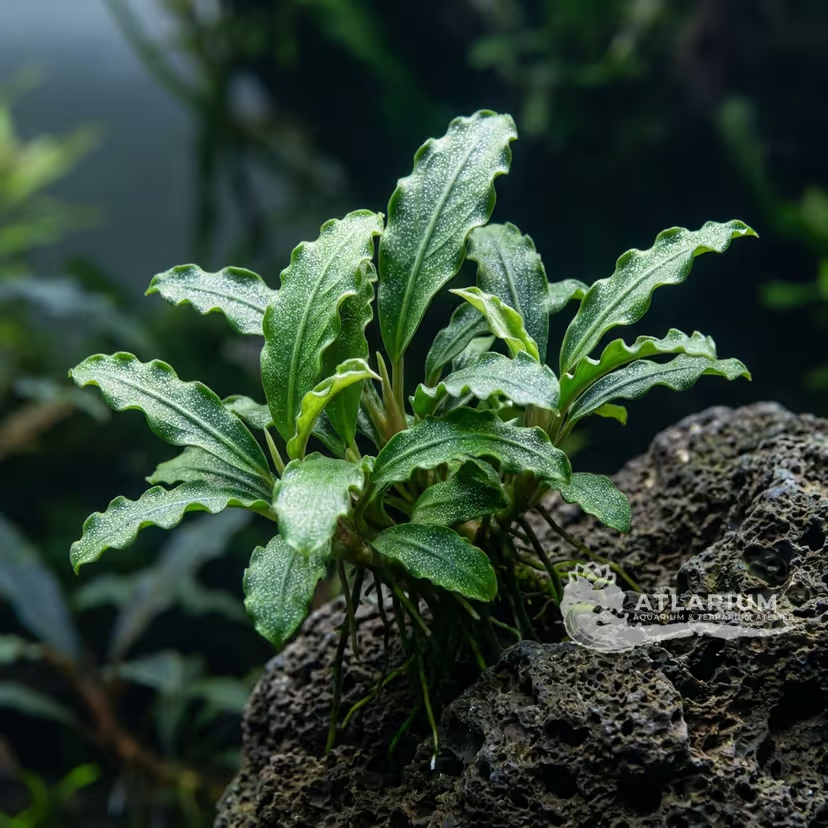
Bucephalandra pygmaea "Bukit Kelam / Sintang"
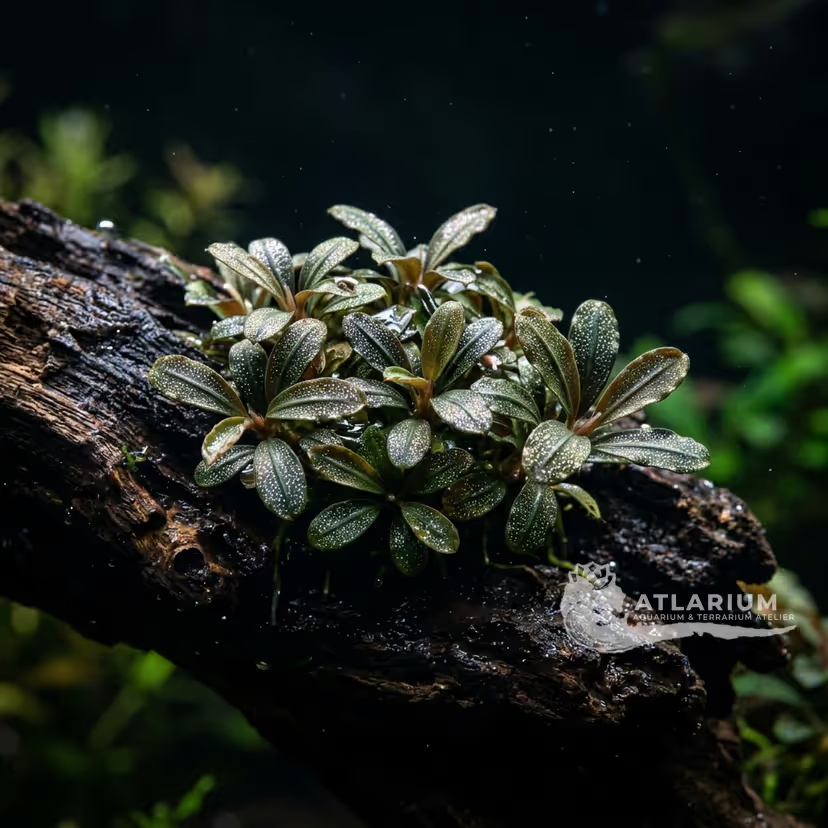
Plant

Bucephalandra pygmaea "Bukit Kelam / Sintang"

Bucephalandra pygmaea "Bukit Kelam / Sintang"

View details->
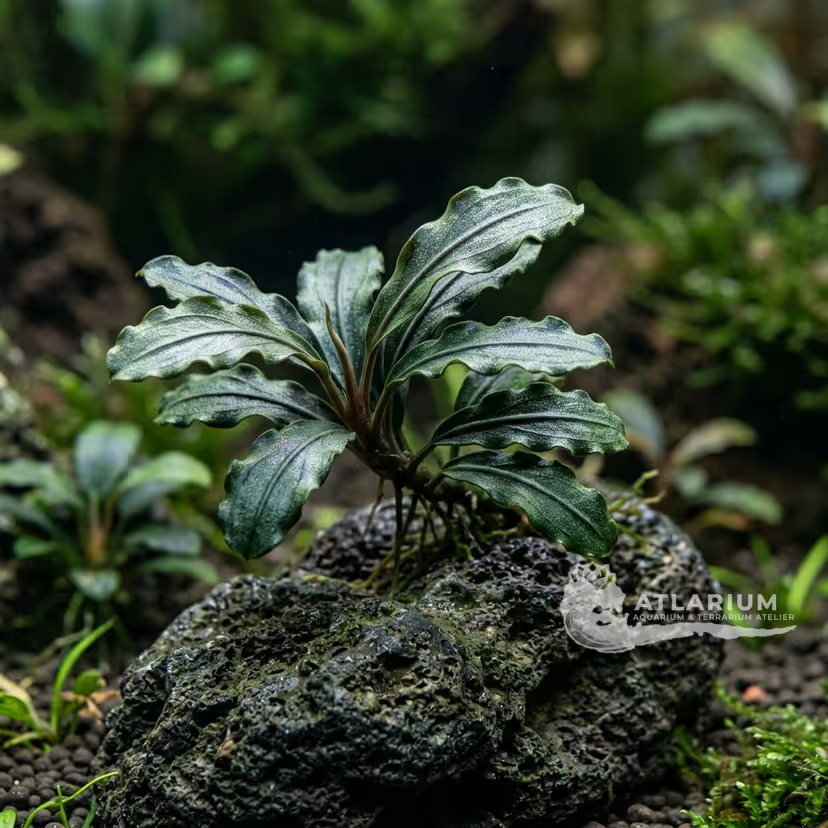
Bucephalandra pygmaea "Kapit"
Plant

Bucephalandra pygmaea "Kapit"

Bucephalandra pygmaea "Kapit"
View details->
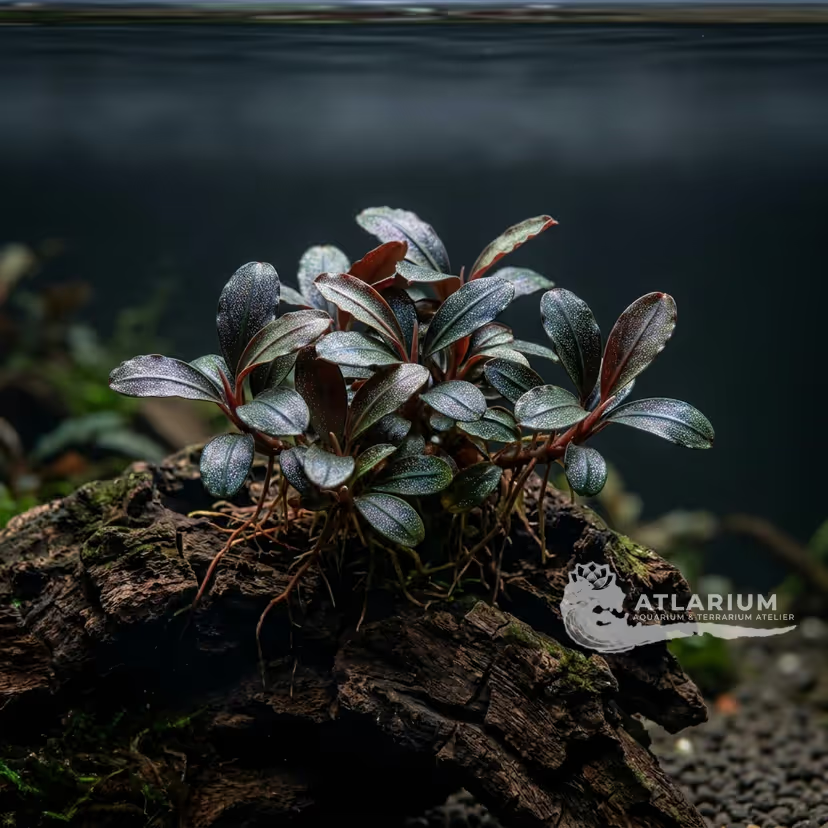
Bucephalandra sordidula
Plant

Bucephalandra sordidula

Bucephalandra sordidula
View details->
Bucephalandra sp. "Bodok"
Plant

Bucephalandra sp. "Bodok"

Bucephalandra sp. "Bodok"

View details->
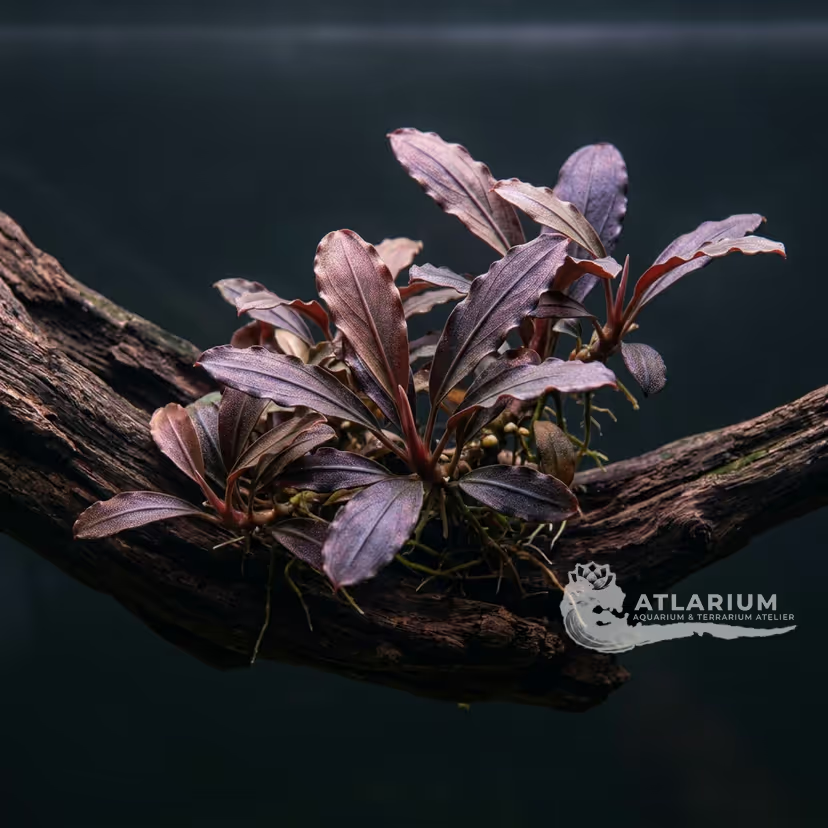
Bucephalandra sp. "Braun-rot narrow"
Plant

Bucephalandra sp. "Braun-rot narrow"

Bucephalandra sp. "Braun-rot narrow"
View details->
Bucephalandra sp. "Braun-rot" ("Serimbu")
Plant

Bucephalandra sp. "Braun-rot" ("Serimbu")

Bucephalandra sp. "Braun-rot"
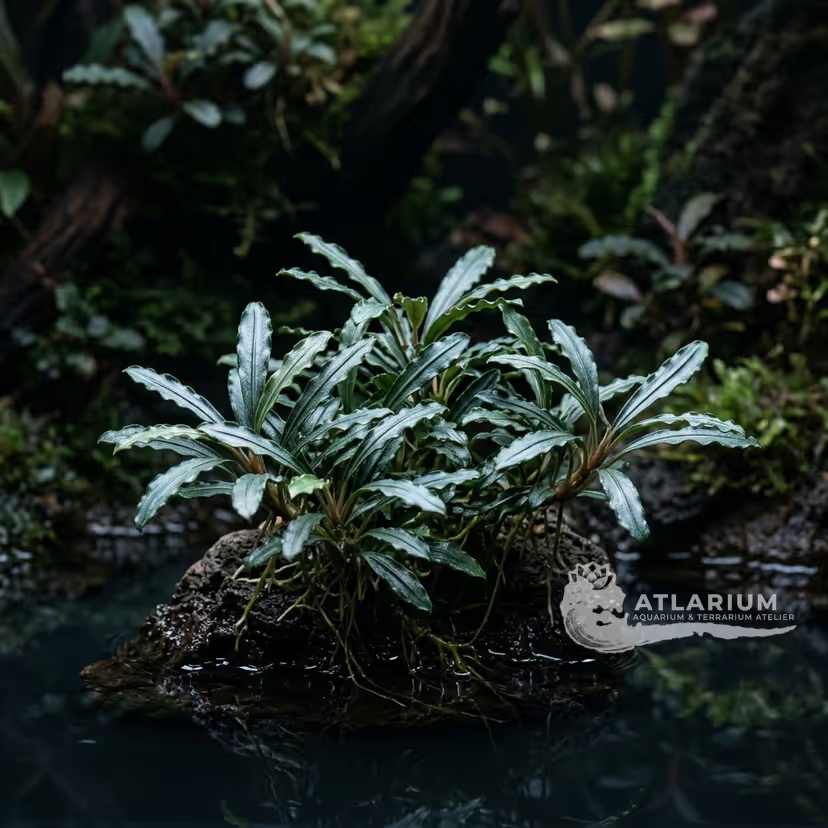
View details->
Bucephalandra sp. "Gunung Sumpit"
Plant

Bucephalandra sp. "Gunung Sumpit"

Bucephalandra sp. "Gunung Sumpit"
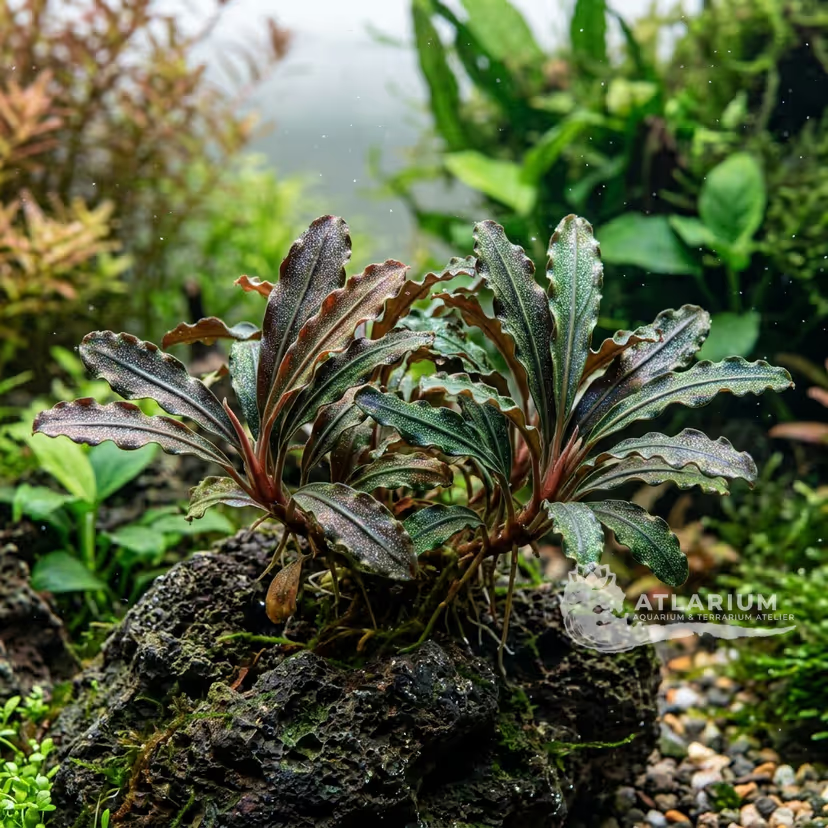
View details->
Bucephalandra sp. "Kedagang"
Plant

Bucephalandra sp. "Kedagang"

Bucephalandra sp. "Kedagang"

View details->
Ammannia sp. 'Bonsai'
Plant

Ammannia sp. 'Bonsai'

Ammannia sp. 'Bonsai'

View details->
Bacopa sp. "Japan"
Plant

Bacopa sp. "Japan"

Bacopa sp. "Japan"

View details->
Bolbitis heteroclita
Plant

Bolbitis heteroclita

Bolbitis heteroclita

View details->
Arrowhead Anubias
Plant

Arrowhead Anubias

Anubias hastifolia

View details->
Bucephalandra motleyana "Braun-rot narrow"
Plant

Bucephalandra motleyana "Braun-rot narrow"

Bucephalandra motleyana "Braun-rot narrow"

View details->
Bucephalandra motleyana "Riam Macam"
Plant

Bucephalandra motleyana "Riam Macam"

Bucephalandra motleyana "Riam Macam"
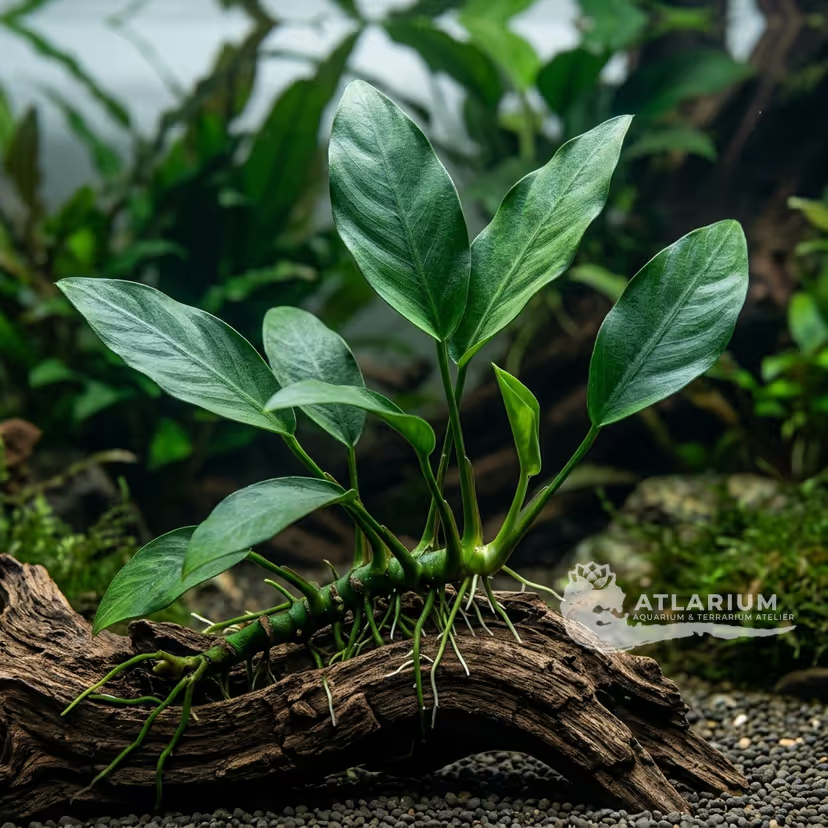
View details->
Anubias
Plant

Anubias

Anubias barteri

View details->
Anubias nana
Plant

Anubias nana

Anubias barteri var. nana

View details->

Similar care

Cards with similar requirements, difficulty, habitat, and husbandry profile.

Pink Corydoras (Axelrod's Cory)

Pink Corydoras (Axelrod's Cory)

Corydoras axelrodi

View details->
Fawn Cory

Fawn Cory

Corydoras cervinus

View details->
Guapore Cory

Guapore Cory

Corydoras guapore

View details->
Mamoré Cory

Mamoré Cory

Corydoras mamore

View details->
Many-spotted Cory

Many-spotted Cory

Corydoras polystictus

View details->
Miguelito Cory

Miguelito Cory

Corydoras virginiae

View details->
Garbe's Corydoras

Garbe's Corydoras

Corydoras garbei

View details->
Lacerda's Cory

Lacerda's Cory

Corydoras lacerdai

View details->
Britski's Brochis

Britski's Brochis

Corydoras britskii

View details->
Reticulated Corydoras

Reticulated Corydoras

Corydoras reticulatus

View details->
Ehrhardt's Corydoras

Ehrhardt's Corydoras

Corydoras ehrhardti

View details->
Bader's Corydoras

Bader's Corydoras

Corydoras baderi

View details->
Banded Corydoras

Banded Corydoras

Corydoras vittatus

View details->
Bicolor Corydoras

Bicolor Corydoras

Corydoras bicolor

View details->
Broad Corydoras

Broad Corydoras

Corydoras latus

View details->
Carla's Cory

Carla's Cory

Corydoras carlae

View details->
Last updated: 06/30/2026
Napo Corydoras (Corydoras napoensis) Care Guide & Tank Setup | Atlarium