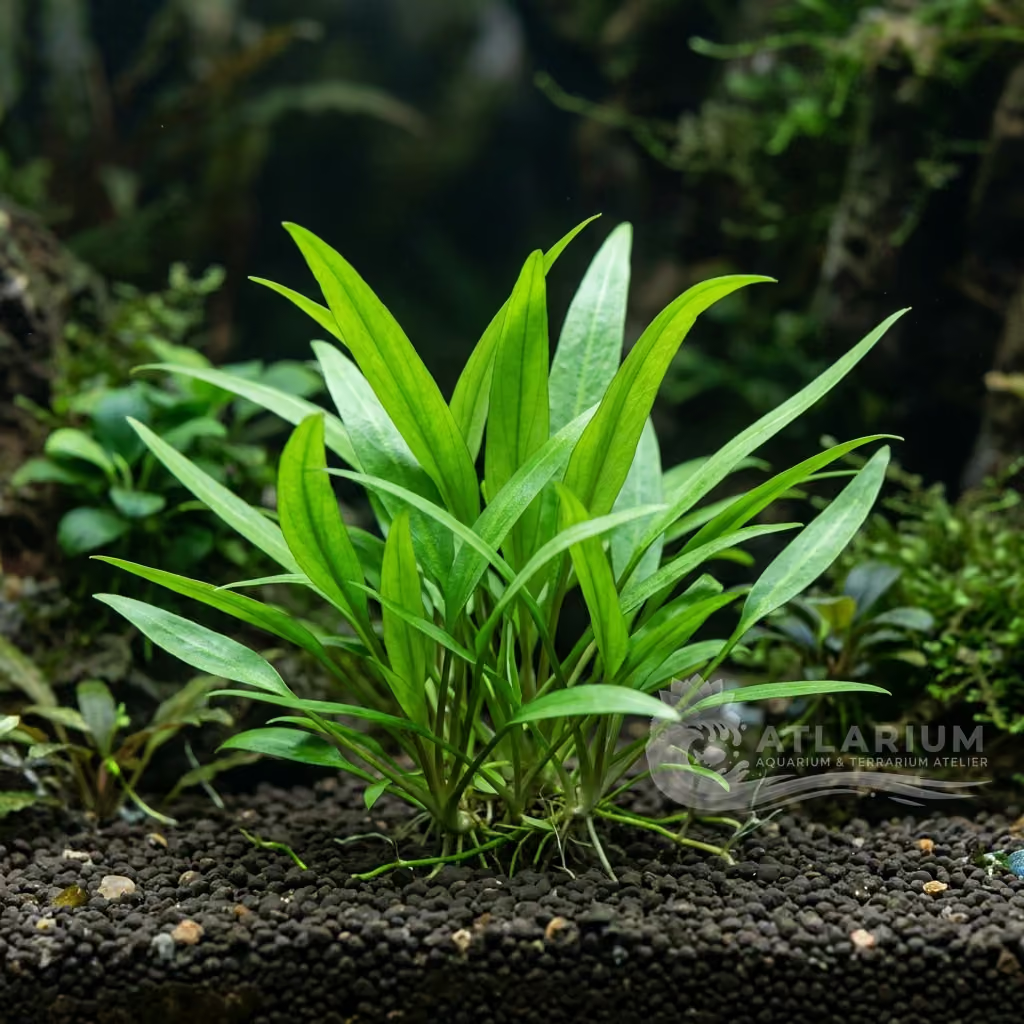
Bucephalandra sp. "Braun-rot narrow"
Bucephalandra sp. "Braun-rot narrow"
An extremely demanding, spectacular brown-red narrow-leaved rheophyte from Borneo. Designed by nature to fiercely anchor onto shaded river basalts.
Water Temperature
20 - 26 °C
pH Value
6 - 7.5
Water type
Freshwater
Light
Low
CO2
Low
Expected height
5 cm
Expected width
5 cm
GH
4 - 20 dGH
KH
0 - 10 dKH

Species description
Geographical Origin and Habitat: Endemic exclusively to the deeply shaded, fast-flowing torrential streams of Borneo. Bucephalandra "Braun-rot narrow" (translated from German as "Brown-Red Narrow") is a spectacular, highly specialized rheophyte. It evolved to violently anchor its thick woody roots onto dark basalt rocks and submerged, decaying jungle logs directly in the path of pounding rapids. It is an extreme amphibious survivor, adapted to thriving in pristine, highly oxygenated blackwater that frequently floods and recedes in brutal monsoonal cycles, demanding high humidity and relentless water flow.
Taxonomy & Genetics: This specific variant has not yet received a formal scientific species designation within the Araceae family and is recognized in the high-end commercial trade purely by its German descriptive name, "Braun-rot narrow." Taxonomically, it is highly prized for its unique genetic mutation that causes severe elongation of the leaf blade combined with profound hyper-pigmentation. It is widely considered by professional aquascapers and elite botanical collectors as a "Holy Grail" variant due to its mesmerizing, alien coloration and rarity.
Physical Structure: The architectural structure is characterized by an incredibly tough, woody rhizome that strictly creeps horizontally across the hardscape, locking on with iron-grip, fleshy white roots. It completely refuses to grow vertical stems. The defining feature is its leaves: they are highly elongated, extremely narrow, strictly lanceolate (spear-shaped), and intensely ruffled or undulated along the margins. The plant grows in chaotic, sprawling, multi-layered clumps, forming a dense, dark, creeping bush that resembles a metallic prehistoric ivy.
Color & Texture: The coloration is breathtaking, completely extraterrestrial, and deeply dark. Depending on the lighting, the leathery leaves shift violently between deep rusty brown, muddy bronze, and an intensely glowing, profound dark violet or bloody red. It possesses zero green hues. The thick, stiff leaves are heavily encrusted with an unusually high density of microscopic, iridescent silver dots (stomata). Under high-intensity LED lighting, the dark red/purple leaves sparkle spectacularly, looking like dark velvet dusted with crushed diamonds.

Care, breeding and tankmates
Lighting & CO2: It is an extremely demanding, slow-growing epiphyte. If placed in a low-light, low-tech tank, it will survive, but it will completely lose its metallic red and violet coloration, reverting to a dull, muddy brown. To unlock its true, spectacular dark-red and purple iridescence, it requires medium to high-intensity LED lighting. Because intense lighting invites devastating algae onto its slow-growing leaves, injecting pressurized CO2 is absolutely mandatory to accelerate its metabolism and allow it to outcompete algae.
Nutrition & Substrate: Like all elite Bucephalandra, it is a strict, obligate epiphyte. It MUST NEVER be buried in aquasoil, sand, or gravel; burying the woody rhizome will instantly suffocate and disintegrate the plant. It feeds exclusively from the water column. It must be physically attached to hardscape (wood or porous rock) using cyanoacrylate superglue or tied with cotton thread. To fuel its dense, glittering, red-purple leaves, aggressively dose the water column with a premium, iron-rich liquid micro-fertilizer.
Water Chemistry: Originating from the torrential rapids of Borneo, it demands immaculate water quality and extremely high dissolved oxygen. It prefers soft, slightly acidic water (pH 6.0 - 6.8) and cooler tropical temperatures (20-25°C). The single most critical environmental requirement is violent, relentless water flow. It must be placed directly in the path of a powerhead or strong filter return. Without intense water flow, detritus will settle on its narrow, heavily ruffled leaves, suffocating the plant and inviting Black Beard Algae.
Space Management & Placement: Due to its extreme rarity, dark majestic coloration, and creeping growth habit, it is the ultimate high-end focal point for meticulous aquascapes. It should be wedged into the highest, fastest-flowing crevices of central sprawling driftwood or glued to the peaks of Seiryu stone, creating a dark, sparkling, purple-red cascade over the hardscape. Never hide it as a background plant, as its mesmerizing, glittering details and narrow ruffled leaves will be completely lost to the viewer.
Pruning: Pruning is a surgical, extremely rare procedure due to its agonizingly slow growth rate. If propagation is absolutely required, use ultra-sharp spring scissors to cleanly sever the creeping woody rhizome. Ensure the cut segment contains at least 4 healthy, metallic-red leaves and several robust white gripping roots. Use cyanoacrylate gel to instantly glue the priceless clone to a new piece of hardscape. Never tear the leaves or pull the rhizome by hand, as this will destroy the plant.
Risks & Diseases: The absolute greatest threat to this rare red variant is "Buce Melt." Any sudden, massive fluctuation in water chemistry—especially an ammonia spike, a CO2 crash, or extreme temperature swings—will cause the plant to panic and violently dissolve its priceless purple-red leaves into a slimy mush overnight. The second greatest threat is its agonizingly slow growth; if water flow is inadequate, the leathery leaves will quickly become permanently encrusted with suffocating Green Spot Algae (GSA).

Geographic origin and distribution
Endemic exclusively to the deeply shaded, fast-flowing torrential streams of Borneo. Bucephalandra "Braun-rot narrow" (translated from German as "Brown-Red Narrow") is a spectacular, highly specialized rheophyte. It evolved to violently anchor its thick woody roots onto dark basalt rocks and submerged, decaying jungle logs directly in the path of pounding rapids. It is an extreme amphibious survivor, adapted to thriving in pristine, highly oxygenated blackwater that frequently floods and recedes in brutal monsoonal cycles, demanding high humidity and relentless water flow.
Origin
South and Southeast Asia

Plant profile
- Placement
- Epiphyte
- Features narrow leaves with beautiful brown-red hues. As a classic epiphyte, it is meant to be placed directly onto the hardscape. It fits perfectly into the crevices of rocks or along the branches of driftwood. Ensure it receives adequate flow to prevent detritus buildup on its slow-growing leaves. Proper placement highlights its natural beauty and promotes healthy attachment.
- Botanical form
- Rhizome
- Botanically, it displays a fascinating arrangement of foliage and stems or rhizomes. Features narrow leaves with beautiful brown-red hues. The leaf shape, venation, and overall structure are defining characteristics of this species. Its morphology can shift slightly depending on whether it is grown submersed or emersed. It provides exceptional structural diversity to any planted aquarium.
- Growth
- Slow
- Under optimal conditions with high light and CO2, the growth rate is considered very slow. Features narrow leaves with beautiful brown-red hues. In lower tech setups, it will grow significantly slower and may adapt its morphology. Regular pruning may be necessary to maintain a compact growth form over time. Its growth speed is directly correlated with the availability of light, CO2, and dissolved nutrients.
- Substrate
- None
- Features narrow leaves with beautiful brown-red hues. This plant is an epiphyte and should never have its rhizome buried in the substrate. Doing so will lead to rot and eventual death. Instead, it must be attached to hardscape materials such as wood or rocks using thread or aquarium-safe glue. Over time, its roots will naturally grip the surfaces.
- Column fertilization
- Recommended
- Liquid fertilization is crucial for this plant, as it draws a significant portion of its nutrients directly from the water column. Features narrow leaves with beautiful brown-red hues. A comprehensive fertilizer containing nitrogen, phosphorus, potassium, and trace elements should be dosed regularly. Iron supplementation is especially important to maintain its coloration and prevent chlorosis. Dosing should be adjusted based on the plant mass and growth rate observed in the aquarium.
- Root fertilization
- None
- Features narrow leaves with beautiful brown-red hues. Since it does not grow in the substrate, traditional root tabs are entirely ineffective. This plant relies almost exclusively on its exposed root system and leaves to absorb nutrients directly from the water flow. Maintaining a rich water column is therefore the primary method of fertilization. Occasional use of liquid root-stimulators in the water can help establish new growth.
- Trimming
- Occasional
- Trimming is rarely needed due to the slow growth rate. When necessary, simply cut the rhizome with clean, sharp scissors to remove old or damaged sections. Avoid cutting individual leaves unless they are decaying, as this will not encourage new growth from the cut stem.
- Propagation
- Rhizome division
- Features narrow leaves with beautiful brown-red hues. Propagation is achieved by carefully cutting the rhizome into smaller pieces. Each new piece must have at least three to four healthy leaves and a portion of the root system to survive. Use very sharp, sterilized scissors to make a clean cut and prevent infection. The new segments can then be reattached to other areas of the hardscape.
- Sensitivity
- Moderate
- This plant is sensitive to sudden changes in water parameters, which can trigger leaf melt. It is also susceptible to algae growth on its leaves if placed under very intense light without adequate CO2. Stable conditions and good water flow are essential for its long-term health.
- Layout role
- Epiphyte, Midground, Nano
- It serves as an excellent detail plant for midground or foreground areas, adding texture and unique colors. Its small size and epiphytic nature make it perfect for naturalizing hardscape transitions. It is highly valued in aquascaping for creating focal points in nano tanks or intricate details in larger layouts.

Image gallery
Licensed images linked to the species or, when marked, to the closest representative taxon.

Related species
Recommendations grouped by close relatives, companion choices, and similar care.