Cryptocoryne albida
Cryptocoryne crispatula var. albida
An elegant, flow-loving amphibious plant from Myanmar and Thailand with narrow, wavy leaves. It easily adapts to low-light aquariums but develops beautiful marbled patterns under moderate to high lighting.
Water Temperature
22 - 28 °C
pH Value
6 - 7.5
Water type
Freshwater
Light
Medium
CO2
Low
Expected height
15 cm
Expected width
10 cm
GH
4 - 20 dGH
KH
2 - 12 dKH

Species description
Geographical Origin and Habitat: Endemic exclusively to the deeply shaded, fast-flowing monsoon rivers and streams of southern Myanmar (Burma) and peninsular Thailand. Cryptocoryne albida is a highly elegant, strictly rheophytic (flow-loving) rosette plant. It thrives almost entirely in amphibious environments, aggressively rooting its fleshy rhizome into pure river sand and gravel banks. It is perfectly adapted to survive violent seasonal flooding and drastic fluctuations in water levels, easily transitioning between submerged aquatic growth and emersed terrestrial forms on muddy riverbanks.
Taxonomy & Genetics: Scientifically classified within the Araceae family, it is sometimes still erroneously traded under its outdated synonym, Cryptocoryne costata. Taxonomically, C. albida is highly prized by professional aquascapers for a very specific genetic mutation: extreme leaf narrowing. While most Cryptocorynes feature broad, ovate leaves, C. albida possesses genetics that force the production of exceptionally narrow, severely elongated, spear-like leaves, making it a critical architectural tool for creating fine textures in the midground.
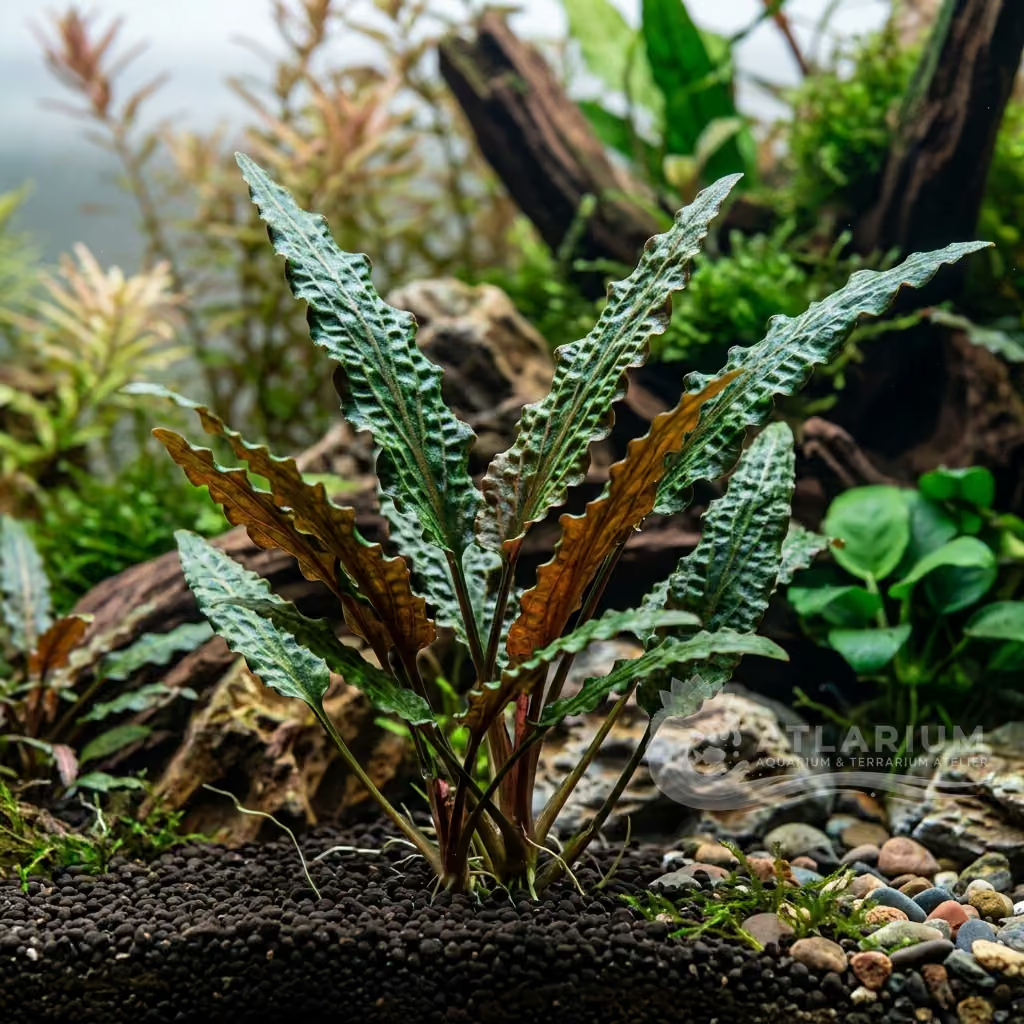
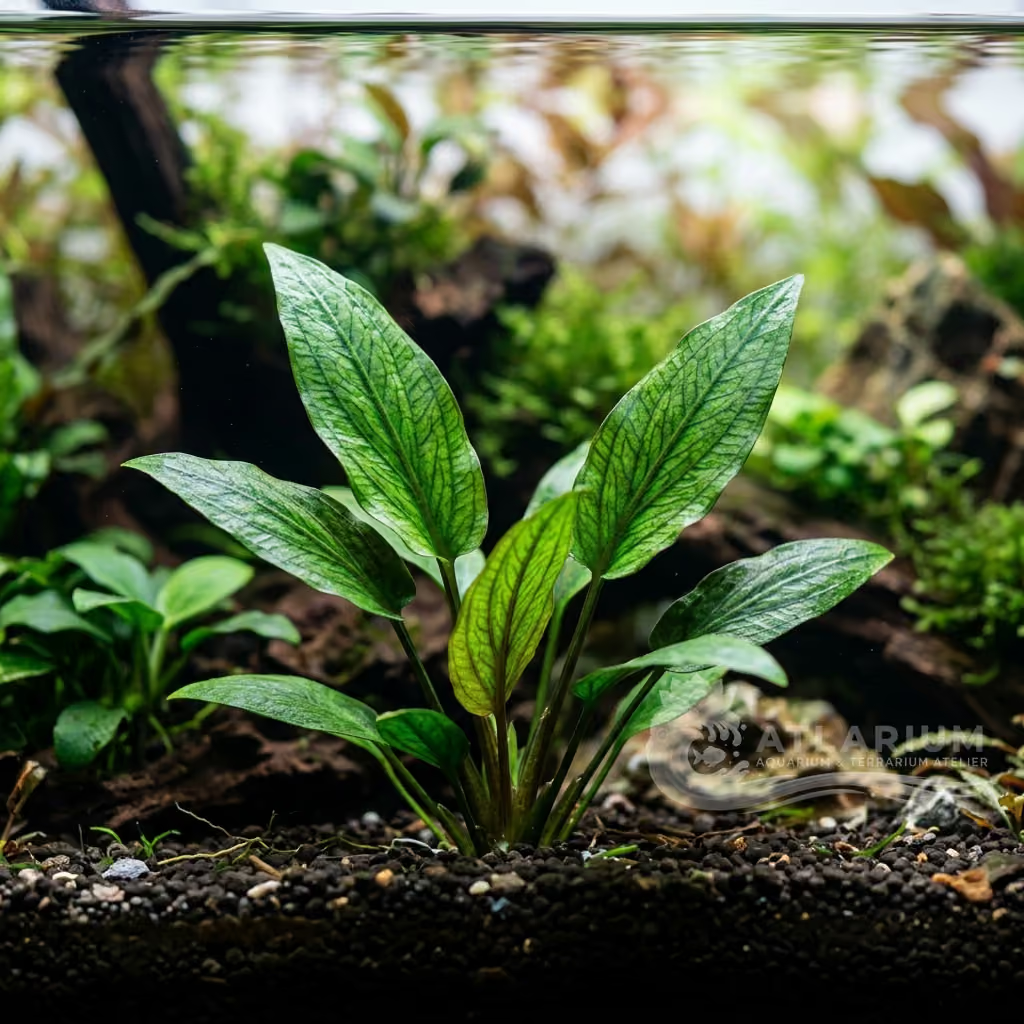
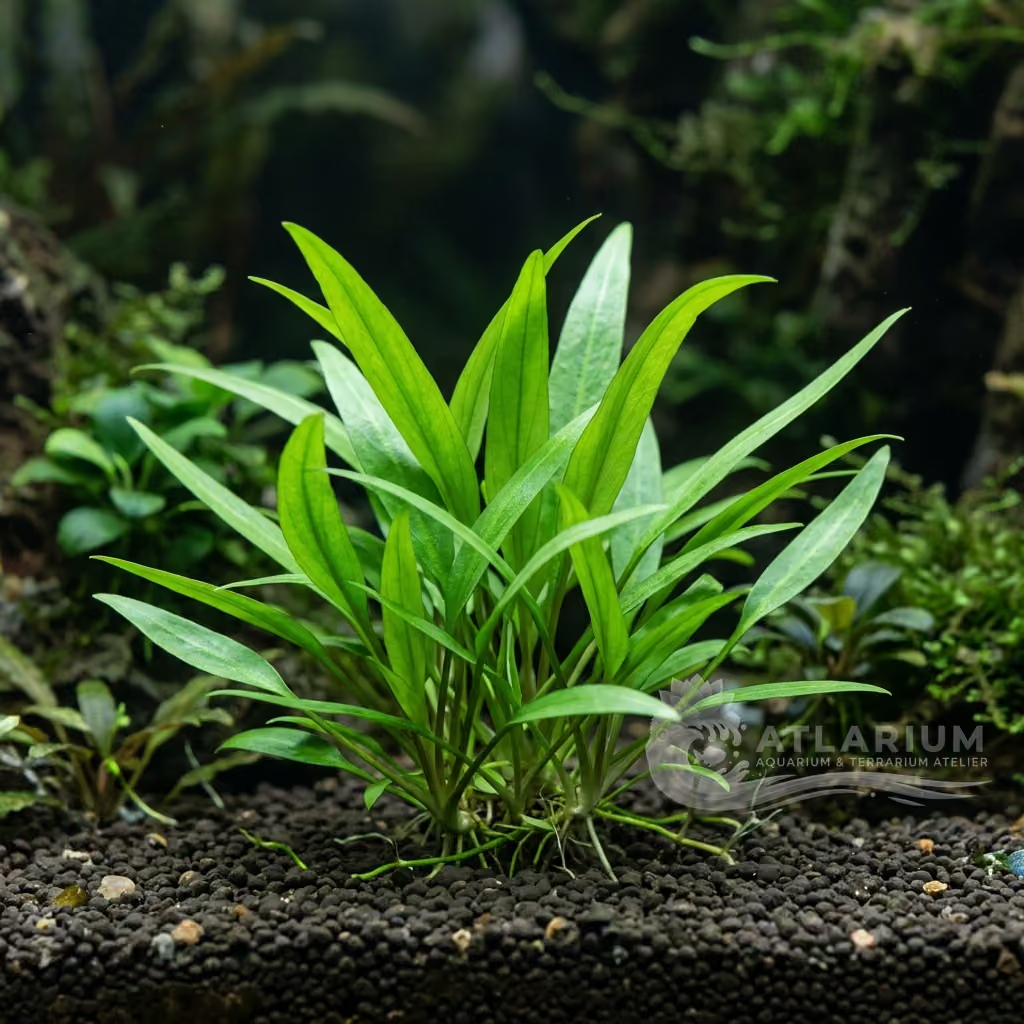
Physical Structure: The architectural structure of C. albida is incredibly delicate and flowing. It is a true rosette plant, completely lacking vertical stems. The foundation is a thick, fleshy subterranean rhizome that deploys aggressive, deep-reaching white roots. The leaves erupt directly from the crown on distinct, thin petioles. The defining feature is the foliage: the leaves are strictly linear to narrowly lanceolate, very long, and intensely slender. The leaf margins are completely smooth, lacking the heavy hammering or crinkling seen in other species.
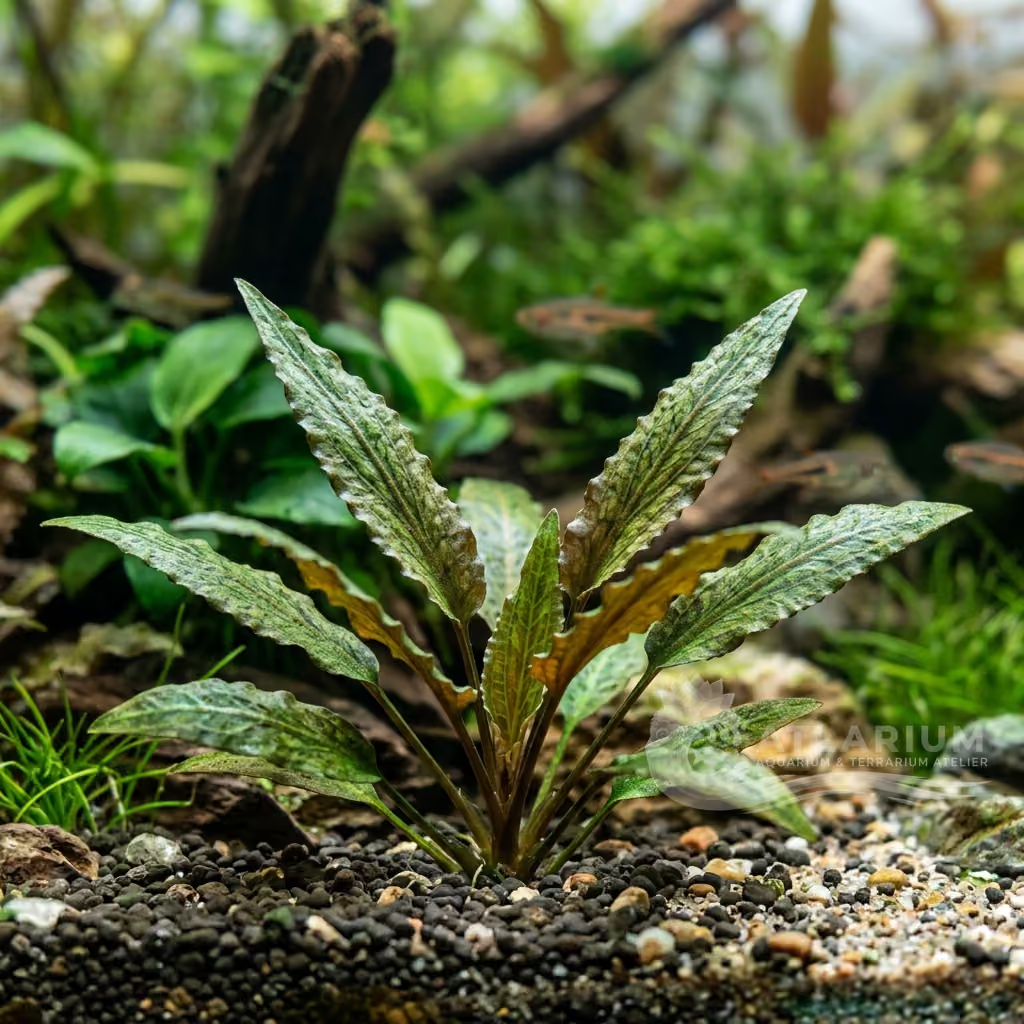
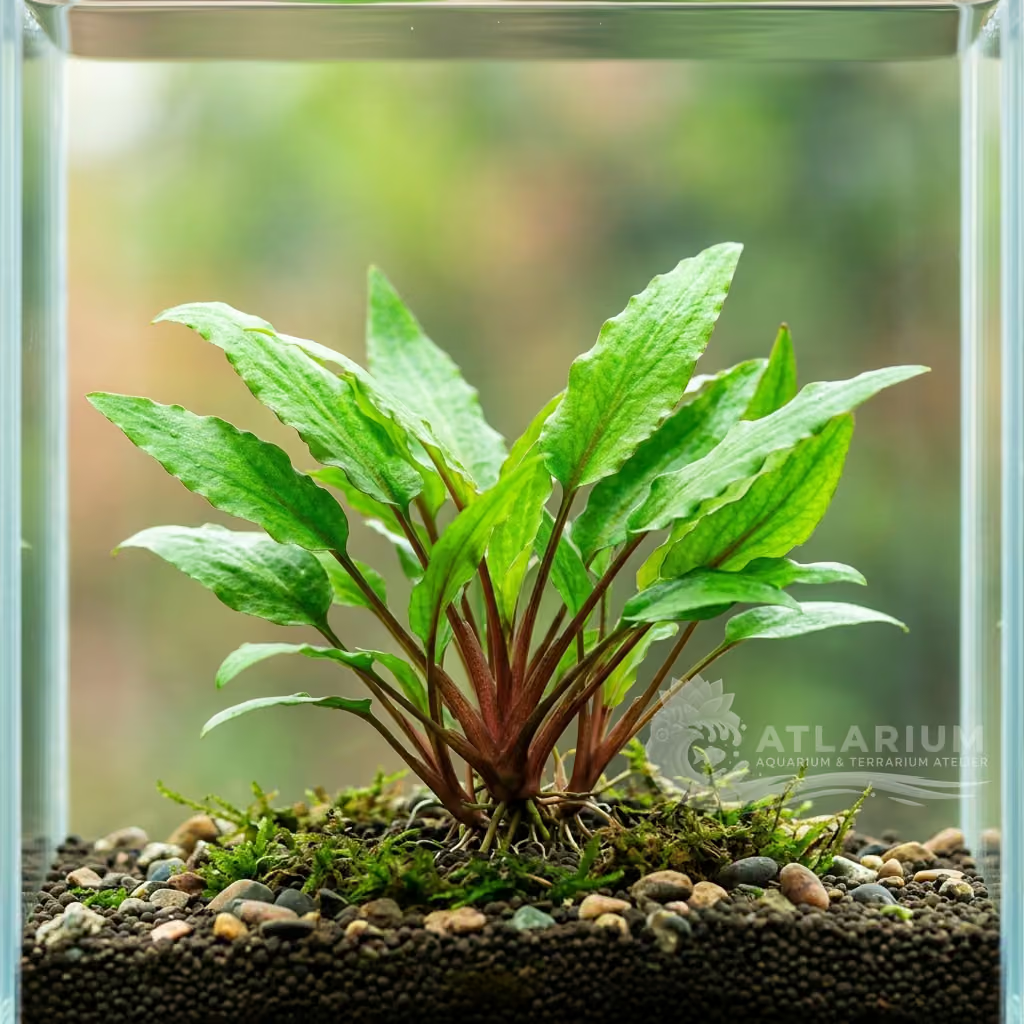
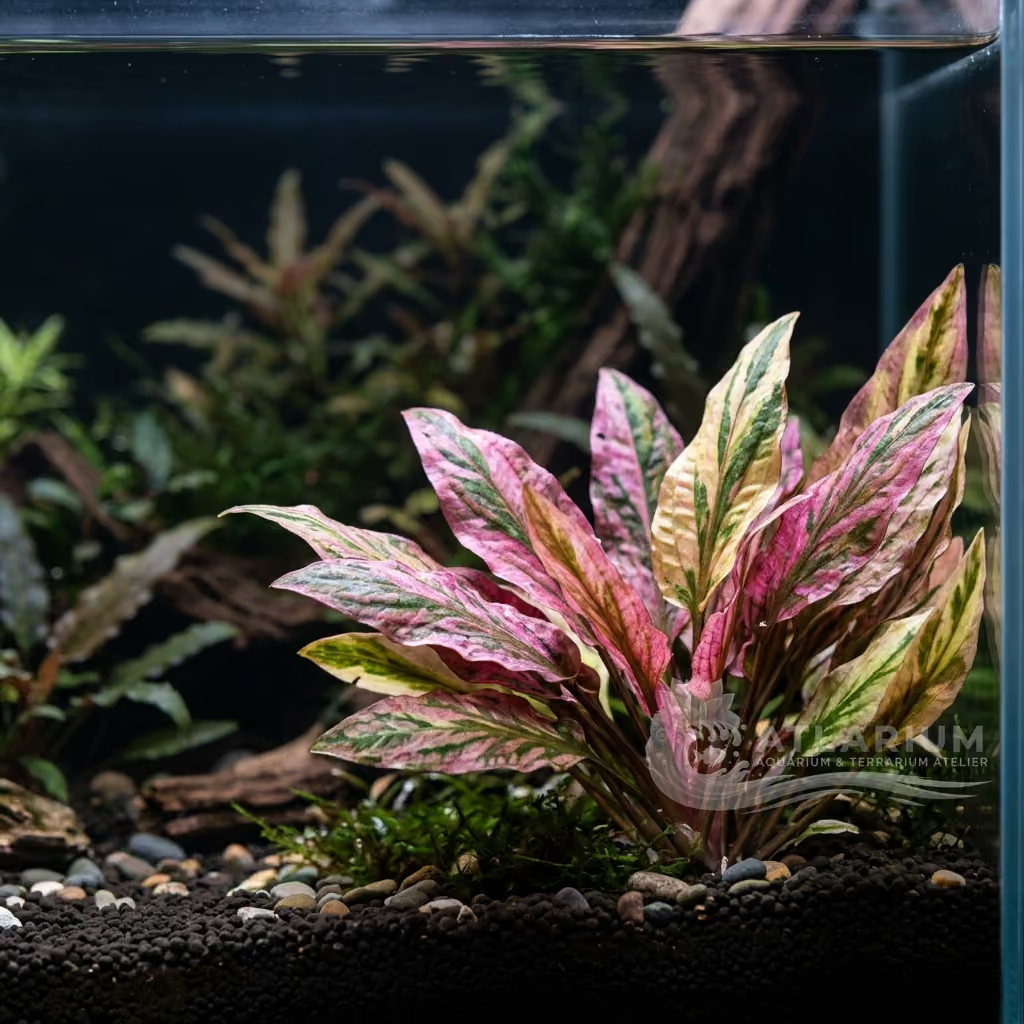
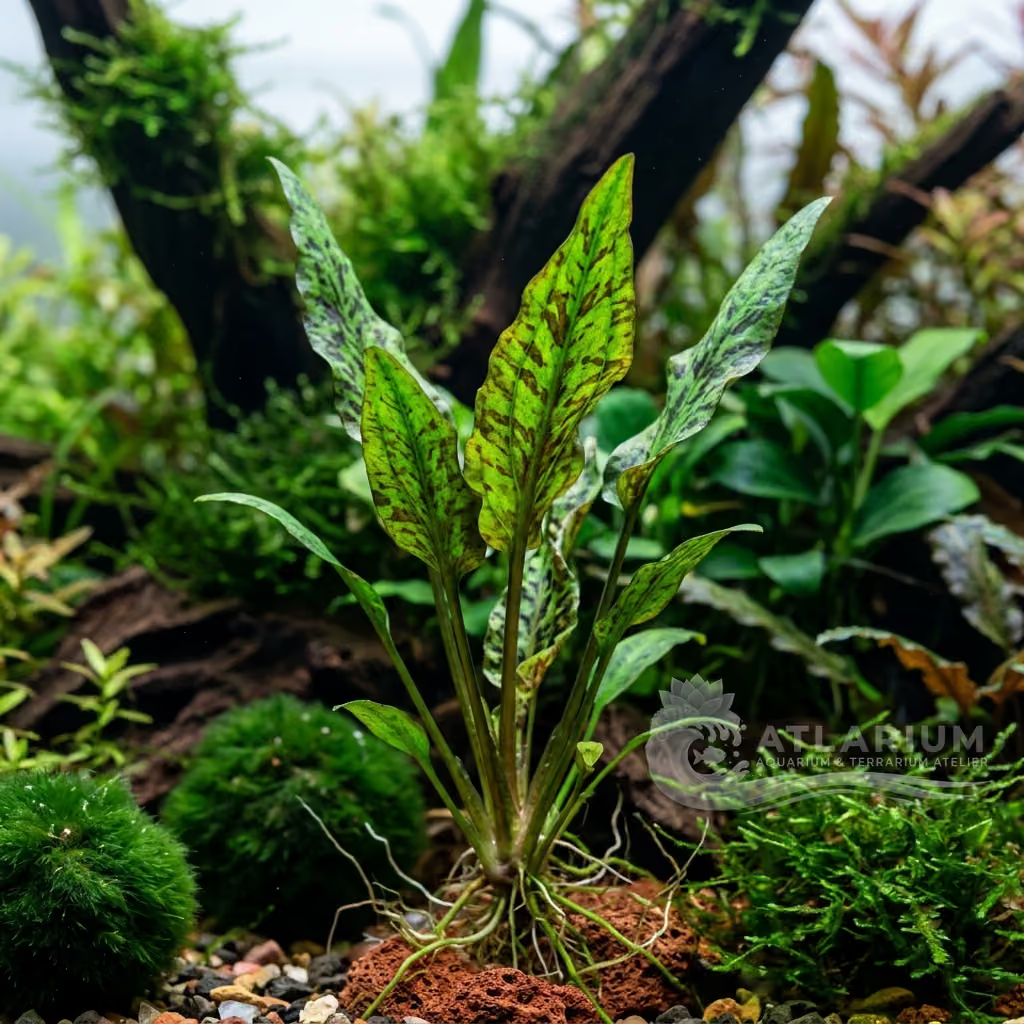
Color & Texture: The coloration is highly variable and deeply sophisticated. Depending on the specific genetic strain and lighting intensity, the leaves range from a bright, solid apple-green to a magnificent, highly sought-after mottled reddish-brown or copper hue. The plant generally lacks the brilliant pinks seen in C. flamingo. The texture of the leaves is exceptionally smooth, papery, and completely flat. Because the slender leaves are so thin and smooth, they offer almost zero resistance to the water, fluttering elegantly in the current.

Care, breeding and tankmates
Lighting & CO2: It is a slow-growing, highly adaptable rosette plant. In low-light, deeply shaded aquariums, it will easily survive, but the leaves will remain strictly green and grow slightly taller. To force the plant to develop a dense, compact rosette and to unlock the spectacular mottled reddish-brown colors of the "Brown" variant, medium to high-intensity LED lighting is mandatory. While injected CO2 is not required for survival, pressurized CO2 drastically accelerates its agonizingly slow growth rate and significantly enhances leaf coloration.
Nutrition & Substrate: Like all Cryptocorynes, C. albida is an absolute, obligate root feeder. Its aggressive, deep-reaching root system absolutely demands a mature, nutrient-dense substrate (minimum 5 cm / 2 inches deep). It strongly prefers fine, sandy substrates or high-quality aquasoil. If planted in sterile, inert gravel without supplementation, it will quickly stunt and melt. The substrate MUST be heavily enriched with premium, iron-rich root tabs directly beneath the rhizome. It absorbs virtually no nutrition from the water column.
Water Chemistry: Originating from the monsoon rivers of Southeast Asia, it demands immaculate water quality and high dissolved oxygen. It prefers standard tropical temperatures (22-26°C). Unlike the hard-water loving C. affinis, C. albida strongly prefers soft, slightly acidic water (pH 6.0 - 7.0), perfectly mimicking its native blackwater streams. The single most critical environmental requirement is moderate to high water flow. It must be placed in areas of the tank with good circulation to keep its smooth, slender leaves free of suffocating detritus.
Space Management & Placement: Due to its elegant, narrow leaves and moderate size (10-20 cm height), C. albida is the ultimate transition plant for high-end aquascapes. It is meticulously used in the midground, planted tightly around the base of central driftwood or sprawling Seiryu stone. Its slender, flowing leaves perfectly soften the harsh edges of the hardscape. Because it spreads via subterranean runners, it will eventually form a stunning, highly textured, grass-like bush that bridges the gap between the foreground carpet and the tall background stems.
Pruning: Pruning is a very delicate, infrequent procedure. Never attempt to trim the slender leaves in half; the cut edge will instantly turn black and rot. To prune dead, melting, or heavily shaded older leaves, you must reach down to the absolute base of the rosette and cleanly slice or snap the petiole directly at the gravel line. To manage its spread, physically dig into the substrate and cleanly sever the subterranean runner connecting the baby plant to the mother rhizome, then carefully uproot the clone.
Risks & Diseases: The absolute greatest threat to C. albida is the infamous "Crypt Melt." This species is particularly sensitive to sudden environmental instability. A rapid change in pH, a massive water change with cold water, or forcefully uprooting and moving the plant will trigger a violent biological panic, causing all the elegant slender leaves to dissolve into a slimy mush within 24 hours. However, the thick underground rhizome is nearly indestructible; if the leaves melt, do not remove the roots, as it will completely regrow within weeks.

Geographic origin and distribution
Endemic exclusively to the deeply shaded, fast-flowing monsoon rivers and streams of southern Myanmar (Burma) and peninsular Thailand. Cryptocoryne albida is a highly elegant, strictly rheophytic (flow-loving) rosette plant. It thrives almost entirely in amphibious environments, aggressively rooting its fleshy rhizome into pure river sand and gravel banks. It is perfectly adapted to survive violent seasonal flooding and drastic fluctuations in water levels, easily transitioning between submerged aquatic growth and emersed terrestrial forms on muddy riverbanks.
Origin
South and Southeast Asia

Plant profile
- Placement
- Midground
- Because of its distinctively narrow, pointed leaves, it serves as an excellent midground transitional plant, offering a different texture from broader-leaved species. In smaller aquariums, it can even be utilized as a focal background plant. Planting it in a small group creates a grass-like, elegant tuft that contrasts beautifully with rocks and driftwood. It is also quite tolerant of shading, allowing it to be placed under larger, overhanging plants.
- Botanical form
- Rosette
- Cryptocoryne albida is a rosette plant defined by its long, very narrow, lanceolate leaves that often feature gracefully wavy or ruffled margins. Depending on the lighting and the specific variant, its leaves can range from a bright, crisp green to an attractive bronze or reddish-brown. The plant typically stays relatively low, forming elegant, sweeping tufts rather than growing strictly upwards. Its delicate appearance belies a very tough, resilient constitution once established.
- Growth
- Slow
- This is a notoriously slow-growing plant, demanding considerable patience from the aquarist. It may take several weeks or even months after planting before it shows noticeable new growth or begins to send out runners. Once it establishes a strong root network, its growth becomes steady, though it will never be considered fast. The slow growth makes it a highly desirable, low-maintenance plant that rarely needs trimming.
- Substrate
- High
- A fine-grained, highly fertile substrate is essential for the best growth and runner production of this species. Aquasoils that are rich in humic substances and iron perfectly mimic its natural riverbank habitats in Asia. It can grow in plain sand or fine gravel, provided that high-quality root tabs are inserted deeply around its root system. Coarse gravel should be avoided as it impedes the spread of its delicate runner network.
- Column fertilization
- Recommended
- As an obligate root feeder, it extracts minimal nutrients from the water column, making liquid fertilization largely a secondary concern. A very light dosing of a comprehensive liquid fertilizer is sufficient to keep the water parameters balanced and provide trace elements. Over-fertilizing the water column will only encourage algae, which can easily coat its slow-growing leaves. Maintaining low, stable nitrates and pristine water quality is the best approach.
- Root fertilization
- None
- This plant is entirely dependent on a rich substrate for its long-term survival and propagation. Pushing nutrient-dense, iron-rich root tabs directly beneath the plant's rosette is highly recommended for vigorous growth. These tabs should be replaced every 3-4 months to ensure continuous feeding as the roots deplete the local soil. A robust root feeding strategy is the most effective way to prevent melting and encourage the growth of runners.
- Trimming
- Occasional
- Trimming is rarely needed due to its slow growth, but older or decaying leaves should be removed promptly. Always cut the leaf petiole as close to the root crown as possible using sharp scissors. Avoid cutting leaves in half or trimming the top of the plant.
- Propagation
- Rhizome division, Runners
- Propagation is entirely vegetative in the aquarium, achieved via runners that branch out through the substrate. These runners will sprout new, miniature rosettes a few inches away from the mother plant. Once the daughter plants have at least four or five healthy leaves, the runner can be cleanly cut and the new plant moved if necessary. Frequent uprooting should be avoided, as it causes severe stress and melting.
- Sensitivity
- Moderate
- Like many Cryptocorynes, it is prone to 'Crypt melt' if subjected to sudden shifts in water parameters, temperature, or lighting. Stability is key to keeping the foliage intact. If the leaves do melt, leave the root system in place, and new leaves will typically emerge after an adjustment period.
- Layout role
- Midground, Foreground
- It provides a wonderful contrast in shape and color when placed against hardscape elements like rocks or driftwood. Its neat rosette shape and varying colors make it a staple for midground detailing in nature aquariums. It effectively softens the edges of hardscape transitions.

Image gallery
Licensed images linked to the species or, when marked, to the closest representative taxon.

Related species
Recommendations grouped by close relatives, companion choices, and similar care.