Dwarf Crypt
Cryptocoryne parva
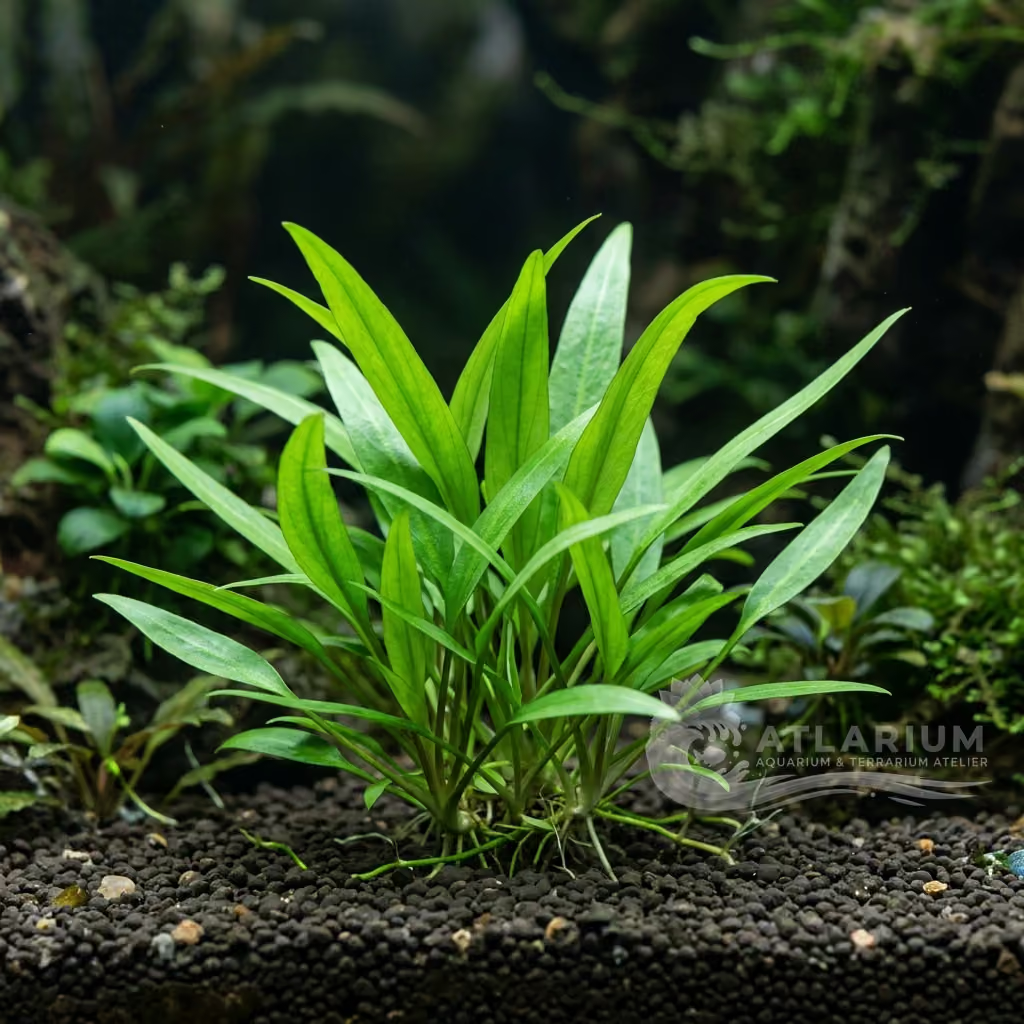
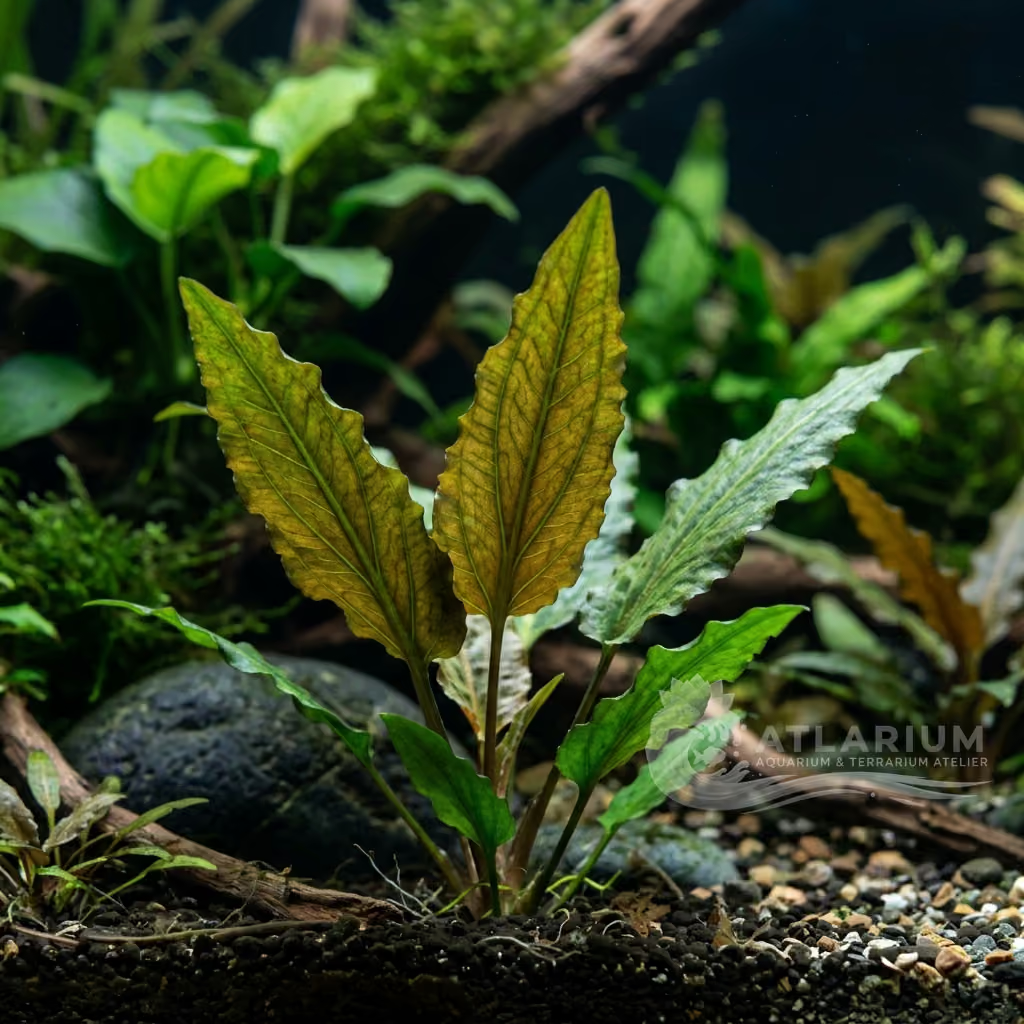
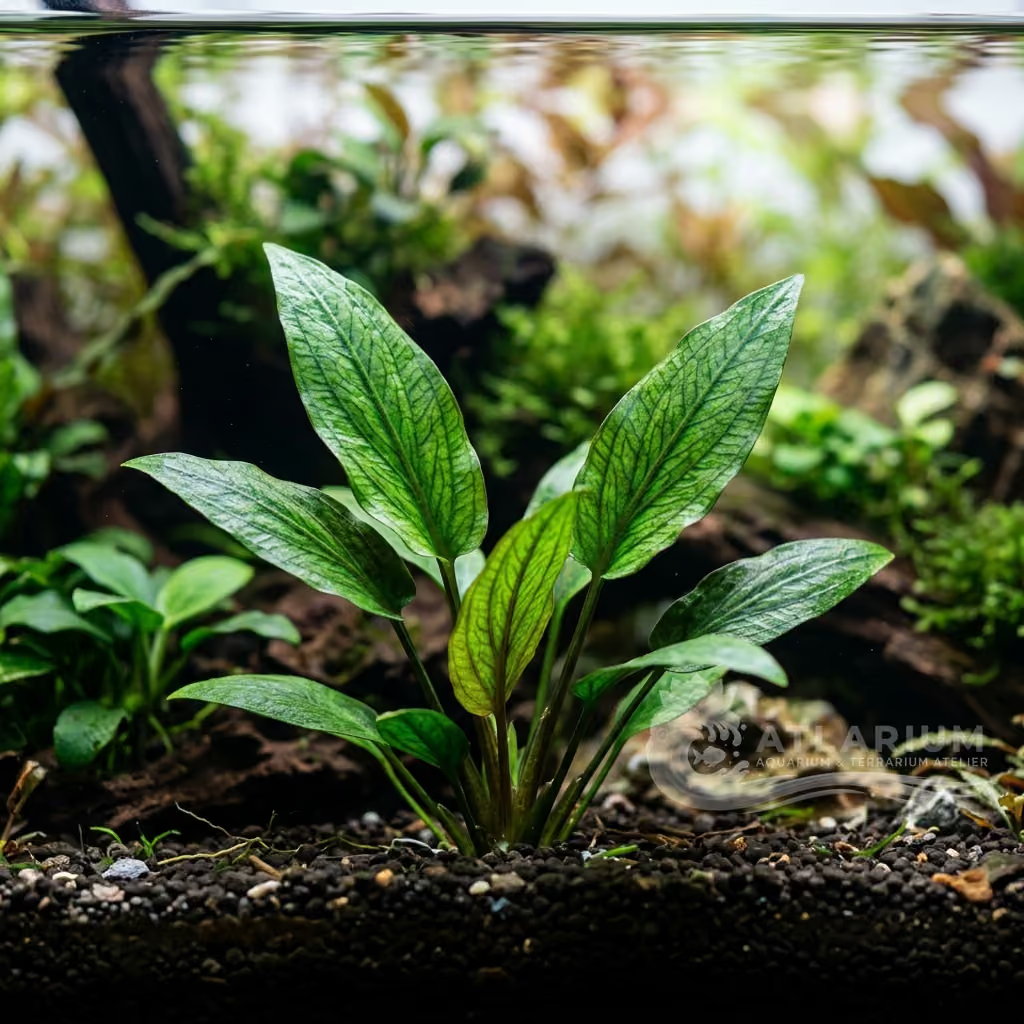
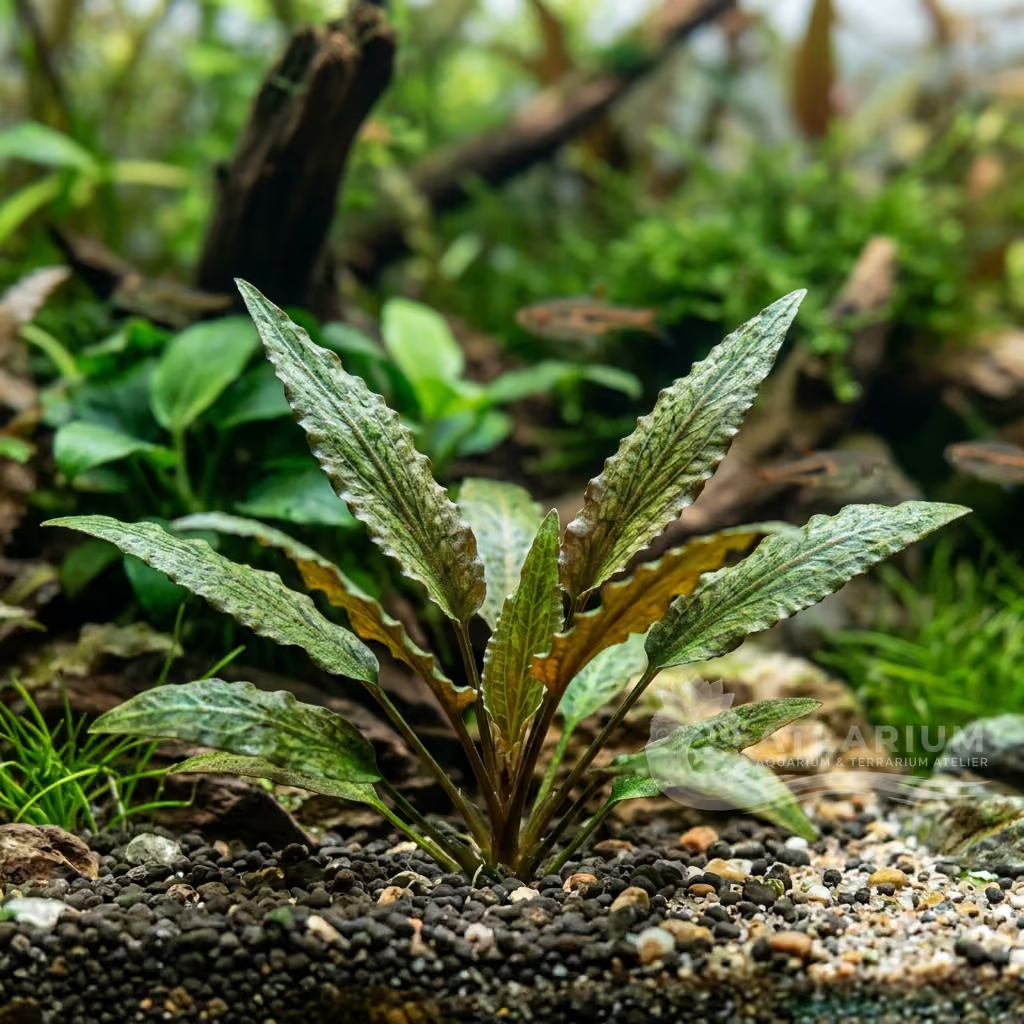
The Dwarf Crypt (Foreground, 5 cm). The smallest known Cryptocoryne species. It forms compact green tufts suitable for foreground lawns. It has a very slow growth rate, requiring a rich substrate and moderate to high light levels compared to other shade-loving crypts.
Water Temperature
20 - 28 °C
pH Value
5.5 - 8
Water type
Freshwater
Light
Media
CO2
Media (Aumenta significativamente la velocità di propagazione)
Expected height
5 cm
Expected width
5 cm
GH
4 - 20 dGH
KH
2 - 15 dKH

Species description
Geographical Origin and Habitat: Cryptocoryne parva is native to Sri Lanka, specifically the central highland regions around Kandy. It grows along the muddy and sandy banks of fast-flowing rivers and streams. In the wild, it forms dense grassy carpets that stay submerged during rainy periods and emersed on wet soil during dry months, exposed to stronger sunlight compared to other shade-loving Cryptocoryne species.
Taxonomy & Genetics: Belonging to the Araceae family, it is the smallest known species in the genus Cryptocoryne. It was first described in the 20th century. Genetically, Cryptocoryne parva maintains a highly stable dwarf structure and does not display the morphological variability typical of other species in the genus. Its growth rate is genetically pre-determined to be extremely slow.
Physical Structure: The plant features a compact rosette structure with short leaf stems. The leaves have a narrow, pointed, lanceolate lamina. The roots are highly developed and thick in proportion to the overall size of the plant, designed to anchor it firmly to the sandy substrate against the force of river currents.
Color & Texture: The leaves display a bright green or grass green color, uniform on both sides of the leaf. Unlike other Cryptocoryne species, it does not develop brown or bronze hues under intense light. The texture is moderately rigid and smooth, with entire and smooth leaf margins that give the plant a clean and tidy appearance.

Care, breeding and tankmates
Lighting & CO2: Requires moderate to high lighting to maintain its dwarf and compact growth habit. Under low light, it tends to grow taller, losing its compactness. CO2 injection is recommended to accelerate growth and stimulate propagation via runners.
Nutrition & Substrate: It requires a fertilized and very nutrient-rich substrate, especially rich in iron, since it absorbs almost all of its nutrients from the bottom through its robust root system. Root tabs inserted into the substrate are highly essential.
Water Chemistry: It thrives in temperatures between 20 and 28°C (68-82°F), with an optimal pH range of 5.5 to 8.0. It adapts to both soft and moderately hard water, but requires stable water parameters to prevent leaf melt.
Space Management & Placement: It is positioned exclusively in the foreground. It is used to create low carpets or small green decorative groups at the base of the hardscape. Single plantlets should be planted a few centimeters apart to allow them to merge over time.
Pruning: Routine pruning consists only of removing yellowing or damaged outer leaves. It propagates itself by sending out underground runners from which new daughter plants grow, which can then be separated and replanted.
Risks & Diseases: It is subject to "Cryptocoryne Meltdown" (sudden rotting of the leaves) in case of drastic and sudden swings in water parameters or lighting. Additionally, its slow-growing leaves can become covered in algae if the tank is unbalanced.

Geographic origin and distribution
Cryptocoryne parva is native to Sri Lanka, specifically the central highland regions around Kandy. It grows along the muddy and sandy banks of fast-flowing rivers and streams. In the wild, it forms dense grassy carpets that stay submerged during rainy periods and emersed on wet soil during dry months, exposed to stronger sunlight compared to other shade-loving Cryptocoryne species.
Origin
South and Southeast Asia

Plant profile
- Placement
- Foreground
- This species is best suited as a foreground carpet in the aquarium. Its diminutive rosette of small, grass-like leaves provides excellent contrast against both fine-leaved stems and hardscape materials. Careful positioning ensures it receives adequate light without being overshadowed by faster-growing plants.
- Botanical form
- Rosette
- Cryptocoryne parva features a beautiful diminutive rosette of small, grass-like leaves that adapts to its submerged environment. The leaf shape and stem length can shift dynamically based on the available light intensity and spectrum. Its robust crown and creeping rhizome form the foundation of this elegant aquatic plant.
- Growth
- Slow
- Cryptocoryne parva exhibits a naturally extremely slow pace of growth, typical of many species in its genus. It prioritizes root development initially, resulting in a delayed emergence of new leaves after planting. Environmental stability rather than high energy input is the key to steady, reliable growth.
- Substrate
- Rich
- For the best results, Cryptocoryne parva should be planted in a high-quality, mineral-rich substrate. Since it draws the majority of its nutrition from the roots, a well-established bottom layer is essential. Sand or fine gravel can be used successfully provided adequate root tabs are consistently supplied.
- Column fertilization
- Optional
- Although primarily a root feeder, Cryptocoryne parva absorbs significant nutrients from the water column. A balanced liquid fertilizer dosed weekly will support its overall metabolic functions. Care must be taken not to overdose, which could invite algae on its slower-growing leaves.
- Root fertilization
- Required
- Because Cryptocoryne parva develops a massive root system, it requires substantial subterranean feeding. Burying nutrient capsules near its base every few months guarantees lush and continuous growth. Neglecting root fertilization often leads to stunted leaves and a gradual decline in plant mass.
- Trimming
- Occasional
- Trimming is practically non-existent for this species due to its miniature size and sluggish growth. Occasional maintenance may involve carefully snipping away single decaying or algae-infested leaves using precision spring scissors. Never trim the entire carpet down like you would with Eleocharis or Hemianthus. Always avoid disturbing the substrate, as its shallow roots are easily uprooted.
- Propagation
- Runners
- The most effective way to propagate Cryptocoryne parva is by dividing its natural runner network. Wait until the young plantlets exhibit independent roots before separating them from the parent rhizome. Replanting them gently with root tabs ensures they transition smoothly without melting.
- Sensitivity
- Sensitive
- While generally hardy, it can still experience 'Crypt melt' if subjected to sudden environmental shifts, especially during the initial planting phase. It requires highly stable conditions, consistent CO2, and steady lighting to thrive. If melting occurs, the tiny root systems must be left in place to recover, though this will further delay the carpeting process. Proper acclimation is crucial.
- Layout role
- Foreground, group
- Cryptocoryne parva is the ultimate low-maintenance carpeting plant for patient aquascapers. It creates a lush, dark green foreground that looks incredibly natural and refined. Its tiny scale makes it an excellent choice for Iwagumi layouts in nano aquariums. It provides a stable, long-lasting foreground that will persist beautifully for years without needing a replant.

Related species
Recommendations grouped by close relatives, companion choices, and similar care.