Cryptocoryne × willisii "Pigmea"
Cryptocoryne × willisii "Pigmea"
Cryptocoryne × willisii 'Pigmea' is a stunning dwarf selection. Its extremely compact, narrow green leaves make it the perfect indestructible choice for intricate foregrounds and tiny nano tanks.
Water Temperature
22 - 28 °C
pH Value
6 - 7.5
Water type
Freshwater
Light
Low
CO2
Medium - High
Expected height
8 cm
Expected width
10 cm
KH
2 - 10 dKH

Species description
Geographical Origin and Habitat: Cryptocoryne × willisii 'Pigmea' is a dwarf cultivated selection derived from the natural hybrid Cryptocoryne × willisii, which is native to the riverbanks and wet forests of the central highlands of Sri Lanka. The type species develops in areas characterized by alternating wet and dry seasons, growing submerged along seasonal forest streams. The 'Pigmea' variety has been selected and propagated in cultivation for its extremely small size, ideal for reproducing miniature underwater landscapes.
Taxonomy & Genetics: It belongs to the Araceae family, genus Cryptocoryne. The taxonomic entity Cryptocoryne × willisii is considered a stable natural hybrid complex combining the genetic traits of related Sri Lankan species such as C. parva, C. beckettii, C. walkeri, and C. undulata. The 'Pigmea' cultivar genetically fixes the dwarfing characteristic, maintaining stable small leaves even in the presence of abundant nutrient availability in the soil.
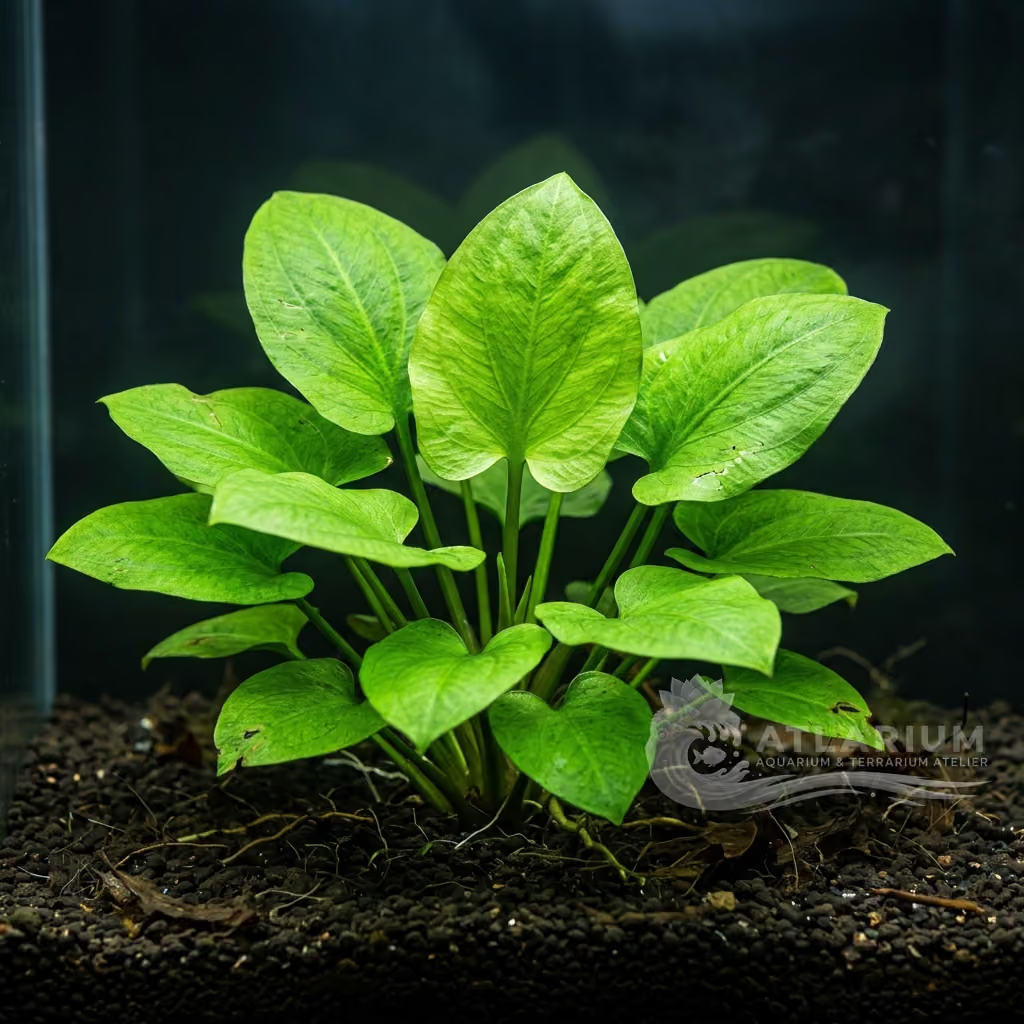
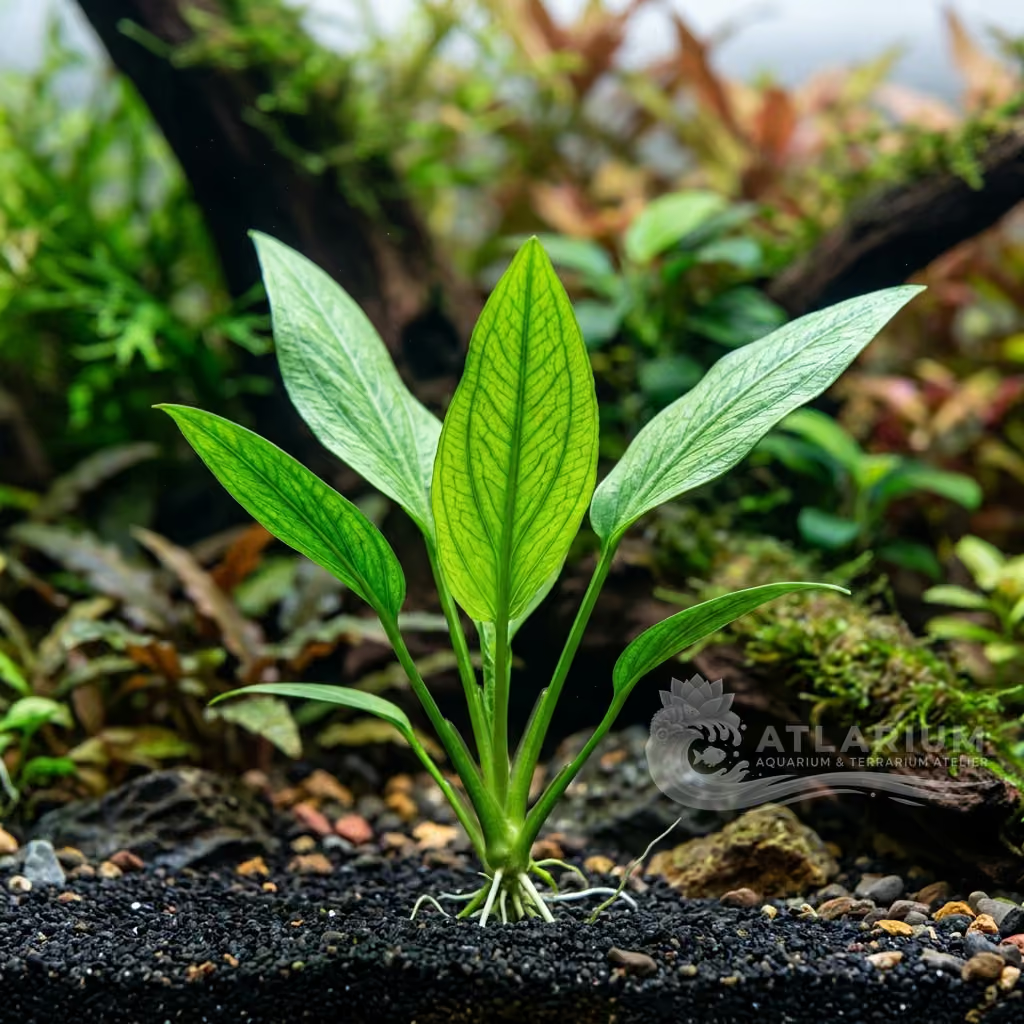
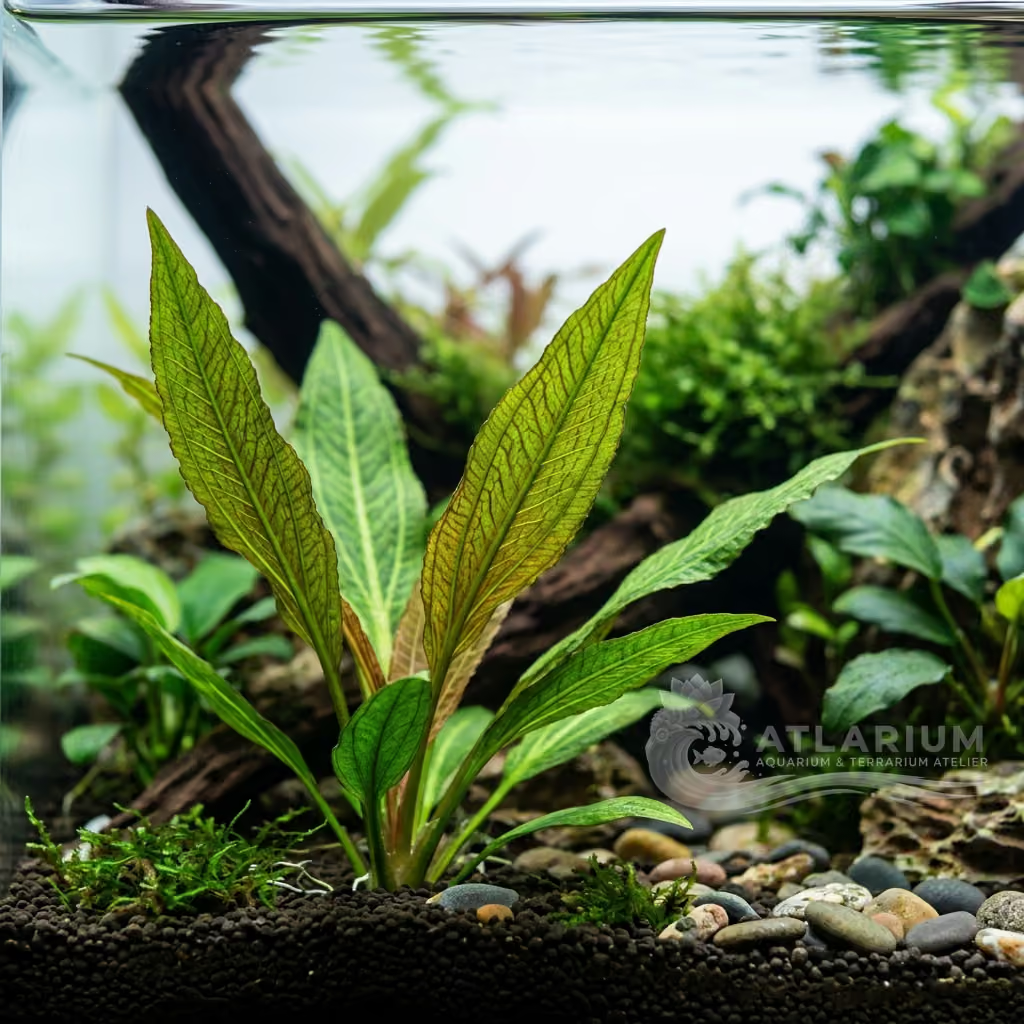
Physical Structure: The plant exhibits a dense, creeping herbaceous rosette structure, with a maximum height that rarely exceeds 5-8 cm. The leaves are narrowly lanceolate, almost needle-like when compared to other congenerics, supported by short, leathery petioles arranged radially around a thin, branched rhizome. The root system, although proportioned to the small size of the rosette, forms a dense network of whitish, fibrous roots that easily penetrate sandy substrates.
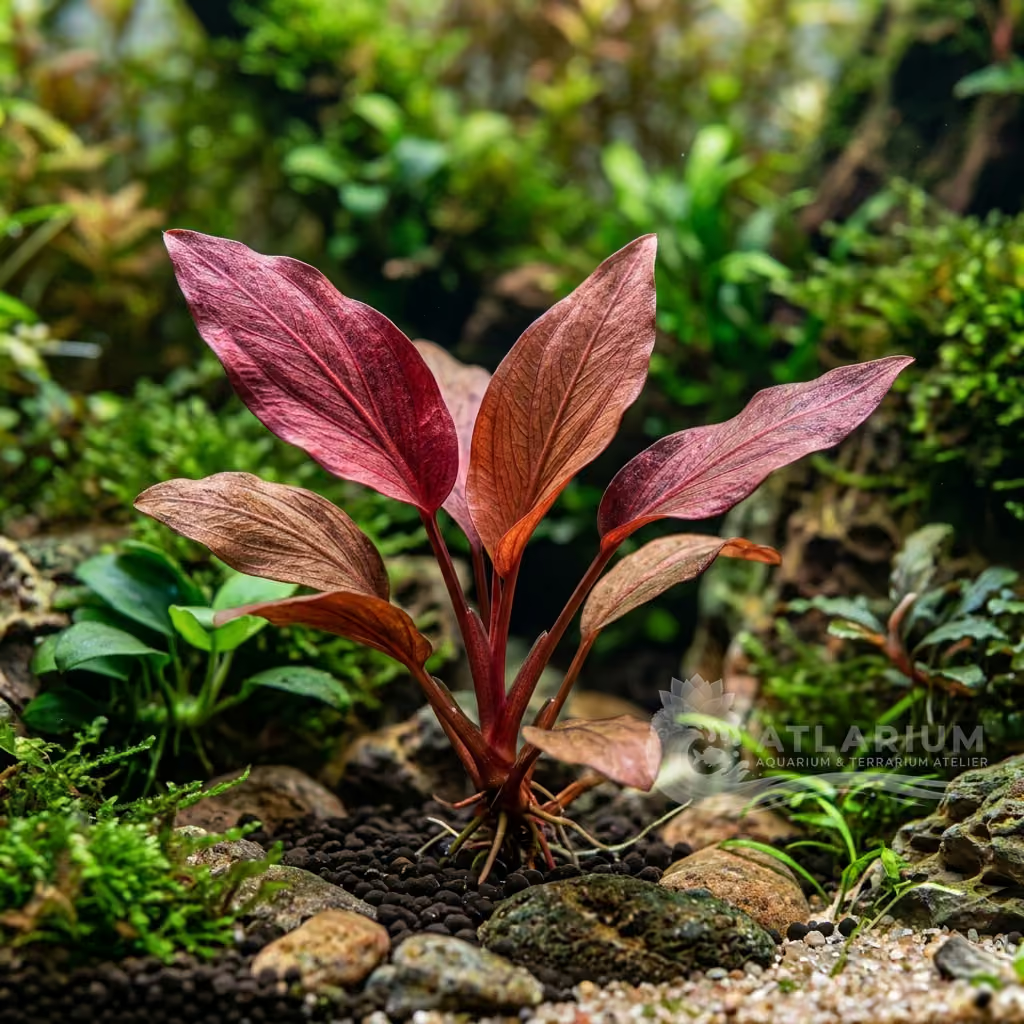
Color & Texture: The leaves show a bright green coloration, sometimes with slight bronze hues along the edges or near the base of the petiole under medium lighting. The leaf blade has a waxy, smooth texture, with straight or barely wavy margins. The fine and uniform texture of the clump creates a pleasant visual softness, similar to that of a submerged lawn.

Care, breeding and tankmates
Lighting & CO2: Adapted to low to moderate lighting conditions. Under too intense light, the leaves tend to grow prostrate and close to the ground, while under weak light the petioles stretch slightly vertically. CO2 injection is not critical, but a controlled dosage (5-12 mg/L) promotes development by producing closer and healthier runners.
Nutrition & Substrate: Prefers a fine, fertile substrate, such as fine-grained aquasoil (powder) or sand enriched with specific root fertilizer tabs. The plant absorbs most of its nutrients through its root system. Liquid
Water Chemistry: Tolerant of chemical parameters, it prefers soft to medium-hard water, with an optimal pH between 6.0 and 7.5. The optimal water temperature ranges from 20°C to 28°C. Regular water changes contribute to overall stability by avoiding pH or conductivity swings.
Space Management & Placement: It is ideal for foreground placement in aquariums of any size, and is particularly suitable for nano-aquariums. Plant it in small groups, spacing individual rosettes 2 cm apart; over time it will propagate, covering empty spaces and forming a compact green carpet.
Pruning: Slow growth makes pruning almost non-existent. It is only recommended to remove individual damaged or yellowing outer leaves by carefully cutting them at the base of the rhizome with precision scissors to prevent them from rotting on the bottom.
Risks & Diseases: Shows good resistance to Cryptocoryne melt, but drastic changes in light or fertilizers can trigger leaf decay. Due to its slow development, leaves can be colonized by green spot algae if the phosphate-to-nitrate ratio is not balanced.

Geographic origin and distribution
Cryptocoryne × willisii 'Pigmea' is a dwarf cultivated selection derived from the natural hybrid Cryptocoryne × willisii, which is native to the riverbanks and wet forests of the central highlands of Sri Lanka. The type species develops in areas characterized by alternating wet and dry seasons, growing submerged along seasonal forest streams. The 'Pigmea' variety has been selected and propagated in cultivation for its extremely small size, ideal for reproducing miniature underwater landscapes.
Origin
South and Southeast AsiaSelective breeding and cultivars

Plant profile
- Placement
- Foreground
- Perfect as a foreground plant due to its exceptionally small stature and compact growth habit. It works beautifully when planted in small groups at the base of larger hardscape features. In nano tanks, it can serve as a primary carpeting plant.
- Botanical form
- Rosette
- Characterized by tiny, narrowly ovate to lanceolate leaves that remain consistently small. The leaves are typically bright green and form dense, miniature rosettes. This dwarf variety maintains its diminutive size even under optimal growing conditions.
- Growth
- Slow
- Grows quite slowly, requiring patience as it establishes its root system and begins to spread. The addition of CO2 and root fertilizers can moderately increase its growth speed. Its slow pace makes it very easy to manage without frequent maintenance.
- Substrate
- High
- As a demanding root feeder, Cryptocoryne × willisii "Pigmea" requires a deep, nutrient-dense substrate to thrive. A foundation of high-quality aqua soil or enriched sand provides the necessary minerals and trace elements. The substrate should be at least 4 centimeters thick, allowing the plant's delicate root system to establish a strong anchor. Absorbing the majority of its nutrients directly from the soil, it benefits greatly from periodic supplementation with root tabs.
- Column fertilization
- Recommended
- Liquid fertilization is mostly optional but can be beneficial in sparsely stocked aquariums. A light dose of a complete fertilizer will ensure no trace element deficiencies occur. It draws most of its required nutrients through the substrate.
- Root fertilization
- None
- Thrives best when provided with a nutrient-rich substrate or targeted root tabs. Developing a strong root system is essential for its long-term stability and propagation. Root feeding is the most effective way to encourage lush, continuous growth.
- Trimming
- Occasional
- Pruning is rarely needed because of its slow growth and naturally small size. Maintenance usually only involves removing old, yellowing, or algae-covered leaves at the base. Care should be taken not to disturb the root system during maintenance.
- Propagation
- Cuttings
- Reproduces by sending out short runners that sprout new, miniature plantlets nearby. These can be left to form a dense carpet or snipped and replanted to start new patches. Ensure the new plantlets have adequate roots before attempting to separate them.
- Sensitivity
- Moderate
- Like other Cryptocorynes, it is prone to melting when introduced to new aquariums or when water parameters fluctuate rapidly. It prefers a stable environment and should not be moved once planted. Once acclimated, it becomes a very hardy and resilient plant.
- Layout role
- Nano, Midground, Foreground, group
- Ideal for creating intricate details in the foreground and around the edges of hardscape. Its tiny leaves provide a sense of scale, making it especially valuable in nano aquariums and aquascaping layouts. It softens transitions between the substrate and larger decorative elements.

Related species
Recommendations grouped by close relatives, companion choices, and similar care.