Encyclopaedia

Plant atlas
PlantFreshwaterEasy
©AI Generated·Proprietary

Cryptocoryne balansae

Cryptocoryne balansae

Cryptocoryne balansae is a fascinating background plant with long, hammered leaves. Medium growth, requires a rich substrate and tolerates hard water.

Taxonomy
Class:Liliopsida
Order:Alismatales
Family:Araceae
Genus:Cryptocoryne
Species:Cryptocoryne balansae

Share

Check out Cryptocoryne balansae on Atlarium

PracticeRecognition quizzesPhotos, names, origins, and puzzles to review Atlas species.Open quizzes
Water Temperature

22 - 28 °C

pH Value

6 - 7.5

Water type

Freshwater

Light

Medium - High

CO2

Medium - High

Expected height

60 cm

Expected width

15 cm

KH

2 - 10 dKH

Species description

Cryptocoryne balansae, also known as Cryptocoryne crispatula var. balansae, is native to Southeast Asia, particularly southern Thailand, Vietnam, and Laos. In these regions, it colonizes fast-flowing limestone rivers, often growing in dense submerged communities along riverbeds rich in pebbles and clay sediments. It adapts to seasonal water level fluctuations, remaining submerged for most of the year but surviving in emersed form during the dry season if the substrate remains moist. Taxonomically, it belongs to the Araceae family and is considered a geographical variety of the Cryptocoryne crispatula complex.

Care, breeding and tankmates

Prefers hard or moderately hard water with a KH between 4 and 15 dKH and an alkaline or neutral pH (6.5-8.0). Tolerating highly calcified waters sets it apart from other Cryptocorynes, making it ideal for East African cichlid aquariums or hard water tanks. The optimal temperature is between 22°C and 28°C. The main risk is "Cryptocoryne melt," a phenomenon where leaves suddenly dissolve due to rapid changes in water parameters or light intensity. To prevent this, maintain stable aquarium conditions and avoid frequent relocation once established.

Geographic Origin and Distribution

This species originates from: Thailand, Vietnam, Laos.

Origin

South and Southeast Asia

Plant profile

Placement
Background

This tall, flowing plant is definitively a background species. Its incredibly long leaves will eventually reach the surface and stretch across the top of the aquarium, gracefully riding the water current. Ensure it is planted in an area where its long foliage will not overshadow smaller, light-demanding plants below.

Botanical form
Rosette

C. balansae is famed for its long, ribbon-like leaves that feature deeply hammered or 'bullate' textures. The leaves are typically a bright to vibrant olive green, although under high light, they can develop attractive brownish tints. The plant grows strictly upwards, eventually trailing along the water surface.

Growth
Medium

It exhibits a moderate growth rate, but patience is required as it can take quite some time to establish a strong root network after planting. Once settled, it will continuously produce new leaves from the rosette. Providing CO2 injection significantly boosts its growth speed and overall robust appearance.

Substrate
High
Column fertilization
Recommended

Liquid fertilization is beneficial to complement root feeding, particularly to supply potassium and trace elements. Maintaining adequate calcium and magnesium levels in the water column is vital, as this plant thrives in harder water. Regular liquid dosing prevents pinholes in the older, longest leaves.

Root fertilization
Recommended

Root feeding is the primary and most important method of providing nutrition. Regularly inserting comprehensive root tabs deep into the substrate around the base of the plant ensures long-term vigor. A rich clay-based or soil substrate will produce the most impressive and textured specimens.

Trimming
Occasional

Pruning should only involve the removal of the oldest, outermost leaves that show signs of damage or extreme algae growth. Cut these leaves off cleanly at the base of the rosette. Never cut the leaves mid-stem, as the remaining portion will die back and rot within the tank.

Propagation
Runners

Propagation occurs via strong, thick underground runners that spread outwards from the mother plant. New rosettes will eventually break the surface of the substrate. Allow the new plantlets to grow to a substantial size with a good root system before severing the runner to separate them.

Sensitivity
Moderate

Like most Cryptocorynes, it is highly sensitive to rapid fluctuations in water parameters, which can trigger 'Crypt melt'. It distinctly prefers medium to hard water and may struggle or melt if placed in very soft, acidic environments. Provide stable conditions to ensure the leaves remain intact.

Layout role
Background, texture contrast

It acts as a dynamic, flowing background curtain that adds incredible movement to the aquascape. The highly textured leaves provide an excellent visual contrast against smooth stem plants or hardscape materials. Its trailing canopy offers fantastic shelter for timid or top-dwelling fish species.

Image gallery

Licensed images linked to the species or, when marked, to the closest representative taxon.

Related species

Recommendations grouped by close relatives, companion choices, and similar care.

Variants and close relatives

Same atlas type, nearby scientific identity, genus, or family.

Cryptocoryne bullosa

Cryptocoryne bullosa

Cryptocoryne bullosa

View details->
Cryptocoryne albida

Cryptocoryne albida

Cryptocoryne albida

View details->
Cryptocoryne axelrodii

Cryptocoryne axelrodii
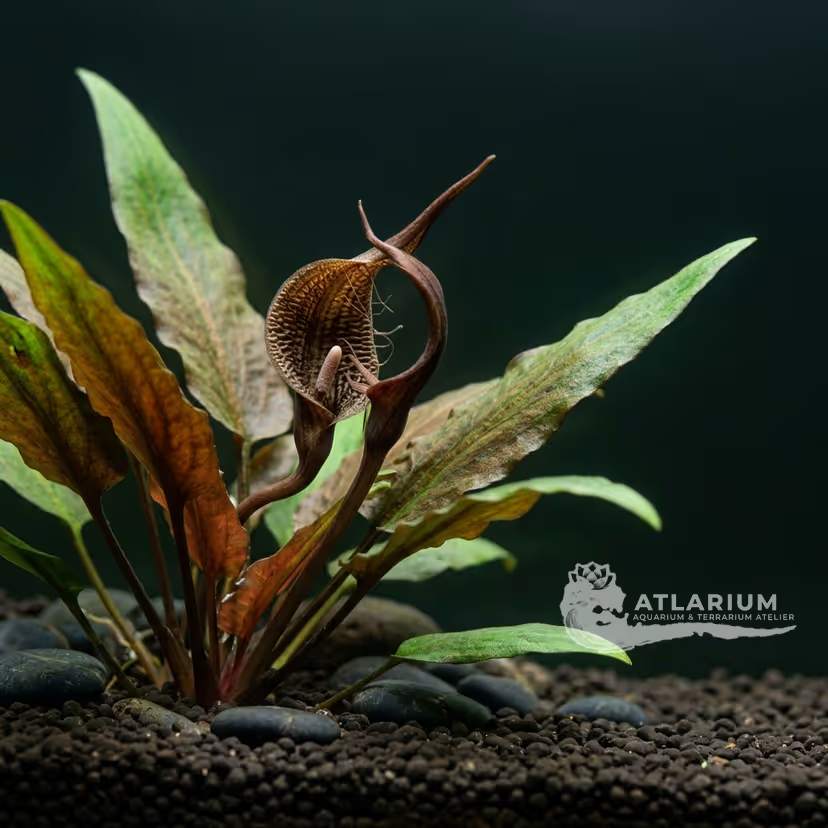
Cryptocoryne axelrodii

View details->
Cryptocoryne coronata

Cryptocoryne coronata

Cryptocoryne coronata

View details->
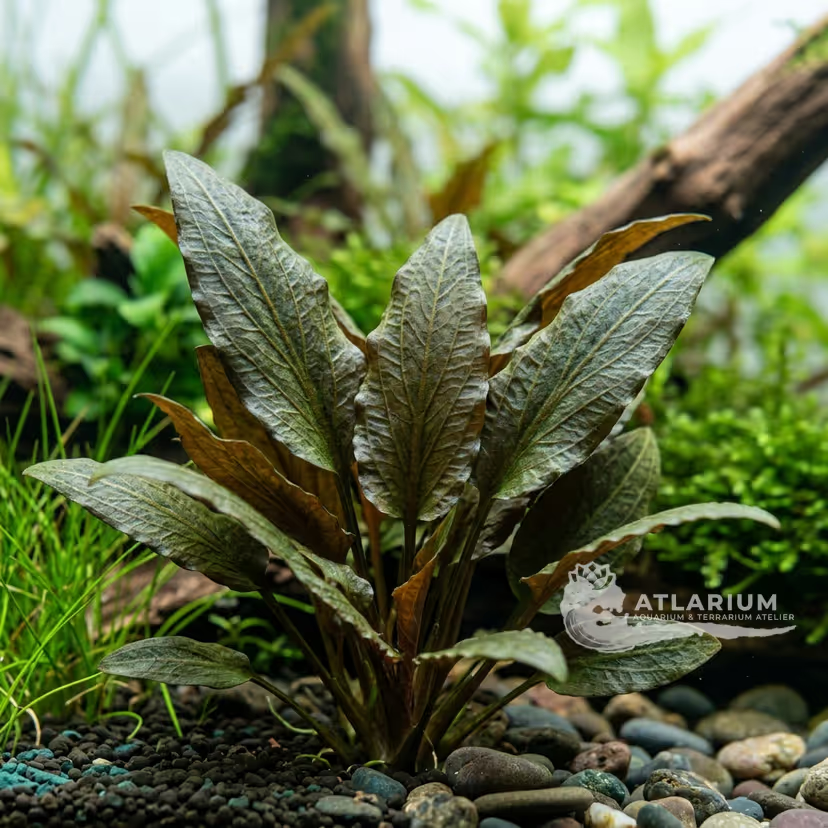
Giant Cryptocoryne Cordata

Giant Cryptocoryne Cordata

Cryptocoryne cordata var. cordata
View details->
Cryptocoryne blassii

Cryptocoryne blassii

Cryptocoryne blassii

View details->
Cryptocoryne cordata var. blassii

Cryptocoryne cordata var. blassii

Cryptocoryne cordata var. blassii

View details->
Cryptocoryne affinis

Cryptocoryne affinis
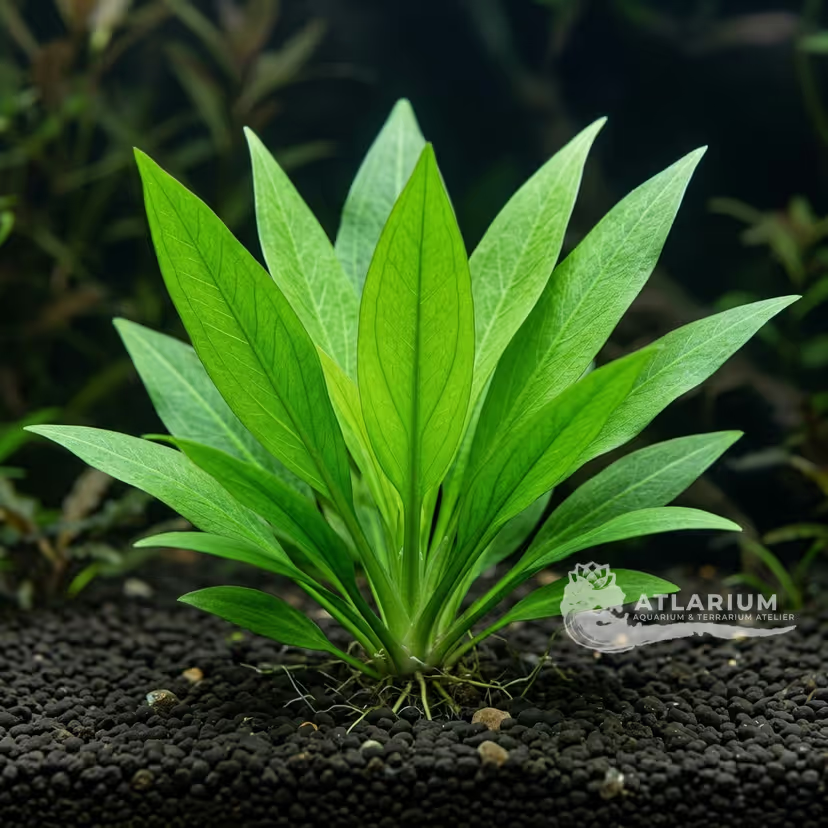
Cryptocoryne affinis

View details->
Cryptocoryne beckettii "Viridifolia"

Cryptocoryne beckettii "Viridifolia"

Cryptocoryne beckettii "Viridifolia"

View details->
Cryptocoryne cordata var. siamensis

Cryptocoryne cordata var. siamensis
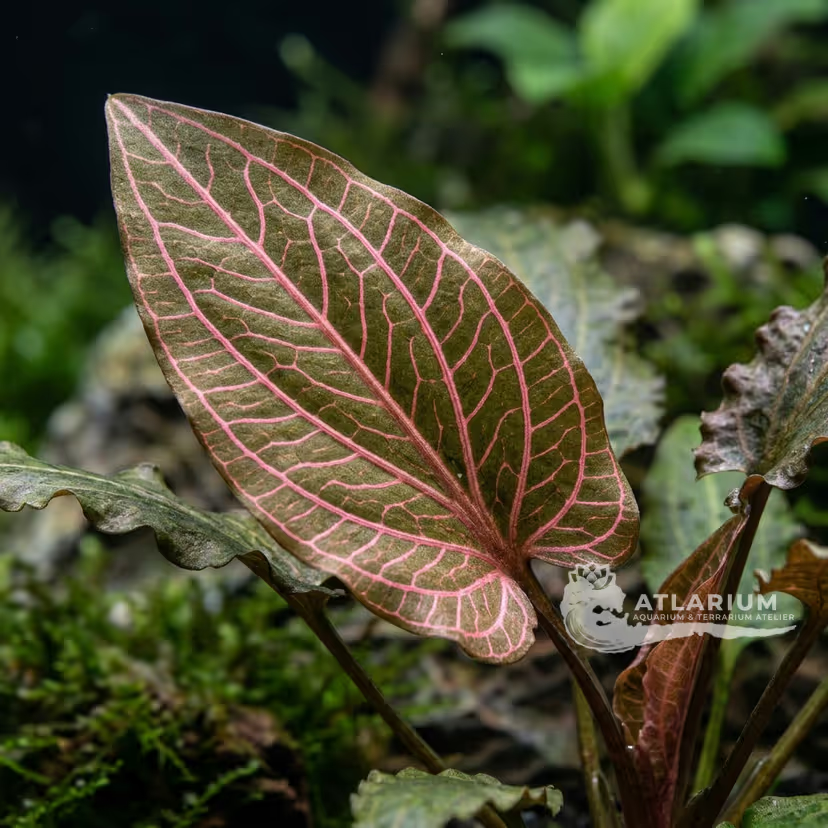
Cryptocoryne cordata var. siamensis

View details->
Cryptocoryne cordata var. siamensis 'Rosanervig'

Cryptocoryne cordata var. siamensis 'Rosanervig'

Cryptocoryne cordata var. siamensis 'Rosanervig'

View details->
Cryptocoryne beckettii

Cryptocoryne beckettii
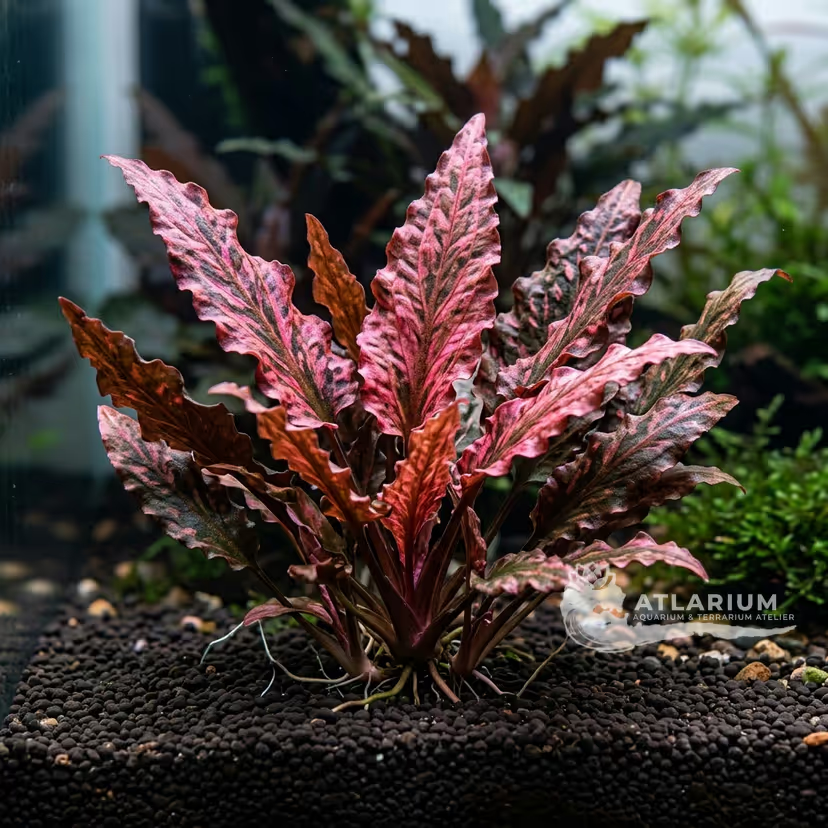
Cryptocoryne beckettii

View details->
Cryptocoryne beckettii "Petchii Pink"

Cryptocoryne beckettii "Petchii Pink"

Cryptocoryne beckettii "Petchii Pink"

View details->
Cryptocoryne beckettii "Petchii"

Cryptocoryne beckettii "Petchii"

Cryptocoryne beckettii "Petchii"

View details->
Cryptocoryne aponogetifolia

Cryptocoryne aponogetifolia

Cryptocoryne aponogetifolia

View details->
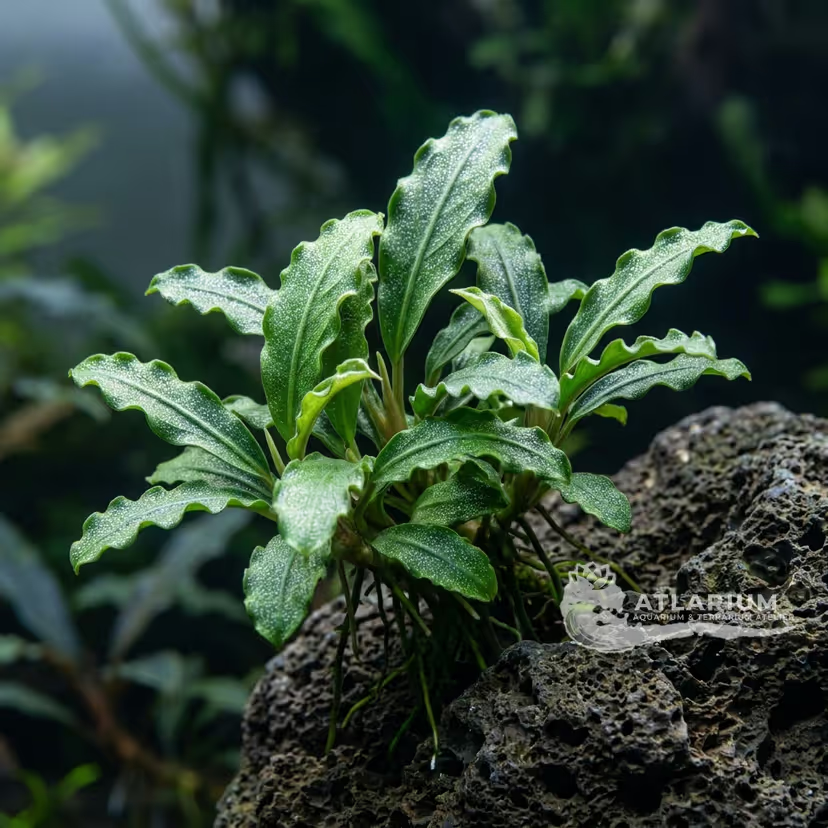
Bucephalandra motleyana "Braun-rot" ("Serimbu")

Bucephalandra motleyana "Braun-rot" ("Serimbu")

Bucephalandra motleyana "Braun-rot" ("Serimbu")

View details->

Recommended companions

Compatible cards from coherent ecosystems with matching parameters.

Ammannia sp. 'Bonsai'

Ammannia sp. 'Bonsai'

Ammannia sp. 'Bonsai'

View details->
Bucephalandra motleyana "Kapit"

Bucephalandra motleyana "Kapit"

Bucephalandra motleyana "Kapit"

View details->
Bucephalandra motleyana "Pancuraji"

Bucephalandra motleyana "Pancuraji"

Bucephalandra motleyana "Pancuraji"

View details->
Bucephalandra sp. "Bukit Kelam / Sintang"

Bucephalandra sp. "Bukit Kelam / Sintang"

Bucephalandra sp. "Bukit Kelam / Sintang"

View details->
Bucephalandra sp. "Melawi"

Bucephalandra sp. "Melawi"

Bucephalandra sp. "Melawi"

View details->
Commelinaceae sp. "Green"

Commelinaceae sp. "Green"

Commelinaceae sp. "Green"

View details->
Cordyline fruticosa

Cordyline fruticosa

Cordyline fruticosa

View details->
Bucephalandra motleyana "Braun-rot narrow"

Bucephalandra motleyana "Braun-rot narrow"

Bucephalandra motleyana "Braun-rot narrow"

View details->
Bucephalandra motleyana "Riam Macam"

Bucephalandra motleyana "Riam Macam"

Bucephalandra motleyana "Riam Macam"

View details->
Cherry Barb
Fish

Cherry Barb

Puntius titteya

View details->
Bamboo shrimp
Invertebrate

Bamboo shrimp

Atyopsis moluccensis

View details->
Bucephalandra sp. "Black Leaf"

Bucephalandra sp. "Black Leaf"

Bucephalandra sp. "Black Leaf"

View details->
Blackline Tetra
Fish

Blackline Tetra

Hyphessobrycon scholzei

View details->
Skunk cory
Fish

Skunk cory

Corydoras arcuatus

View details->
Ceratopteris siliquosa

Ceratopteris siliquosa

Ceratopteris siliquosa

View details->
Bacopa sp. "Japan"

Bacopa sp. "Japan"

Bacopa sp. "Japan"

View details->

Similar care

Cards with similar requirements, difficulty, habitat, and husbandry profile.

Crinum thaianum

Crinum thaianum

Crinum thaianum

View details->
Chlorophytum bichetii

Chlorophytum bichetii

Chlorophytum bichetii

View details->
Ceratopteris richardii

Ceratopteris richardii

Ceratopteris richardii

View details->
Blyxa cf. vietii

Blyxa cf. vietii

Blyxa cf. vietii

View details->
Arrowhead Anubias

Arrowhead Anubias

Anubias hastifolia

View details->
Anubias barteri var. nana 'Round Leaf'

Anubias barteri var. nana 'Round Leaf'

Anubias barteri var. nana 'Round Leaf'

View details->
Bucephalandra motleyana

Bucephalandra motleyana
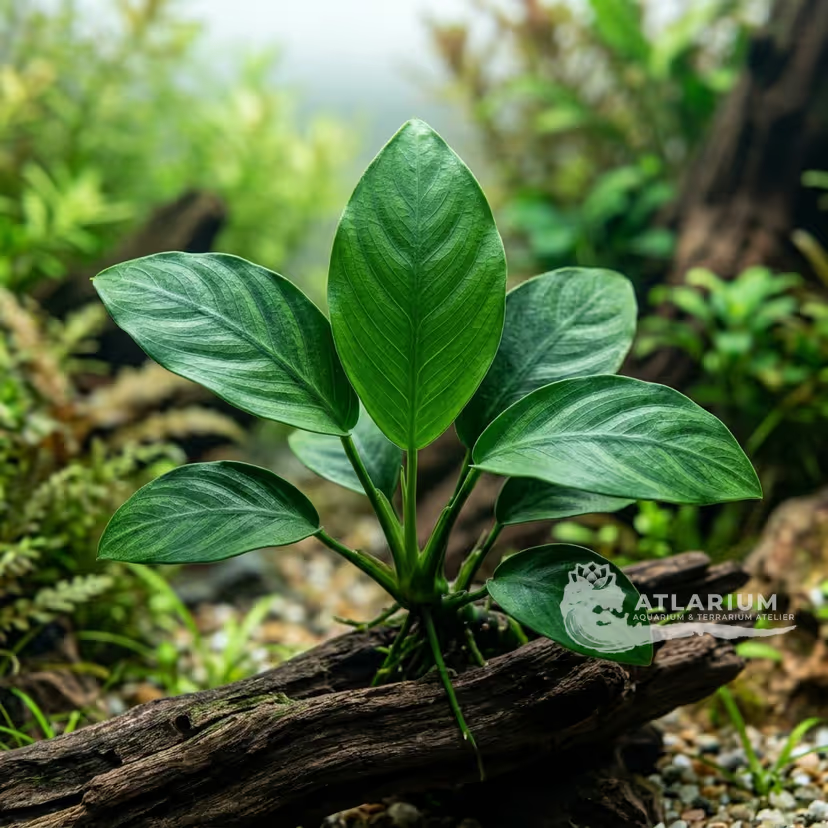
Bucephalandra motleyana

View details->
Anubias minima

Anubias minima

Anubias minima

View details->
Alternanthera reineckii "rosaefolia minor"

Alternanthera reineckii "rosaefolia minor"

Alternanthera reineckii "rosaefolia minor"

View details->
Anubias gigantea

Anubias gigantea

Anubias gigantea

View details->
Bucephalandra pygmaea "Bukit Kelam / Sintang"
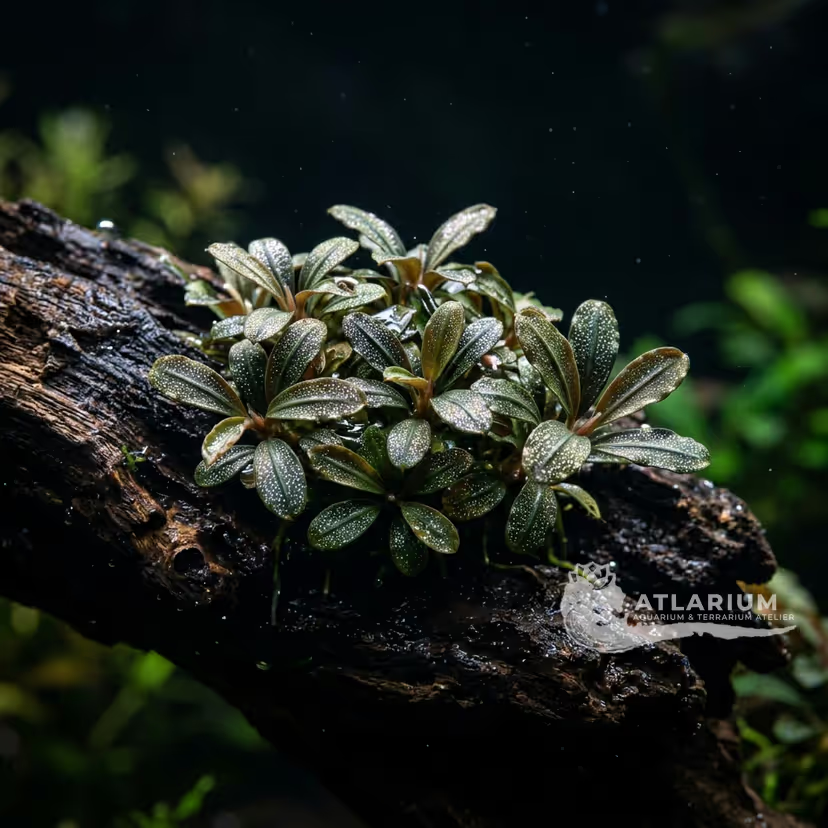
Bucephalandra pygmaea "Bukit Kelam / Sintang"

Bucephalandra pygmaea "Bukit Kelam / Sintang"

View details->
Bucephalandra pygmaea "Kapit"

Bucephalandra pygmaea "Kapit"
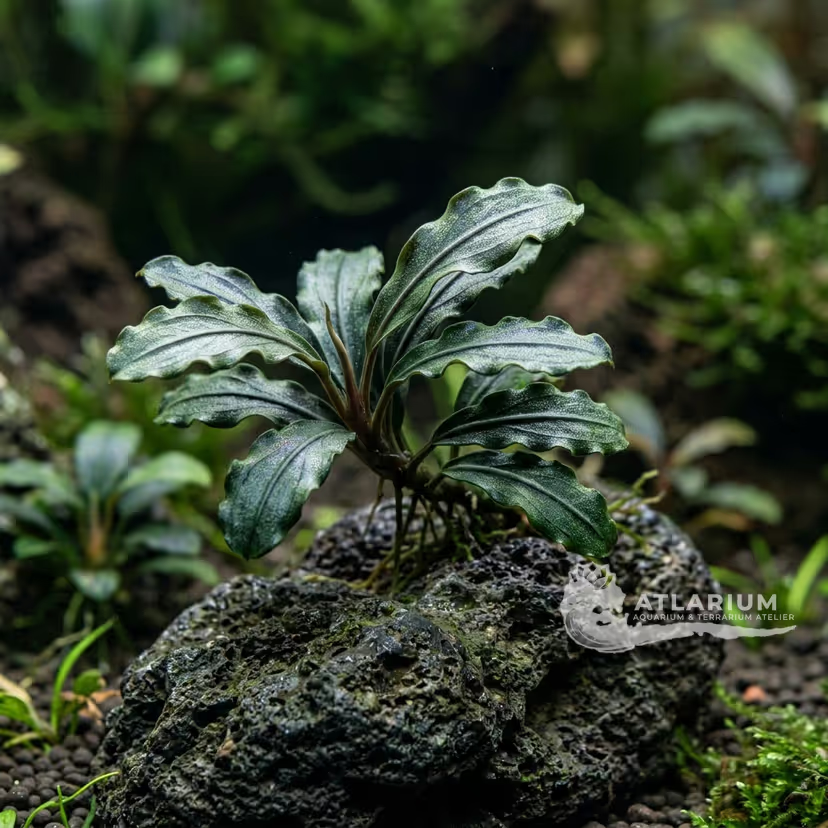
Bucephalandra pygmaea "Kapit"

View details->
Bucephalandra sordidula

Bucephalandra sordidula
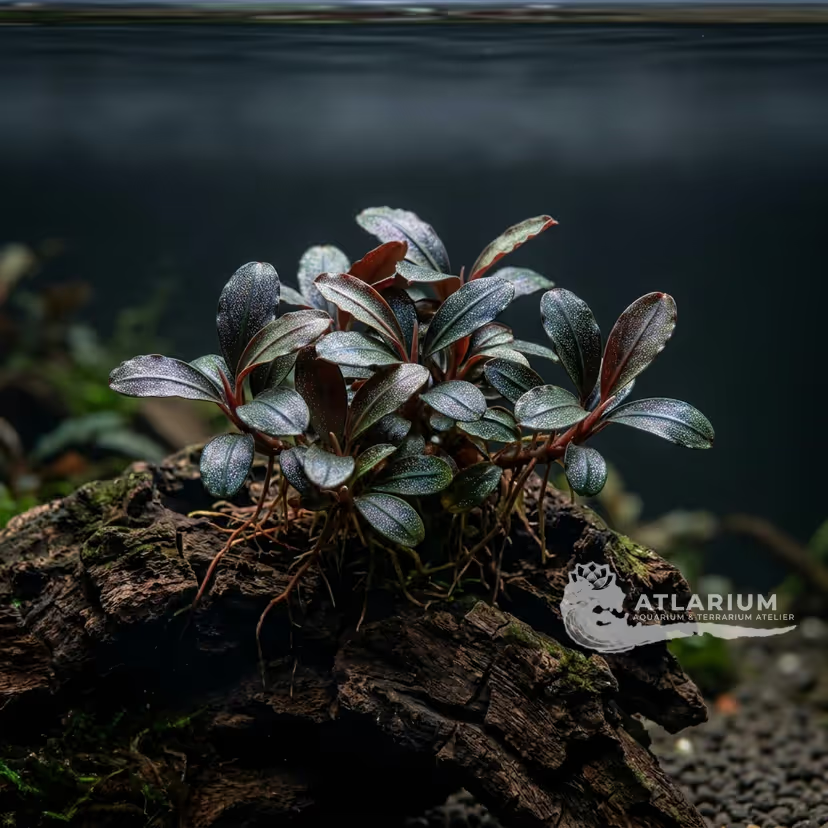
Bucephalandra sordidula

View details->
Bucephalandra sp. "Bodok"

Bucephalandra sp. "Bodok"

Bucephalandra sp. "Bodok"

View details->
Bucephalandra sp. "Braun-rot narrow"

Bucephalandra sp. "Braun-rot narrow"
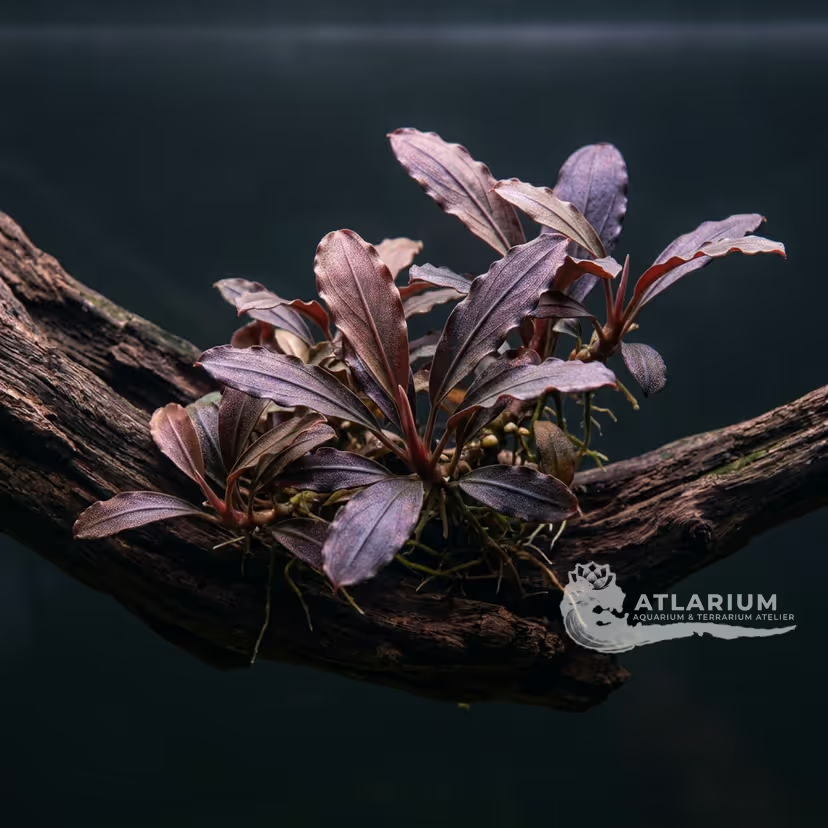
Bucephalandra sp. "Braun-rot narrow"

View details->
Bucephalandra sp. "Braun-rot" ("Serimbu")

Bucephalandra sp. "Braun-rot" ("Serimbu")

Bucephalandra sp. "Braun-rot"

View details->
Last updated: 06/16/2026