Crinum thaianum
Crinum thaianum
The Water Onion from Thailand is an exceptionally tough bulb plant boasting huge, ribbon-like green leaves. Highly adaptable, it thrives in shaded, low-tech tanks but explodes in size under bright light.
Water Temperature
22 - 28 °C
pH Value
6 - 8
Water type
Freshwater
Light
Medium
CO2
Low
Expected height
100 cm
Expected width
20 cm
GH
4 - 20 dGH
KH
2 - 12 dKH

Species description
Geographical Origin and Habitat: Endemic exclusively to the pristine, extremely fast-flowing, and highly oxygenated river systems of southern Thailand (particularly in the Phang Nga province). Crinum thaianum, globally known as the "Water Onion," is an exceptionally robust aquatic bulb plant. It evolved to permanently bury its massive, fleshy bulb deep into heavy mud and sandy riverbeds, anchoring itself directly in the violent, pounding flow of tropical monsoon rapids. It is perfectly adapted to surviving in massive, deep aquatic environments that frequently flood.
Taxonomy & Genetics: Scientifically classified within the Amaryllidaceae family, it is closely related to the famous West African Crinums (like C. natans and C. calamistratum) but is genetically and geographically distinct. Taxonomically, C. thaianum is celebrated for a specific genetic trait: its leaves completely lack the heavily ruffled, crinkled margins of its African cousins. Instead, its genetics force the production of exceptionally smooth, perfectly flat, wildly elongated ribbon-like leaves, earning it its fame as a spectacular, sleek architectural centerpiece.
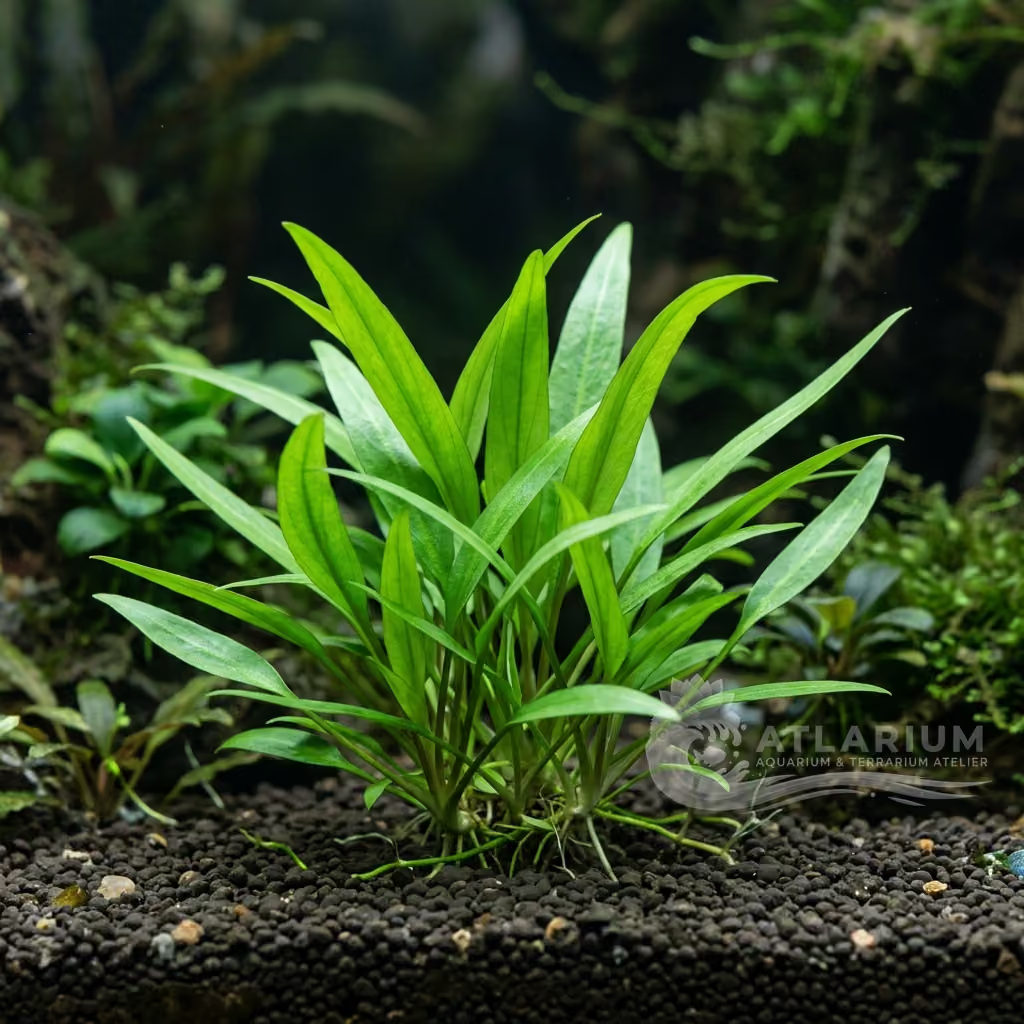
Physical Structure: The structural architecture of the Water Onion is dominant, elegant, and breathtakingly massive. The foundation is a huge, perfectly spherical, true bulb (closely resembling an edible white onion) that deploys a massive, sprawling root system. It produces absolutely no vertical stems. The leaves erupt directly from the bulb's crown. These leaves are shockingly long (frequently exceeding 200 cm / 80 inches in length), relatively broad (up to 3 cm wide), and perfectly smooth, resembling miles of sleek green ribbon elegantly flowing in the current.
Color & Texture: The coloration is a bright, solid, extremely vibrant apple-green to mid-green, lacking the deeply dark, moody emerald tones of its African cousins. It possesses zero biological ability to produce red pigments. The texture is intensely rigid, rubbery, and incredibly leathery. Because the sleek, ribbon-like leaves are so physically thick and strong, the plant is completely indestructible, rendering it entirely impervious to damage from massive, destructive, or herbivorous fish (like Oscars, Pacus, or massive Plecos).

Care, breeding and tankmates
Lighting & CO2: It is an extremely forgiving, highly adaptable bulb plant. It will comfortably survive and produce its massive ribbon leaves in deeply shaded, low-light aquariums, making it a staple in low-tech setups. However, to force the bulb to rapidly deploy its 200-cm-long leaves, medium to high-intensity LED lighting is recommended. While injected CO2 is not strictly required for survival, pressurized CO2 drastically accelerates its metabolism, powering the immense energy required to rapidly grow such massive, thick foliage.
Nutrition & Substrate: As a colossal true bulb plant, the Water Onion is an extremely aggressive root feeder. It MUST be planted in a very deep (minimum 10 cm / 4 inches), nutrient-dense substrate enriched with heavy root tabs. CRITICAL: When planting, only the bottom two-thirds of the white bulb and its roots should be buried. The upper third of the bulb (the crown) MUST remain exposed above the substrate; if the entire fleshy bulb is completely buried and suffocated, it will instantly rot and the plant will die.
Water Chemistry: Originating from the fast-flowing rivers of Thailand, it demands excellent water quality and highly oxygenated conditions. It thrives in standard heated tropical aquariums (22-28°C) and is virtually invincible regarding pH and hardness, adapting effortlessly to soft acidic water or rock-hard alkaline tap water. However, the absolute most critical environmental requirement is massive, relentless water flow. The plant must be placed directly in the path of a powerful filter return, allowing its smooth, massive ribbons to stream gracefully.
Space Management & Placement: Due to its colossal 200-cm leaf length and dominant nature, C. thaianum is strictly an architectural centerpiece for massive aquariums. It should be planted as a standalone specimen in the background. Its endless, smooth ribbons will violently breach the surface and drape endlessly across the top of the tank, gracefully blocking light to the areas below. It must never be used in nano tanks, and it must never be crowded, as its massive root system will violently choke out smaller carpeting plants.
Pruning: Pruning is a delicate procedure. Because the sleek leaves emerge directly from the bulb, you cannot cleanly cut a leaf in half; a severed leaf will never regrow its tip, and the bluntly cut edge will quickly turn brown and rot, destroying the sleek aesthetic. To prune, you must reach down to the base of the bulb and cleanly peel or slice away the entire outermost, oldest leaf directly at the crown. To manage extreme length, it is better to let the leaves drape across the surface rather than cut them.
Risks & Diseases: The absolute greatest threat to this indestructible Water Onion is improper planting. If the massive white bulb crown is completely buried in the substrate, the entire plant will rapidly rot into a foul, toxic mush. The second major risk is Black Beard Algae (BBA). Because the smooth, ribbon-like leaves live for years and grow relatively slowly, they act as massive landing pads for devastating algae if water flow is inadequate or organic waste builds up in the aquarium.

Geographic origin and distribution
Endemic exclusively to the pristine, extremely fast-flowing, and highly oxygenated river systems of southern Thailand (particularly in the Phang Nga province). Crinum thaianum, globally known as the "Water Onion," is an exceptionally robust aquatic bulb plant. It evolved to permanently bury its massive, fleshy bulb deep into heavy mud and sandy riverbeds, anchoring itself directly in the violent, pounding flow of tropical monsoon rapids. It is perfectly adapted to surviving in massive, deep aquatic environments that frequently flood.
Origin
South and Southeast Asia

Plant profile
- Placement
- Background
- Due to the extreme length its leaves can reach—often exceeding 2 meters—it must be placed in the background of large aquariums. The leaves will quickly reach the surface and stretch across the top, providing excellent shade and a natural canopy for shy fish. Its long, flowing form works beautifully near filter outflows where the leaves can trail in the current. Avoid placing it in small tanks where it will quickly block all light.
- Botanical form
- Rosette
- This species is characterized by a prominent, onion-like bulb from which long, flat, straight, ribbon-like leaves emerge. Unlike other Crinum species, its leaves are not crinkled or wavy, but smooth and slightly translucent green. The foliage is incredibly tough and fibrous, rendering it completely unpalatable to almost all herbivorous fish. When grown in open-topped tanks or ponds, it may produce a stunning, highly fragrant white lily-like flower.
- Growth
- Medium
- For a bulb plant, Crinum thaianum is considered a relatively fast grower, rapidly pushing out new leaves once fully established. The leaves themselves grow very quickly towards the surface, requiring occasional, careful trimming if they begin to choke the tank. Despite its speed, it does not require intense lighting to maintain this growth pace. It is generally very hardy and will continuously grow for many years.
- Substrate
- High
- A very deep substrate is absolutely critical for this plant, as its bulb can grow to be quite large and its roots are extensive. The bulb should be planted so that the top one-third to one-half is exposed above the substrate line to prevent rotting. A nutrient-rich aquasoil or gravel fortified heavily with root tabs is ideal. Without a deep, secure anchor, the plant's massive buoyancy can pull it out of the substrate.
- Column fertilization
- Recommended
- Water column feeding is less important than root feeding, but regular dosing of a comprehensive liquid fertilizer helps maintain leaf vigor. Because the leaves grow so long and have massive surface area, they can efficiently absorb trace elements from the water. Be cautious not to over-fertilize the water column, as its long leaves are prime targets for hair algae if nutrient levels become unbalanced. Keep nitrates and phosphates at moderate levels.
- Root fertilization
- None
- This is a quintessential heavy root feeder that derives the vast majority of its sustenance directly from the substrate. Placing several high-quality root tabs in a circle around the bulb is highly recommended for long-term health. These tabs should be replenished every 2 to 3 months, especially in mature tanks where the soil may be depleted. A well-fed root system prevents the bulb from shrinking and ensures continuous leaf production.
- Trimming
- Occasional
- Avoid cutting the leaves midway, as the cut ends will often turn brown and decay, looking unsightly. Instead, prune the plant by carefully peeling or cutting the oldest outer leaves off right at the base of the bulb. This promotes new growth from the center and keeps the plant looking tidy.
- Propagation
- Seeds, Division
- Propagation occurs naturally and slowly via the production of daughter bulbs that form around the base of the mother plant. These small offsets should not be separated until they have developed a robust root system and several inches of leaves. Once they reach an adequate size, they can be gently detached and planted elsewhere in the tank. Attempting to artificially divide the main bulb is not recommended and usually results in the death of the plant.
- Sensitivity
- Moderate
- The most important consideration is not to bury the bulb completely, which can cause it to rot; at least half of the bulb must remain exposed. It is generally hardy but dislikes being uprooted or moved frequently. Provide stable water parameters to avoid sudden leaf melt.
- Layout role
- Midground, Background
- It is an excellent background plant for creating flowing, linear elements in an aquascape. Its long trailing leaves mimic a natural riverine environment, offering perfect hiding spots for fish. Its strong presence makes it a fantastic focal point for large, minimalist hardscapes.

Image gallery
Licensed images linked to the species or, when marked, to the closest representative taxon.

Related species
Recommendations grouped by close relatives, companion choices, and similar care.