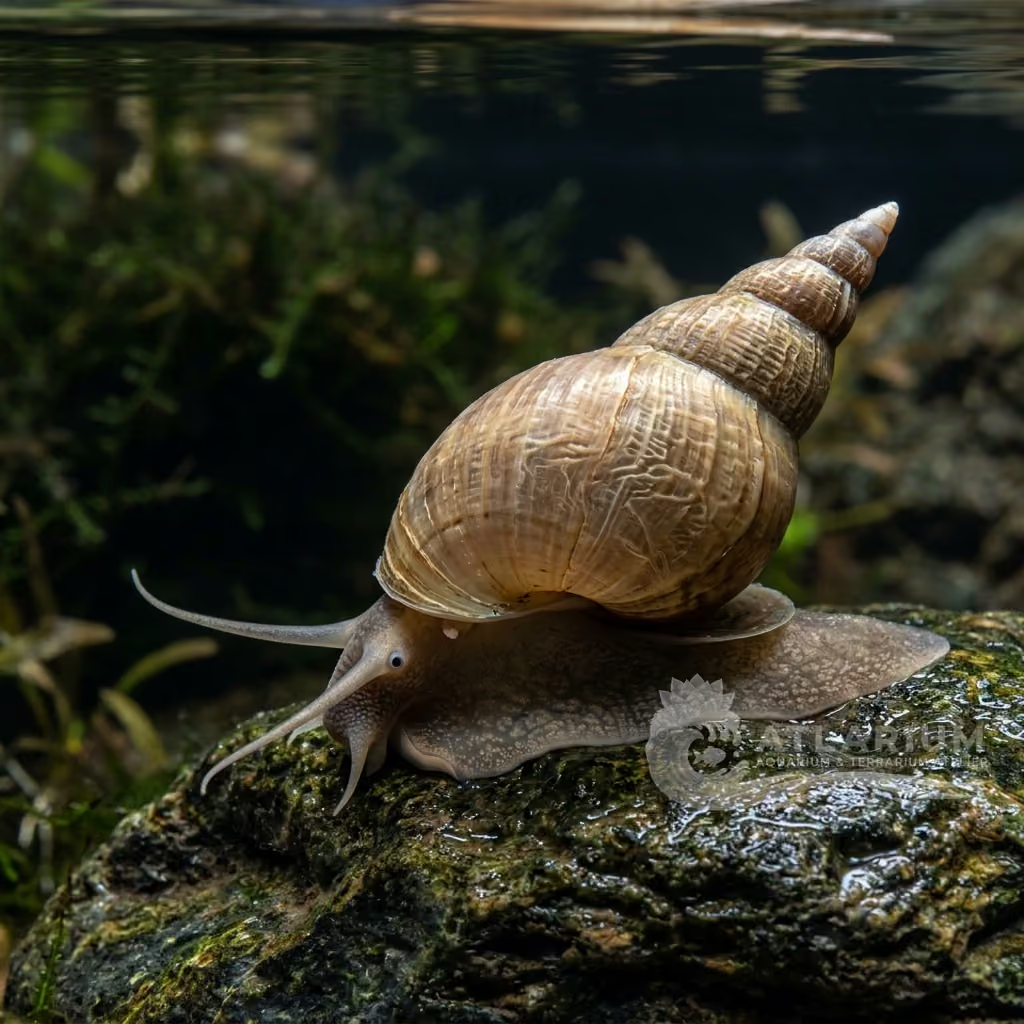
Spiny nerite snail
Clithon sowerbianum
The Spiny Nerite Snail is a fantastic freshwater janitor that relentlessly consumes diatoms and green dust algae. It thrives in hard water and won't overpopulate.
Water Temperature
20 - 28 °C
pH Value
7 - 8.4
Water type
Freshwater / Brackish
Invertebrate type
Freshwater snail
Adult size
2 cm
Minimum group
>= 1
GH
6 - 20 dGH
KH
3 - 15 dKH
TDS
120 - 450 ppm
Ecological role
Scavenger
Copper sensitivity
High

Species description
Geographical Origin and Habitat: The Horned Nerite Snail (Clithon sowerbianum) is a tiny, highly specialized, and visually distinct aquatic gastropod natively endemic to the coastal mangrove swamps, tidal river mouths, and brackish estuaries of Southeast Asia (including Indonesia, the Philippines, and Thailand). Their natural biotope is defined by the harsh, highly variable conditions where freshwater rivers merge with the saltwater ocean. They spend their lives tightly gripping smooth coastal rocks and submerged mangrove roots, grazing on thick algae mats in rapidly changing currents.
Taxonomy: Scientifically classified within the Neritidae family, they are significantly smaller than most other Nerite species available in the hobby. Fully mature adults rarely exceed 1.5 to 2.0 centimeters (0.6-0.8 inches) in diameter. Despite their small size, they possess an incredibly thick, dense calcium-carbonate shell. Their defining anatomical feature—and the reason for their common name—is the presence of several distinct, sharp, horn-like spikes protruding from the back of their shell, an evolutionary defense mechanism against crushing predators like crabs and birds.
Social Behavior: They are completely peaceful, highly industrious, and strictly utilitarian scavengers with absolutely zero predatory instincts. They are entirely oblivious to other tank mates. Their entire lifespan is dedicated to a slow, methodical, endless patrol of the aquarium's hard surfaces—glass, rocks, filters, and tough plant leaves—relentlessly vacuuming up microscopic green spot algae, diatoms, and biofilm. Because of their tiny size, they are exceptional at cleaning tight crevices and small plant leaves that larger snails cannot reach.
Coloration and Sexual Dimorphism: Sexual dimorphism is visually non-existent; while there are distinct males and females, they cannot be sexed by the human eye. Their coloration is highly variable and striking. The base color of the shell often features swirling bands of black and yellow, olive green and black, or solid black with intricate yellow zigzag patterns. The sharp "horns" protruding from the shell are usually dark brown or black and add a rugged, prehistoric aesthetic to this tiny snail.

Care, breeding and tankmates
Tank Setup: The aquarium architecture MUST accommodate their biological need for hard grazing surfaces and their propensity to escape. A nano tank of 10-20 liters (2.5-5 gallons) is sufficient. The tank MUST feature smooth rocks and glass surfaces.
CRITICAL WARNING: Like all Nerites, their tidal instincts drive them to climb out of the water. A perfectly sealed, tight-fitting lid is unconditionally mandatory, otherwise they will crawl out, fall behind the tank, and dehydrate to death on the floor.
Diet and Feeding: They are spectacular, highly specialized herbivorous aufwuchs grazers and undisputed champions of nano-algae removal. They actively consume tough Green Spot Algae (GSA) and brown diatoms. However, their tiny size and massive appetite make them highly prone to starvation in immaculate tanks. Their diet MUST be heavily supplemented if natural algae runs out. Regular offerings of premium sinking algae wafers, spirulina powder, and blanched vegetables (zucchini) are unconditionally mandatory for their survival.
Water Quality: Originating from brackish estuaries, they possess a massive, uncompromising biological requirement for pristine, HARD water. They STRICTLY require hard, highly alkaline water (GH 8-20, pH 7.2 - 8.5) and warm tropical heat (24-28°C / 75-82°F). Keeping them in soft, acidic water (below pH 7.0) is absolutely fatal; the acidity will rapidly dissolve, pit, and erode their calcium-carbonate shells (especially their delicate horns), leading to agonizing death. Flawless filtration is mandatory; they have zero tolerance for Ammonia.
Compatibility and Tankmates: Compatibility is absolutely stellar due to their peaceful nature and spiky, impenetrable shell. They are the perfect cleanup crew for peaceful nano freshwater or brackish community tanks. They completely ignore fish and dwarf shrimp. They MUST NEVER be housed with specialized snail-eating predators (like Pea Puffers, massive Loaches, or large Cichlids) that will crush their shells. Excellent companions include Bettas, Nano Tetras, Guppies, and peaceful dwarf shrimp.
Aquarium Breeding: This is a massive benefit for aquarists: Horned Nerites CANNOT reproduce in a freshwater aquarium. Females will continuously lay tiny, hard, white eggs (resembling sesame seeds) scattered across driftwood and rocks. While these eggs can be visually annoying and are very difficult to scrape off, they will NEVER hatch in freshwater. In the wild, their microscopic larvae MUST be washed out to the saltwater ocean to survive. Thus, they will never overrun a tank like pest snails.
Risks and Diseases: The absolute greatest physical risk is agonizing death from shell degradation caused by keeping them in soft, acidic water; hard, alkaline water with high calcium is unconditionally mandatory. The second major risk is lethal starvation in clean tanks lacking algae; supplemental vegetable feeding is crucial. Finally, escaping is a massive risk; they will climb out of uncovered tanks. Care must be taken not to break off their spikes when handling them.

Geographic origin and distribution
The Horned Nerite Snail (Clithon sowerbianum) is a tiny, highly specialized, and visually distinct aquatic gastropod natively endemic to the coastal mangrove swamps, tidal river mouths, and brackish estuaries of Southeast Asia (including Indonesia, the Philippines, and Thailand). Their natural biotope is defined by the harsh, highly variable conditions where freshwater rivers merge with the saltwater ocean. They spend their lives tightly gripping smooth coastal rocks and submerged mangrove roots, grazing on thick algae mats in rapidly changing currents.
Origin
Tropical oceans and reefsEurope, Mediterranean, and West AsiaSouth and Southeast Asia

Invertebrate profile
- Diet
- Biofilm grazer
- The dietary requirements for Clithon sowerbianum revolve heavily around their constant grazing on biofilm and algae. In a mature aquarium, they will naturally find a significant portion of their food by foraging across surfaces. However, it is important to supplement their diet with high-quality commercial foods designed specifically for them. Vegetable matter, blanched spinach, or specialized sinking pellets can ensure they receive full nutrition. Providing a varied and balanced diet directly correlates to better coloration, growth rates, and overall vitality.
- Ecological role
- Scavenger
- In their natural habitat, Clithon sowerbianum plays a vital ecological role as part of the clean-up crew. They help maintain the balance of their ecosystem by breaking down decaying organic matter and consuming nuisance algae. This natural behavior translates perfectly into the home aquarium, where they serve as tireless workers keeping the environment pristine. By reducing the buildup of detritus, they indirectly improve water quality and prevent the spread of harmful pathogens. Their constant activity makes them a functional and invaluable addition to any balanced aquatic system.
- Adult size
- 2 cm
- Jump risk
- Yes
- Aquarists should be aware that Clithon sowerbianum has a known tendency for climbing up the glass out of the water. This usually happens if water parameters deteriorate, prompting an instinctual escape response to find better conditions. A tight-fitting lid or a custom mesh screen on the aquarium is highly recommended to prevent any dry tragedies. Keeping the water level an inch or two below the rim can also deter escape attempts effectively. If an individual is found outside the tank, returning it quickly to the water might still save it if it hasn't completely dried out.
- Shock sensitivity
- High
- It is widely documented that Clithon sowerbianum is incredibly susceptible to osmotic shock and rapid shifts in water parameters. When introducing them to a new tank, a slow drip acclimation process over several hours is strictly necessary. Sudden fluctuations in temperature, pH, or dissolved solids can lead to immediate stress, failed molts, or death. Aquarists must ensure that top-offs are done slowly and with matched water to maintain stability. Routine water changes should be smaller and more frequent rather than large, sudden replacements.
- Calcium and minerals
- High
- Adequate calcium levels are fundamentally important for the survival and growth of Clithon sowerbianum. Calcium is the primary building block for their exoskeleton or shell, and a deficiency can lead to fatal structural issues. The water column must have a balanced general hardness (GH) to provide dissolved minerals for absorption. Additionally, offering calcium-enriched foods or specialized mineral supplements can greatly assist their biological needs. Regular testing of the water's mineral content is recommended to ensure they have enough raw materials to thrive.
- Molting
- Shell growth
- The molting process is the most vulnerable time in the life cycle of Clithon sowerbianum. During this period, they shed their old exoskeleton to grow, leaving them soft and defenseless for a short window. It is crucial to provide ample hiding spaces, such as dense moss, tubes, or leaf litter, so they can retreat safely. Never remove the discarded molts from the tank, as the invertebrates will consume them to quickly reclaim lost calcium and minerals. A failed molt, often seen as the "ring of death," is typically indicative of mineral imbalances or stress in the aquarium.
- Reproduction
- Oviparous
- Breeding Clithon sowerbianum in captivity can be an immensely rewarding experience for dedicated aquarists. Some species breed readily in stable parameters, while others require complex larval transitions through brackish water. Once conditions are optimal, females will generally carry the developing eggs until they hatch. Ensuring a predator-free environment and abundant microscopic food sources, like biofilm or specific larval foods, is essential for high survival rates. Observing the successive generations grow adds a dynamic and fascinating layer to keeping them.
- Compatibility & tankmates
- Peaceful
- When selecting tank mates for Clithon sowerbianum, extreme caution must be exercised to prevent them from becoming an expensive snack. They should ideally be kept in a species-only tank, or alongside very small, peaceful nano fish that pose no threat. Any fish with a mouth large enough to swallow them will likely try to do so eventually. Bottom-dwelling competitors or overly aggressive feeders might also outcompete them for resources. A thoughtfully planned community prioritizing peaceful coexistence is the key to their long-term thriving.

Image gallery
Licensed images linked to the species or, when marked, to the closest representative taxon.

Related species
Recommendations grouped by close relatives, companion choices, and similar care.