Virgin nerite snail
Vitta virginea
The Virgin Nerite Snail is a small, brilliantly patterned freshwater gastropod. It is an extraordinarily adaptable algae eater that adds beauty to planted tanks.
Water Temperature
20 - 28 °C
pH Value
7 - 8.5
Water type
Brackish / Marine
Invertebrate type
Marine snail
Adult size
2 cm
Minimum group
>= 1
GH
8 - 20 dGH
KH
3 - 15 dKH
TDS
150 - 450 ppm
Ecological role
Scavenger
Copper sensitivity
High

Species description
Geographical Origin and Habitat: The Virgin Nerite Snail (*Neritina virginea*) is a small, brilliantly patterned, extraordinarily adaptable gastropod natively endemic to the volatile coastal rivers, mangrove swamps, and massive estuaries of the western Atlantic Ocean, ranging from the southern United States (Florida) stretching all the way down through the Caribbean and into Brazil. Their natural biotope is defined by the severe salinity fluctuations of the intertidal zone, where rivers crash into the sea.
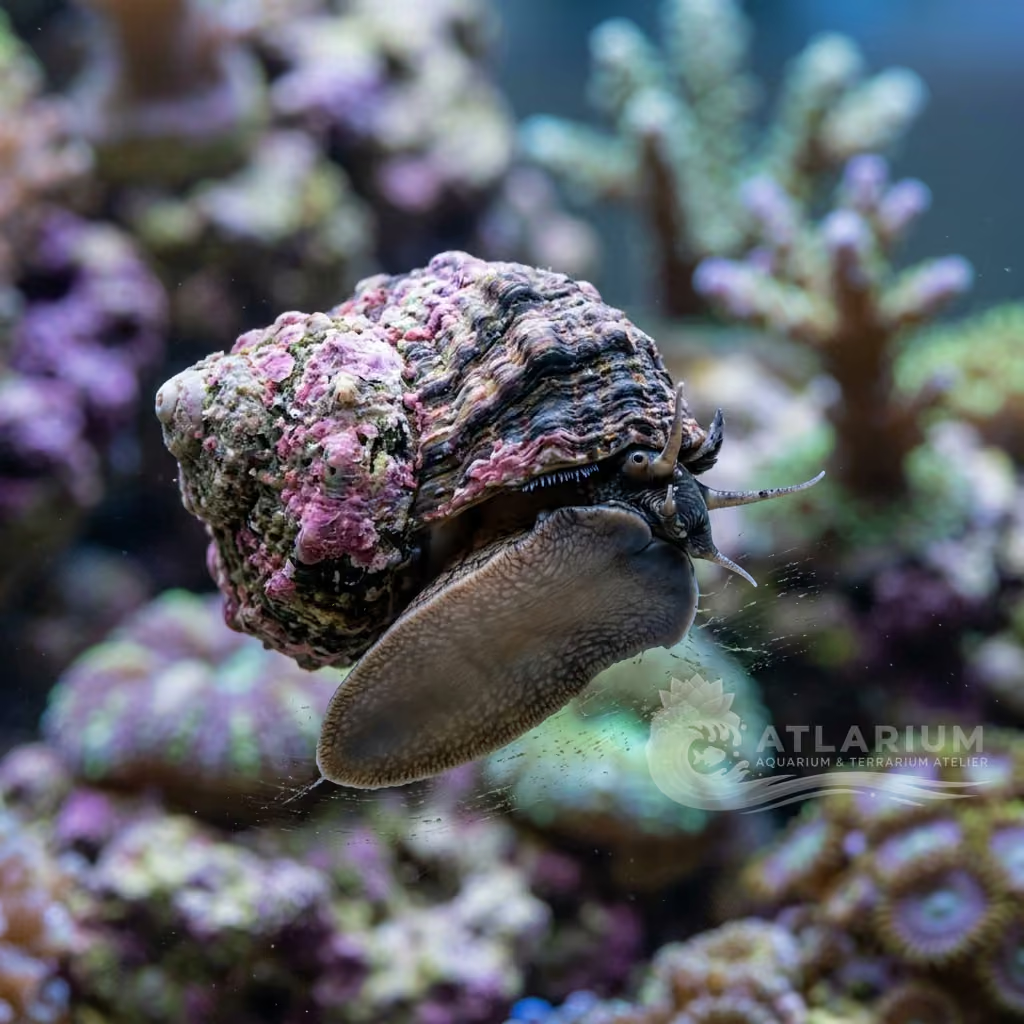
Taxonomy: Scientifically classified within the Neritidae family, they are significantly smaller and more delicate-looking than the bulky Olive or Zebra Nerites. Fully mature adults rarely exceed 1.0 to 1.5 centimeters (0.4-0.6 inches) in shell diameter. They possess a smooth, highly polished, drop-like or semi-globular shell completely lacking the sharp spikes of the Hedgehog Nerite. Like all true Nerites, they breathe via gills and possess a tightly fitting, D-shaped operculum to survive low tides.
Social Behavior: They are entirely peaceful, highly industrious, and strictly herbivorous grazing machines. They act as relentless, miniature biological vacuums. They spend their entire lives clamped fiercely to hard surfaces (rocks, mangrove roots, and aquarium glass), using their powerful radula to continuously rasp away microscopic algae films. Because their natural environment experiences extreme tidal shifts, they are hardwired to migrate upwards, making them notorious escape artists in open tanks.
Coloration and Sexual Dimorphism: Sexual dimorphism is visually non-existent. Their shell coloration is the reason they are highly prized, representing one of the most wildly variable and spectacularly patterned species in the aquarium hobby. No two snails look identical. The smooth, glossy shell can feature base colors of pure white, vivid yellow, deep olive, or mahogany. This base is covered in chaotic, breathtaking arrays of microscopic zigzags, stripes, dots, and netting in contrasting black, brown, or red.

Care, breeding and tankmates
Tank Setup: The aquarium architecture must reflect their need for algae grazing and their intense instinct to climb. A minimum 20-liter (5-gallon) tank is required.
CRITICAL REQUIREMENT: An absolutely tight-fitting, heavy lid is unconditionally mandatory; they possess a relentless tidal instinct to climb above the waterline and WILL escape an open aquarium to dry up on the floor. The tank MUST be mature and heavily illuminated to promote the continuous, natural growth of surface algae.
Diet and Feeding: They are voracious, unstoppable, obligate algivores (algae eaters).
CRITICAL WARNING: Virgin Nerites CANNOT be placed in pristine, "sterile," or newly cycled aquariums. They strictly consume enormous quantities of Green Spot Algae (GSA), brown diatoms, and soft green algae off glass and rocks. They will slowly starve to death if the tank lacks a steady supply of algae. They are 100% reef-safe and will absolutely never consume or damage healthy, living aquarium plants.
Water Quality: Originating from the Caribbean, they demand stable tropical heat (22-28°C / 72-82°F). Because they evolved in estuaries, they are incredible osmoregulators; they thrive equally well in 100% pure freshwater, heavy brackish water, or full marine reef setups. However, to maintain their highly polished, beautifully patterned shells, they STRICTLY require hard, alkaline water (GH 8-20, pH 7.5 - 8.4) rich in dissolved calcium. Soft, acidic freshwater will rapidly dissolve their shells.
Compatibility and Tankmates: Compatibility is universally excellent for peaceful community tanks. They are the perfect, non-intrusive miniature cleanup crew. Their small size makes them slightly more vulnerable to determined predators than larger Nerites, so they MUST NEVER be housed with massive Loaches, aggressive Cichlids, or dedicated snail-crushing Pufferfish. They are completely harmless to all fish, dwarf shrimp (Neocaridina/Caridina), and fry, making them ideal for nano-aquascapes.
Aquarium Breeding: Breeding Virgin Nerite Snails in a standard freshwater aquarium is
biologically impossible:. Females will incessantly cover the aquarium glass and hardscapes with hundreds of tiny, hard, white egg capsules that look like sesame seeds. While visually annoying, these eggs are completely harmless. The eggs strictly require a complex, fluctuating transition into brackish and full marine saltwater to successfully hatch into free-swimming veliger larvae. They will never overpopulate.
Risks and Diseases: The absolute greatest physical risk is slow, agonizing starvation; owners frequently place them in brand-new, sterile tanks completely devoid of the heavy algae growth they unconditionally require to survive. The second major risk is lethal desiccation; without a tight lid, their tidal instinct will force them out of the tank to dry up. Finally, keeping them in soft, acidic freshwater lacking calcium will lethally dissolve their beautiful shells and cause systemic organ failure.

Geographic origin and distribution
The Virgin Nerite Snail (*Neritina virginea*) is a small, brilliantly patterned, extraordinarily adaptable gastropod natively endemic to the volatile coastal rivers, mangrove swamps, and massive estuaries of the western Atlantic Ocean, ranging from the southern United States (Florida) stretching all the way down through the Caribbean and into Brazil. Their natural biotope is defined by the severe salinity fluctuations of the intertidal zone, where rivers crash into the sea.
Origin
Tropical oceans and reefsExtra-Amazon South AmericaCentral America and CaribbeanNorth AmericaEurope, Mediterranean, and West Asia

Invertebrate profile
- Diet
- Biofilm grazer
- Herbivorous grazer. Primarily consumes soft green algae, diatoms, and biofilm from glass, rocks, and plant leaves. Will not eat healthy plants. May require supplemental algae wafers if natural algae is insufficient.
- Ecological role
- Scavenger
- Excellent algae eater, particularly adept at cleaning glass and hardscape without damaging flora.
- Adult size
- 2 cm
- Jump risk
- Yes
- High risk of escaping. Nerite snails are known to climb out of open-top aquariums. A tight-fitting lid is highly recommended.
- Shock sensitivity
- High
- Can be sensitive to sudden shifts in pH or temperature. Acclimate carefully.
- Calcium and minerals
- High
- Needs adequate calcium to maintain a strong, healthy shell and prevent erosion.
- Molting
- Shell growth
- Nerite snails like Vitta virginea absolutely do not molt. Unlike shrimp or crabs, these mollusks possess a hard calcium carbonate shell that continuously grows with them. If you discover a hollow, translucent shell-like object in your tank, it is likely the discarded molt of a crustacean, not your snail.
- Reproduction
- Oviparous
- Lays distinct, sesame-seed-like egg capsules on hard surfaces (glass, wood, rocks). These eggs require brackish or saltwater to hatch into larvae, so they will not reproduce in freshwater aquariums.
- Compatibility & tankmates
- Peaceful
- The Virgin Nerite is exceptionally peaceful and focuses entirely on grazing algae. It can be safely kept with any community fish, dwarf shrimp, and other peaceful invertebrates. However, it is vulnerable to shell-crushing predators, so it must never be housed with assassin snails, large cichlids, or pufferfish.

Image gallery
Licensed images linked to the species or, when marked, to the closest representative taxon.

Related species
Recommendations grouped by close relatives, companion choices, and similar care.