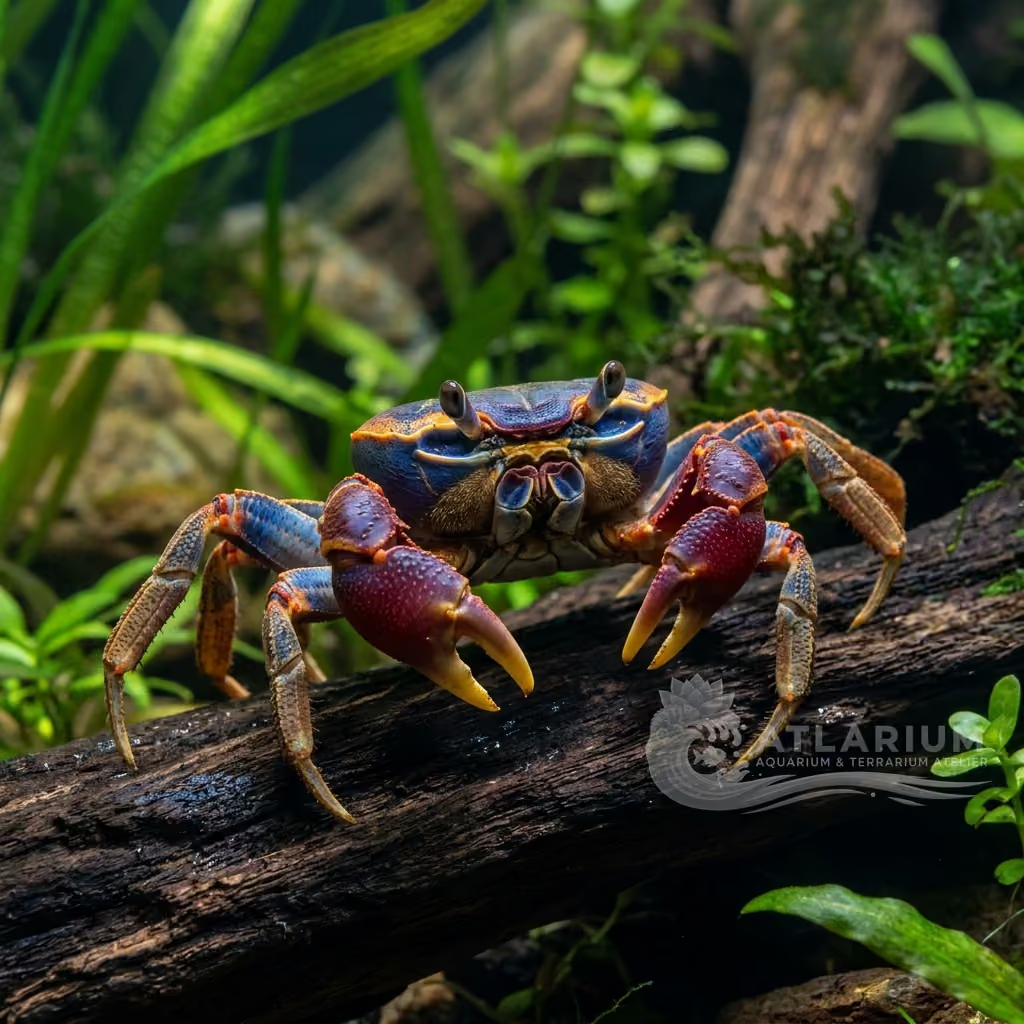
Orange-clawed Fiddler Crab
Gelasimus vocans
The Calling Fiddler Crab is renowned for its large claw waving displays. A captivating paludarium resident, it demands a deep sandy land area to dig and filter food from brackish water habitats.
Water Temperature
22 - 28 °C
pH Value
7.8 - 8.4
Water type
Brackish / Marine
Invertebrate type
Marine crab
Adult size
4 cm
Minimum group
>= 3
KH
6 - 10 dKH
Ecological role
Scavenger
Copper sensitivity
High

Species description
Geographical Origin and Habitat: Widely distributed throughout the coastal regions of the Indo-Pacific, from East Africa and India to the Philippines, southern Japan, and Australia. It inhabits muddy tidal flats, estuaries, and mangrove swamps, digging deep burrows that fill with water during high tide.
Taxonomy: Belongs to the family Ocypodidae and the genus Uca (often classified under Gelasimus or Austruca by modern taxonomists). The carapace width reaches about 2 to 3 centimeters. The defining feature is the extreme claw asymmetry in males.
Social Behavior: They live in dense colonies where each individual claims and defends a burrow. Males use their massive orange claw to communicate, performing rhythmic waving displays to attract females and ward off rival males during territorial disputes.
Coloration and Sexual Dimorphism: The carapace is cryptically colored in shades of dark grey, brown, or green with pale mottling. Sexual dimorphism is extreme; males possess one giant orange-yellow claw and one small feeding claw, while females have two small, identical claws.

Care, breeding and tankmates
Tank Setup: Must be housed in a specialized paludarium or aqua-terrarium (minimum 60 liters) with a dry land area and a shallow water section. The land area must have a deep layer (8-10 cm) of damp fine sand to allow natural burrowing behaviors.
Diet and Feeding: Detritivore and scavenger. Naturally sifts sand and mud for microalgae, bacteria, and organic particles; in captivity, they accept sinking crab pellets, crushed spirulina wafers, bloodworms, small pieces of fish, and blanched vegetables.
Water Quality: Requires brackish water conditions (specific gravity of 1.005-1.015). Maintain water and air temperatures between 24 and 28 °C, with a pH of 7.5 to 8.2. Gentle water flow is preferred, alongside efficient biological filtration.
Compatibility and Tankmates: Best kept in a species-specific tank. They can be housed in small groups of one male and multiple females; avoid keeping multiple males in small enclosures to prevent frequent territorial fights over burrows.
Aquarium Breeding: Breeding in captivity is extremely difficult due to the complex marine larval stages. The female carries fertilized eggs under her abdomen before releasing pelagic zoea larvae, which require specialized planktonic feeding and seawater salinity.
Risks and Diseases: Molting failure is the most common health risk, usually caused by lack of calcium and minerals. Supplement water with trace elements. Copper is highly toxic to all crustaceans and must never be introduced into the tank.

Geographic origin and distribution
Widely distributed throughout the coastal regions of the Indo-Pacific, from East Africa and India to the Philippines, southern Japan, and Australia. It inhabits muddy tidal flats, estuaries, and mangrove swamps, digging deep burrows that fill with water during high tide.
Origin
Tropical oceans and reefsAfrica and MadagascarSouth and Southeast AsiaEast AsiaAustralia, New Guinea, and Oceania

Invertebrate profile
- Diet
- Detritivore
- As a robust omnivore, Gelasimus vocans actively searches for both plant matter and meaty food items. They consume detritus, algae, and any small leftover scraps of food provided to the tank. Sinking wafers and chopped seafood can supplement their daily scavenging.
- Ecological role
- Scavenger
- Gelasimus vocans serves as a highly effective scavenger, breaking down larger pieces of organic waste. They aerate the substrate with their movement and control nuisance algae growth. Their constant activity maintains the health and cleanliness of the benthic zone.
- Adult size
- 4 cm
- Jump risk
- Yes
- Although they do not jump, Gelasimus vocans possesses exceptional climbing abilities and a strong desire to explore. Many crabs can effortlessly climb up airlines, heater cords, or silicon edges. A secure top cover is absolutely essential to prevent escapes.
- Shock sensitivity
- Medium
- Gelasimus vocans should be acclimated carefully to avoid the shock of rapidly changing water parameters. Wide fluctuations in salinity or temperature can compromise their immune systems or trigger premature molting. Consistency in water quality is paramount for their long-term health.
- Calcium and minerals
- Medium
- Sufficient calcium availability is an absolute requirement for Gelasimus vocans to maintain its hard carapace. Poor calcium levels can cause incomplete molting and eventual death. Feeding calcium-enriched diets and keeping minerals in balance is vital for their exoskeleton strength.
- Molting
- Yes
- During molting, Gelasimus vocans sheds its old shell to allow for growth and regeneration of lost limbs. It is entirely soft and defenseless during this process, requiring secure caves or crevices for hiding. The old molt should remain in the tank so the crab can recycle the calcium.
- Reproduction
- Oviparous
- Rearing Gelasimus vocans in an aquarium is generally quite difficult due to their complicated larval phases. Females carry dense clusters of eggs on their abdomen before releasing them as planktonic zoea. These microscopic larvae usually require separate rearing vessels and very specific live foods.
- Compatibility & tankmates
- Community
- Gelasimus vocans is generally safe with fish that are too large to be eaten but too small to view the crab as prey. Certain predatory species of fish should be entirely avoided. Be cautious when keeping them with slower bottom-dwelling species which might be pinched.

Related species
Recommendations grouped by close relatives, companion choices, and similar care.