Stocky Cerith
Cerithium litteratum
The Stocky Cerith Snail is an invaluable clean-up crew member. Burrowing in the sand and climbing live rock, it consumes diverse algae and detritus, maintaining pristine conditions in nano reefs.
Water Temperature
22 - 28 °C
pH Value
8.1 - 8.4
Water type
Marine
Invertebrate type
Freshwater snail
Adult size
2.5 cm
Minimum group
>= 1
KH
8 - 12 dKH
Ecological role
Herbivore
Copper sensitivity
High

Species description
Geographical Origin and Habitat: Western Atlantic: distributed from the coasts of Florida and the Gulf of Mexico throughout the Caribbean Sea to Venezuela and Brazil. It inhabits Thalassia seagrass beds, sandy intertidal flats, and rocky zones covered by a thin layer of algae and sediment, in warm and shallow waters.
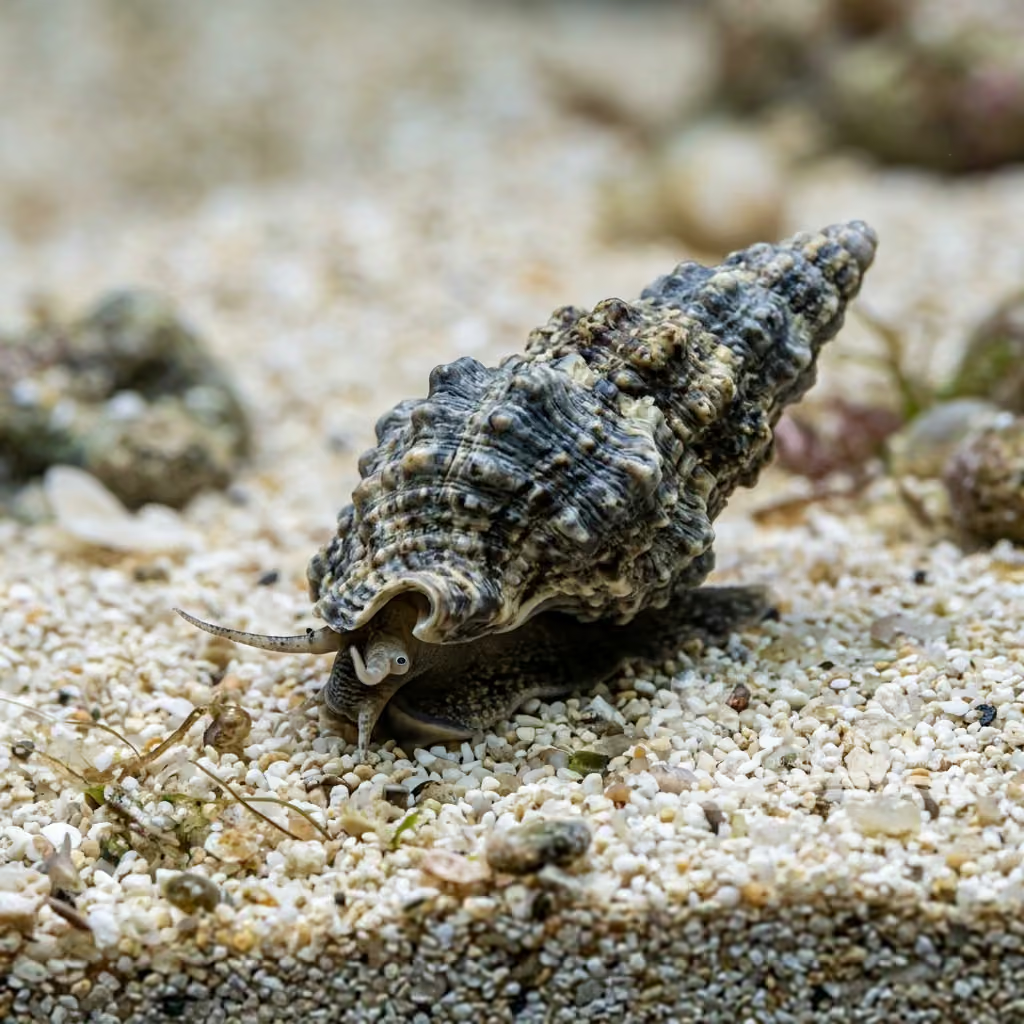
Taxonomy: Belongs to the class Gastropoda, family Cerithiidae, genus Cerithium. It is commonly known as the 'Stocky Cerith' due to its thick, robust, and compact shell. The outer surface features relief sculpting with nodulose spiral cords that strengthen the structure against predators.
Social Behavior: Peaceful and completely harmless invertebrate that spends most of its time burrowing into the upper layer of the sandy substrate or climbing on live rock. It has mostly nocturnal habits, emerging from the sand at sunset to graze on algae.
Coloration and Sexual Dimorphism: The shell features a whitish or cream background color, finely decorated with small black or dark brown dots, lines, and dashes resembling alphabetic characters (hence the scientific name 'litteratum'). There is no externally visible sexual dimorphism.

Care, breeding and tankmates
Tank Setup: Requires an aquarium with a fine sand or aragonite bed at least 3-5 cm deep, where it can easily burrow. Stable live rock is important as it likes to climb on it to remove the algal film. It does not require a large tank volume, being suitable even for nano reefs starting from 30 liters.
Diet and Feeding: Detritivore and herbivore. It is an excellent clean-up crew member that actively feeds on diatoms, diatoms, filamentous algae, cyanobacteria, leftover fish food, and decaying organic matter on the bottom. It does not harm corals or macro-invertebrates in the tank.
Water Quality: Sensitive to sudden shifts in chemical parameters. Requires well-filtered marine water with a temperature between 22 and 26 °C, pH between 8.1 and 8.4, and a stable density of 1.023 to 1.025. As with all gastropods, adequate calcium and magnesium levels are essential for shell growth.
Compatibility and Tankmates: Completely peaceful and compatible with all corals and reef-safe fish. Avoid housing with dedicated gastropod predators, such as puffers, triggerfish, certain crabs, and aggressive hermit crabs (e.g., blue-leg hermits) that might kill it to steal its shell.
Aquarium Breeding: Oviparous reproduction. It can lay eggs encased in gelatinous ribbons on rocks or glass. However, the resulting planktonic larvae are usually removed by filtration systems or preyed upon by fish, making spontaneous reproduction in the tank very difficult to achieve.
Risks and Diseases: Extremely sensitive to copper in the water (treatments for fish) and to high levels of nitrates or phosphates, which can be lethal. If a specimen dies, it must be removed promptly to prevent decomposition from polluting the water and causing ammonia spikes.

Geographic origin and distribution
Western Atlantic: distributed from the coasts of Florida and the Gulf of Mexico throughout the Caribbean Sea to Venezuela and Brazil. It inhabits Thalassia seagrass beds, sandy intertidal flats, and rocky zones covered by a thin layer of algae and sediment, in warm and shallow waters.
Origin
Tropical oceans and reefsExtra-Amazon South AmericaCentral America and CaribbeanNorth America

Invertebrate profile
- Diet
- Detritivore
- Feeds on detritus, diatoms, and film algae.
- Ecological role
- Herbivore
- Crucial part of the cleanup crew. Aerates the top layer of sand.
- Adult size
- 2.5 cm
- Jump risk
- Yes
- Does not jump. Found buried in sand or on rocks.
- Shock sensitivity
- Medium
- Adaptable but benefits from slow acclimation.
- Calcium and minerals
- Medium
- Requires sufficient calcium and alkalinity.
- Molting
- Shell growth
- As a marine gastropod, Cerithium litteratum does not undergo a molting process to grow. Instead, it continuously secretes calcium carbonate to expand and strengthen its shell over time. Any peeling or flaking observed on the shell is not a molt, but likely a sign of calcium deficiency or environmental stress.
- Reproduction
- Oviparous
- In the aquarium, these snails are known to reproduce and will often lay squiggly, ribbon-like trails of egg masses on the glass or rockwork. However, the resulting planktonic larvae face a complex developmental stage and rarely survive to adulthood due to mechanical filtration and predation in typical home aquariums.
- Compatibility & tankmates
- Peaceful
- The Stocky Cerith is a highly peaceful and beneficial addition to any cleanup crew. It is completely reef-safe, ignoring corals and actively cleaning detritus and algae. It is compatible with all peaceful inhabitants, but should be kept away from shell-crushing predators like triggerfish, puffers, or certain wrasses.

Related species
Recommendations grouped by close relatives, companion choices, and similar care.