Encyclopaedia

FishMarineEasy
©AI Generated·Proprietary

Blackside Hawkfish

Paracirrhites forsteri

A hardy and predatory marine fish known for perching on corals and rockwork, recognizable by dark freckles on its face and a distinctive dark side stripe.

Taxonomy
Class:Actinopteri
Order:Perciformes
Family:Cirrhitidae
Genus:Paracirrhites
Species:Paracirrhites forsteri

Share

Check out Blackside Hawkfish on Atlarium

PracticeRecognition quizzesPhotos, names, origins, and puzzles to review Atlas species.Open quizzes
Water Temperature

22 - 28 °C

pH Value

8.1 - 8.4

Water type

Marine

Tank level

Middle

Adult size

22 cm

Minimum tank volume

>= 250 L

Minimum group

>= 1

KH

8 - 12 dKH

Species description

Geographical Origin and Habitat: The Blackside Hawkfish is widely distributed throughout the tropical waters of the Indo-Pacific. Its range extends from the Red Sea and East Africa to the Hawaiian and Line Islands, and south to French Polynesia. It primarily inhabits seaward reefs, outer reef slopes, and shallow lagoons at depths of 1 to 35 meters, where it perches on branching corals.
Taxonomy and Morphology: Belonging to the family Cirrhitidae, Paracirrhites forsteri features a robust, elongated body with a blunt head and a large mouth filled with sharp teeth. Lacking a swim bladder, it has thick, muscular pectoral fin rays that serve as hands to secure its position on corals. Adults can reach a maximum length of approximately 22 centimeters.
Social Behavior: This species is solitary, highly territorial, and alert. It spends most of its day perching atop corals or rocks, watching for passing prey. It displays aggressive territorial behavior toward conspecifics and other hawkfish, and will readily attack smaller tankmates that encroach upon its hunting territory.
Coloration and Sexual Dimorphism: The coloration changes significantly with growth. Adults display a yellowish or pink head covered in small dark brown or black freckles, a reddish-brown body, and a broad dark band with a white or yellow border on the rear flanks. Juveniles are lighter and lack freckles. They are protogynous hermaphrodites, where dominant females transition into males.

Care, breeding and tankmates

Aquarium Setup: An adult specimen requires a spacious marine aquarium of at least 250 liters. The tank should feature plenty of stable live rock arranged to create ledges and high perches. If branching corals (like Acropora) are kept, ensure they are large and hardy enough to withstand the constant perching of this heavy fish.
Diet and Feeding: It is a voracious carnivore. In captivity, it must be fed a varied diet consisting of meaty frozen foods such as mysis shrimp, krill, chopped clam, squid, and fish flesh. They will also accept high-quality large sinking pellets. Feed them once or twice daily, ensuring food is distributed so other fish can eat.
Water Quality: Requires strong filtration and moderate water movement to simulate its natural reef edge habitat. Maintain stable water parameters: temperature 22°C to 28°C, pH 8.1 to 8.4, specific gravity 1.020 to 1.025, and keep nitrate and phosphate levels low to support overall fish and coral health.
Compatibility and Cohabitation: Reef-safe with corals, but highly dangerous to mobile invertebrates. Small ornamental shrimp (such as Lysmata), crabs, and small fish (like nano gobies, firefish, or small damselfish) will be eaten. Keep only with larger, active tankmates such as tangs, large wrasses, angelfish, or triggerfish.
Aquarium Breeding: Breeding in home aquariums is extremely rare. They are pelagic spawners; at dusk, a bonded pair will perform a quick spawning run toward the surface to release eggs and sperm. The resulting larvae float in the water column and are very difficult to raise in captivity due to their feeding requirements.
Risks and Diseases: This is an incredibly hardy species with a strong resistance to common marine diseases like marine ich. The greatest risk is jumping; they are powerful jumpers when startled or chasing prey, making a tight-fitting mesh screen or solid lid an absolute requirement.

Geographic Origin and Distribution

The Blackside Hawkfish is widely distributed throughout the tropical waters of the Indo-Pacific. Its range extends from the Red Sea and East Africa to the Hawaiian and Line Islands, and south to French Polynesia. It primarily inhabits seaward reefs, outer reef slopes, and shallow lagoons at depths of 1 to 35 meters, where it perches on branching corals.

Origin

Tropical oceans and reefsAfrica and Madagascar

Fish profile

Temperament
Aggressive
As a large and bold predator, it is highly territorial and will aggressively protect its dominant perching positions. Smaller or similarly shaped fish will face immediate and severe hostility upon introduction. Its confident, watchful temperament makes it an incredible display fish for appropriate predator tanks.
Diet
Carnivore
In the wild, it feeds extensively on small benthic crustaceans and invertebrates. The aquarium diet should rely heavily on frozen mysis, krill, and enriched brine shrimp. It may eventually accept high-quality marine carnivore pellets with time and patience.
Sex ratio
Solitary
They are protogynous hermaphrodites, meaning all individuals are born female and the most dominant will eventually transition into a male. In a spacious aquarium, they can be kept in a harem consisting of one male and several females. Adding two males to the same tank will inevitably result in lethal territorial disputes.
Feeding frequency
Twice daily
Feeding one to two times per day is ideal for maintaining the health of this fish. Care must be taken not to overfeed, as uneaten food will quickly degrade the water quality. Small portions consumed completely within a few minutes are best.
Bioload
The bioload for this species is moderately high, requiring a well-established filtration system. Oversized protein skimmers and frequent mechanical filter cleaning are recommended. Regular and substantial water changes are crucial to keep the water parameters completely stable.
Flow
Strong
This species thrives in moderate to high water flow, which reflects its energetic nature. Strong currents help oxygenate the water and deliver food particles directly to them. Wavemakers and gyre pumps are highly recommended to replicate natural surge zones.
Jump risk
Yes
Lacking a true swim bladder, this fish often darts upwards rapidly when alarmed or chasing prey. This explosive upward movement frequently results in the fish launching directly out of the water. A completely secure canopy or screen top is strictly required to prevent their loss.
Reproduction
Oviparous
Following a complex courtship display, they release their eggs and sperm directly into the open water column. These pelagic eggs drift freely with the currents until they eventually hatch into tiny larvae. Captive breeding is practically impossible due to the specialized requirements of their planktonic larval stage.
Compatibility & tankmates
Community
This species is notoriously aggressive towards smaller fish and will eat ornamental shrimp. Careful selection of tank mates is required, favoring robust species that inhabit different areas of the tank. Snails and hermit crabs are generally ignored, but small delicate invertebrates are at high risk.
Tank level
Middle
Lacking a swim bladder, this fish prefers to rest directly on the substrate, rocks, or coral branches. It spends the vast majority of its time stationary, actively observing its surroundings. It only leaves its perch to execute lightning-fast strikes on passing food or prey.

Window to the official scientific data of the species

Data synced on: 06/15/2026

Scientific Parameters & Models

Trophic level
4.3 ± 0.76 se
Phylogenetic uniqueness (PD50)
0.5156
Bayesian Length-Weight
a = 0.00871, b = 3.09
VulnerabilityLow vulnerability (12 / 100)

Image gallery

Licensed images linked to the species or, when marked, to the closest representative taxon.

Related species

Recommendations grouped by close relatives, companion choices, and similar care.

Recommended companions

Compatible cards from coherent ecosystems with matching parameters.

Grape caulerpa
Plant

Grape caulerpa

Caulerpa racemosa

View details->
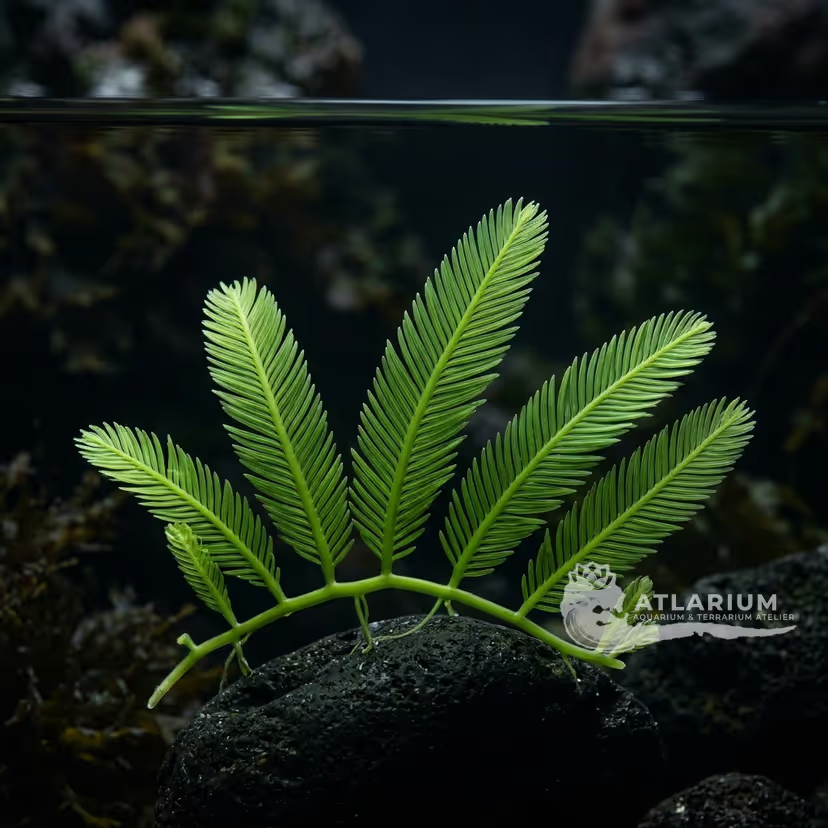
Caulerpa prolifera
Plant

Caulerpa prolifera

Caulerpa prolifera
View details->
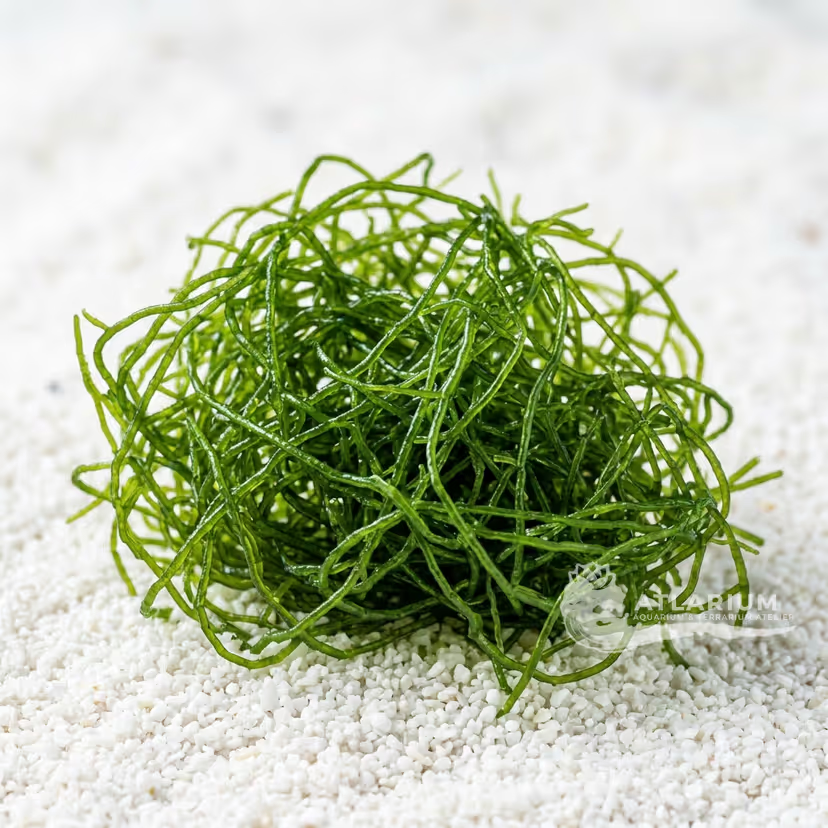
Caulerpa taxifolia
Plant

Caulerpa taxifolia

Caulerpa taxifolia
View details->
Chaetomorpha macroalgae
Plant

Chaetomorpha macroalgae

Chaetomorpha linum

View details->
Dead man fingers algae
Plant

Dead man fingers algae

Codium fragile

View details->
Halimeda macroalgae
Plant

Halimeda macroalgae

Halimeda opuntia

View details->
Peacock tail algae
Plant

Peacock tail algae

Padina pavonica

View details->
Red gracilaria
Plant

Red gracilaria

Gracilaria parvispora

View details->
Red grape algae
Plant

Red grape algae

Botryocladia uvaria

View details->
Sea lettuce
Plant

Sea lettuce

Ulva lactuca

View details->
Red Mangrove
Plant

Red Mangrove

Rhizophora mangle

View details->

Similar care

Cards with similar requirements, difficulty, habitat, and husbandry profile.

Blackear Wrasse

Blackear Wrasse

Halichoeres poeyi

View details->
Blue Dottyback

Blue Dottyback

Pseudochromis

View details->
Erdmann's dottyback

Erdmann's dottyback

Pseudochromis erdmanni

View details->
Barber Goby

Barber Goby

Elacatinus figaro

View details->
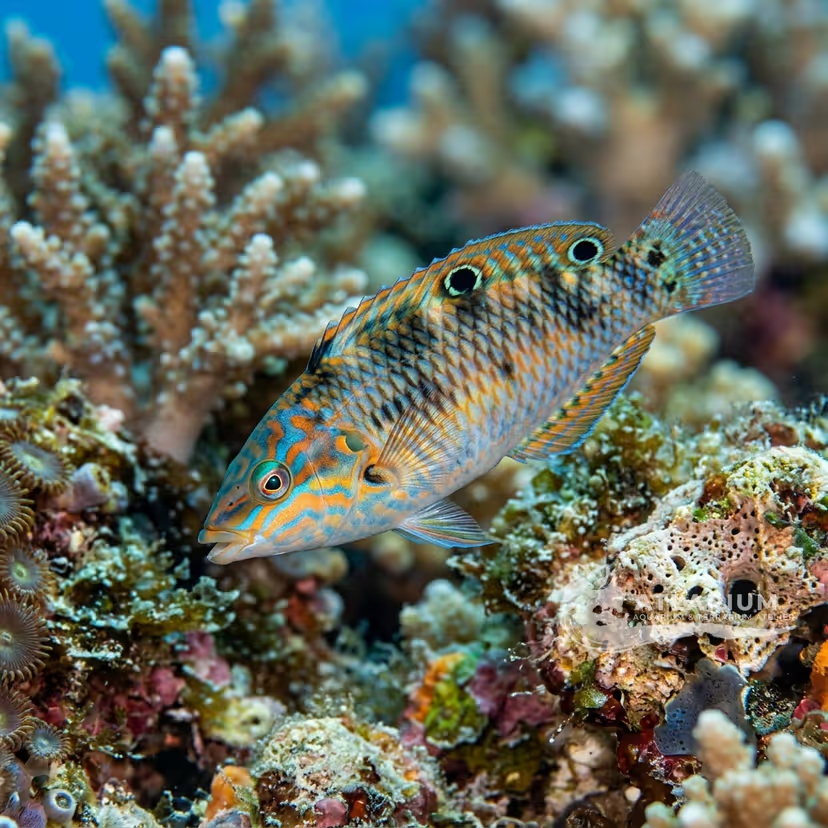
Neon dottyback

Neon dottyback

Pseudochromis aldabraensis
View details->
Wounded Wrasse

Wounded Wrasse

Halichoeres chierchiae

View details->
Black-axil Chromis

Black-axil Chromis

Chromis atripectoralis

View details->
Blue assessor

Blue assessor

Assessor macneilli

View details->
Blue-spot Dascyllus

Blue-spot Dascyllus

Dascyllus carneus

View details->
Elongate dottyback

Elongate dottyback

Pseudochromis elongatus
View details->
Fiji Blenny

Fiji Blenny

Ecsenius fijiensis

View details->
Black Bow Damselfish

Black Bow Damselfish

Neoglyphidodon melas

View details->
Bullseye Damselfish

Bullseye Damselfish

Abudefduf taurus

View details->
Strawberry Dottyback

Strawberry Dottyback

Pictichromis porphyrea
View details->
Tailspot blenny

Tailspot blenny

Ecsenius stigmatura

View details->
Banded-head Shrimpgoby

Banded-head Shrimpgoby

Amblyeleotris cephalotaenius

View details->
Last updated: 06/30/2026
Blackside Hawkfish (Paracirrhites forsteri) Care Guide & Tank Setup | Atlarium