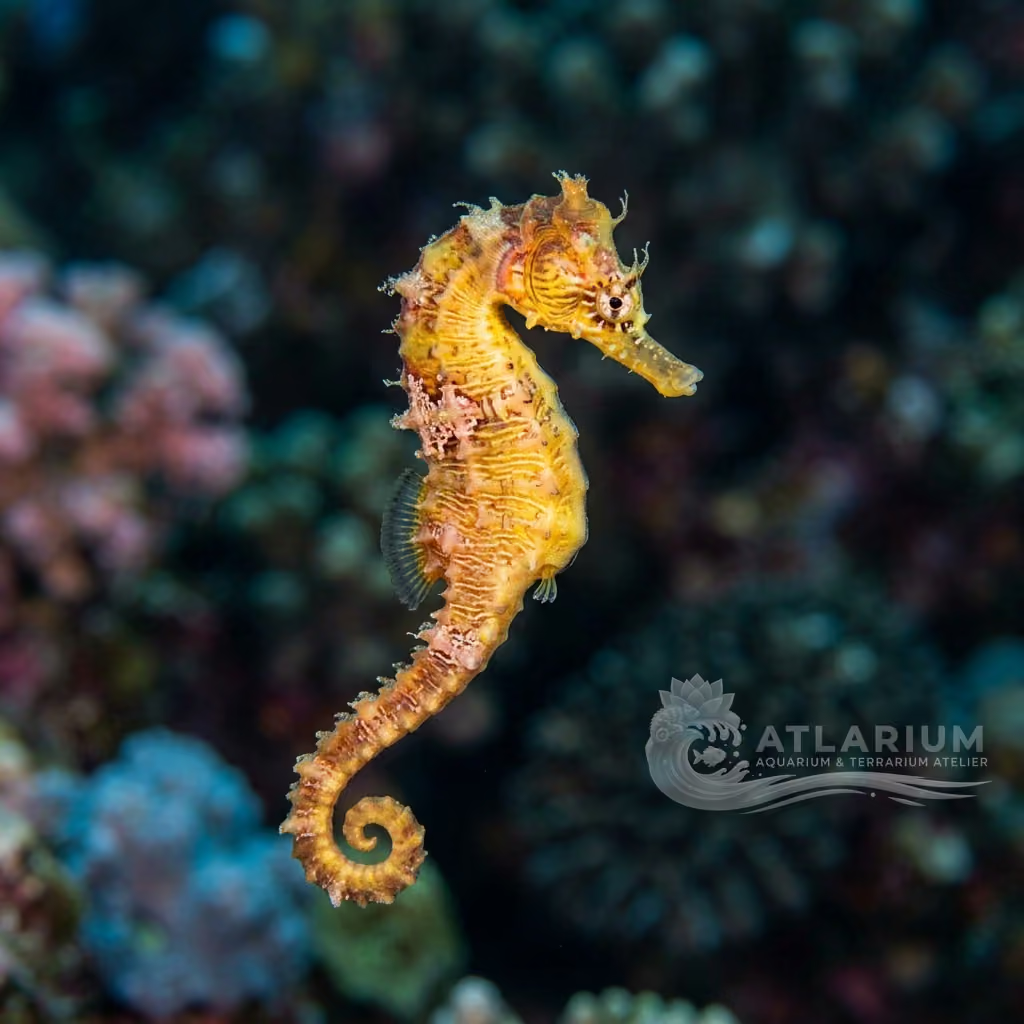
Common seahorse
Hippocampus kuda
An iconic marine fish with a unique shape, characterized by slow movements, a prehensile tail, and the male carrying the eggs in a specialized brood pouch.
Water Temperature
22 - 26 °C
pH Value
8.1 - 8.4
Water type
Marine
Tank level
Bottom and middle
Adult size
17 cm
Minimum tank volume
>= 100 L
Minimum group
>= 2
KH
8 - 12 dKH

Species description
Geographical Origin and Habitat: This species is widely distributed throughout the tropical waters of the Indo-Pacific, ranging from the East African coast and the Red Sea to Hawaii and French Polynesia. It inhabits shallow coastal lagoons, sheltered bays, seagrass beds, and mangrove estuaries containing macroalgae, at depths typically between 1 and 20 meters.
Taxonomy and Morphology: Belongs to the family Syngnathidae and the genus Hippocampus. It features an armor-like skeleton of bony plates instead of scales, a tube-like snout used to suck in tiny prey, and a prehensile tail without a caution fin, used for anchoring to surfaces. Adults reach a length of 15 to 18 cm. It lacks teeth and a stomach.
Social Behavior: An extremely peaceful, slow-moving, and shy fish. It often forms stable monogamous pairs and enjoys the company of its own species. It spends most of the day anchored to sea grass or artificial hitches using its tail, scanning the surrounding water with independently moving eyes for approaching prey.
Coloration and Sexual Dimorphism: Coloration is highly variable and adaptively changes to match the surroundings; it ranges from bright yellow to dark brown, black, orange, or grey, sometimes with dark spots or skin filaments. Sexual dimorphism is distinct in mature specimens: males possess a prominent brood pouch on their abdomen, which is absent in females.

Care, breeding and tankmates
Aquarium Setup: Requires a dedicated species-only aquarium of at least 100 to 120 liters (approx. 25-30 gallons) for a pair. The tank must feature plenty of hitching posts such as branching macroalgae (e.g., Caulerpa), thin plastic chains, or smooth dry branches. Water flow must be low to moderate, as seahorses are weak swimmers and will easily tire or get sucked into filtration intakes; use sponge covers on all pump inlets.
Diet and Feeding: Extremely demanding feeders. Lacking a true stomach, they must eat throughout the day. Captive-bred specimens (strongly recommended) eat frozen mysis and brine shrimp enriched with vitamins, fed 2 to 3 times daily. Wild-caught specimens usually only accept live foods (copepods, ghost shrimp) and are highly prone to starvation. Use a feeding station to minimize waste.
Water Quality: Demands pristine and stable water conditions. Standard parameters: temperature 22-25°C (72-77°F, they are highly sensitive to temperatures above 26°C/79°F), pH 8.1-8.4, specific gravity 1.020-1.024, and KH 8-12. Ammonia and nitrites must be zero, and nitrates must be kept under 10 ppm. Use an efficient protein skimmer and perform regular water changes.
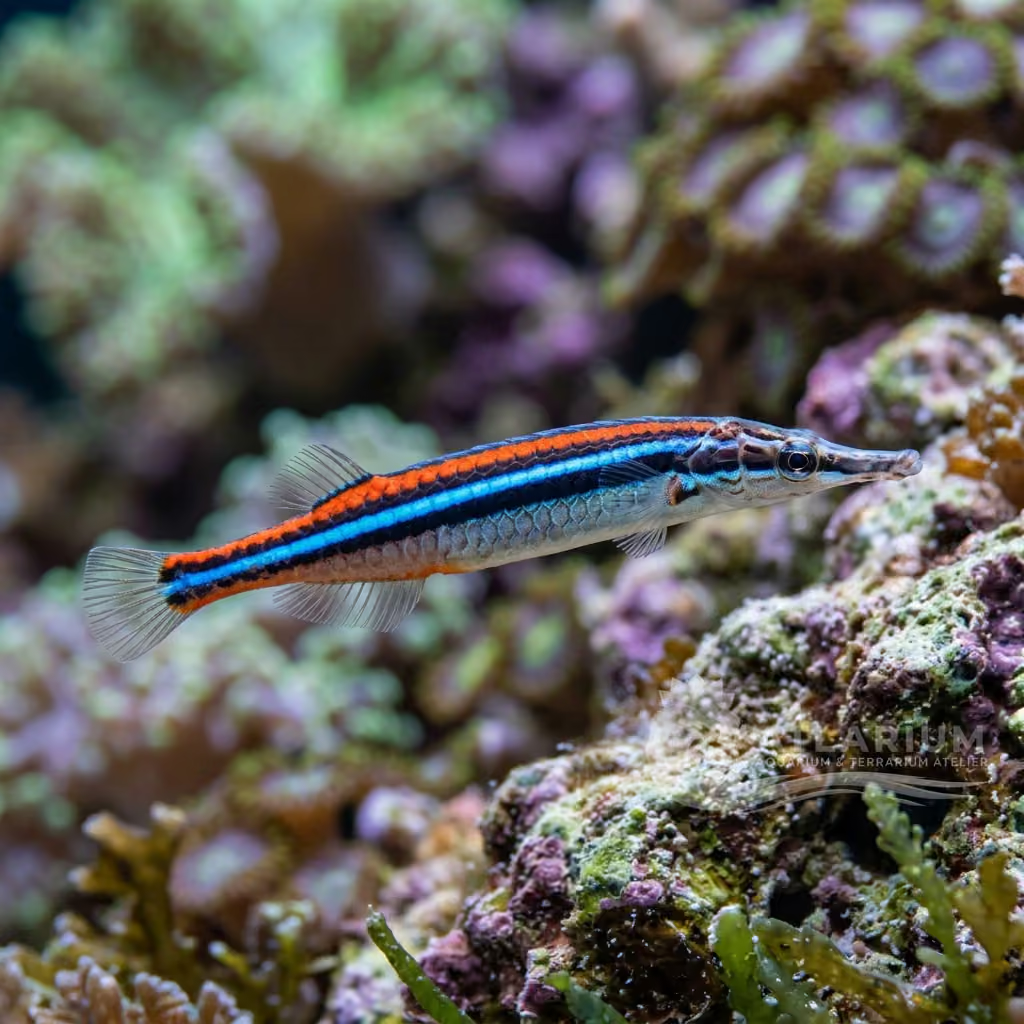
Compatibility and Cohabitation: Best kept alone or with slow, peaceful tankmates that will not outcompete them for food, such as dragonets, firefish, and small gobies. Avoid fast or aggressive swimmers (tangs, damsels, wrasses). Do not house with stinging corals (LPS like Euphyllia) or anemones, as they will sting the seahorses. Safe corals include mushrooms and zoanthids.
Aquarium Breeding: Captive breeding is highly rewarding. During courtship, the female deposits eggs into the male's abdominal brood pouch. The male fertilizes them internally, carrying them for 2 to 4 weeks before giving birth to miniature free-swimming seahorses. Rearing the fry requires daily feedings of live rotifers and newly hatched artemia in a dedicated system.
Risks and Diseases: Prone to bacterial infections (such as Vibrio), fungal skin diseases, and gas bubble disease (which can form in the male's pouch or skin). Buying only captive-bred (CB) specimens is vital, as they are significantly hardier, disease-free, and trained to eat frozen foods, unlike wild-caught seahorses.

Geographic origin and distribution
This species is widely distributed throughout the tropical waters of the Indo-Pacific, ranging from the East African coast and the Red Sea to Hawaii and French Polynesia. It inhabits shallow coastal lagoons, sheltered bays, seagrass beds, and mangrove estuaries containing macroalgae, at depths typically between 1 and 20 meters.
Origin
Tropical oceans and reefsAfrica and Madagascar

Fish profile
- Temperament
- Peaceful
- Known for being extremely peaceful and deliberate, they are the ultimate peaceful marine inhabitants. They show no aggression towards any other species, focusing entirely on hunting tiny crustaceans. Male seahorses may occasionally posture at one another during mating season, but it rarely results in injury. Their delicate nature means the aquarist must actively protect them from any form of stress.
- Diet
- Carnivore
- The Spotted seahorse is strictly carnivorous and requires a diet rich in small crustaceans. In captivity, they must be trained to eat frozen mysis shrimp, which will form the staple of their diet. The mysis should be enriched with vitamins and highly unsaturated fatty acids (HUFAs) to prevent nutritional deficiencies. Live foods like copepods and adult brine shrimp can be offered occasionally as a treat.
- Life expectancy
- 1-5 years
- Adult size
- 17 cm
- Sex ratio
- Pair
- Sexing the Spotted seahorse is relatively straightforward once they reach maturity. Males develop a distinct brood pouch on their lower abdomen, while females maintain a smooth profile. They are best kept in true pairs or small groups with an equal ratio of males to females. They are highly social and often form strong pair bonds, greeting each other daily with elaborate dances.
- Feeding frequency
- 2-3 times daily
- Seahorses lack a true stomach and possess a very short, inefficient digestive tract. Therefore, the Spotted seahorse must be fed small amounts at least two to three times every single day. Using a feeding station or a target feeding method ensures they get enough food without creating excessive waste. Missing even a few days of feeding can severely compromise their health.
- Bioload
- Medium to High
- The Spotted seahorse has a surprisingly high bioload considering its relatively sedentary nature. This is primarily due to their need for heavy, frequent feedings of meaty foods, which leads to uneaten food decaying in the tank. A robust filtration system and an oversized protein skimmer are highly recommended. Frequent siphoning of the substrate and regular water changes are required to keep water pristine.
- Flow
- Strong
- Gentle to moderate water flow is absolutely critical for the Spotted seahorse. They are very weak swimmers and can easily be battered against the rockwork by strong currents. The flow should be just enough to keep the water oxygenated and prevent detritus from settling. Providing numerous hitching posts in areas of low flow allows them to rest comfortably.
- Jump risk
- No
- Reproduction
- Oviparous
- Breeding the Spotted seahorse in captivity is a common and highly rewarding experience for dedicated hobbyists. The male seahorse uniquely carries the fertilized eggs in a specialized brood pouch until they hatch. After a gestation period of a few weeks, the male expels fully formed, miniature seahorses. Raising the fry requires dedicated nursery tanks and a constant supply of live rotifers and newly hatched artemia.
- Compatibility & tankmates
- Peaceful
- Seahorses are extremely delicate and must be kept in a dedicated species-only tank or with very peaceful, slow-moving companions. The Spotted seahorse cannot compete for food with fast-swimming fish and will easily starve in a standard community tank. Safe tank mates include pipefish, small peaceful gobies, and non-stinging corals like gorgonians. Avoid any aggressive fish, crabs, or corals with potent stinging tentacles.
- Tank level
- Middle/Bottom
- The Spotted seahorse utilizes all levels of the aquarium depending on the placement of their hitching posts. They prefer vertical tanks over horizontal ones, as they enjoy moving up and down the water column during courtship. They spend the vast majority of their time hitched to macroalgae, gorgonians, or artificial decorations. Providing a tall structure encourages their natural vertical swimming behavior.

Related species
Recommendations grouped by close relatives, companion choices, and similar care.