Encyclopaedia

InvertebrateMarineEasy
©AI Generated·Proprietary

Feather Duster Worm

Sabellastarte spectabilis

A breathtaking marine filter-feeding worm, distinguished by its magnificent, colorful crown of feathery tentacles used to capture passing plankton.

Taxonomy
Class:Polychaeta
Order:Sabellida
Family:Sabellidae
Genus:Sabellastarte
Species:Sabellastarte spectabilis

Share

Check out Feather Duster Worm on Atlarium

PracticeRecognition quizzesPhotos, names, origins, and puzzles to review Atlas species.Open quizzes
Water Temperature

22 - 26 °C

pH Value

8.1 - 8.4

Water type

Marine

Invertebrate type

Tubeworm

Adult size

12 cm

Minimum group

>= 1

KH

8 - 12 dKH

Ecological role

Filter feeder

Species description

Geographical Origin and Habitat: This species is native to the Indo-Pacific region but has been introduced to parts of the Western Atlantic and Caribbean. It anchors to coral reefs, sandy lagoons, and rocky substrates.
Taxonomy: Classified within the class Polychaeta, order Sabellida, and family Sabellidae. It constructs a flexible, leathery tube made of fine sand, mud particles, and mucus secreted by the worm.
Social Behavior: Sessile and non-aggressive. Extremely sensitive to light changes and water vibrations. It immediately retracts its feathery crown into the protective tube at the slightest sign of threat.
Coloration and Sexual Dimorphism: The branchial crown (radioles) displays beautiful banding patterns in combinations of brown, white, purple, orange, and cream. There is no visible sexual dimorphism in this species.

Care, breeding and tankmates

Tank Setup: Requires a mature marine aquarium of at least 100 liters. Anchor the leathery tube firmly within rocky crevices or bury the lower part in a sand bed in areas with moderate, non-laminar water flow.
Diet and Feeding: Specialized filter feeder. Requires regular dosing of phytoplankton, micro-zooplankton, and liquid invertebrate foods. Without target feeding, it will slowly starve in clean water.
Water Quality: Maintain stable reef conditions: temperature 22.0 to 27.0 °C, pH 8.1 to 8.4, and salinity between 1.020 and 1.025. Very sensitive to copper treatments, which are highly toxic and lethal.
Compatibility and Tankmates: Do not house with predatory species such as butterflyfish, triggerfish, pufferfish, or certain wrasses that will nip at its delicate crown and prevent feeding.
Aquarium Breeding: Extremely rare in home aquariums. Spawns by releasing eggs and sperm into the water column. The delicate trochophore larvae are usually removed by standard aquarium filtration.
Risks and Diseases: Primary risks are copper exposure and starvation. Under extreme stress, poor water quality, or malnutrition, the worm may shed its entire crown (autotomy) or crawl out of its tube.

Geographic Origin and Distribution

This species is native to the Indo-Pacific region but has been introduced to parts of the Western Atlantic and Caribbean. It anchors to coral reefs, sandy lagoons, and rocky substrates.

Origin

Cosmopolitan or introducedCentral America and CaribbeanTropical oceans and reefs

Invertebrate profile

Diet
Filter feeder
The diet of Sabellastarte spectabilis typically consists of organic detritus, microalgae, or specific planktonic particles. In a home aquarium, they constantly forage along the substrate or rockwork looking for nourishment. Supplemental feeding with specialized invertebrate pellets or liquid foods may be necessary. Ensuring a varied and nutritious diet will promote vibrant colors and long-term health. Overfeeding should be avoided to maintain optimal water quality.
Ecological role
Filter feeder
In the wild, Sabellastarte spectabilis plays a crucial role in maintaining the balance of its native ecosystem. They often act as natural cleaners, breaking down waste materials and unconsumed food. Their constant movement helps aerate the sand bed and prevent the buildup of toxic gases. By managing algae growth, they create space for slow-growing corals and sponges to thrive. A balanced aquarium ecosystem relies heavily on their diligent cleaning efforts.
Shock sensitivity
High
This invertebrate is highly sensitive to rapid fluctuations in water parameters. Sudden changes in temperature, salinity, or pH can cause severe osmotic shock and death. A slow and careful acclimation process, preferably drip acclimation, is absolutely necessary. Maintain stable aquarium conditions through regular monitoring and automated top-offs. Avoid performing excessively large water changes at once.
Calcium and minerals
High
Proper calcium levels are absolutely vital for the structural integrity and growth of this species. They continuously extract calcium carbonate from the water to build their shells, skeletons, or protective tubes. Maintaining calcium levels between 400 and 450 ppm ensures they remain healthy. It is also important to balance alkalinity and magnesium alongside calcium supplementation. Regular testing is required in heavily stocked reef aquariums.
Molting
Yes
If applicable to its morphology, this invertebrate undergoes periodic molting to facilitate growth. During the molting process, the organism becomes extremely vulnerable to predation and stress. It is crucial to provide ample hiding spaces, such as caves or crevices, where they can retreat safely. Do not remove the discarded exoskeleton, as they often consume it to quickly replenish essential minerals. Disturbing them during this delicate phase can lead to fatal complications.
Reproduction
Oviparous
Reproduction in the home aquarium is often challenging and rare for many invertebrate species. Most require highly specific environmental triggers, such as temperature shifts or lunar cycles. The resulting larvae usually have a prolonged planktonic stage, making them difficult to rear. Specialized food sources like phytoplankton are needed to sustain the offspring. Consequently, most specimens available in the hobby are wild-caught or professionally aquacultured.
Compatibility & tankmates
Reef safe
Compatibility varies largely based on the specific species and tank mates. They are generally peaceful but can fall prey to aggressive or predatory fish. Ensure they are housed with calm tank mates that will not nip or harass them. Research individual species requirements to avoid territorial disputes. Always monitor new additions carefully to ensure harmonious interactions.

Image gallery

Licensed images linked to the species or, when marked, to the closest representative taxon.

Related species

Recommendations grouped by close relatives, companion choices, and similar care.

Recommended companions

Compatible cards from coherent ecosystems with matching parameters.

Black-axil Chromis
Fish

Black-axil Chromis

Chromis atripectoralis

View details->
Blue assessor
Fish

Blue assessor

Assessor macneilli

View details->
Tailspot blenny
Fish

Tailspot blenny

Ecsenius stigmatura

View details->
Allen's blenny
Fish

Allen's blenny

Ecsenius alleni

View details->
Axelrod's blenny
Fish

Axelrod's blenny

Ecsenius axelrodi

View details->
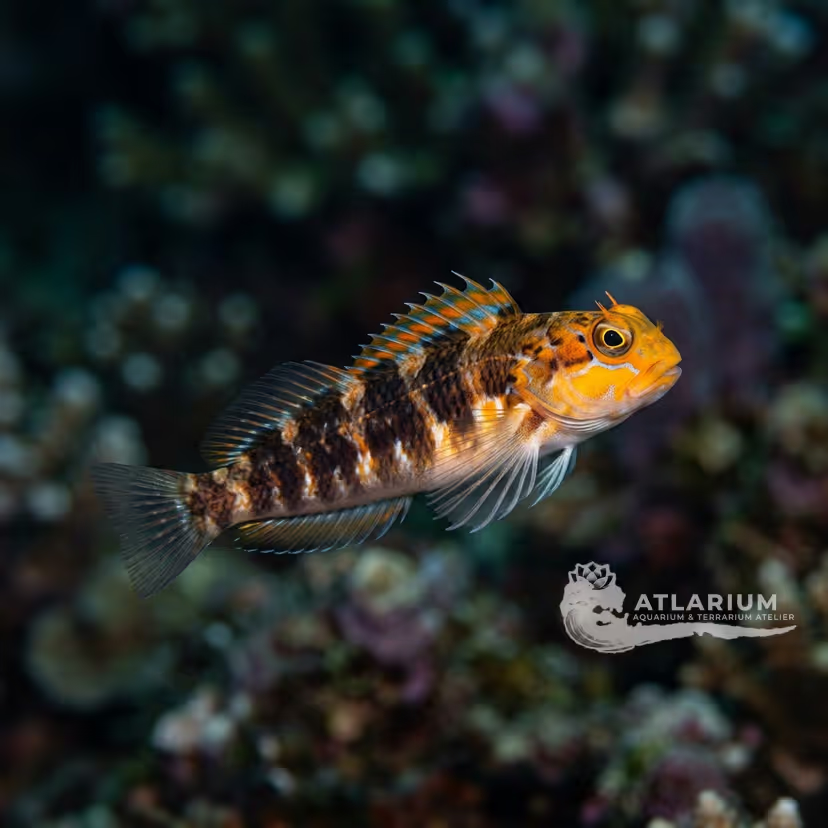
Black combtooth blenny
Fish

Black combtooth blenny

Ecsenius namiyei
View details->
Yelloweye Combtooth Blenny
Fish

Yelloweye Combtooth Blenny

Ecsenius opsifrontalis

View details->
Barrier Reef chromis
Fish

Barrier Reef chromis

Chromis nitida

View details->
Beau's Fairy Wrasse
Fish

Beau's Fairy Wrasse

Cirrhilabrus beauperryi

View details->
Blackhead Shrimpgoby
Fish

Blackhead Shrimpgoby

Amblyeleotris melanocephala

View details->
Collette's blenny
Fish

Collette's blenny

Ecsenius collettei

View details->
Grape caulerpa
Plant

Grape caulerpa

Caulerpa racemosa

View details->
Beautiful Blenny
Fish

Beautiful Blenny

Ecsenius pulcher

View details->
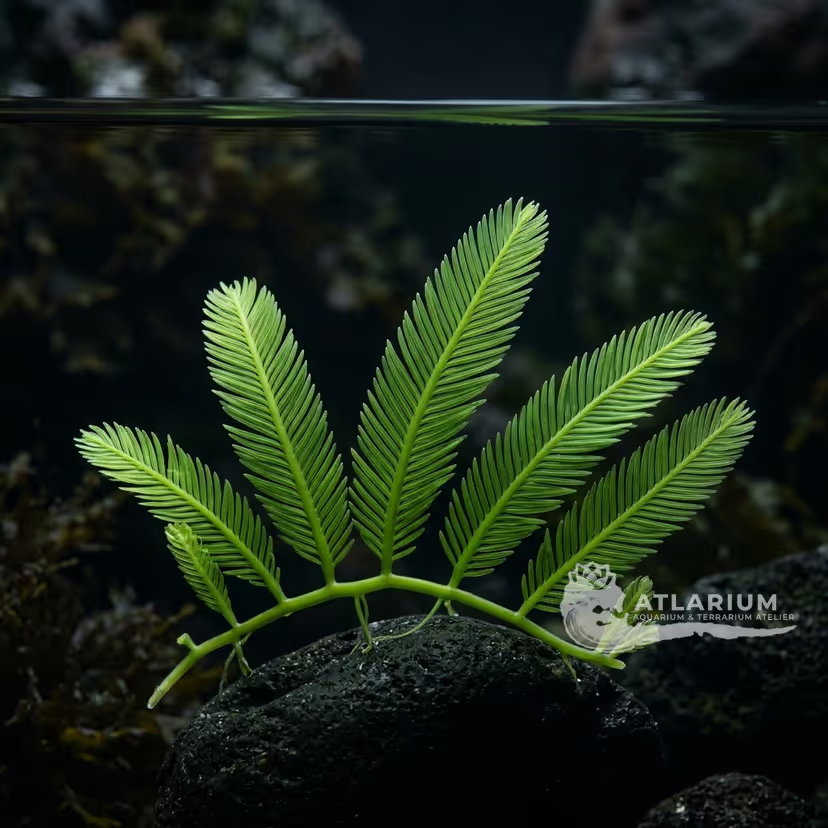
Caulerpa prolifera
Plant

Caulerpa prolifera

Caulerpa prolifera
View details->
Caulerpa taxifolia
Plant

Caulerpa taxifolia

Caulerpa taxifolia
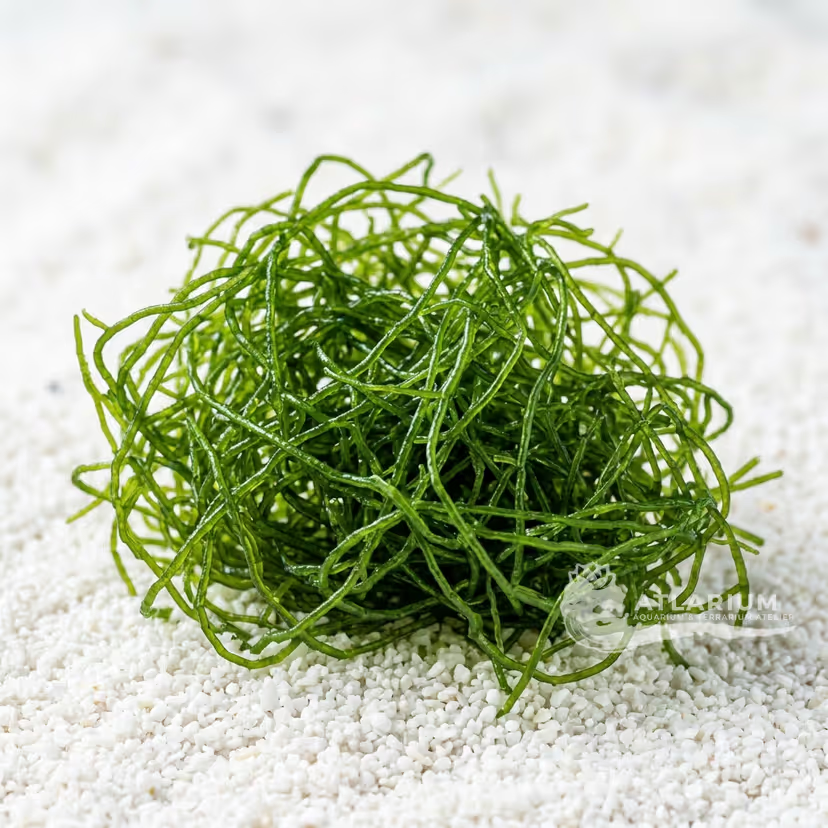
View details->
Chaetomorpha macroalgae
Plant

Chaetomorpha macroalgae

Chaetomorpha linum

View details->

Similar care

Cards with similar requirements, difficulty, habitat, and husbandry profile.

Green Sea Urchin

Green Sea Urchin

Lytechinus variegatus
View details->
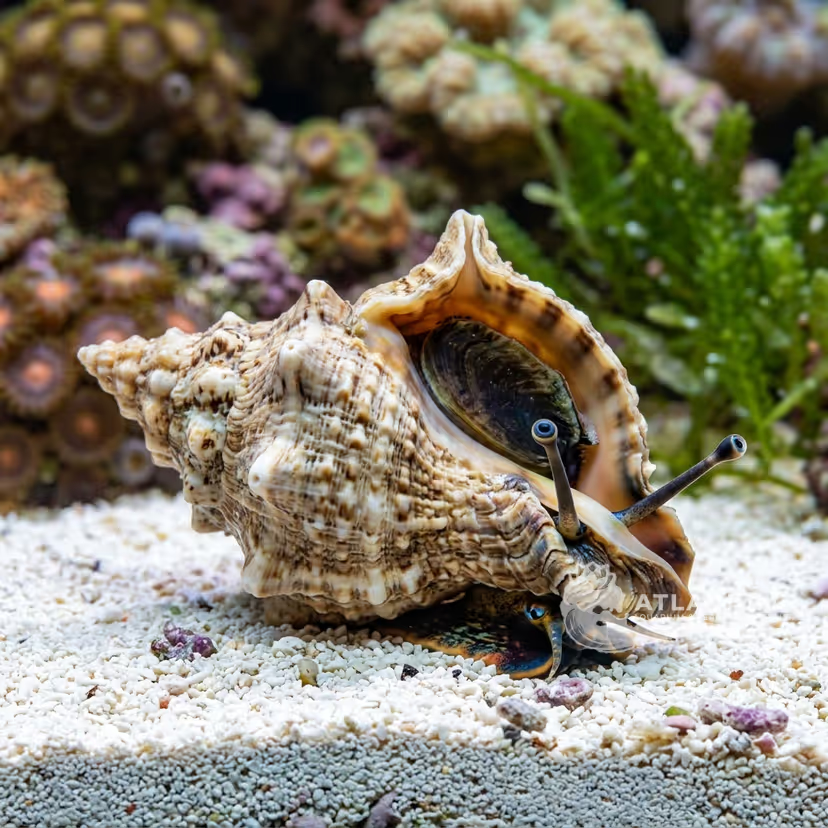
Florida Fighting Conch

Florida Fighting Conch

Strombus alatus

View details->
Pyramid top shell

Pyramid top shell

Tectus pyramis

View details->
Rock Flower Anemone

Rock Flower Anemone

Phymanthus crucifer

View details->
Long-spined sea urchin

Long-spined sea urchin

Diadema setosum

View details->
African snapping shrimp

African snapping shrimp

Alpheus africanus
View details->
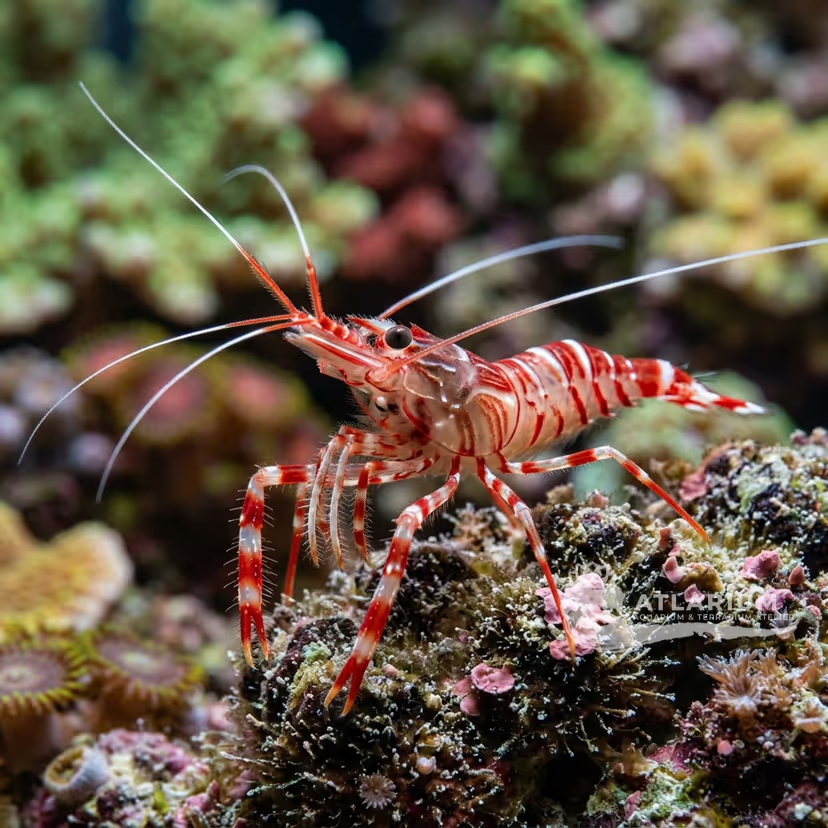
Anker's Cleaner Shrimp

Anker's Cleaner Shrimp

Lysmata ankeri

View details->
Blood-spotted Hermit Crab

Blood-spotted Hermit Crab

Clibanarius cruentatus

View details->
Chapin's Hermit Crab

Chapin's Hermit Crab

Clibanarius chapini
View details->
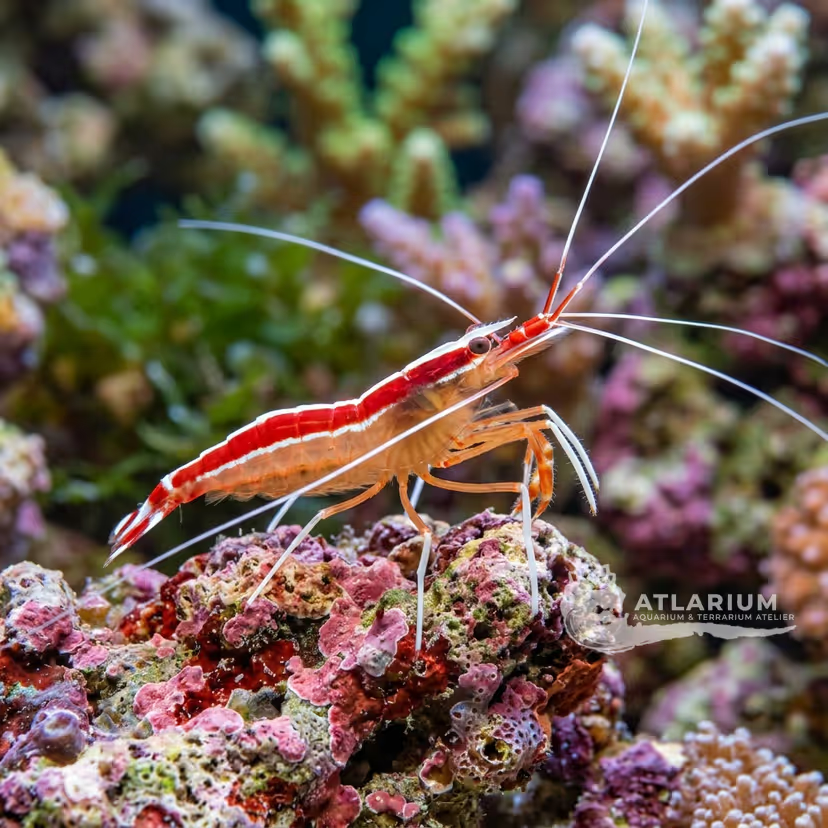
Grabham's cleaner shrimp

Grabham's cleaner shrimp

Lysmata grabhami

View details->
Lipke's Cleaner Shrimp

Lipke's Cleaner Shrimp

Lysmata lipkei

View details->
Sharp-femured Pistol Shrimp

Sharp-femured Pistol Shrimp

Alpheus acutofemoratus
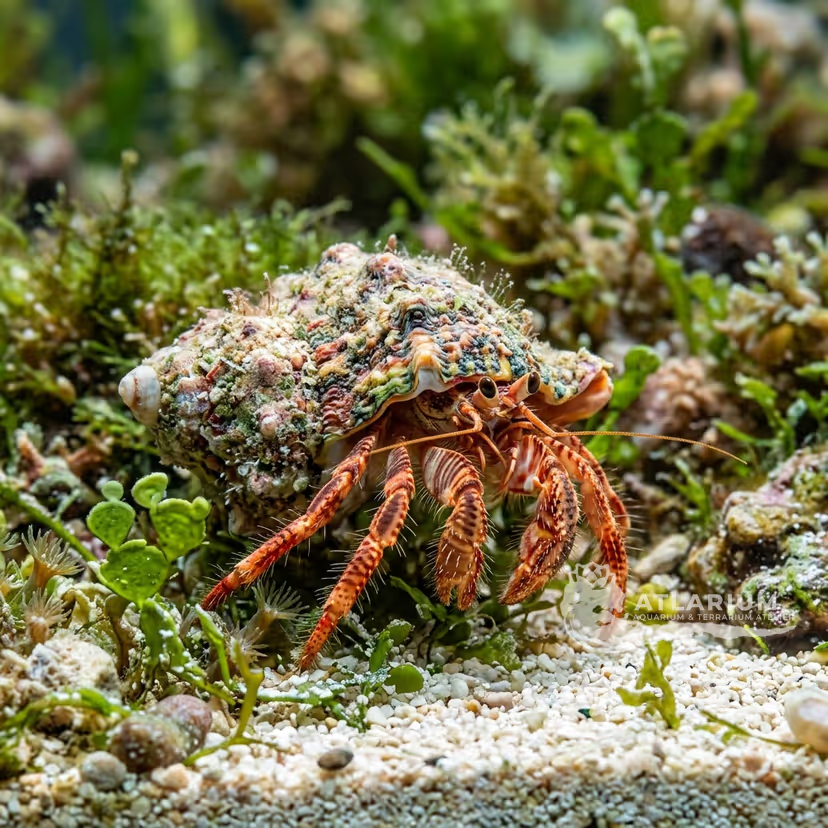
View details->
Antillean hermit crab

Antillean hermit crab

Clibanarius brasiliensis

View details->
Bahia Cleaner Shrimp

Bahia Cleaner Shrimp

Lysmata bahia

View details->
Danai's hermit crab

Danai's hermit crab

Clibanarius danai
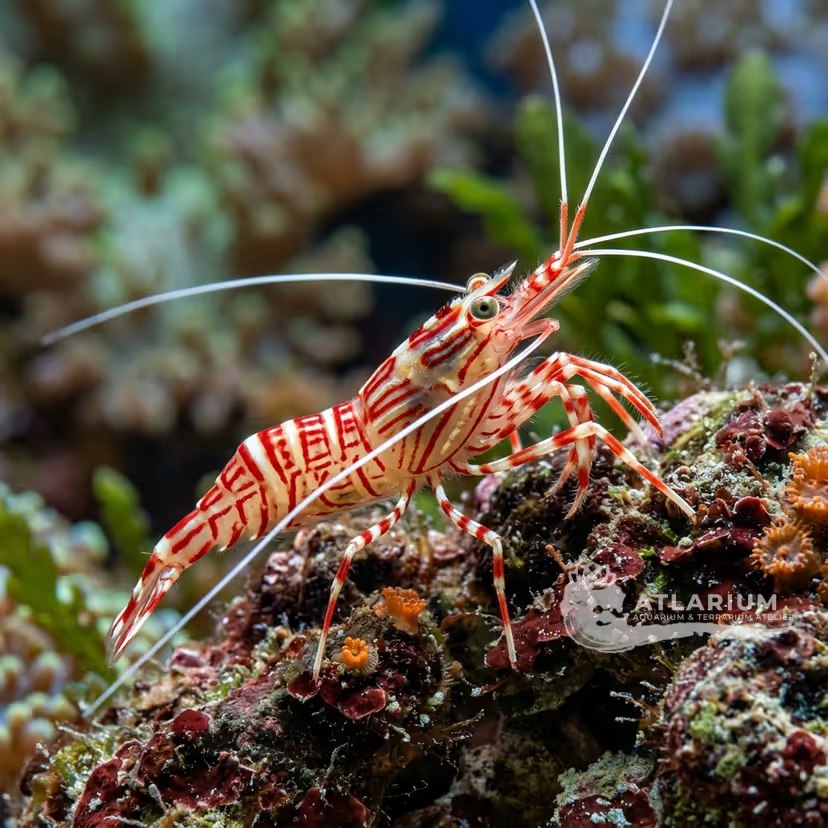
View details->
Lysmata prima shrimp

Lysmata prima shrimp

Lysmata

View details->
Last updated: 06/30/2026
Feather Duster Worm (Sabellastarte spectabilis) Care Guide & Tank Setup | Atlarium