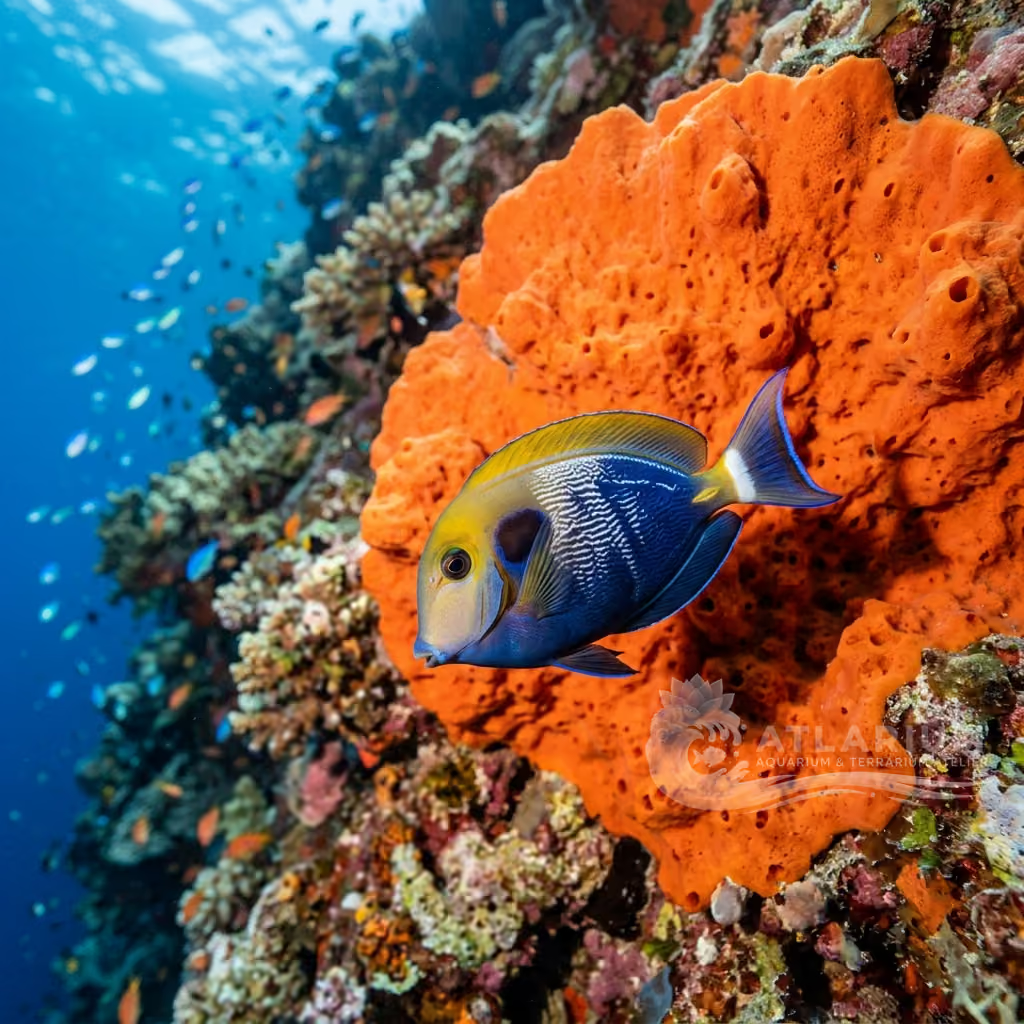
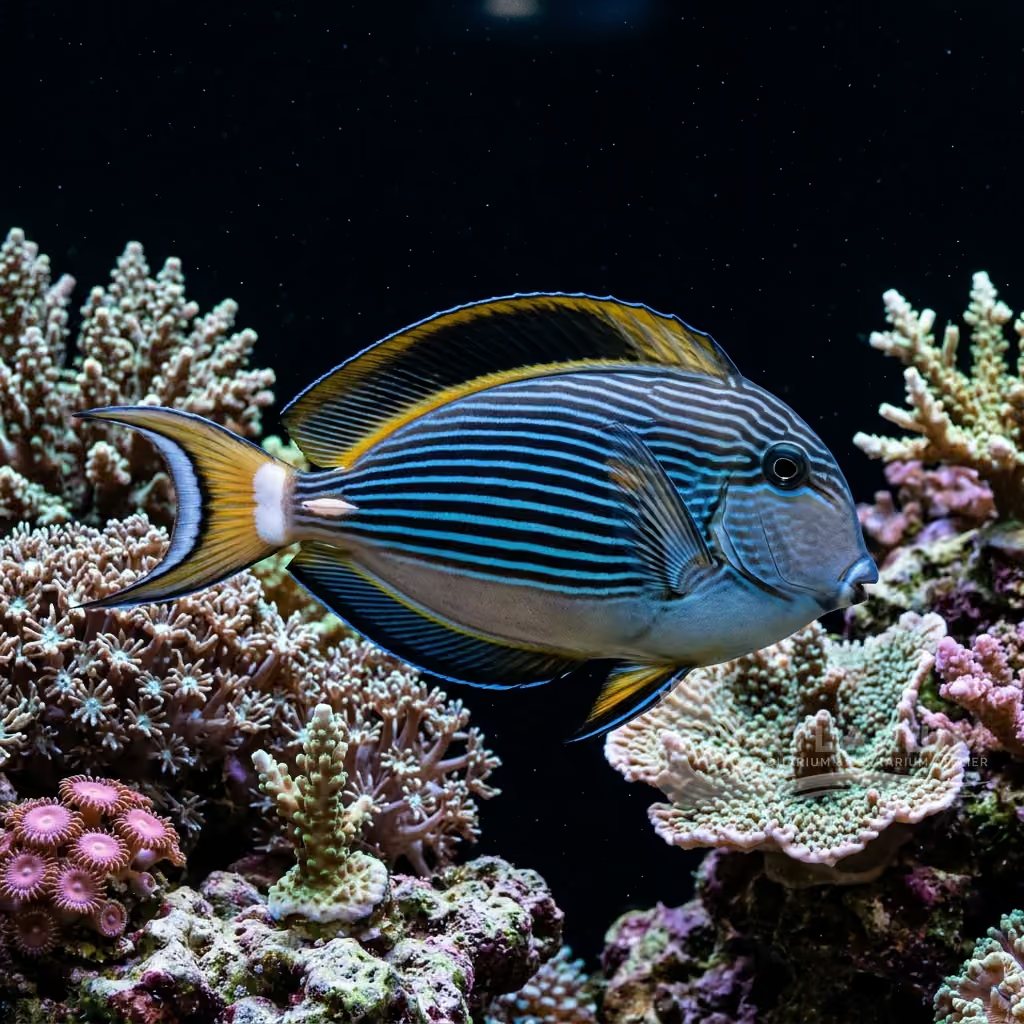
Mustard Tang
Acanthurus guttatus
The whitespotted surgeonfish dwells in turbulent, high-energy surge zones of the Indo-Pacific. It is perfectly adapted to crashing waves and heavily oxygenated waters.
Water Temperature
22 - 26 °C
pH Value
8.1 - 8.4
Water type
Marine
Tank level
All levels
Adult size
26 cm
Minimum tank volume
>= 700 L
Minimum group
>= 1
KH
8 - 12 dKH

Species description
Geographical Origin and Habitat: Acanthurus guttatus is native to the tropical Indo-Pacific, with a range spanning from Mauritius and Reunion east to Easter Island, reaching north to southern Japan and south to coastal Australia. Its preferred habitat is highly specialized: it inhabits high-energy surge zones of seaward reefs and rocky shorelines exposed to breaking waves. It is found in shallow waters, typically from 0 to 6 meters, where the water is turbulent and highly oxygenated.
Taxonomy and Morphology: This species belongs to the family Acanthuridae. It features a disc-shaped, laterally compressed body with a rounded silhouette that allows it to navigate turbulent coastal currents with minimal resistance. It possesses a sharp, retractable spine on each side of the caudal peduncle, characteristic of the genus Acanthurus, which is used as a defensive weapon against predators.
Social Behavior: In the wild, it forms tight-knit schools that move quickly through the foam and breaking waves to graze on algae. This schooling behavior protects them from predators in open zones. In aquariums, it is active and fast-swimming, but can exhibit strong territorial aggression toward other surgeonfish of the genus Acanthurus or species with similar color patterns.
Coloration and Sexual Dimorphism: The color pattern is distinctive: a dark brownish-grey body adorned with three vertical white bars (one behind the eye, one mid-body, and one near the tail) and covered on the posterior half with numerous small white dots. The pelvic fins are a vivid mustard-yellow. There is no visible external sexual dimorphism, though mature males may be slightly larger during spawning periods.

Care, breeding and tankmates
Aquarium Setup: Requires a marine aquarium of at least 400 to 500 liters. The system must recreate a high-energy reef environment, using multiple powerheads to generate strong, turbulent water movement and wave action. Oxygenation must be kept at maximum levels, making a powerful protein skimmer and additional aeration essential. Rockwork must be securely anchored to withstand the current.
Diet and Feeding: It is a dedicated herbivore. It spends most of its time grazing on filamentous algae and organic films from rocks. In captivity, it must be fed daily with dried nori seaweed, spirulina-enriched foods, and high-quality herbivore flakes. While it will accept frozen foods like mysis and brine shrimp, these should only be given as occasional supplements.
Water Quality: This species is demanding regarding water parameters. It requires pristine, well-oxygenated water with a constant temperature between 24°C and 27°C, pH of 8.1 to 8.4, and salinity between 1.023 and 1.025. Due to its sensitivity to low oxygen levels, efficient water turnover and a high redox potential are critical.
Compatibility and Cohabitation: Safe for reef aquariums with corals and sessile invertebrates. It coexists well with peaceful fish like gobies, anthias, and clownfish. Housing it with other surgeonfish is risky and requires a very large tank to minimize territorial clashes. It does not harm corals or clams.
Aquarium Breeding: Breeding in home aquariums is not documented. In the wild, they are pelagic group spawners, releasing eggs and sperm into the water column during dusk, where the fertilized eggs drift with open ocean currents.
Risks and Diseases: Acanthurus guttatus is highly susceptible to skin parasites such as marine ich (Cryptocaryon) and marine velvet (Oodinium). Stress from insufficient water flow or poor nutrition will quickly compromise its immune system. A strict quarantine protocol is highly recommended before introduction to the main tank.

Geographic origin and distribution
Acanthurus guttatus is native to the tropical Indo-Pacific, with a range spanning from Mauritius and Reunion east to Easter Island, reaching north to southern Japan and south to coastal Australia. Its preferred habitat is highly specialized: it inhabits high-energy surge zones of seaward reefs and rocky shorelines exposed to breaking waves. It is found in shallow waters, typically from 0 to 6 meters, where the water is turbulent and highly oxygenated.
Origin
Tropical oceans and reefsAfrica and MadagascarEast AsiaAustralia, New Guinea, and Oceania

Fish profile
- Temperament
- Semi-aggressive
- Acanthurus guttatus exhibits a semi-aggressive temperament, showing tolerance toward fish of other families but strong territoriality toward other surgeonfishes. It is particularly aggressive toward conspecifics or fish with similar shapes and colorations, such as members of the genus Acanthurus or Zebrasoma. If introduced into a spacious aquarium with plenty of hiding spots, it will tend to establish its own territory without bothering more peaceful tankmates. To minimize aggression, it is best to introduce it as one of the last residents of the tank.
- Diet
- Herbivore
- This is a predominantly herbivorous species that in the wild feeds on filamentous algae and algal detritus present on rocks. In the aquarium, its diet must be based mainly on dehydrated marine algae (such as Nori), commercial spirulina-based foods, and specific pellets for herbivores. It is important to supplement the diet with small frozen crustaceans, such as mysis and brine shrimp, to provide balanced nutrition. A lack of plant matter in the diet can lead to intestinal health issues and loss of bright coloration.
- Life expectancy
- 10-15 years
- Adult size
- 26 cm
- Sex ratio
- Harem
- In nature, Acanthurus guttatus lives in large schools that can number hundreds or thousands of individuals to graze and defend against predators. In the aquarium, however, limited space makes maintaining a group difficult, and the species is usually housed individually to avoid strong intraspecific conflict. Reproduction in captivity is not common, and there is no recommended sex ratio (such as a harem) for standard breeding. If exceptional tank sizes are available (over 1000 liters), attempting a small group is possible, provided all individuals are introduced simultaneously.
- Feeding frequency
- Twice daily
- Due to their accelerated metabolism and habit of continuous grazing, Acanthurus guttatus should be fed multiple times a day. Ideally, small meals should be offered three to four times daily, alternating vegetable-based dry foods and frozen foods. Additionally, it is advisable to place a sheet of Nori algae on a clip daily to allow them to graze throughout the day. This feeding routine prevents wasting and reduces stress from food competition.
- Bioload
- High
- Acanthurus guttatus has a high metabolic rate typical of surgeonfishes, resulting in a significant amount of organic waste. Consequently, it requires a highly efficient filtration system, preferably with an oversized protein skimmer to handle the nutrient load. Constant water movement and regular water changes are essential to keep nitrate and phosphate levels low. Fine mechanical filtration will help quickly remove solid debris before it decomposes.
- Flow
- Strong
- Acanthurus guttatus originates from coral reef zones characterized by strong surges and intense currents, therefore requiring very strong water movement in the aquarium. It is essential to install powerful wavemakers to replicate the surge effect and ensure excellent water oxygenation. A vigorous water flow not only promotes their physical well-being but also stimulates their natural behavior of swimming against the current. Lack of current can cause respiratory stress and a drastic reduction in the fish's activity.
- Jump risk
- Yes
- Acanthurus guttatus presents a medium-high risk of jumping, particularly when startled or during territorial disputes with other fish. Its natural reaction to danger is a lightning-fast escape upwards or to the sides, which can easily lead it out of open aquariums. To prevent fatal accidents, it is highly recommended to cover the aquarium with a solid lid or a tight-fitting mesh net. Even dim night lighting can help reduce jumping caused by sudden frights in the dark.
- Reproduction
- Rare / not documented
- Reproduction in Acanthurus guttatus occurs through mass spawning in a pelagic environment, where fish gather in large schools to release eggs and sperm into the water column. The fertilized eggs float in the open sea, making larval development extremely complex to replicate in captivity. To date, there are no recorded cases of successful commercial reproduction in home aquariums. Managing planctonic larvae requires highly specialized equipment and feeding protocols that exceed the capabilities of the average hobbyist.
- Compatibility & tankmates
- Territorial
- This species is considered reef-safe, as it does not harm hard corals, soft corals, or sessile invertebrates in the aquarium. It shows excellent compatibility with most peaceful reef fish such as damselfishes, anthias, gobies, and wrasses. However, cohabiting with other surgeonfishes, especially of the same genus, requires very large tanks and simultaneous introduction to prevent fierce clashes. Avoid pairing it with overly shy species that might be startled by its energetic swimming.
- Tank level
- All levels
- This species mainly occupies the middle-top zone of the water column, where flow and oxygenation are highest, but frequently descends to the bottom to graze on live rocks. Due to its active swimming nature, it will utilize the entire available aquarium space if currents are adequate. It is essential to leave an ample open swimming area in the central and upper parts of the tank. The presence of strong water movement will induce the fish to swim actively across all levels of the tank.

Scientific Parameters & Models
FishBase
Window to the official scientific data of the species
FishBase v25.04Data synced on: 06/15/2026
- Trophic level
- 2 ± 0 se
- Resilience
- High (less than 15 months)
- Phylogenetic uniqueness (PD50)
- 0.5
- Bayesian Length-Weight
- a = 0.03236, b = 2.95
- VulnerabilityLow vulnerability (16 / 100)

Related species
Recommendations grouped by close relatives, companion choices, and similar care.