Blue tang surgeonfish
Acanthurus coeruleus
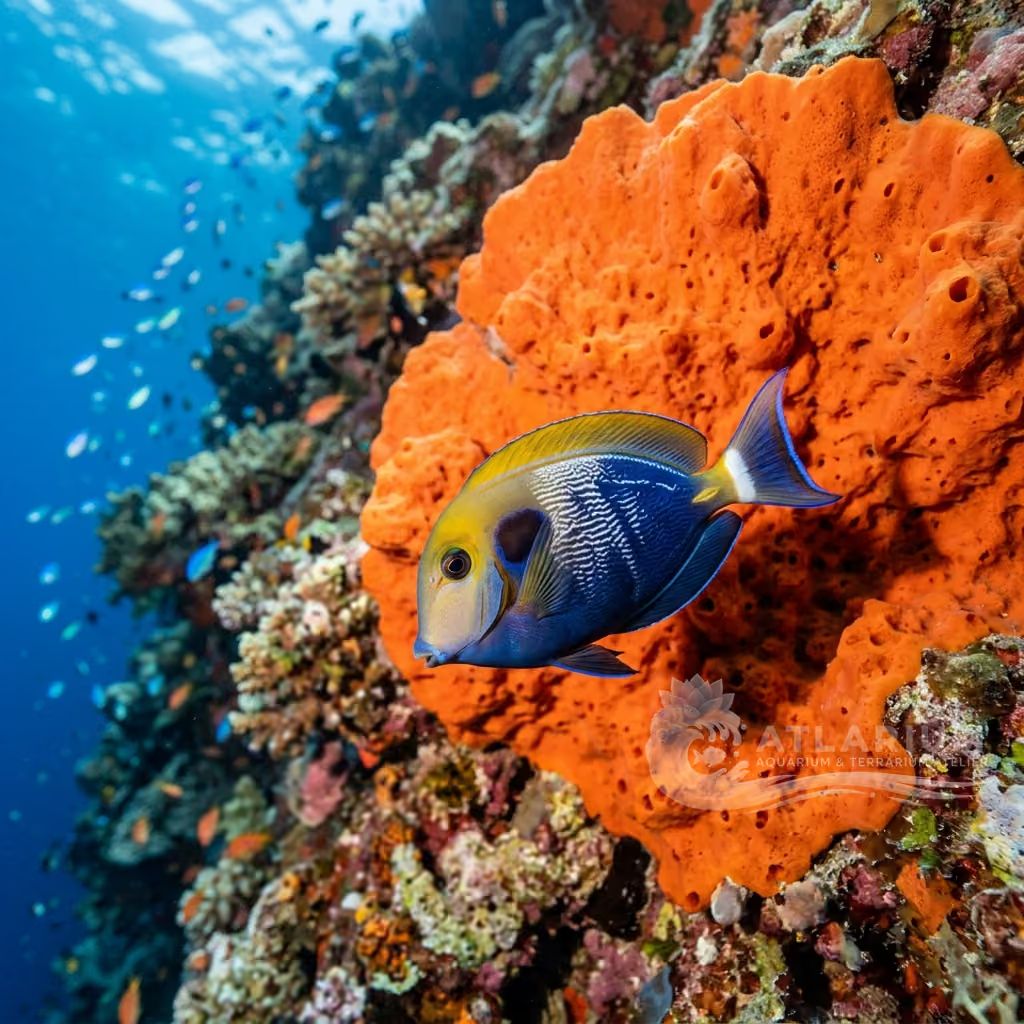
The Atlantic blue tang favors shallow, sunlit coral reefs in the Caribbean. Characterized by its deep blue color, it actively grazes on benthic algae in clear waters.
Water Temperature
22 - 27 °C
pH Value
8.1 - 8.4
Water type
Marine
Tank level
All levels
Adult size
39 cm
Minimum tank volume
>= 680 L
Minimum group
>= 1
KH
8 - 12 dKH

Species description
Geographical Origin and Habitat: This species is native to the tropical and subtropical waters of the western Atlantic Ocean, distributed from New York and the Bermuda Islands down to southern Brazil, including the entire Gulf of Mexico and the Caribbean Sea. It primarily inhabits shallow coral reefs, coastal rocky reefs, and seagrass beds at depths between 2 and 40 meters, where the water is clear and sunlit, promoting algae growth.
Taxonomy and Morphology: Acanthurus coeruleus belongs to the family Acanthuridae. It features a deep, highly laterally compressed body with a rounded head profile. Like all surgeonfish, it is equipped with a sharp, spine-like modified scale (the 'scalpel') on each side of the caudal peduncle, which is housed in a yellow sheath. Adults can reach a maximum length of approximately 30-35 cm.
Social Behavior: Juveniles are solitary and highly territorial, whereas adults often form large schools that range across the reef to graze on algae. Schooling behavior allows them to overwhelm the territorial defenses of other herbivorous fish (such as damselfish). In the aquarium, it exhibits strong intraspecific territoriality and aggression toward similar-looking surgeonfish.
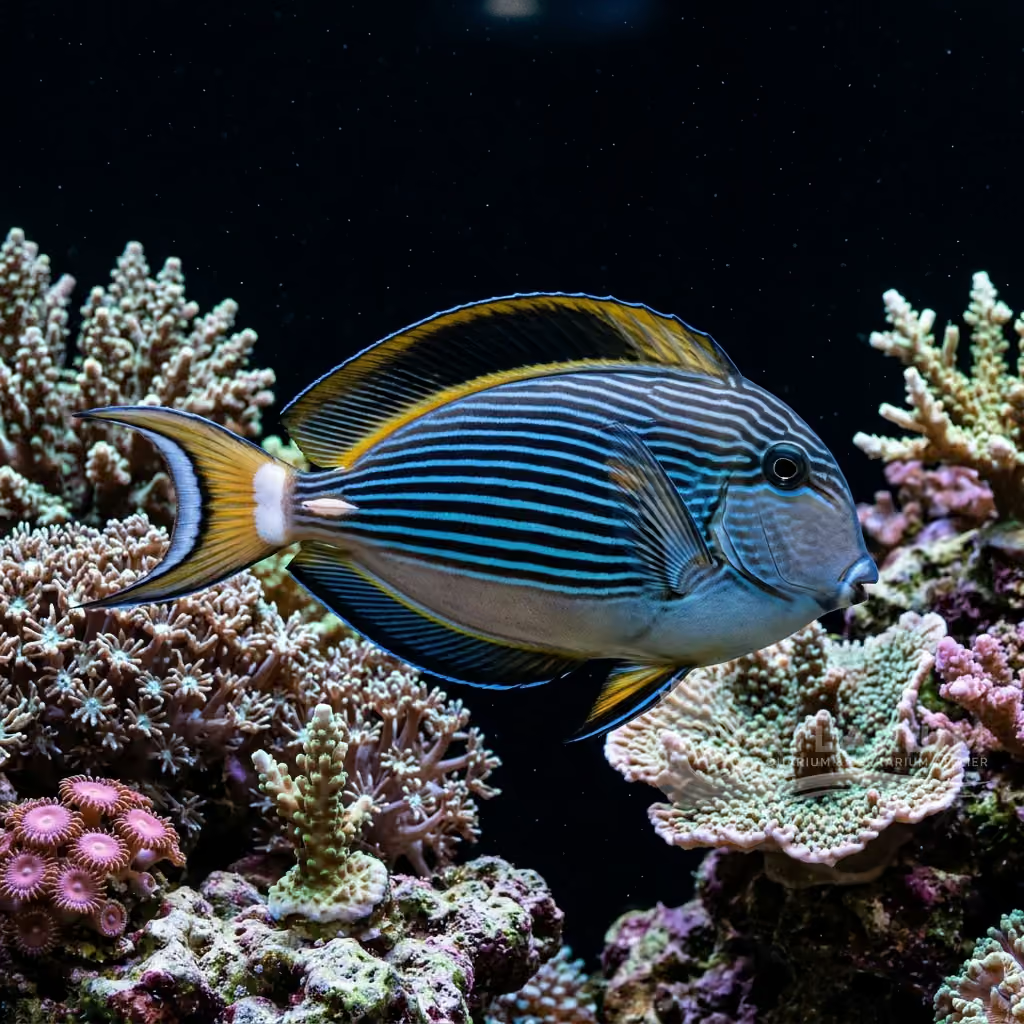
Coloration and Sexual Dimorphism: This species undergoes a spectacular color metamorphosis as it matures. Juveniles are entirely bright yellow with thin blue trim along their fins. As they grow, the body changes to a deep blue-violet or purple color with narrow gray and blue longitudinal lines, and the tail may remain yellow for a time (sub-adult phase) before turning dark blue. There is no visible sexual dimorphism.

Care, breeding and tankmates
Aquarium Setup: It requires a large aquarium of at least 400-500 liters for a single specimen due to its size and relentless swimming habits. The tank should be aquascaped with a sturdy rock structure rich in benthic algae for grazing, offering numerous open passages while leaving a vast open front area for active swimming. Covering the tank is important to prevent jumping.
Diet and Feeding: It is a specialized herbivore that feeds in the wild almost exclusively on filamentous algae and macroalgae. In an aquarium, its diet must be predominantly plant-based, consisting of dried nori sheets attached to clips, spirulina, algae-enriched pellets, and occasional small portions of frozen food (mysis, brine shrimp) to balance protein intake.
Water Quality: It demands excellent water quality with stable parameters: temperature between 24°C and 27°C, pH between 8.1 and 8.4, and salinity between 1.021 and 1.025. To support the health and respiration of this highly active fish, the water must be heavily oxygenated and kept in rapid motion using wavemakers, backed by a powerful protein skimmer.
Compatibility and Cohabitation: It is reef-safe and ideal for reef tanks containing hard and soft corals. It coexists well with fish from other families, provided they are not overly shy. However, it displays strong aggression toward conspecifics and other Acanthurus species of similar shape and color. It is best to introduce it last among surgeonfish to minimize conflicts.
Aquarium Breeding: Breeding in aquariums is extremely complex and has not been achieved in home systems. In the wild, they form massive spawning aggregations where pairs dart upward toward the surface to release eggs and sperm simultaneously into the water column. The larvae undergo a very long planktonic stage before settling on the reef.
Risks and Diseases: It is notorious for being highly susceptible to parasitic skin diseases such as Oodinium and Cryptocaryon (marine ich), often referred to as an 'ich magnet'. Its thin skin, lacking thick scales, makes it vulnerable to temperature swings and stress. A rigorous quarantine period before introduction and foods enriched with garlic and vitamins are highly recommended.

Geographic origin and distribution
This species is native to the tropical and subtropical waters of the western Atlantic Ocean, distributed from New York and the Bermuda Islands down to southern Brazil, including the entire Gulf of Mexico and the Caribbean Sea. It primarily inhabits shallow coral reefs, coastal rocky reefs, and seagrass beds at depths between 2 and 40 meters, where the water is clear and sunlit, promoting algae growth.
Origin
Tropical oceans and reefsExtra-Amazon South AmericaCentral America and CaribbeanNorth America

Fish profile
- Temperament
- Semi-aggressive
- The Atlantic Blue Tang is a semi-aggressive and highly territorial species, particularly towards other surgeonfish and similarly shaped or colored competitors. While they are generally peaceful towards smaller, non-related tankmates, they will actively defend their grazing territory against intruders. They spend their days constantly active, patrolling the reef and picking at algae on rocks and glass. Because of their sharp caudal spines, their territorial displays can result in physical injury to other fish if the tank is too cramped.
- Diet
- Herbivore
- This fish is primarily herbivorous and requires a diet rich in marine algae and vegetable matter to maintain its health and vibrant coloration. In addition to natural algae growth in the tank, they should be offered high-quality nori, spirulina, and specialized herbivore pellets or flakes. While they will eagerly accept meaty foods like mysis shrimp or brine shrimp, these should only be offered occasionally to prevent digestive issues. Enriching their dried seaweed with vitamin supplements can also help boost their immune system and prevent lateral line erosion.
- Life expectancy
- 10-15 years
- Adult size
- 39 cm
- Sex ratio
- Harem
- In a home aquarium, it is highly recommended to house only a single specimen of Acanthurus coeruleus per tank, as they are intensely territorial towards their own kind. Keeping them in groups is generally only feasible in very large public aquaria or massive custom systems where territories can be clearly established. If multiple surgeonfish are to be kept together, they should be introduced simultaneously to a spacious tank with complex rockwork. If you wish to maintain a group, a harem setup with one male and several females is ideal, but sexing them is virtually impossible for hobbyists.
- Feeding frequency
- Twice daily
- Due to their high metabolism and relatively short digestive tracts, Acanthurus coeruleus should be fed multiple times per day. Ideally, they should receive small portions of herbivore food three to four times daily to replicate their continuous grazing in the wild. Alternatively, clipping a sheet of dried nori to the tank glass allows them to graze naturally throughout the day at their own pace. Regular, frequent feeding is also crucial in reducing territorial aggression and preventing them from nipping at corals.
- Bioload
- High
- The Atlantic Blue Tang is a very active herbivore that consumes large quantities of food throughout the day, resulting in a high bioload. A powerful filtration system, including a high-capacity protein skimmer, is essential to manage the significant organic waste they produce. Frequent water changes and routine maintenance of filter media are necessary to keep nitrate and phosphate levels low. Maintaining pristine water quality is particularly crucial for this species, as they are highly susceptible to diseases like marine ich under poor water conditions.
- Flow
- Strong
- In their natural reef environment, Atlantic Blue Tangs inhabit high-energy areas like reef crests and outer slopes, which translates to a strong preference for vigorous water flow. A high turnover rate and strong currents within the aquarium are essential to keep this fish active and healthy. Strong flow also ensures high dissolved oxygen levels, which are critical for supporting their rapid breathing and high metabolic demands. The use of multiple wavemakers or powerheads is highly recommended to create dynamic, turbulent water movement.
- Jump risk
- Yes
- Acanthurus coeruleus is a fast-swimming and energetic fish that poses a significant jump risk, especially when startled. In the wild, their natural spawning behavior involves a rapid vertical rush to the surface, which can easily translate to jumping out of a home aquarium. Sudden lighting changes or aggressive interactions with tankmates can also cause them to leap in panic. Therefore, a secure, tight-fitting lid or a high mesh cover is absolutely necessary to prevent tragic accidents.
- Reproduction
- Oviparous
- The reproduction of Acanthurus coeruleus in home aquaria is exceptionally difficult and has rarely, if ever, been achieved by hobbyists. In nature, they are pelagic broadcast spawners that form large breeding aggregations and rush toward the surface to release eggs and sperm simultaneously. Courting couples require massive water columns and specific environmental cues like tides and lunar cycles to trigger spawning. Additionally, the resulting microscopic larvae drift in the ocean currents for several weeks, making their feeding and rearing virtually impossible in standard aquarium setups.
- Compatibility & tankmates
- Semi-aggressive
- Acanthurus coeruleus is reef-safe and compatible with a wide variety of corals, although underfed specimens may occasionally nip at large polyp stony corals or clam mantles. They can be safely kept with peaceful invertebrates and small, non-aggressive fish such as clownfish, damselfish, gobies, and wrasses. However, they are highly aggressive towards other surgeonfish, especially members of their own genus or other species with similar shapes and blue coloration. Introductions should be carefully planned, and adding them last to the aquarium is often recommended to minimize territorial conflict.
- Tank level
- All levels
- This species is an incredibly active swimmer that utilizes all levels of the aquarium. They can be seen constantly moving through open water in the middle and upper zones of the tank, while frequently descending to graze on the substrate and live rocks. A proper aquascape should include a balance of wide-open swimming areas and dense rock formations with caves. The aquarium should be long and wide rather than tall to provide the horizontal space these fish require to feel secure and display natural behaviors.

Scientific Parameters & Models
FishBase
Window to the official scientific data of the species
FishBase v25.04Data synced on: 06/15/2026
- Trophic level
- 2.2 ± 0 se
- Resilience
- Medium (1.4 - 4.4 years)
- Generation time
- 9.8 years
- Phylogenetic uniqueness (PD50)
- 0.5
- Bayesian Length-Weight
- a = 0.0257, b = 2.96
- VulnerabilityHigh vulnerability (59 / 100)

Related species
Recommendations grouped by close relatives, companion choices, and similar care.