White-freckled Surgeonfish
Acanthurus maculiceps
The white-freckled surgeonfish inhabits high-energy Indo-Pacific reef channels. Armed with venomous spines, this large fish actively grazes on algae in deep, clear waters.
Water Temperature
23 - 28 °C
pH Value
8.1 - 8.4
Water type
Marine
Tank level
All levels
Adult size
40 cm
Minimum tank volume
>= 950 L
Minimum group
>= 1
KH
8 - 12 dKH

Species description
Geographical Origin and Habitat: Tropical Indo-Pacific. Inhabits outer reef slopes exposed to strong currents and deep channel passages rich in corals and algae down to 30 meters. Inhabits clear, high-energy outer reef slopes and channels, where it is found grazing on algae-covered rocks at depths of 2 to 25 meters.
Taxonomy and Morphology: Belongs to the family Acanthuridae. Reaches about 40 cm. Oval, laterally compressed body with small teeth and a sharp bony scalpel on the sides of the tail base. Classified in the family Acanthuridae, this surgeonfish possesses sharp, venomous caudal spines on either side of the caudal peduncle for defense.
Social Behavior: Active and fast fish, swims constantly. Displays high territoriality toward other large herbivores in limited spaces. An active and powerful swimmer, it requires vast open water areas to roam and displays strong territorial defense against other large herbivores.
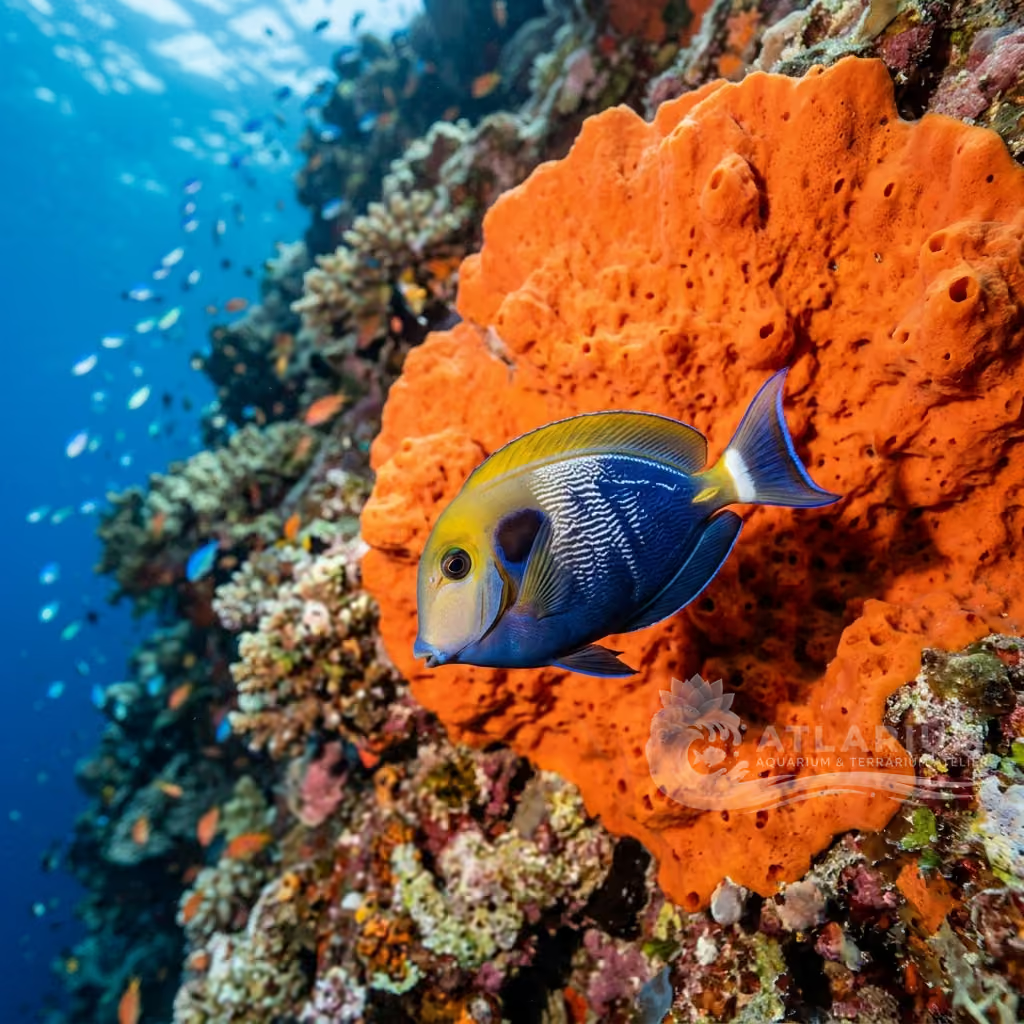
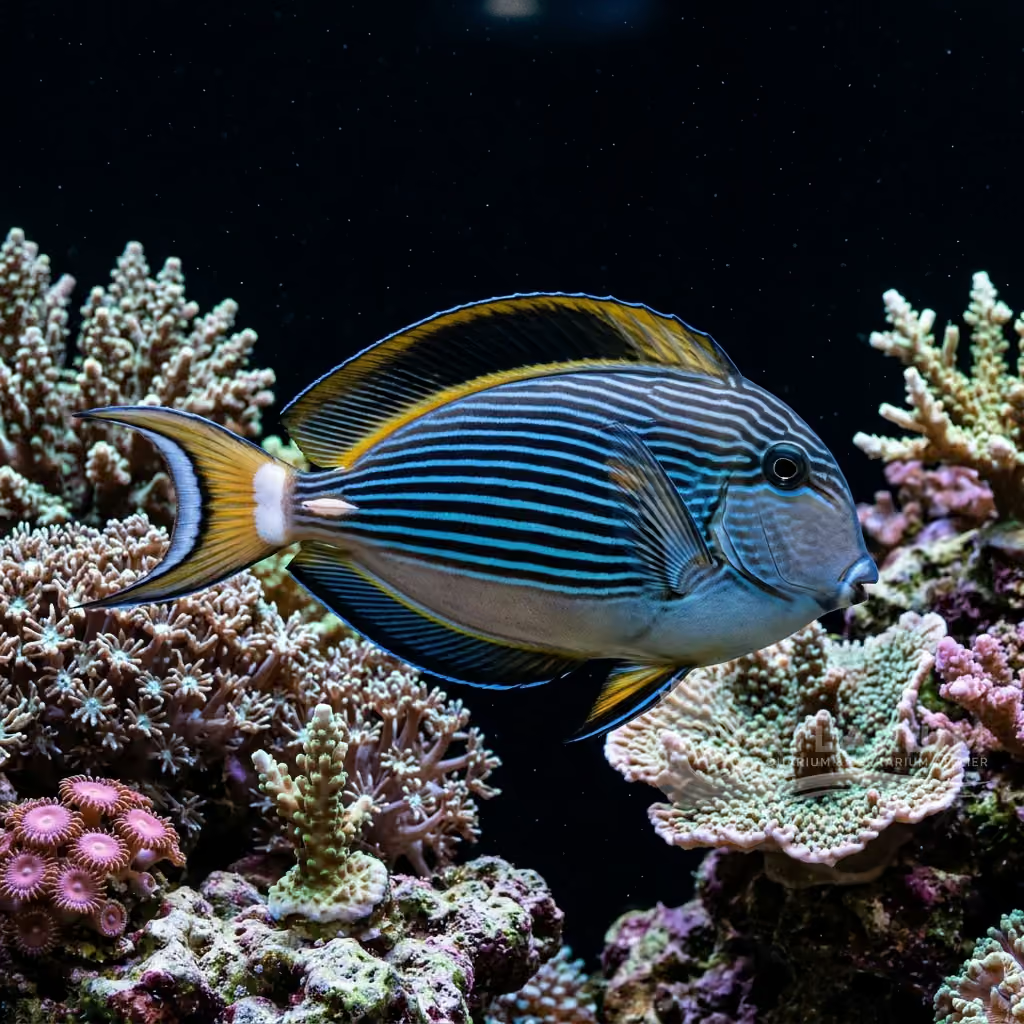
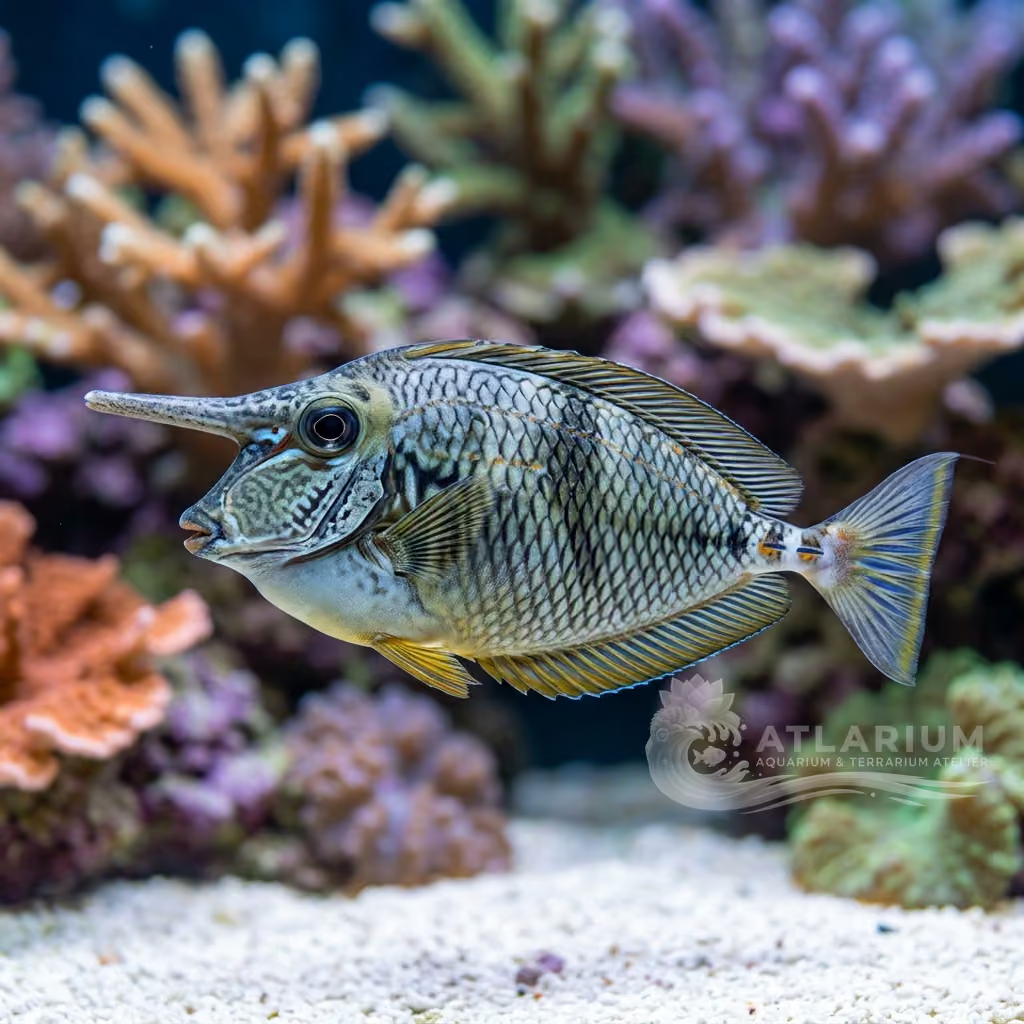
Coloration and Sexual Dimorphism: Olive-brown body covered with fine streaks. Distinguished by the snout and head covered with a dense series of white or yellow spots (freckles) and a black elongated shoulder patch. The body is dark brown with fine white spots (freckles) on the head, a black shoulder bar, and a bright yellow spot on the pectoral fin tip.

Care, breeding and tankmates
Aquarium Setup: Requires a massive tank of at least 950 liters (250 gallons) with very strong water movement and ample open areas for fast swimming. A massive tank of at least 950 liters is essential to accommodate its size, active swimming habits, and high metabolic waste production.
Diet and Feeding: Herbivore. Feed large amounts of plant matter: nori seaweed, spirulina, enriched veggie pellets, and fresh macroalgae. Feed a diet heavy in macroalgae, nori sheets, and herbivore pellets, supplemented with mysis shrimp and krill to maintain healthy body weight.
Water Quality: Temperature 23-28°C (73-82°F), pH 8.1-8.4, specific gravity 1.020-1.025. Efficient skimming and maximum oxygenation to prevent stress and parasites. High water flow and extreme oxygenation are vital; use heavy-duty wavemakers and a high-performance protein skimmer to maintain pristine water.
Compatibility and Cohabitation: 100% reef-safe. Does not touch corals. Can show high aggression toward other surgeonfish, especially Acanthurus species. Best kept as the only Acanthurus species in the tank. Introduce last to a peaceful community of large reef fish to minimize territorial clashes.
Aquarium Breeding: Reproduction is not feasible in home aquariums. Spawns by releasing pelagic eggs in the open ocean. Captive breeding has not been successfully achieved in home aquariums due to their complex schooling and pelagic spawning requirements.
Risks and Diseases: Equipped with a sharp caudal spine, exercise maximum caution during maintenance. Highly sensitive to skin infections and Marine Ich. Highly prone to skin parasites (marine ich, velvet). A high-wattage UV sterilizer and running a strict copper or hyposalinity quarantine are recommended.

Geographic origin and distribution
Tropical Indo-Pacific. Inhabits outer reef slopes exposed to strong currents and deep channel passages rich in corals and algae down to 30 meters. Inhabits clear, high-energy outer reef slopes and channels, where it is found grazing on algae-covered rocks at depths of 2 to 25 meters.
Origin
Tropical oceans and reefsEast Asia

Fish profile
- Temperament
- Semi-aggressive
- Acanthurus maculiceps is a semi-aggressive species that exhibits strong territoriality, especially towards other surgeonfish and food competitors. It is generally peaceful towards smaller, unrelated fish like wrasses, clownfish, or anthias, but will defend its grazing territory fiercely. Due to this behavior, it should be introduced to the aquarium last to minimize territorial disputes and allow other fish to establish themselves first.
- Diet
- Herbivore
- This species is primarily herbivorous, feeding on microalgae and detritus in the wild. In an aquarium, its diet should consist of high-quality marine algae, dried seaweed (Nori), Spirulina, and specialized herbivore preparations. Although it requires vegetable matter as its dietary staple, it will also consume meaty foods like mysis shrimp and brine shrimp, which should be offered occasionally as supplement.
- Life expectancy
- 10-15 years
- Adult size
- 40 cm
- Sex ratio
- Solitary
- In a home aquarium, it is highly recommended to keep only a single specimen of Acanthurus maculiceps per tank due to their strong territorial nature. Attempting to house males and females together or keeping multiple individuals is extremely risky unless the tank is exceptionally large, such as several thousand liters. In wild conditions, they may form loose aggregations, but in captivity, individual housing is the standard safety practice to prevent fatal fights.
- Feeding frequency
- Twice daily
- Due to their high metabolic rate and active lifestyle, these surgeonfish require frequent feedings throughout the day. It is highly recommended to feed them small amounts two to three times daily, rather than one large feeding. Additionally, placing dried seaweed on an algae clip allows them to graze continuously, mimicking their natural foraging behavior and reducing stress.
- Bioload
- High
- The white-freckled surgeonfish has a high metabolic rate due to its constant activity and diet, producing a substantial amount of waste. A powerful protein skimmer, efficient mechanical filtration, and regular water changes are necessary to keep nitrates and phosphates low. This species requires a mature, well-filtered aquarium system to maintain the high water quality it needs to thrive.
- Flow
- Strong
- Acanthurus maculiceps inhabits high-energy reef environments like seaward reefs and outer reef flats, where water movement is strong. In captivity, they require strong water flow and high dissolved oxygen levels to feel comfortable and stay healthy. Using powerful wavemakers and ensuring surface agitation is essential to replicate their natural habitat and support their muscular swimming needs.
- Jump risk
- Yes
- While not traditional jump-prone species, surgeonfish like Acanthurus maculiceps are very fast, powerful, and easily startled. When spooked by sudden changes in lighting, external movement, or aggressive tankmates, they can easily leap out of an open aquarium. A tight-fitting lid or a secure mesh cover is essential to prevent tragic accidents and keep this energetic species safely inside the tank.
- Reproduction
- Oviparous
- Reproduction of Acanthurus maculiceps in home aquaria is extremely difficult and has not been successfully documented. In nature, they are broadcast spawners that release their gametes into the water column during group spawning events, allowing fertilized eggs to drift as plankton. The massive tank size, specific environmental cues, and specialized larval rearing foods required make breeding this species in captivity virtually impossible for hobbyists.
- Compatibility & tankmates
- Semi-aggressive
- This surgeonfish is compatible with a wide variety of reef fish, including peaceful species like anthias, gobies, clownfish, and cardinalls. However, it will fight aggressively with members of its own genus (Acanthurus) and other similarly shaped tangs unless the aquarium is extremely large. It is reef-safe and will not harm corals or sessile invertebrates, making it an excellent addition to a diverse community reef tank.
- Tank level
- All levels
- The white-freckled surgeonfish is an exceptionally active swimmer that utilizes all levels of the water column. It will frequently cruise through open water in the middle and upper zones of the aquarium while also diving down to graze on algae growing on the rocks and substrate. Consequently, a tank design with ample open swimming space, combined with structured rockwork, is ideal for supporting its natural behavior.

Scientific Parameters & Models
FishBase
Window to the official scientific data of the species
FishBase v25.04Data synced on: 06/15/2026
- Trophic level
- 2 ± 0 se
- Resilience
- Medium (1.4 - 4.4 years)
- Phylogenetic uniqueness (PD50)
- 0.5
- Bayesian Length-Weight
- a = 0.02042, b = 2.99
- VulnerabilityModerate vulnerability (39 / 100)

Related species
Recommendations grouped by close relatives, companion choices, and similar care.