Yellowfin Surgeonfish
Acanthurus xanthopterus
The yellowfin surgeonfish is the largest in its genus, capable of reaching 70cm. It frequents deep lagoons and seaward slopes in the Indo-Pacific, needing vast swimming areas.
Water Temperature
22 - 28 °C
pH Value
8 - 8.5
Water type
Marine
Tank level
All levels
Adult size
70 cm
Minimum tank volume
>= 150 L
Minimum group
>= 1
KH
8 - 12 dKH

Species description
Geographical Origin and Habitat: Indo-Pacific: widely distributed from East Africa to the Hawaiian Islands, the Gulf of California, and south to Ecuador. It is found in deep lagoons, seaward reef slopes, and protected bays at depths up to 90 meters, often over sandy areas.
Taxonomy and Morphology: A member of the family Acanthuridae. This is the largest species in the genus Acanthurus, capable of reaching up to 70 cm (28 inches) in length. Features an oval, laterally compressed body with a terminal mouth adapted for grazing. The tail base has retractable spines.
Social Behavior: Diurnal, highly active, and a constant swimmer. In nature, adults form large school aggregations, whereas in the aquarium, they can show severe territorial aggression towards other surgeonfish of similar shape or species.
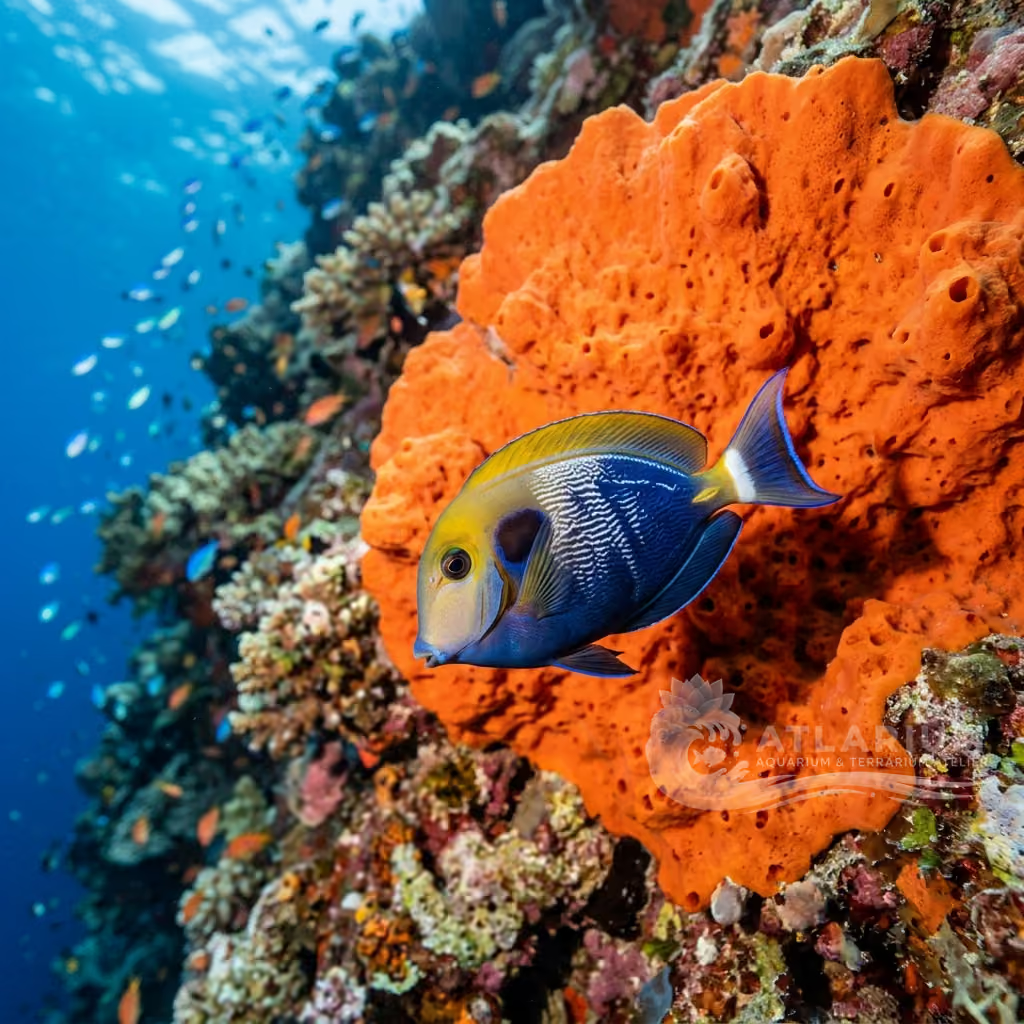
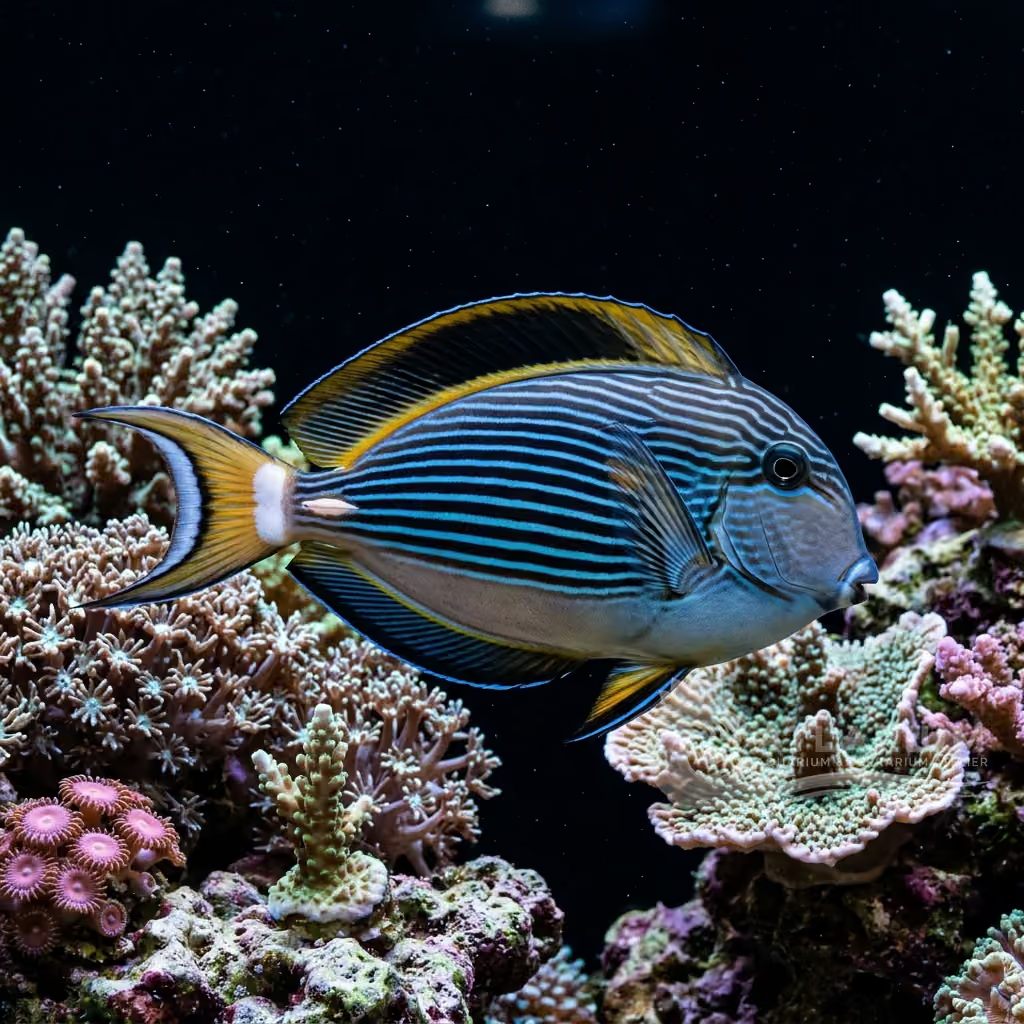
Coloration and Sexual Dimorphism: Body coloration is typically purplish-grey to brown, featuring bright yellow pectoral fins and a yellow zone around the eyes. The dorsal and anal fins have longitudinal yellow margins. Genders look identical.

Care, breeding and tankmates
Aquarium Setup: Minimum tank size is 1500 liters (approx. 400 gallons) to accommodate its massive adult size. Requires open water zones for swimming. Live rock should be arranged in stable, low-profile structures to prevent tipping by the fish.
Diet and Feeding: Herbivorous and detritivorous. Needs a high-fiber diet. Provide dried seaweed (nori), spirulina, veggie pellets, and macroalgae several times a day. Supplement with frozen mysis or krill to ensure adequate protein intake.
Water Quality: Demands pristine water conditions: temperature 22-28°C (72-82°F), pH 8.0-8.5, and specific gravity 1.020-1.025. Highly oxygenated water with strong, constant water currents (high turn-over rate) and powerful skimming are mandatory.
Compatibility and Cohabitation: 100% reef-safe. It does not harm corals or sessile invertebrates. Best kept as the only Acanthurus species in the tank. It is compatible with large, active tankmates such as groupers, angels, and triggerfish.
Aquarium Breeding: Not successfully bred in captive home aquariums. They are pelagic broadcast spawners, forming spawning aggregations in the wild. Rearing the delicate pelagic larvae in captivity is highly challenging.
Risks and Diseases: Extremely susceptible to marine ich (Cryptocaryon) and velvet (Oodinium). A high-output UV sterilizer is highly recommended. The retractable caudal spines are large and sharp; exercise extreme care when handling.

Geographic origin and distribution
Indo-Pacific: widely distributed from East Africa to the Hawaiian Islands, the Gulf of California, and south to Ecuador. It is found in deep lagoons, seaward reef slopes, and protected bays at depths up to 90 meters, often over sandy areas.
Origin
Tropical oceans and reefsExtra-Amazon South AmericaCentral America and CaribbeanNorth AmericaAfrica and Madagascar

Fish profile
- Temperament
- Semi-aggressive
- This species exhibits a semi-aggressive temperament, especially as it matures and claims territory. While it is generally peaceful towards unrelated, non-similar species, it will show intense hostility toward other surgeonfish. It is a dominant and boisterous fish that requires large tank mates to avoid bullying behaviors. Providing a spacious environment with plenty of hiding places is essential to minimize territorial disputes.
- Diet
- Omnivore
- The Yellowfin Surgeonfish is an omnivore with a strong preference for herbivorous foods. In the wild, it grazes on microalgae, detritus, and small invertebrates found on sandy and rocky substrates. In captivity, its diet must consist primarily of high-quality marine algae, spirulina, and dried seaweed (nori) offered on clips. Occasional feedings of meaty items like mysis shrimp or krill help provide a balanced nutritional profile.
- Life expectancy
- 15-30 years
- Adult size
- 70 cm
- Sex ratio
- Solitary
- In a home aquarium, the Yellowfin Surgeonfish is best kept as a single specimen. It is highly territorial towards members of its own species and closely related tangs, which can lead to fatal aggression in confined spaces. In massive public aquariums, they may be kept in small groups if introduced simultaneously and provided with ample space. For standard husbandry, keeping one per tank is the safest and most recommended approach.
- Feeding frequency
- Twice daily
- To match its natural grazing behavior, this species should be fed multiple times throughout the day. Offering small portions of food three to four times daily helps support its high metabolic rate and active lifestyle. Additionally, leaving dried seaweed on a feeding clip allows the fish to graze continuously between main meals. Consistent feeding is also crucial in reducing aggression and maintaining their immune system.
- Bioload
- Extreme
- Due to its massive adult size of up to 70 centimeters, the Yellowfin Surgeonfish produces a significant amount of organic waste. Maintaining this species requires an extremely robust filtration system, including a high-performance protein skimmer and frequent water changes. Large sumps and heavy water turnover are essential to keep the water parameters stable and prevent nitrate accumulation. Consequently, it is categorized as having an extreme biological load that only large systems can handle.
- Flow
- Strong
- This fish inhabits reef edges and outer lagoons, meaning it is adapted to strong water currents. In the aquarium, it requires moderate to strong water flow to stimulate natural swimming behavior and maintain high oxygen levels. Excellent water movement also assists in keeping detritus suspended, allowing the filtration system to remove it efficiently. A combination of wavemakers and strong return pumps is highly recommended for their setup.
- Jump risk
- Yes
- The Yellowfin Surgeonfish is a powerful swimmer that can easily leap out of an aquarium if startled or stressed. This risk is particularly high during the acclimation phase, feeding times, or when tank lights are suddenly switched off. To prevent accidental escapes, a heavy and tight-fitting lid or a secure mesh cover is absolutely mandatory. Additionally, minimizing sudden movements around the tank helps reduce their startle response.
- Reproduction
- Oviparous
- The Yellowfin Surgeonfish is a broadcast spawner that releases eggs and sperm into the open water column in large aggregations. Because of this complex spawning behavior and a very long planktonic larval stage, they do not reproduce in home aquariums. While scientific institutions have occasionally raised larvae under strict laboratory conditions, captive breeding remains unviable for hobbyists. Consequently, all specimens available in the trade are wild-harvested.
- Compatibility & tankmates
- Peaceful
- Due to its potential size and active nature, compatibility is best achieved with other large, robust marine species. Ideal tank mates include large wrasses, triggerfish, groupers, and large angelfish that can tolerate its boisterous presence. It should not be housed with other tangs of the same genus or similar shape unless the system is exceptionally large. Small, passive, or delicate fish should be avoided as they may be easily intimidated by this large predator-free grazer.
- Tank level
- All levels
- This species is a highly active and strong swimmer that utilizes all levels of the water column. It will constantly patrol the open midwater areas of the tank while also descending to the bottom to graze on rocks and substrate. To accommodate this behavior, the aquarium layout must feature extensive open swimming spaces alongside rocky structures. Adequate depth and length of the tank are critical to support their continuous cruising habits.

Scientific Parameters & Models
FishBase
Window to the official scientific data of the species
FishBase v25.04Data synced on: 06/15/2026
- Trophic level
- 2.9 ± 0.23 se
- Resilience
- Very low (more than 14 years)
- Generation time
- 3.8 years
- Phylogenetic uniqueness (PD50)
- 0.5
- Bayesian Length-Weight
- a = 0.02399, b = 2.96
- VulnerabilityModerate vulnerability (37 / 100)

Related species
Recommendations grouped by close relatives, companion choices, and similar care.