Fowler's surgeonfish
Acanthurus fowleri
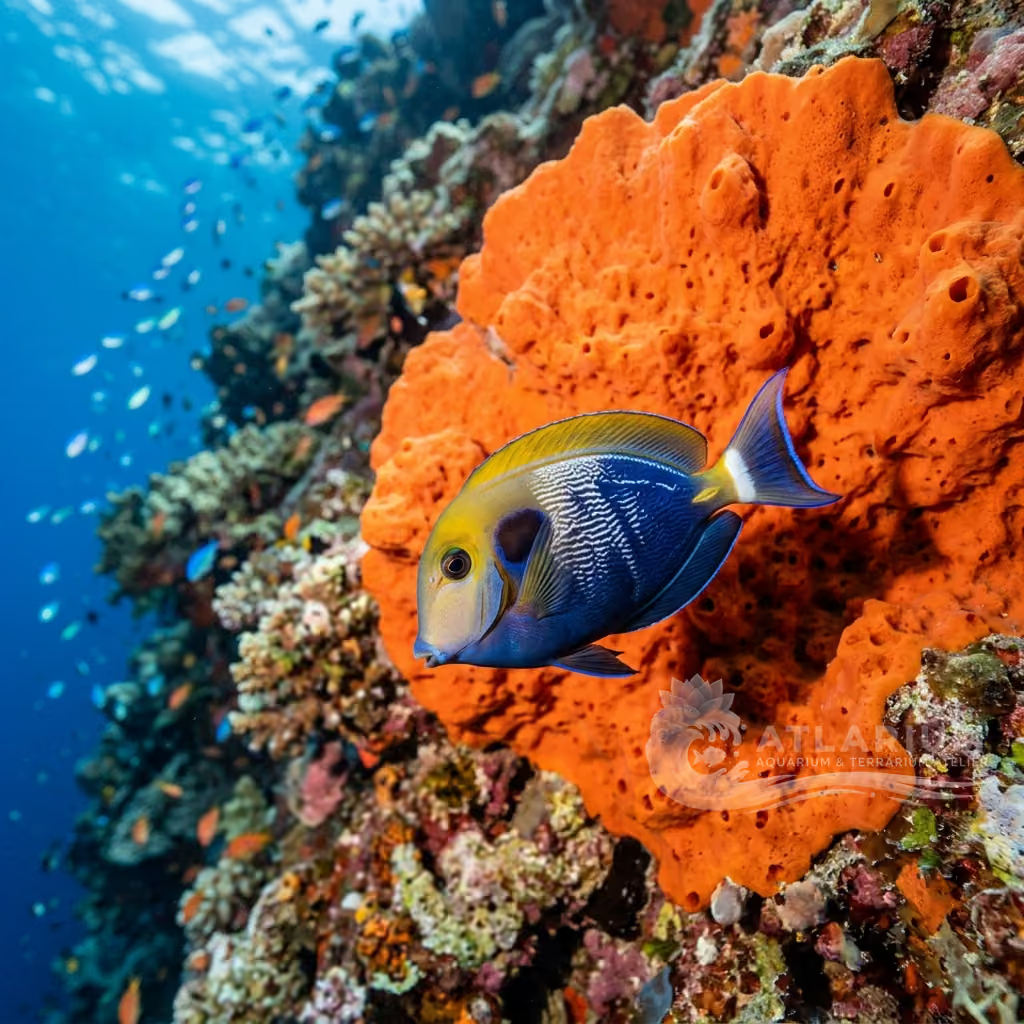
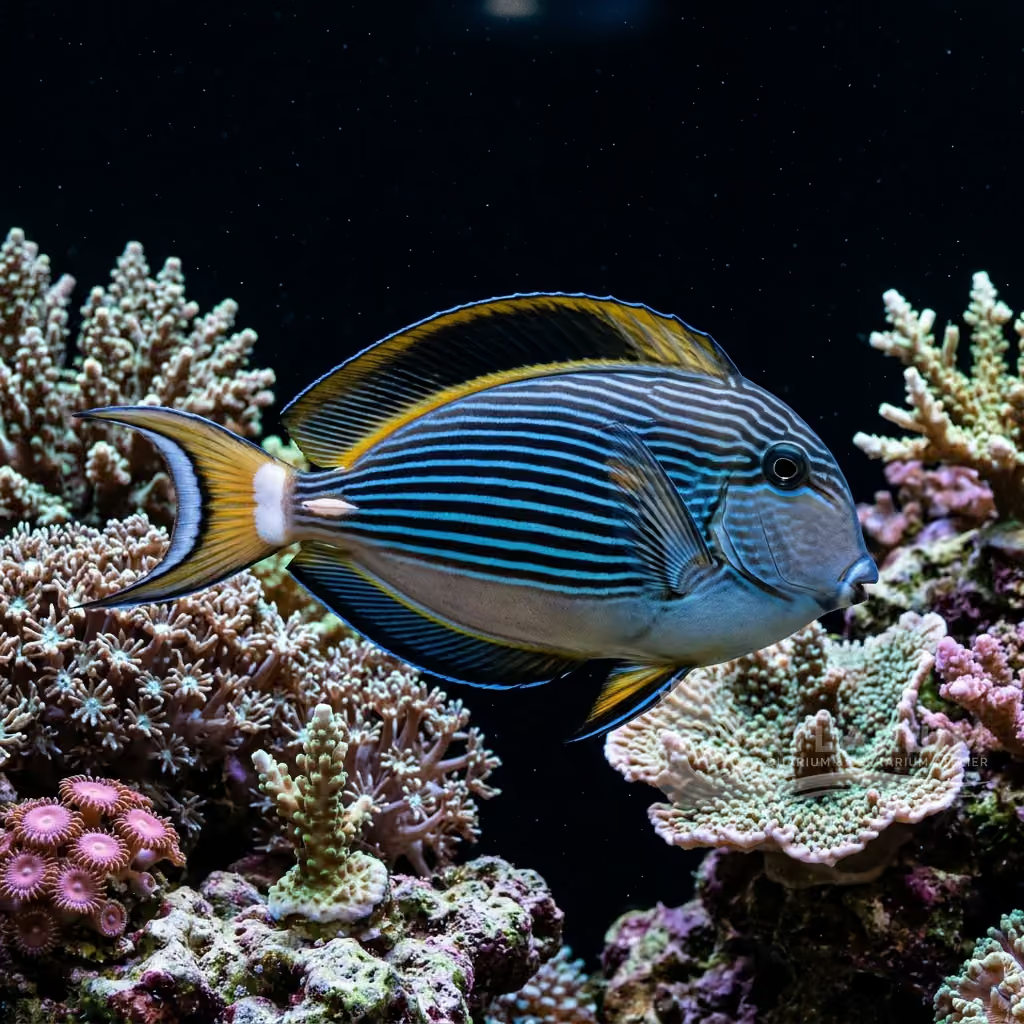
Acanthurus fowleri is a rare and striking surgeonfish from the Western Indo-Pacific, identified by a distinctive horseshoe mark behind its eye. It requires a very large tank.
Water Temperature
23 - 27 °C
pH Value
8.1 - 8.4
Water type
Marine
Tank level
All levels
Adult size
45 cm
Minimum tank volume
>= 1,000 L
Minimum group
>= 1
KH
8 - 12 dKH

Species description
Geographical Origin and Habitat:
This species is primarily native to the Western Indo-Pacific, with populations concentrated around the Philippines, Indonesia, Papua New Guinea, the Solomon Islands, and northern Australia. It inhabits outer reef slopes and steep drop-offs exposed to strong ocean currents, at depths ranging from 10 to 50 meters, preferring coral-rich zones.
Taxonomy and Morphology:
Belonging to the family Acanthuridae, Acanthurus fowleri features an oval-shaped, laterally compressed body. Adults can grow to an impressive maximum size of approximately 45 centimeters in length. The mouth is positioned low on the head, which is ideal for grazing on algae. It possesses sharp, venomous spines on the sides of the caudal peduncle.
Social Behavior:
It is a solitary and highly territorial species that patrols large territories on the coral reef. In the aquarium, its behavior is aggressive and dominant, especially toward other surgeonfish of the same genus or species with similar patterns. It should be introduced last in large setups to minimize territorial aggression.
Coloration and Sexual Dimorphism:
The adult coloration consists of an olive-brown body decorated with fine, wavy blue-gray lines. The defining feature is a black, horseshoe-shaped mark ringed in electric blue located immediately behind the eye. The caudal fin is dark with a distinct white margin. No visible external sexual dimorphism is present between males and females.

Care, breeding and tankmates
Aquarium Setup:
To accommodate a mature adult, a giant marine aquarium of at least 700 liters is required. The tank must feature exceptionally strong water movement, generated by high-powered wavemakers, and high oxygenation. The rockwork should contain established live rock for grazing but must leave most of the tank's volume open for swimming.
Diet and Feeding:
It is a primarily herbivorous fish. In captivity, it must be fed a constant diet of high-quality vegetable matter, including dried nori sheets, spirulina, and specialized veggie pellets. It also grazes on filamentous algae growing on the rocks. Supplement the diet with small portions of frozen mysis and brine shrimp to boost immunity.
Water Quality:
Demands pristine water quality and extremely stable parameters. Keep temperature between 24°C and 26°C, pH from 8.1 to 8.4, specific gravity from 1.021 to 1.025, and KH stable between 8 and 12 dKH. Organic wastes like nitrates and phosphates must be kept low. A high-end protein skimmer and activated carbon filtration are required.
Compatibility and Cohabitation:
This species is reef safe and will not harm corals or ornamental invertebrates. However, due to its aggressive nature, it should not be housed with conspecifics or similarly looking tangs like Acanthurus bariene. It coexists well with other active and robust fish such as large wrasses, triggers, and large angelfish.
Aquarium Breeding:
There are no recorded instances of this species breeding in home aquariums. In the wild, they are broadcast spawners that release pelagic eggs into the water column. The eggs drift with ocean currents and undergo a long, complex larval phase that requires specialized live feeds that cannot be cultivated in typical home systems.
Risks and Diseases:
Highly susceptible to marine ich (Cryptocaryon irritans) and marine velvet (Oodinium) due to its thin mucus layer. It is also prone to Head and Lateral Line Erosion (HLLE) if water conditions degrade or if its diet lacks necessary vitamins. A strict quarantine period and a UV sterilizer are strongly advised.

Geographic origin and distribution
This species is primarily native to the Western Indo-Pacific, with populations concentrated around the Philippines, Indonesia, Papua New Guinea, the Solomon Islands, and northern Australia. It inhabits outer reef slopes and steep drop-offs exposed to strong ocean currents, at depths ranging from 10 to 50 meters, preferring coral-rich zones.
Origin
Tropical oceans and reefsNorth AmericaAfrica and MadagascarSouth and Southeast AsiaAustralia, New Guinea, and Oceania

Fish profile
- Temperament
- Semi-aggressive
- Acanthurus fowleri is generally classified as a semi-aggressive fish, exhibiting territorial behavior once established in the aquarium. Like other surgeonfish, they possess a sharp caudal spine (scalpel) at the base of their tail, which they will use to defend their territory or establish dominance. They are typically peaceful toward unrelated tankmates but can be highly aggressive toward other tangs, particularly those of the same genus or similar shape. Introducing this fish last to the aquarium can help mitigate territorial conflicts with other inhabitants.
- Diet
- Herbivore
- The diet of Acanthurus fowleri is primarily herbivorous, consisting of marine algae and organic detritus. In the aquarium, they should be offered a constant supply of dried seaweed (Nori), spirulina, and high-quality vegetable-based pellets or flakes. They also benefit from grazing on natural algae growth on live rocks within the tank, and will sometimes graze algae from sponge surfaces. Providing a small amount of meaty foods like mysis shrimp helps supplement their diet, but their primary intake must remain plant-based to prevent nutritional diseases.
- Life expectancy
- 10-15 years
- Adult size
- 45 cm
- Sex ratio
- Solitary
- In the wild, Acanthurus fowleri is generally a solitary species that defends its grazing territory against competitors. In a home aquarium, it is highly recommended to house only a single individual of this species to prevent severe intraspecific aggression. Keeping them in pairs or groups is extremely difficult and should only be attempted in massive, public-sized aquariums where territories can be established. Attempting to keep multiple specimens in a standard-sized tank often leads to stress, injury, or death.
- Feeding frequency
- Twice daily
- Because of their active nature and rapid metabolism, Acanthurus fowleri should be fed multiple times throughout the day. Offering small, frequent meals about 2 to 3 times a day is ideal to mimic their natural grazing behavior on the reef. Feeding clips with dried seaweed should be left in the tank for several hours to allow them to graze at their own pace. Consistent feeding helps reduce stress, keeps their energy levels high, and curbs aggression toward other tankmates.
- Bioload
- Medium to High
- Acanthurus fowleri is a large-bodied surgeonfish that reaches up to 45 cm in length, resulting in a substantial biological load on the aquarium filtration system. Due to their high metabolic rate and constant grazing habits, they produce a significant amount of waste that must be managed. A powerful protein skimmer, efficient mechanical filtration, and frequent water changes are essential to maintain low nutrient levels. Neglecting filtration can quickly lead to poor water quality and stress-related illnesses in this sensitive species.
- Flow
- Strong
- Acanthurus fowleri is native to seaward reefs and drop-offs where water currents are strong and well-oxygenated. In captivity, they require strong water flow to stimulate their natural swimming behavior and maintain high oxygen levels. Utilizing powerful wavemakers or powerheads to create turbulent currents will simulate their wild environment and keep them healthy. Adequate flow also prevents detritus from settling, helping to keep the overall water quality pristine.
- Jump risk
- Yes
- While surgeonfish are not the most notorious jumpers, Acanthurus fowleri still poses a moderate jump risk, particularly when startled. Their large size, high speed, and easily frightened nature mean they can quickly leap out of an open aquarium if spooked by sudden movements or lighting changes. A tight-fitting lid or a secure mesh cover is highly recommended to prevent accidental escapes and fatal accidents. Providing plenty of rocky caves and hiding spots will also help reduce their anxiety and tendency to flee upward.
- Reproduction
- Oviparous
- Like most surgeonfish, Acanthurus fowleri is a pelagic spawner, releasing eggs and sperm into the open water column where they drift as plankton. Consequently, breeding this species in a home aquarium is extraordinarily difficult and has not been achieved successfully in private installations. Large public aquariums with specialized, massive systems are the only venues capable of managing the larval stages of these fish. Almost all specimens available in the marine aquarium trade are wild-caught.
- Compatibility & tankmates
- Aggressive
- Acanthurus fowleri is compatible with a wide range of marine fish, provided their tankmates are not other large surgeonfish with similar shapes or coloring. They do well with peaceful reef fish such as clownfish, damsels, wrasses, and large angelfish. They are also considered reef-safe as they will not bother corals, although caution should be exercised with small ornamental invertebrates that might be nipped at if the fish is underfed. Because of their potential for aggression, any other tangs should only be housed with them in very large tanks and introduced simultaneously or beforehand.
- Tank level
- All levels
- Acanthurus fowleri is an active, open-water swimmer that utilizes all levels of the aquarium. They spend a significant portion of their time near the bottom and middle zones, grazing on algae growing on rockwork and decor. However, they will frequently swim up to the surface during feeding times or when exploring the tank. Providing ample open swimming space across the entire water column is crucial for their physical and psychological well-being.

Scientific Parameters & Models
FishBase
Window to the official scientific data of the species
FishBase v25.04Data synced on: 06/15/2026
- Trophic level
- 2 ± 0.1 se
- Resilience
- Medium (1.4 - 4.4 years)
- Phylogenetic uniqueness (PD50)
- 0.5
- Bayesian Length-Weight
- a = 0.02291, b = 2.96
- VulnerabilityModerate vulnerability (42 / 100)

Related species
Recommendations grouped by close relatives, companion choices, and similar care.