Sohal surgeonfish
Acanthurus sohal
Endemic to the Red Sea and Persian Gulf, the sohal surgeonfish is highly aggressive and territorial. It dominates high-energy surge zones, defending vital algae resources.
Water Temperature
22 - 28 °C
pH Value
8.1 - 8.4
Water type
Marine
Tank level
All levels
Adult size
40 cm
Minimum tank volume
>= 950 L
Minimum group
>= 1
KH
8 - 12 dKH

Species description
Geographical Origin and Habitat: Acanthurus sohal is endemic to the tropical waters of the Red Sea and the Persian Gulf. It primarily inhabits outward-facing coral reefs and shallow reef flats exposed to surge and wave action, at depths ranging from 1 to 10 meters. The species is highly adapted to high-energy zones with turbulent, oxygen-rich water where it swims continuously, defending territories rich in filamentous algae that grow on sunlit rocks.
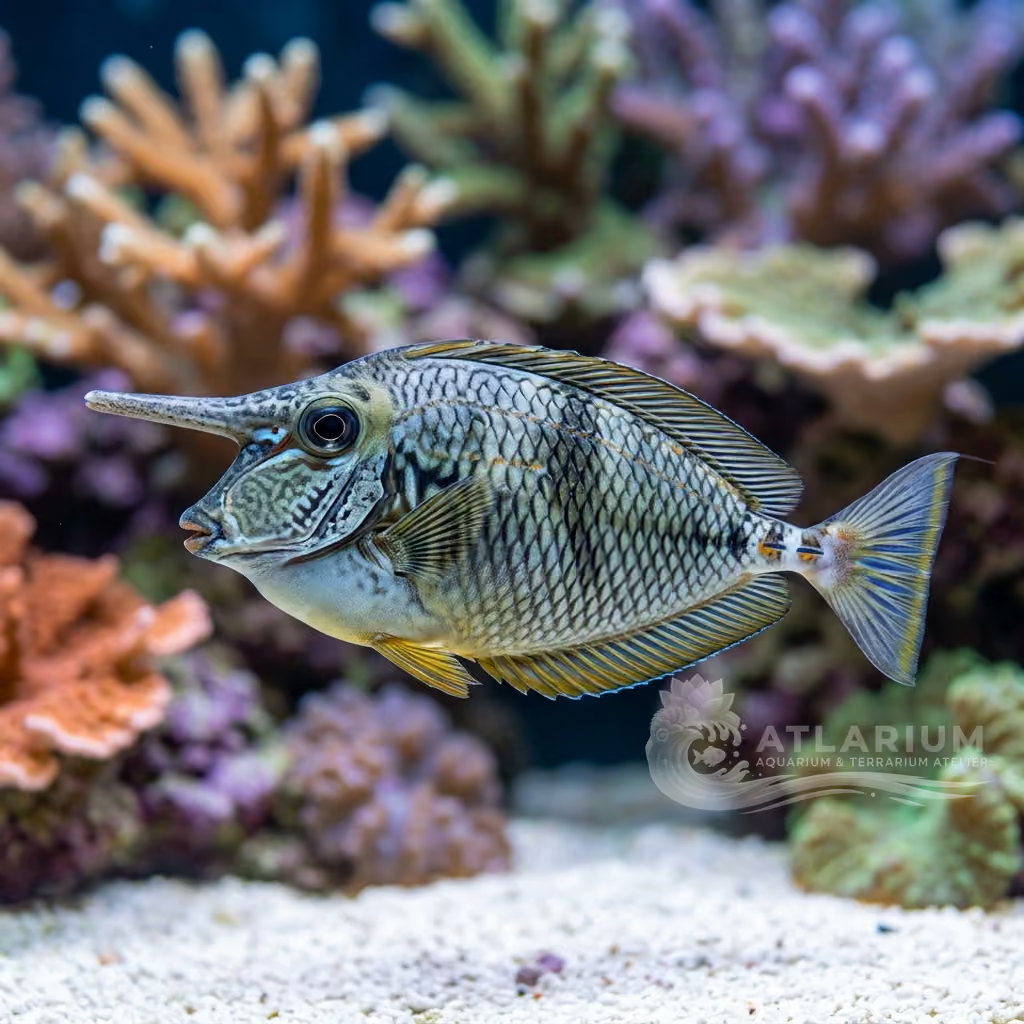
Taxonomy and Morphology: Belonging to the family Acanthuridae and the genus Acanthurus. It exhibits an oval-shaped, laterally compressed body typical of surgeonfishes. Its mouth is small, equipped with specialized teeth adapted for grazing and scraping algae from rocks. It possesses sharp, scalpel-like retractable spines (caudal spines) on each side of the caudal peduncle, used for defense. Adults can reach a total length of 40 centimeters.
Social Behavior: Renowned as one of the most territorial and aggressive marine fish in the aquarium hobby. It displays extreme intolerance toward conspecifics and other surgeonfishes, particularly those with similar shapes or color patterns. It actively defends its territory by swimming rapidly around intruders and flashing or slashing with its sharp caudal spines. It should be introduced last.
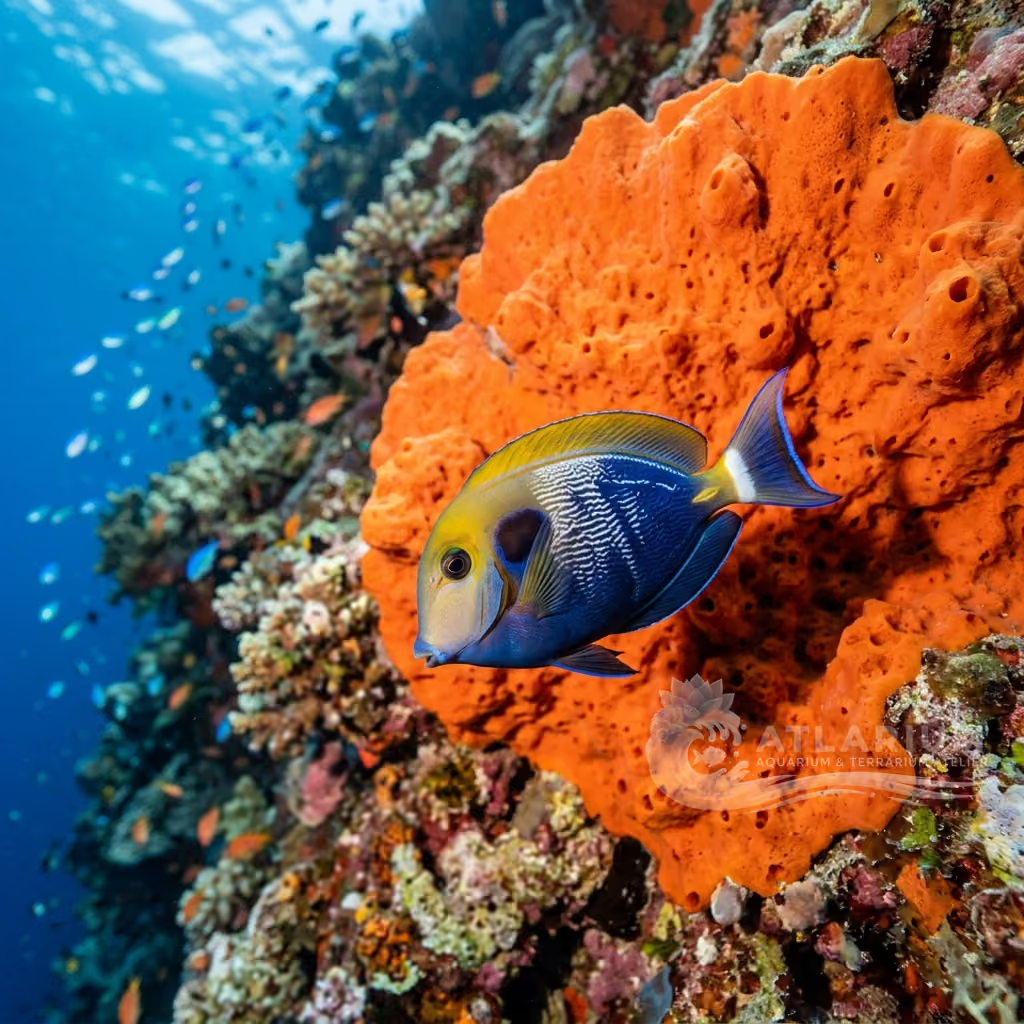
Coloration and Sexual Dimorphism: The coloration is exceptionally striking: a light grey body marked with fine, horizontal black and electric-blue zebra stripes. The dorsal, anal, and caudal fins are black, highlighted with brilliant neon-blue borders. A vivid orange patch is located on the flanks just behind the pectoral fins, and the caudal spines are also orange. There is no visible sexual dimorphism.

Care, breeding and tankmates
Aquarium Setup: Requires an exceptionally large marine aquarium, with a minimum capacity of 700-800 liters (approx. 180-200 gallons) and a tank length of at least 200 cm to allow for open swimming. High-output wavemakers are necessary to recreate the strong, turbulent currents of its natural reef habitat. Live rock should be arranged to form caves and arches while leaving the center open.
Diet and Feeding: A strict herbivore requiring a constant supply of marine vegetation. The diet must consist primarily of dried seaweed (nori), spirulina, high-quality herbivore pellets, and vitamin supplements. Meaty frozen foods such as mysis, brine shrimp, and krill can be offered occasionally, but should not exceed 20% of the overall diet to prevent digestive disorders.
Water Quality: Demands clean, highly oxygenated water with stable parameters. Keep temperature between 24°C and 28°C (75-82°F), pH at 8.1 to 8.4, specific gravity at 1.022 to 1.025, and KH at 8-12 dKH. An efficient protein skimmer, strong mechanical filtration, and regular water changes are essential to keep nitrate and phosphate levels near zero.
Compatibility and Cohabitation: Due to its high aggressiveness, cohabitation is challenging. It must be kept as the only surgeonfish in the aquarium. Compatible tankmates include large, active, and robust species such as triggerfish, large wrasses, groupers, and large angelfish. Avoid housing it with slow-moving, shy, or small fish, which will be severely harassed.
Aquarium Breeding: Spawning in home aquariums is extremely difficult and undocumented due to the fish's pelagic spawning nature and the space required for courtship. In the wild, they form massive spawning aggregations, releasing eggs and sperm simultaneously into the water column during high tide cycles to ensure egg dispersal.
Risks and Diseases: Highly susceptible to external parasites like Marine Ich (Cryptocaryon irritans) and Velvet (Oodinium), especially when stressed during acclimation. It is also prone to Head and Lateral Line Erosion (HLLE) if its diet is nutritionally deficient or if water quality is poor. A strict quarantine protocol is strongly advised.

Geographic origin and distribution
Acanthurus sohal is endemic to the tropical waters of the Red Sea and the Persian Gulf. It primarily inhabits outward-facing coral reefs and shallow reef flats exposed to surge and wave action, at depths ranging from 1 to 10 meters. The species is highly adapted to high-energy zones with turbulent, oxygen-rich water where it swims continuously, defending territories rich in filamentous algae that grow on sunlit rocks.
Origin
Tropical oceans and reefsEurope, Mediterranean, and West Asia

Fish profile
- Temperament
- Aggressive
- Acanthurus sohal is notoriously one of the most aggressive and territorial surgeonfish in the marine aquarium hobby. As they mature, they become increasingly belligerent and will aggressively defend their territory against any perceived rivals. They possess sharp caudal spines (scalpels) that they will use to slash tank mates if challenged. For this reason, they should be introduced as the final fish in the aquarium to prevent them from claiming the entire tank.
- Diet
- Herbivore
- The Sohal Tang is primarily a herbivore that requires a diet rich in marine algae and vegetable matter. In the wild, they graze on various filamentous algae, and in the aquarium, their diet should consist largely of nori, spirulina, and high-quality herbivore pellets. It is also beneficial to supplement their diet with occasional meaty foods like mysis shrimp or brine shrimp to provide balanced nutrition. Offering a varied diet helps maintain their vibrant coloration and keeps their immune system strong.
- Life expectancy
- 10-15 years
- Adult size
- 40 cm
- Sex ratio
- Solitary
- There is no visible sexual dimorphism in Acanthurus sohal, making it virtually impossible to distinguish males from females in a home aquarium. Due to their extreme intraspecific aggression, they must be stocked as solitary individuals in all but the largest systems. Attempting to keep multiples in a standard aquarium will almost certainly result in fatal territorial battles. Only in massive public aquariums can they sometimes be kept in groups.
- Feeding frequency
- Twice daily
- Because of their high activity levels and continuous grazing behavior in the wild, Sohal Tangs should be fed multiple times a day. It is recommended to offer small feedings 3 to 4 times daily, or utilize an algae clip with nori for them to graze on throughout the day. Frequent feeding helps reduce territorial aggression by keeping the fish occupied and well-nourished. Underfeeding can lead to weight loss, stress, and a significant increase in aggression towards tank mates.
- Bioload
- High
- The Sohal Tang is a large, highly active fish with a fast metabolism that produces a significant amount of biological waste. To maintain optimal water quality, a high-capacity protein skimmer and robust mechanical and biological filtration are absolutely essential. Regular water changes and the use of chemical media like carbon or GFO are also recommended to manage nutrients. Without proper filtration, the high bioload from this species can quickly lead to elevated nitrate and phosphate levels.
- Flow
- Strong
- Originating from turbulent reef crests and surge zones in the wild, the Sohal Tang thrives in strong water flow. High-velocity water movement is essential as it simulates their natural environment, promotes muscular development, and keeps them highly active. Strong flow also aids in oxygenating the water, which is crucial for this oxygen-loving species, especially in large aquariums. Strategically placed wavemakers or powerheads should be used to create energetic currents within the tank.
- Jump risk
- Yes
- Because of their speed, high energy levels, and startle response, Sohal Tangs present a moderate to high risk of jumping out of the tank. They can easily jump when spooked by sudden light changes, maintenance, or aggressive encounters with tank mates. Therefore, a secure, tight-fitting lid or mesh cover is highly recommended to prevent accidental escapes. A covered aquarium also provides peace of mind given the rapid acceleration this species is capable of.
- Reproduction
- Oviparous
- In their natural habitat, Sohal Tangs are group spawners that release their eggs and sperm into the water column where fertilization occurs. The eggs are pelagic and drift with the ocean currents, making reproduction highly complex and dependent on environmental cues. To date, successful captive breeding of Acanthurus sohal has not been achieved in private home aquariums due to these complex spawning requirements and larval care difficulties. Consequently, all specimens available in the aquarium trade are wild-caught.
- Compatibility & tankmates
- Extremely aggressive
- Due to its highly aggressive nature, the Sohal Tang is generally incompatible with other surgeonfish, especially those of the same genus or similar body shape. It should ideally be the only tang in the tank to avoid constant and potentially lethal conflicts. It can be housed with larger, semi-aggressive fish like large wrasses, groupers, triggerfish, or angelfish that can stand their ground. While it is reef-safe with corals, it may harass smaller or peaceful tank mates, so careful planning is required.
- Tank level
- All levels
- The Sohal Tang is an incredibly active swimmer that will utilize all levels of the aquarium, from the bottom to the very top. However, it is most frequently observed patrolling the middle and upper zones of the water column, where it can enjoy open swimming space. It requires a long aquarium with minimal obstructions to allow for its fast, energetic pacing. Providing plenty of open space while incorporating rock structures at the bottom mimics their natural reef habitat.

Scientific Parameters & Models
FishBase
Window to the official scientific data of the species
FishBase v25.04Data synced on: 06/15/2026
- Trophic level
- 2 ± 0 se
- Resilience
- Medium (1.4 - 4.4 years)
- Phylogenetic uniqueness (PD50)
- 0.5
- Bayesian Length-Weight
- a = 0.02291, b = 2.96
- VulnerabilityLow to moderate vulnerability (30 / 100)

Related species
Recommendations grouped by close relatives, companion choices, and similar care.