Purple Tang
Zebrasoma xanthurum
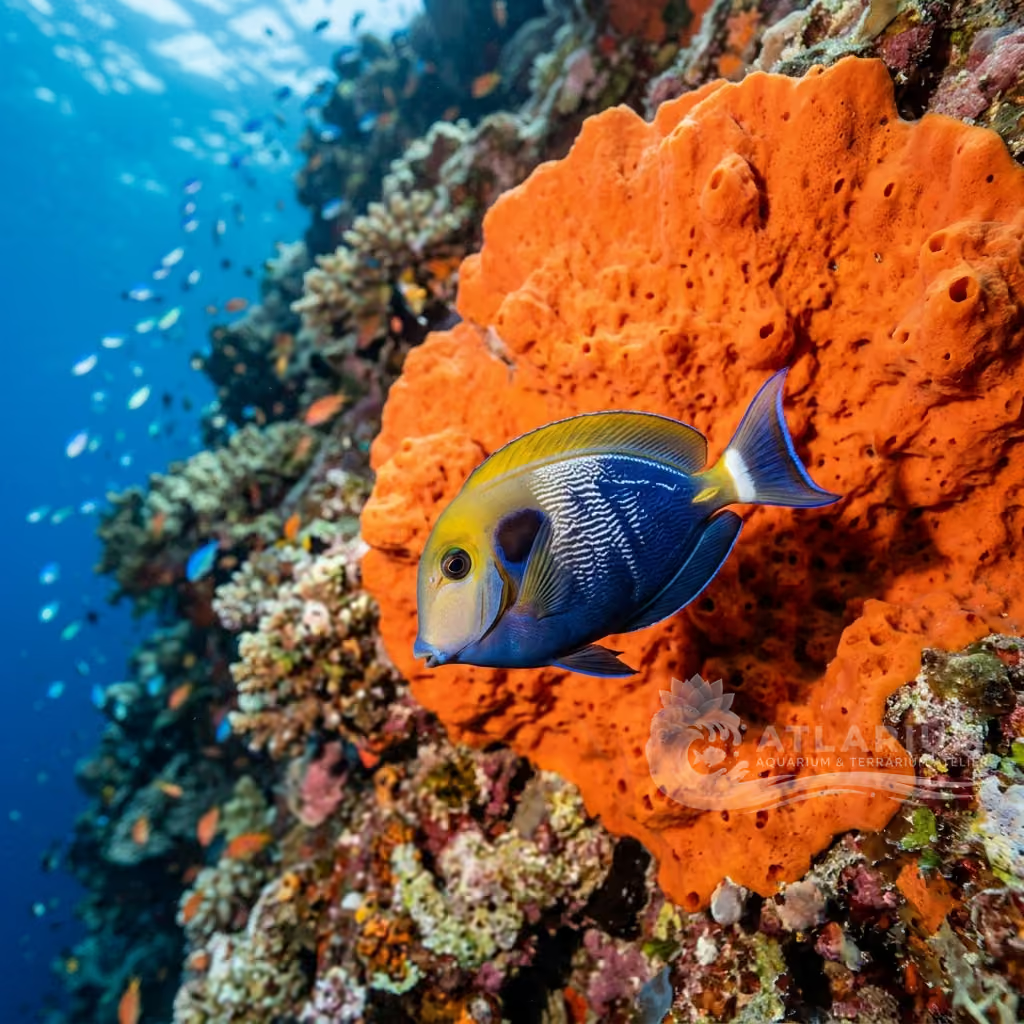
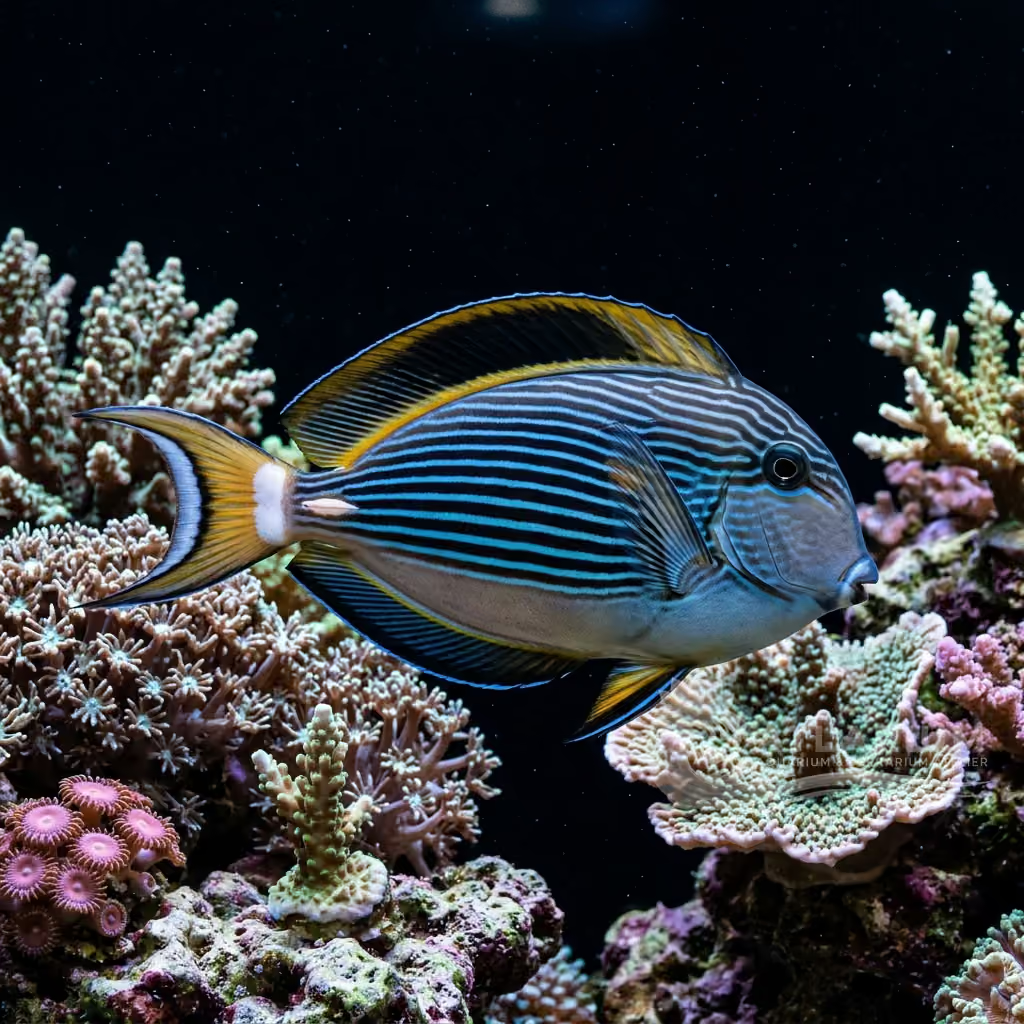
The purple tang, also known as the yellowtail sailfin tang, is an iconic marine species from the Red Sea, prized for its deep blue-purple body and bright yellow tail.
Water Temperature
24 - 28 °C
pH Value
8.1 - 8.4
Water type
Marine
Tank level
All levels
Adult size
22 cm
Minimum tank volume
>= 400 L
Minimum group
>= 1
KH
8 - 12 dKH

Species description
Geographical Origin and Habitat: Zebrasoma xanthurum is primarily native to the Red Sea and the Gulf of Aden, though healthy populations are also recorded in the Persian Gulf and the northern Arabian Sea. Its preferred habitat consists of well-developed coral reefs, both inshore lagoons and outer reef slopes, where it moves actively among branching stony corals and sunlit rocky drop-offs at depths of 2 to 20 meters, grazing on algae.
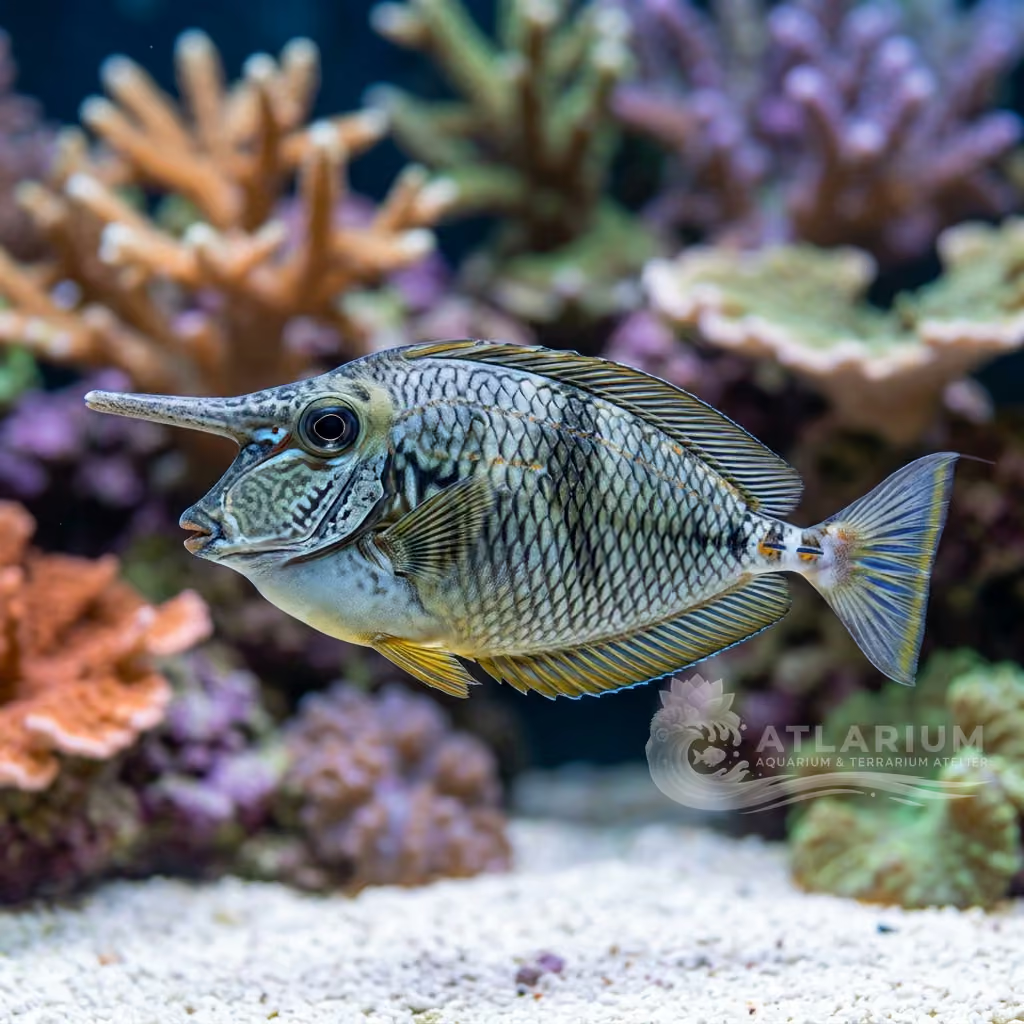
Taxonomy and Morphology: Belonging to the family Acanthuridae and genus Zebrasoma, it features a disc-shaped, laterally compressed body with a pointed snout adapted for picking turf algae out of crevices. Like all surgeonfishes, it possesses a sharp, scalpel-like spine on both sides of the caudal peduncle for self-defense. In captivity, it can reach a maximum length of about 20-22 centimeters.
Social Behavior: It is a highly active and energetic swimmer that shows strong territoriality. It displays notable aggression toward other tangs of the same species or genus, and sometimes toward other fish of similar colors or shapes. However, it is generally peaceful and indifferent toward unrelated fish families when housed in a sufficiently large aquarium.
Coloration and Sexual Dimorphism: The color pattern is striking and unmistakable: the entire body is a deep indigo blue-purple, decorated with fine dark spots on the head and faint horizontal lines on the flanks. The tail fin is a vibrant, contrasting lemon yellow, and the pectoral fins are tipped with yellow. There is no visible external sexual dimorphism; males and females look identical.

Care, breeding and tankmates
Aquarium Setup: Requires a mature marine aquarium of at least 350 to 400 liters. The setup must feature a solid structure of live rock arranged to create numerous caves, overhangs, and swim-throughs for shelter, while leaving a large, open water area in the front for active, high-velocity swimming. Sand or bare-bottom systems are both acceptable.
Diet and Feeding: A voracious herbivore that spends the daylight hours grazing on algae-covered surfaces. Its diet must consist primarily of vegetable matter, including dried nori sheets, spirulina-based pellets, blanched spinach, and fresh vegetables. It will readily accept frozen foods (mysis, brine shrimp), but these should only form a minor portion of its diet.
Water Quality: High water quality, strong oxygenation, and high water turnover are essential. Maintain water temperature between 24°C and 28°C, pH between 8.1 and 8.4, and specific gravity (salinity) between 1.021 and 1.025. Ammonia and nitrite must remain at zero, and nitrates should be kept at minimal levels using a high-capacity protein skimmer.
Compatibility and Cohabitation: Reef-safe species that will not harm corals or sessile invertebrates. To minimize territorial aggression, it should be the last fish introduced to the aquarium. Do not house it with other Zebrasoma tangs unless the aquarium exceeds 1000 liters. It coexists well with clownfish, blennies, large wrasses, and medium angelfish.
Aquarium Breeding: Breeding in a home aquarium is extremely difficult and rarely documented due to the long, sensitive pelagic larval phase. Spawning occurs in pairs or small groups at dusk, where the fish perform a rapid vertical ascent in the water column to release eggs and sperm simultaneously.
Risks and Diseases: Highly susceptible to marine ectoparasites such as marine ich (Cryptocaryon) and marine velvet (Oodinium) due to its thin protective slime coat. Transport stress and sudden temperature drops are typical triggers. It is also prone to Head and Lateral Line Erosion (HLLE) if fed a poor diet. Strict quarantine is recommended.

Geographic origin and distribution
Zebrasoma xanthurum is primarily native to the Red Sea and the Gulf of Aden, though healthy populations are also recorded in the Persian Gulf and the northern Arabian Sea. Its preferred habitat consists of well-developed coral reefs, both inshore lagoons and outer reef slopes, where it moves actively among branching stony corals and sunlit rocky drop-offs at depths of 2 to 20 meters, grazing on algae.
Origin
Tropical oceans and reefs

Fish profile
- Temperament
- Territorial
- The Purple Tang is considered semi-aggressive, particularly within the confines of an aquarium. While it generally ignores invertebrates and unrelated fish, it fiercely defends its grazing territory from perceived competitors. Its sharp caudal spines (scalpels) are effective weapons used during disputes. Providing a sufficiently large tank minimizes aggressive tendencies and promotes a harmonious community.
- Diet
- Herbivore
- The Purple Tang is primarily herbivorous, needing a substantial amount of marine algae in its daily diet. It should be offered dried seaweed (nori) attached to a grazing clip to mimic natural feeding behaviors. While it enthusiastically accepts meaty foods like mysis or brine shrimp, lacking sufficient greens can lead to Head and Lateral Line Erosion (HLLE). Spirulina-enriched flakes or pellets can also supplement its nutritional requirements.
- Life expectancy
- 10-15 years
- Adult size
- 22 cm
- Sex ratio
- Solitary
- There is no easily distinguishable sexual dimorphism in the Purple Tang. Both males and females share the same striking coloration and identical morphological features. In a home aquarium, maintaining a specific sex ratio is generally irrelevant since keeping multiple individuals is highly discouraged. For breeding facilities, genetic testing or behavioral observation is required to confirm the sexes.
- Feeding frequency
- 3-4 times daily
- Because of its highly active nature, this species requires multiple feedings throughout the day. Offering small meals 2 to 3 times daily ensures its high metabolic demands are met. A constant supply of grazing material, such as live macroalgae or dried nori, should be available between structured meals. Underfeeding can rapidly lead to weight loss and a weakened immune system.
- Bioload
- High
- The Purple Tang (Zebrasoma xanthurum) has a moderately high bioload typical of active surgeonfishes. It constantly grazes on algae and requires frequent feedings, which translates to a steady production of waste. A robust filtration system, including a high-capacity protein skimmer, is necessary to manage its biological impact. Regular water changes are also critical to ensure nutrient levels remain within safe parameters.
- Flow
- Strong
- Coming from turbulent reef environments, the Purple Tang thrives in high flow aquarium setups. Strong water movement provides essential oxygenation and replicates the natural currents it encounters in the wild. Multiple powerheads or wavemakers should be positioned to create chaotic, multidirectional flow. This dynamic environment also encourages natural swimming and grazing behaviors across the rockwork.
- Jump risk
- No
- Reproduction
- Egg scatterer
- In the wild, Zebrasoma xanthurum are pelagic spawners, releasing eggs and sperm into the water column during synchronized events. They form large breeding aggregations, usually coordinating with lunar cycles and outgoing tides. Captive breeding of this tang is extremely rare and difficult due to the complex requirements of raising their microscopic larvae. Most individuals available in the hobby are wild-caught from specific locales.
- Compatibility & tankmates
- Highly aggressive
- This tang is generally peaceful toward most non-conspecific tank mates in a reef setting. However, it can become highly territorial and aggressive toward other surgeonfishes, especially those of the same genus or similar body shape. It is best kept as the solitary tang or introduced simultaneously with other tangs into a very large aquarium. Careful observation is required during the initial introduction to mitigate severe aggression.
- Tank level
- All levels
- This species is an active swimmer that utilizes all levels of the water column. It will constantly patrol the open water seeking food and establishing its territory. When resting or feeling threatened, it retreats to the middle and lower levels, seeking refuge within the rockwork. Ample swimming space combined with accessible hiding spots is essential for its well-being.

Scientific Parameters & Models
FishBase
Window to the official scientific data of the species
FishBase v25.04Data synced on: 06/15/2026
- Trophic level
- 2 ± 0 se
- Resilience
- Medium (1.4 - 4.4 years)
- Phylogenetic uniqueness (PD50)
- 0.5078
- Bayesian Length-Weight
- a = 0.02291, b = 2.96
- VulnerabilityLow to moderate vulnerability (27 / 100)

Related species
Recommendations grouped by close relatives, companion choices, and similar care.