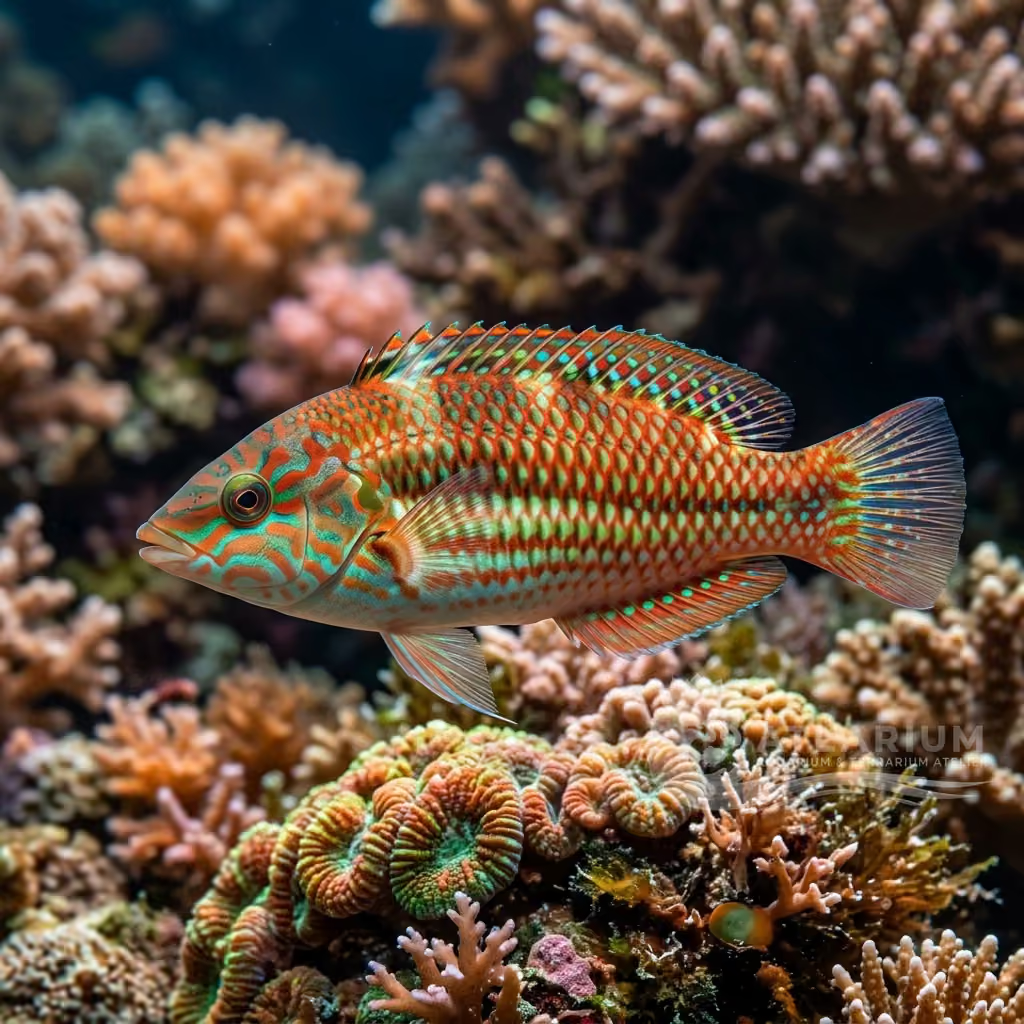
Blackbelly triggerfish
Rhinecanthus verrucosus
The blackbelly triggerfish is a highly intelligent, inquisitive species that actively rearranges rocks. It requires an extremely large tank with heavy, secure aquascaping to prevent any tank damage.
Water Temperature
22 - 28 °C
pH Value
8.1 - 8.4
Water type
Marine
Tank level
All levels
Adult size
23 cm
Minimum tank volume
>= 350 L
Minimum group
>= 1
KH
8 - 12 dKH

Species description
Geographical Origin and Habitat: Rhinecanthus verrucosus, commonly known as the blackbelly triggerfish, is native to the tropical waters of the Indo-West Pacific Ocean. Its range extends from the coasts of East Africa to Vanuatu, reaching north to southern Japan (Ryukyu Islands) and south to northern Australia. It inhabits sheltered coastal bays, shallow inner reef flats, and areas with sandy bottoms and dense benthic algae growth, typically at depths of less than 20 meters.
Taxonomy and Morphology: It belongs to the family Balistidae and the genus Rhinecanthus. It features the classic rhomboidal, laterally compressed body of triggerfishes, protected by tough, plate-like leathery scales. It possesses a trigger-like mechanism formed by three dorsal spine elements; the first spine is large and can be locked upright by the second spine. Adults reach a maximum length of about 23 cm (9 inches). The mouth is small but armed with powerful teeth.
Social Behavior: This is a solitary, highly territorial, and aggressive species. It is an intelligent and curious fish that often interacts with its environment, but it shows significant aggression toward tankmates. It is known to bite heater cables, filter tubes, and even the hands of the aquarist during maintenance. In the wild, it defends its feeding territory fiercely and cannot be housed with other triggerfish.
Coloration and Sexual Dimorphism: The base color is a light tan or brownish-gray on the upper body and white on the lower body. Its most distinctive feature is a large, circular black spot on the lower abdomen. Colorful blue and orange stripes run across the snout and head, adding to its striking appearance. There is no visible sexual dimorphism, and males and females are identical.

Care, breeding and tankmates
Aquarium Setup: Requires a large aquarium of at least 350-400 liters (90-100 gallons) for a single specimen. The rockwork must be heavy and placed directly on the glass bottom, as this fish will actively blow water currents at the sand and move small rocks to search for prey. Ensure all internal equipment, especially heaters and power cables, is protected by plastic guards.
Diet and Feeding: It is a voracious omnivore with a carnivorous preference. Feed a variety of hard-shelled foods to naturally wear down their constantly growing teeth. Offer whole unshelled clams, mussels, shrimp, krill, crab meat, and squid. Supplement their diet with high-quality herbivorous pellets and sheets of dried seaweed. Feed twice daily.
Water Quality: Powerful filtration and a high-performance protein skimmer are mandatory due to the heavy bioload produced by this fish's diet. Maintain standard marine water parameters: temperature between 22°C and 28°C (72-82°F), pH between 8.1 and 8.4, specific gravity between 1.020 and 1.025, and KH between 8 and 12. Perform regular water changes.
Compatibility and Cohabitation: Absolutely not reef-safe. It will consume all crustaceans, snails, sea urchins, starfish, and ornamental shrimp. It should only be housed in a fish-only-with-live-rock (FOWLR) tank with large, robust tankmates such as groupers, large angelfish, and aggressive tangs. Avoid small or passive fish.
Aquarium Breeding: Breeding in home aquaria is not documented. In the wild, they are egg layers; a pair digs a pit in the sandy substrate where the female deposits the eggs. Both parents guard the nest with extreme aggression against any potential egg predators.
Risks and Diseases: This is an exceptionally hardy species, highly resistant to common marine diseases due to its tough skin. The primary risks are damage to aquarium equipment, jumping out of open tanks, and accidental bites to the keeper. Always cover the tank securely and use feeding tongs.

Geographic origin and distribution
Rhinecanthus verrucosus, commonly known as the blackbelly triggerfish, is native to the tropical waters of the Indo-West Pacific Ocean. Its range extends from the coasts of East Africa to Vanuatu, reaching north to southern Japan (Ryukyu Islands) and south to northern Australia. It inhabits sheltered coastal bays, shallow inner reef flats, and areas with sandy bottoms and dense benthic algae growth, typically at depths of less than 20 meters.
Origin
Tropical oceans and reefsAfrica and MadagascarEast AsiaAustralia, New Guinea, and Oceania

Fish profile
- Temperament
- Aggressive
- It has a notoriously bold and aggressive temperament, completely unfazed by larger fish or even human hands. It may indiscriminately bite or rearrange aquarium decor, displaying a highly intelligent but destructive curiosity. A strict species-only or aggressive community setup is the only way to manage its intense personality.
- Diet
- Omnivore
- This species requires a diet rich in hard-shelled invertebrates to wear down its continuously growing teeth. Clams on the half shell, whole shrimp, and hard-shelled crabs are excellent food choices. Supplementing with tough squid and specialized triggerfish formulas is also highly recommended.
- Life expectancy
- 10-15 years
- Adult size
- 23 cm
- Sex ratio
- Solitary
- Distinguishing males from females visually is virtually impossible for the average aquarist. Because they show extreme conspecific aggression, keeping multiple individuals together is a recipe for disaster. It is universally recommended to keep only a single specimen per aquarium.
- Feeding frequency
- Twice daily
- This active species has a high metabolism and should be fed two to three times daily. Offering multiple smaller meals helps reduce aggression and prevents nutrient spikes in the tank. A varied schedule combining pellets and frozen food yields the best results.
- Bioload
- Medium to High
- This fish produces a significantly high amount of waste due to its size and diet. Heavy-duty filtration, including a highly rated protein skimmer, is absolutely mandatory. Aquarists must perform frequent large water changes to prevent the rapid degradation of water quality.
- Flow
- Strong
- Excellent swimming capabilities allow this fish to enjoy and utilize very high water flow. Powerful turnover rates and strong wave patterns keep the fish active and healthy. The high flow also ensures exceptional gas exchange and pristine environmental conditions.
- Jump risk
- Yes
- With a moderate to high jump risk, this fish will attempt to escape if heavily stressed or frightened. Open-top aquariums are not recommended under any circumstances. Ensure that your tank cover has no gaps where an agile fish might squeeze through.
- Reproduction
- Oviparous
- During reproduction, the female carefully prepares a crater-like nest in the sandy substrate. After the eggs are laid and fertilized, both parents may aggressively defend the immediate territory. Captive rearing is rarely achieved due to extreme aggression and the incredibly tiny size of the fry.
- Compatibility & tankmates
- Not reef safe
- This fish is generally not considered reef-safe, as it will nip at or consume corals and various invertebrates. It should be housed in a fish-only system with similarly aggressive or large tank mates. Smaller tank mates may be bullied, injured, or eaten as this fish matures.
- Tank level
- All levels
- This species is an extremely active swimmer that constantly cruises through the middle to upper levels of the tank. It demands a vast amount of open swimming space to remain physically and psychologically healthy. While it may occasionally investigate the rocks, it prefers the open water column.

Scientific Parameters & Models
FishBase
Window to the official scientific data of the species
FishBase v25.04Data synced on: 06/15/2026
- Trophic level
- 3.5 ± 0.3 se
- Resilience
- High (less than 15 months)
- Phylogenetic uniqueness (PD50)
- 0.5078
- Bayesian Length-Weight
- a = 0.01995, b = 2.9
- VulnerabilityLow vulnerability (13 / 100)

Related species
Recommendations grouped by close relatives, companion choices, and similar care.