Halfmoon Triggerfish
Sufflamen chrysopterum
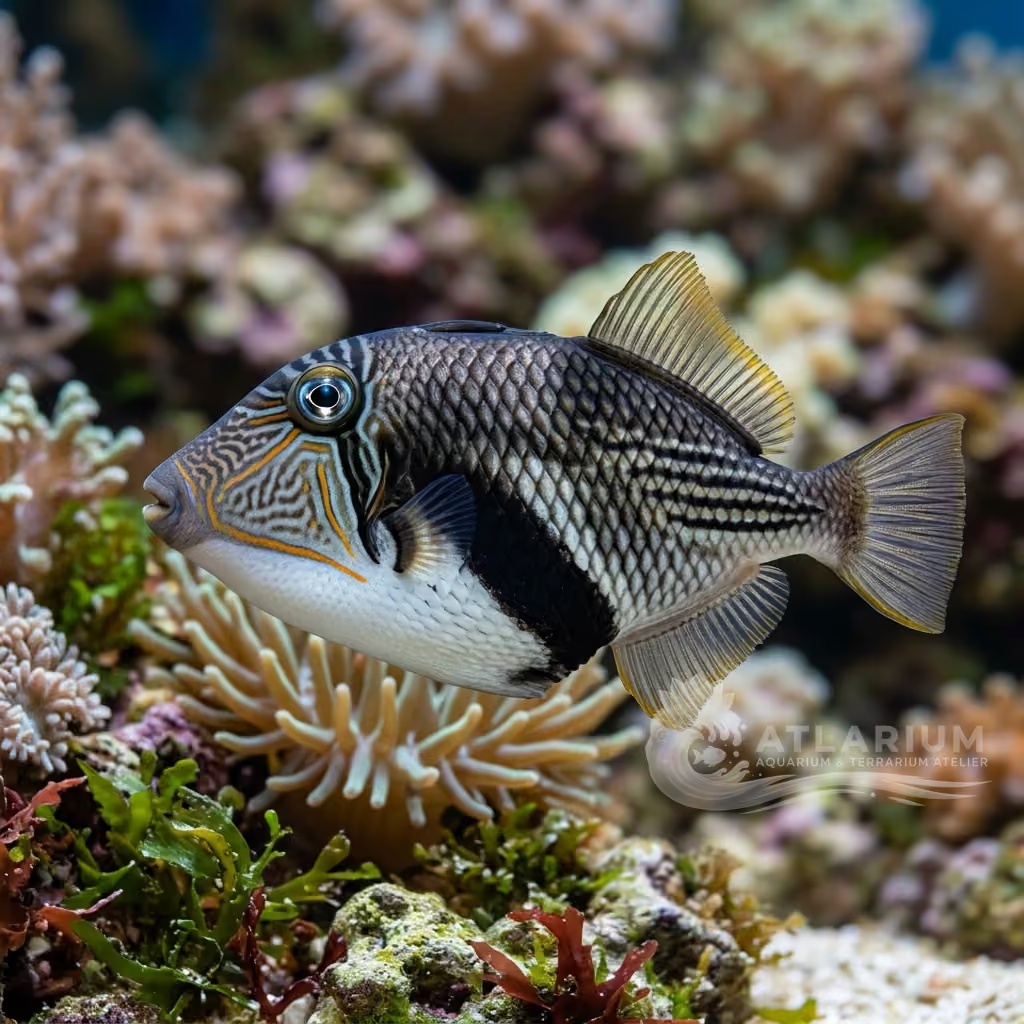
A hardy and territorial triggerfish with a brownish body, a distinctive yellow caudal fin with a white crescent margin, and strong jaws for feeding on invertebrates.
Water Temperature
22 - 26 °C
pH Value
8.1 - 8.4
Water type
Marine
Tank level
Bottom and middle
Adult size
30 cm
Minimum tank volume
>= 500 L
Minimum group
>= 1
KH
8 - 12 dKH

Species description
Geographical Origin and Habitat: Sufflamen chrysopterum, commonly known as the halfmoon triggerfish, is widely distributed throughout the tropical waters of the Indo-West Pacific. Its range extends from East Africa and the Red Sea to the Samoan Islands, northwards to southern Japan, and southwards to the Great Barrier Reef in Australia. It inhabits shallow lagoons, protected inner reefs, and exposed seaward reef slopes at depths ranging from 1 to 30 meters, where rocky structures and sand meet.
Taxonomy and Morphology: Belonging to the family Balistidae and classified under the genus Sufflamen. This robust species can reach a maximum adult length of approximately 30 centimeters. It features an oval, laterally compressed body covered with tough, plate-like scales. The eyes are set high on the head for protection while foraging, and it possesses a strong, lockable first dorsal spine (the 'trigger') used to wedge itself into crevices.
Social Behavior: Strictly solitary and highly territorial. It exhibits significant aggression towards conspecifics and similar-shaped or colored fishes. The halfmoon triggerfish is highly intelligent, active, and curious, often rearranging the substrate and small rocks with its powerful mouth. They establish large territories and will aggressively defend them, especially during spawning seasons.
Coloration and Sexual Dimorphism: Displays a dark brown to olive-green body coloration. A distinctive white or yellowish vertical stripe runs behind the eyes down to the throat area. The caudal fin is bright yellow or orange, highlighted by a stark white margin along the posterior edge forming a crescent or halfmoon shape. There is no clear external sexual dimorphism between males and females.

Care, breeding and tankmates
Aquarium Setup: Requires a very large aquarium of at least 500 liters due to its size and active swimming behavior. Arrange large, heavy live rocks to create stable caves and overhangs. It is important to secure the rockwork (bonding or gluing) as these fish will attempt to dig under and move stones. Provide deep crevices where they can lock themselves in at night.
Diet and Feeding: An active carnivore equipped with powerful jaws and teeth. In the wild, they feed on sea urchins, crabs, bivalves, gastropods, and coral tips. In captivity, feed a varied meaty diet including whole shrimp with shells, clams, mussels, squid, octopus, and high-quality sinking carnivore pellets. Hard shells are necessary to wear down their continuously growing teeth.
Water Quality: Requires standard marine water parameters: temperature between 24 °C and 28 °C, pH of 8.1 to 8.4, and specific gravity of 1.020-1.025. Because of their heavy, messy feeding habits, a high-capacity filtration system, an efficient protein skimmer, and regular partial water changes are essential to prevent the accumulation of organic waste.
Compatibility and Cohabitation: Not reef-safe. They will consume all decorative invertebrates, including crabs, shrimp, snails, and sea urchins, and will eat smaller fish. Best kept in a large Fish-Only-With-Live-Rock (FOWLR) system with other robust, aggressive species such as large tangs, groupers, large wrasses, and puffers. Add this triggerfish last to minimize territorial disputes.
Aquarium Breeding: Mating in captive environments is extremely rare due to high intraspecific aggression. In nature, they dig a depression in the sandy substrate where the female deposits adhesive eggs. Both parents aggressively guard the nest against all intruders. The pelagic larvae undergo a long and complex development phase that has not been successfully replicated in home aquariums.
Risks and Diseases: Exceptionally hardy and disease-resistant. The main risk involves their tendency to bite and chew on aquarium equipment, such as heater tubes, filters, and electrical wires, which must be protected. Always exercise extreme caution during tank maintenance, as they can deliver a painful bite to human fingers.

Geographic origin and distribution
Sufflamen chrysopterum, commonly known as the halfmoon triggerfish, is widely distributed throughout the tropical waters of the Indo-West Pacific. Its range extends from East Africa and the Red Sea to the Samoan Islands, northwards to southern Japan, and southwards to the Great Barrier Reef in Australia. It inhabits shallow lagoons, protected inner reefs, and exposed seaward reef slopes at depths ranging from 1 to 30 meters, where rocky structures and sand meet.
Origin
Tropical oceans and reefsAfrica and MadagascarEast AsiaAustralia, New Guinea, and Oceania

Fish profile
- Temperament
- Aggressive
- They exhibit a bold, aggressive, and highly territorial temperament. They are known to redecorate the aquarium by moving rocks and substrate to suit their preferences. Caution is advised when performing tank maintenance, as they may bite the aquarist's hands if they feel threatened.
- Diet
- Carnivore
- In the wild, their diet consists of hard-shelled invertebrates, sea urchins, and crustaceans. In the home aquarium, they should be fed a varied meaty diet including squid, krill, clams on the half shell, and hard-shelled shrimp. Providing hard foods is essential to help wear down their continuously growing teeth.
- Life expectancy
- 8-12 years
- Adult size
- 30 cm
- Sex ratio
- Solitary
- It is generally best to keep them singly in the home aquarium due to their intense territoriality. Keeping multiple individuals, especially males, usually leads to severe fighting and potential death. Unless the aquarium is extremely large, housing a single specimen is the safest approach.
- Feeding frequency
- Twice daily
- They possess high metabolisms and require frequent feedings to remain healthy and less aggressive. It is recommended to feed them at least two to three times a day with appropriately sized meaty portions. Keeping them well-fed can slightly reduce their aggression towards other tank mates.
- Bioload
- High
- The Halfmoon triggerfish produces a heavy bioload due to its hearty appetite and predatory nature. As a messy eater, it leaves behind significant amounts of organic waste that can quickly foul the water. High-capacity protein skimmers and robust biological filtration are absolutely necessary to maintain optimal water quality.
- Flow
- Strong
- They prefer strong water movement that simulates the dynamic currents of their natural reef habitats. High flow rates also help to keep detritus suspended so it can be effectively removed by the filtration system. Ensuring strong oxygenation through surface agitation is also beneficial for this active swimmer.
- Jump risk
- No
- Reproduction
- Oviparous
- Breeding this species in a home aquarium is highly unlikely and rarely achieved. In nature, they are pelagic spawners, releasing their eggs into the water column where they are swept away by currents. Raising the microscopic larvae requires highly specialized planktonic foods and massive rearing facilities.
- Compatibility & tankmates
- Community
- This species is highly aggressive and generally not reef-safe, as it will consume crustaceans, mollusks, and small fish. It should only be housed in a fish-only with live rock (FOWLR) setup with other large, aggressive species. Tank mates must be robust enough to withstand potential harassment and territorial displays.
- Tank level
- Middle/Bottom
- They are active swimmers that will utilize all levels of the water column throughout the day. While they often inspect the rockwork for potential prey, they also cruise the mid and upper levels. Ample swimming space is necessary to accommodate their energetic behavior.

Scientific Parameters & Models
FishBase
Window to the official scientific data of the species
FishBase v25.04Data synced on: 06/15/2026
- Trophic level
- 3.8 ± 0.2 se
- Resilience
- Medium (1.4 - 4.4 years)
- Phylogenetic uniqueness (PD50)
- 0.5312
- Bayesian Length-Weight
- a = 0.02455, b = 2.96
- VulnerabilityLow vulnerability (20 / 100)

Related species
Recommendations grouped by close relatives, companion choices, and similar care.