Encyclopaedia

FishMarineEasy
©AI Generated·Proprietary

Blue Dottyback

Pseudochromis

A lightning-fast, neon blue dottyback known for its agility and assertive territoriality. It demands a complex labyrinth of live rock to establish its domain and minimize aggression toward others.

Taxonomy
Class:Actinopteri
Order:Perciformes
Family:Pseudochromidae
Subfamily:Pseudochrominae
Genus:Pseudochromis
Species:Pseudochromis
Formerly known as:Pseudochromis cyaneus

Share

Check out Blue Dottyback on Atlarium

PracticeRecognition quizzesPhotos, names, origins, and puzzles to review Atlas species.Open quizzes
Water Temperature

22 - 28 °C

pH Value

8.1 - 8.4

Water type

Marine

Tank level

Bottom and middle

Adult size

7 cm

Minimum tank volume

>= 120 L

Minimum group

>= 1

KH

8 - 12 dKH

Species description

Geographical Origin and Habitat:
This species is native to the Western Central Pacific, particularly concentrated in the coral reefs of Indonesia. It inhabits seaward reefs and protected lagoons, preferring areas rich in corals and rocky rubble at depths of 2 to 25 meters, where it finds shelter.
Taxonomy and Morphology:
Belongs to the family Pseudochromidae. Pseudochromis cyaneus features a slender, elongated, and slightly compressed body, growing to a maximum length of about 7 cm. It has large eyes and a sharp mouth adapted for grabbing small prey.
Social Behavior:
Extremely territorial, bold, and aggressive toward similarly shaped species or fish occupying the same ecological niche (such as gobies and blennies). It defends its chosen cave fiercely and will not hesitate to attack much larger fish.
Coloration and Sexual Dimorphism:
The entire body displays an incredibly vivid, solid electric cobalt-blue coloration that shines under aquarium lighting. Subtle purple highlights or dark lines may appear around the eyes. There is no reliable visual dimorphism.

Care, breeding and tankmates

Aquarium Setup:
Requires an aquarium of at least 120 liters with plenty of live rock to create caves and crevices. This helps the fish establish its territory and reduces stress. A tight-fitting lid or mesh cover is mandatory as they are fast and skilled jumpers.
Diet and Feeding:
Carnivore with a voracious appetite. Eagerly accepts frozen foods such as mysis, brine shrimp, krill, and chopped seafood. Adapts quickly to dry pellets and flakes. Feed twice daily to help curb its aggressive tendencies.
Water Quality:
Requires stable marine parameters: temperature of 22 to 28 °C, pH of 8.1 to 8.4, salinity at SG 1.020 to 1.025, and KH between 8 and 12 dKH. Good filtration and regular water changes help maintain low nitrate levels.
Compatibility and Cohabitation:
Reef safe with corals, but highly dangerous to small ornamental shrimp, which it will quickly hunt and eat. Do not mix with other dottybacks or peaceful, similar-looking fish. Best introduced as the final inhabitant of the tank.
Aquarium Breeding:
Possible but requires a bonded pair. They are egg-layers; the female deposits a sticky ball of eggs in a cave. The male fertilizes and aggressively guards them, fanning them until they hatch. Larvae require microscopic live food.
Risks and Diseases:
Extremely hardy and resistant to most marine fish diseases. The primary risks are injuries from territorial battles and jumping out of uncovered aquariums. Ensure plenty of hiding spots are available.

Geographic Origin and Distribution

This species is native to the Western Central Pacific, particularly concentrated in the coral reefs of Indonesia. It inhabits seaward reefs and protected lagoons, preferring areas rich in corals and rocky rubble at depths of 2 to 25 meters, where it finds shelter.

Origin

Tropical oceans and reefsSouth and Southeast Asia

Fish profile

Temperament
Aggressive
Highly territorial and aggressive. They will defend their cave vigorously. Introduce them to the aquarium last.
Diet
Carnivore
Primarily carnivorous in the wild. Feed a variety of meaty frozen foods like mysis and brine shrimp. They quickly adapt to flake and pellet foods.
Sex ratio
Solitary
Keep singly or as a mated pair. Two males will fight relentlessly. They are capable of changing sex.
Feeding frequency
Twice daily
Feed once or twice daily. They are fast eaters. Ensure food reaches their territory in the rockwork.
Bioload
They have a low to moderate bioload. Their small size keeps waste minimal. Regular maintenance is usually sufficient.
Flow
Strong
Moderate flow is perfectly acceptable. They spend most of their time darting in and out of rocks. High flow does not bother them.
Jump risk
Yes
Prone to jumping through small gaps. A screen top or canopy is required. They often jump during aggressive encounters.
Reproduction
Oviparous
Captive breeding is possible and becoming common. They lay demersal egg masses in caves. The male aggressively guards the eggs.
Compatibility & tankmates
Reef safe
Can be very aggressive for their size. Reef safe but may eat small ornamental shrimp. Keep with fish that can hold their own.
Tank level
Middle/Bottom
They are bottom to mid-level dwellers. They require extensive rockwork with many caves. They rarely swim in open water.

Image gallery

Licensed images linked to the species or, when marked, to the closest representative taxon.

Related species

Recommendations grouped by close relatives, companion choices, and similar care.

Variants and close relatives

Same atlas type, nearby scientific identity, genus, or family.
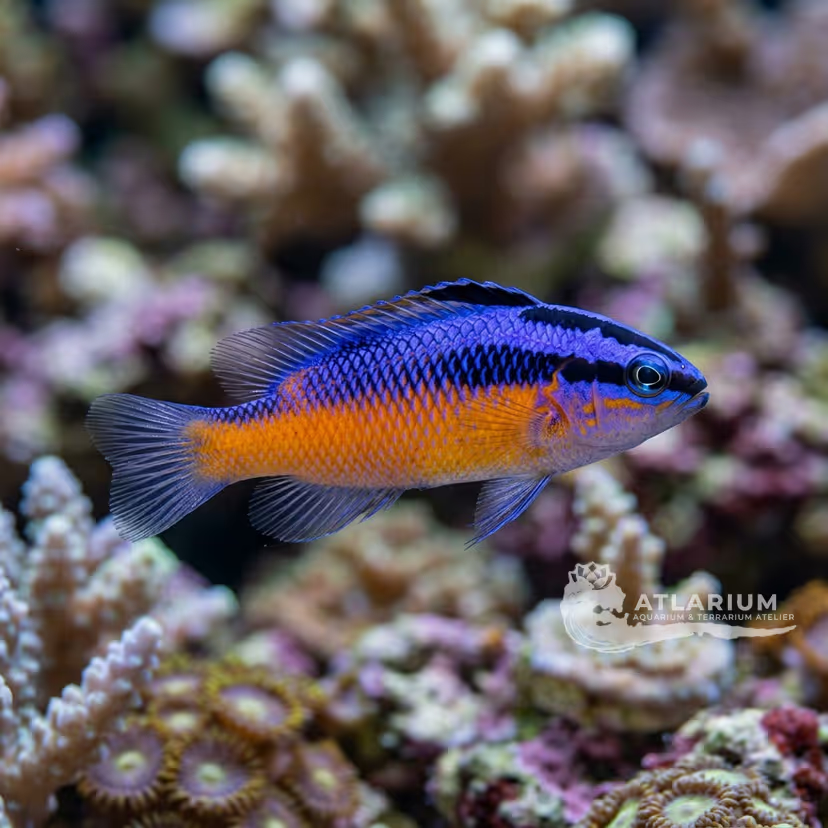
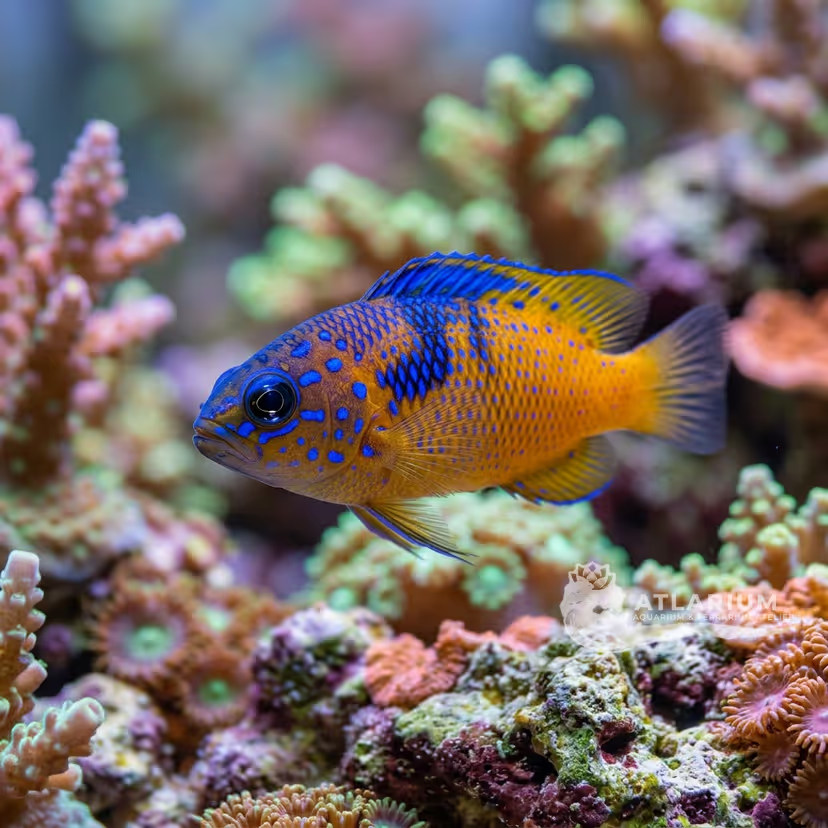
Springer's Dottyback

Springer's Dottyback

Pseudochromis springeri
View details->
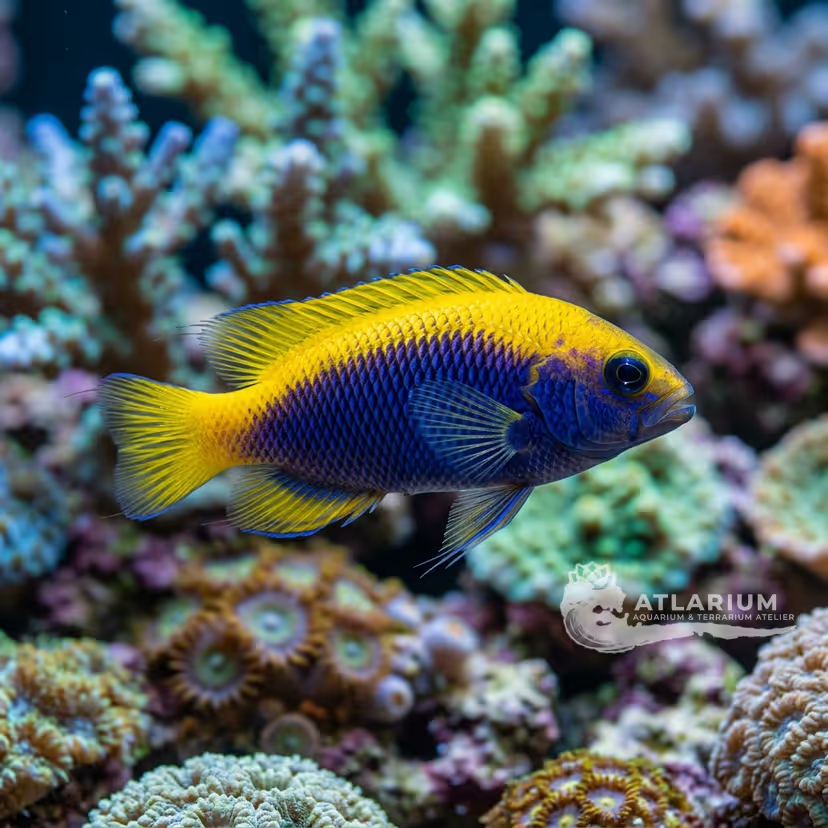
Sunrise Dottyback

Sunrise Dottyback

Pseudochromis flavivertex

View details->
Ammer's dottyback

Ammer's dottyback

Pseudochromis ammeri

View details->
Cole's Dottyback

Cole's Dottyback

Pseudochromis colei

View details->
Comet dottyback

Comet dottyback

Pseudochromis cometes

View details->
Erdmann's dottyback

Erdmann's dottyback

Pseudochromis erdmanni

View details->
Gold-lined dottyback

Gold-lined dottyback

Pseudochromis aurulentus

View details->
Red-tail dottyback

Red-tail dottyback

Pseudochromis coccinicauda

View details->
Neon dottyback

Neon dottyback

Pseudochromis aldabraensis

View details->
Blueback Dottyback

Blueback Dottyback

Pseudochromis cyanotaenia

View details->
Elongate dottyback

Elongate dottyback

Pseudochromis elongatus

View details->
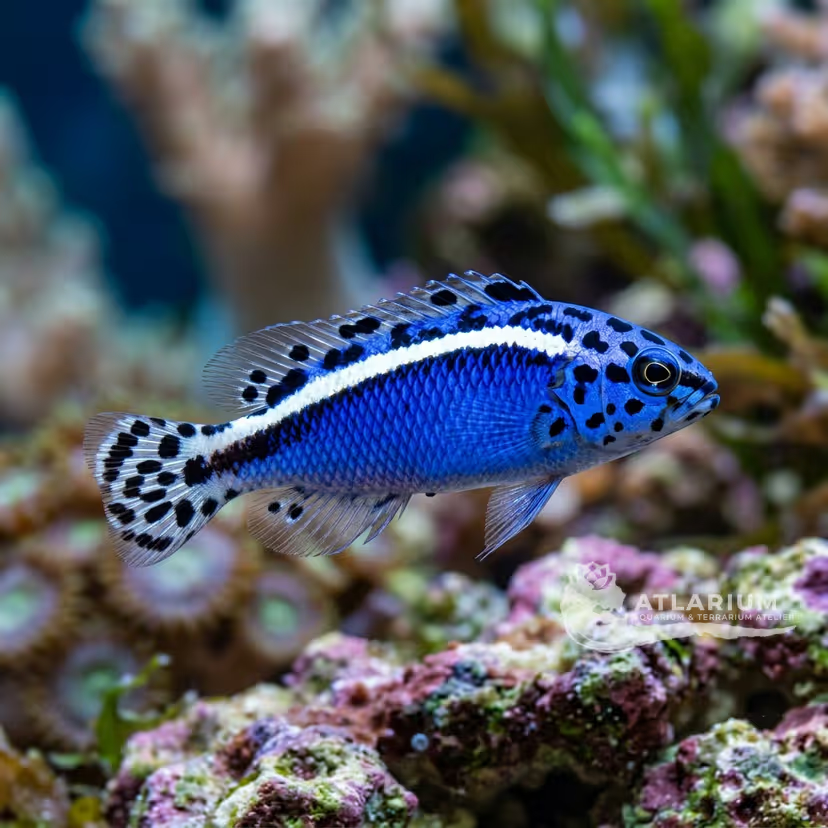
Goldline Dottyback

Goldline Dottyback

Pseudochromis aureolineatus
View details->
Sankey's Dottyback

Sankey's Dottyback

Pseudochromis sankeyi

View details->
Spot-breast Dottyback

Spot-breast Dottyback

Pseudochromis alticaudex
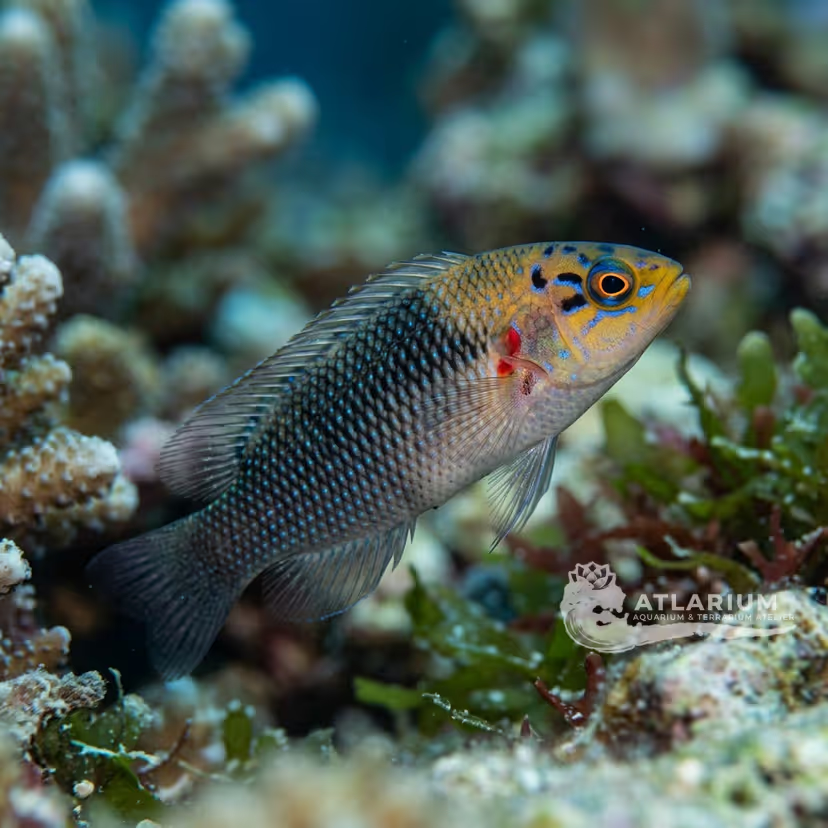
View details->
Steene's Dottyback

Steene's Dottyback

Pseudochromis steenei
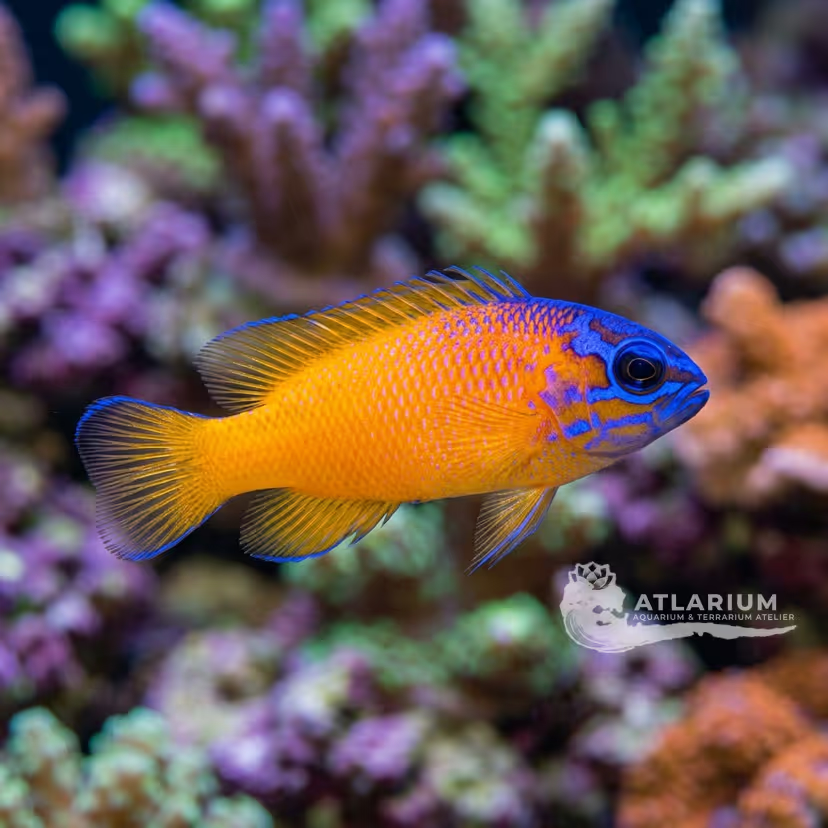
View details->
Tono's Dottyback

Tono's Dottyback

Pseudochromis tonozukai

View details->

Recommended companions

Compatible cards from coherent ecosystems with matching parameters.

Grape caulerpa
Plant

Grape caulerpa

Caulerpa racemosa

View details->
Caulerpa prolifera
Plant

Caulerpa prolifera

Caulerpa prolifera
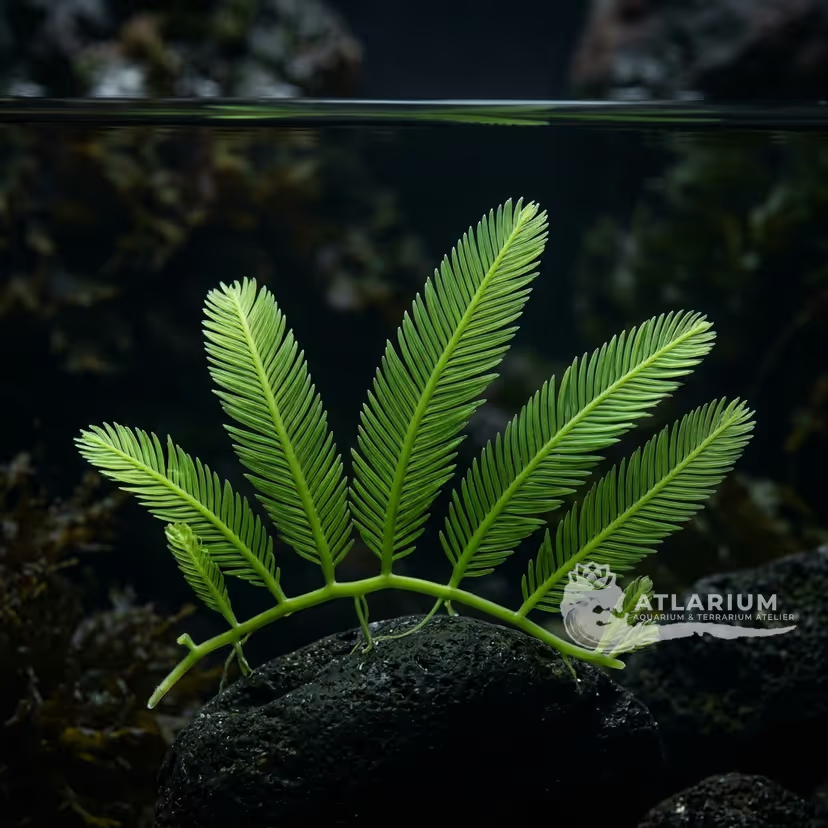
View details->
Caulerpa taxifolia
Plant

Caulerpa taxifolia

Caulerpa taxifolia
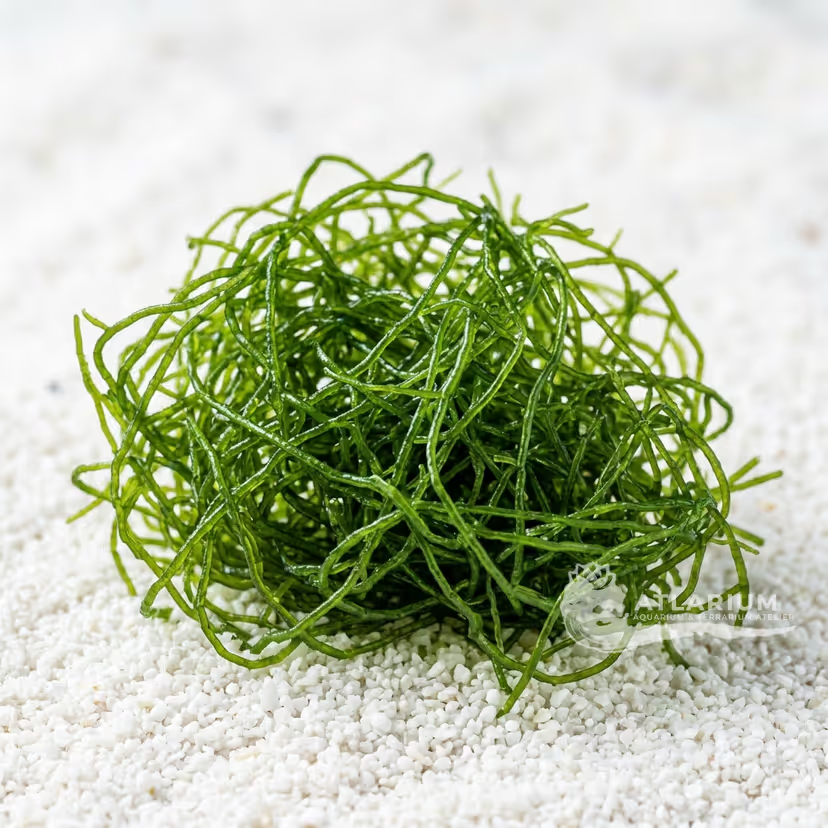
View details->
Chaetomorpha macroalgae
Plant

Chaetomorpha macroalgae

Chaetomorpha linum

View details->
Dead man fingers algae
Plant

Dead man fingers algae

Codium fragile

View details->
Halimeda macroalgae
Plant

Halimeda macroalgae

Halimeda opuntia

View details->
Peacock tail algae
Plant

Peacock tail algae

Padina pavonica

View details->
Red gracilaria
Plant

Red gracilaria

Gracilaria parvispora

View details->
Red grape algae
Plant

Red grape algae

Botryocladia uvaria

View details->
Sea lettuce
Plant

Sea lettuce

Ulva lactuca

View details->
Red Mangrove
Plant

Red Mangrove

Rhizophora mangle

View details->

Similar care

Cards with similar requirements, difficulty, habitat, and husbandry profile.

Oblique-lined Dottyback

Oblique-lined Dottyback

Cypho purpurascens

View details->
Doublebar dottyback

Doublebar dottyback

Pseudochromis bitaeniatus

View details->
Forktail dottyback

Forktail dottyback

Pseudochromis dixurus
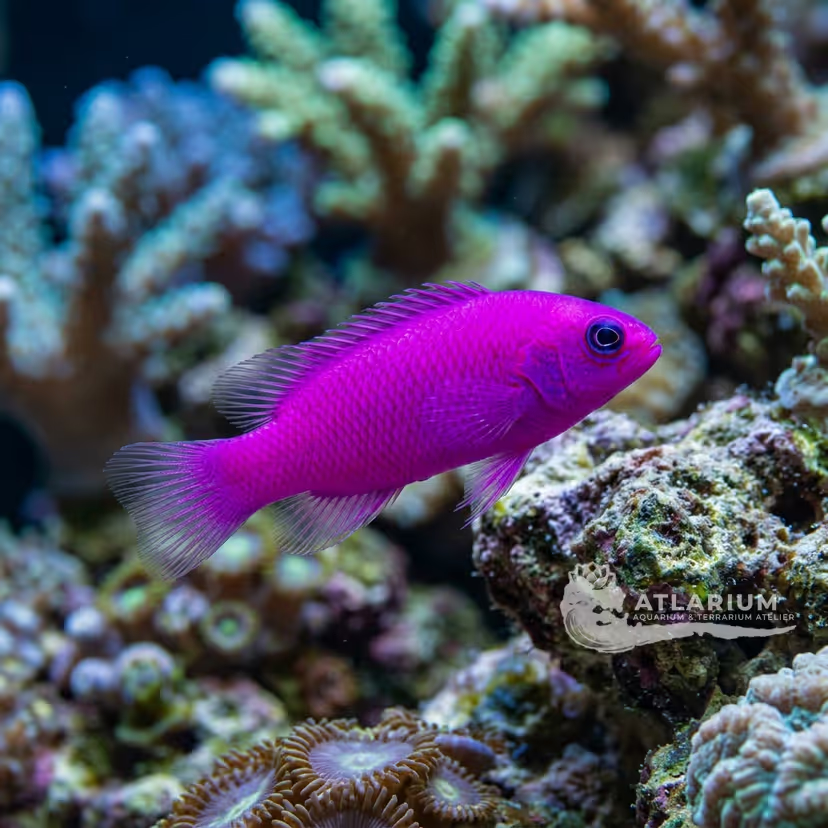
View details->
Strawberry Dottyback

Strawberry Dottyback

Pictichromis porphyrea

View details->
Eichler's Dottyback

Eichler's Dottyback

Pseudochromis eichleri

View details->
Royal Dottyback

Royal Dottyback

Pictichromis paccagnellae

View details->
Blackstripe Dottyback

Blackstripe Dottyback

Pseudochromis nigrovittatus

View details->
Dilectus dottyback

Dilectus dottyback

Pseudochromis dilectus

View details->
Andaman Dottyback

Andaman Dottyback

Pseudochromis andamanensis

View details->
Firetail dottyback

Firetail dottyback

Pseudochromis flammicauda
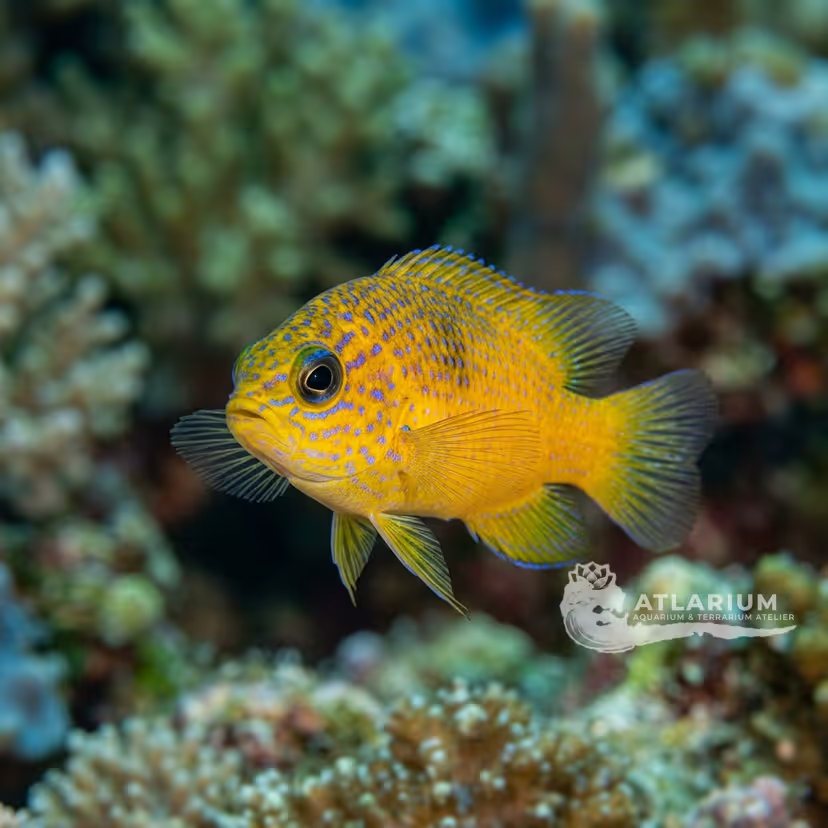
View details->
Gold-spotted dottyback

Gold-spotted dottyback

Pseudochromis chrysospilus

View details->
Orchid dottyback

Orchid dottyback

Pseudochromis fridmani

View details->
Blackear Wrasse

Blackear Wrasse

Halichoeres poeyi

View details->
Coral Hawkfish

Coral Hawkfish

Cirrhitichthys oxycephalus

View details->
Dusky Dottyback

Dusky Dottyback

Pseudochromis fuscus

View details->
Spotted-tail dottyback

Spotted-tail dottyback

Pseudochromis caudalis

View details->
Last updated: 06/30/2026