
Encyclopaedia

FishMarineIntermediate
©AI Generated·Proprietary

Eichler's Dottyback

Pseudochromis eichleri

Eichler's dottyback is a brightly colored, territorial marine fish native to the coral reefs of the Philippines, characterized by its active, cave-dwelling lifestyle.

Taxonomy
Class:Actinopteri
Order:Perciformes
Family:Pseudochromidae
Subfamily:Pseudochrominae
Genus:Pseudochromis
Species:Pseudochromis eichleri

Share

Check out Eichler's Dottyback on Atlarium

PracticeRecognition quizzesPhotos, names, origins, and puzzles to review Atlas species.Open quizzes
Water Temperature

22 - 26 °C

pH Value

8.1 - 8.4

Water type

Marine

Tank level

Bottom and middle

Adult size

7 cm

Minimum tank volume

>= 80 L

Minimum group

>= 1

Species description

Geographical Origin and Habitat: Pseudochromis eichleri is a marine fish species native to the warm tropical waters of the Western Pacific Ocean, with significant populations recorded throughout the coral reef systems of the Philippines. It inhabits outer reef slopes, drop-offs, and channel areas exposed to moderate current flow at depths ranging from 15 to 40 meters. It is closely associated with complex structures of hard corals and calcareous rubble fields at the base of cliffs, which provide a maze of natural crevices.
Taxonomy and Morphology: Taxonomically, it belongs to the family Pseudochromidae, subfamily Pseudochrominae, and the genus Pseudochromis. Morphologically, it displays the typical slender, elongated, and slightly compressed body profile characteristic of dottybacks. The head features large, expressive eyes positioned forward and a terminal mouth equipped with tiny sharp teeth. Adult specimens reach a maximum total length of approximately 7 to 8 centimeters.
Social Behavior: The social behavior of this species is marked by strong territoriality and pronounced intraspecific aggression. It is a solitary benthic predator that defends a specific territory centered around a preferred rock cave or crevice. In a captive environment, Eichler's dottyback will vigorously chase away any fish of similar shape, size, or coloration that approaches its domain, while showing tolerance toward larger or open-water fish.
Coloration and Sexual Dimorphism: The coloration of this dottyback is highly striking, featuring a bright yellow to orange-yellow lower body and ventral area, transitioning into a dark bluish-gray or purple hue along the dorsal ridge. A thin, iridescent dark line is visible in the periorbital area, and a dark spot is present on the gill cover. Adult males often exhibit brighter coloration and elongated unpaired fins compared to females during spawning phases.

Care, breeding and tankmates

Aquarium Setup: Requires an aquarium of at least 100 liters, decorated with a solid and intricate layout of live rock. It is crucial to arrange the rocks to form multiple caves, dark crevices, and tunnels, allowing the fish to satisfy its instinctual urge to patrol shelters and establish a secure home base. A sandy or fine coral rubble substrate is highly recommended.
Diet and Feeding: It is an active carnivorous predator. The diet in captivity should consist of high-quality frozen foods such as mysis shrimp, brine shrimp, chopped krill, and fish eggs. It also readily accepts high-quality pellet or flake foods enriched with vitamins. Feed the fish twice daily in small portions near the rockwork to minimize feeding competition and associated stress.
Water Quality: Stable water parameters and efficient biological filtration are essential. The optimal water temperature should range between 24°C and 27°C, pH between 8.1 and 8.4, and salinity (specific gravity) between 1.020 and 1.025. Nitrite and ammonia levels must remain at zero, and nitrate levels should be managed through regular water changes and a properly sized protein skimmer.
Compatibility and Cohabitation: Due to its aggressive nature, it should be kept as a single specimen per tank unless a very large aquarium is available. It is compatible with robust, active fish such as tangs, damselfish, larger wrasses, and dwarf angelfish. Do not house this species with small, passive fish like gobies, firefish, or small ornamental shrimp (such as Thor or small Lysmata species), as they will be preyed upon.
Aquarium Breeding: Breeding in the aquarium is possible with established pairs. The male lures the female into its cave using courtship displays, where she deposits a spherical mass of adhesive eggs. The male fertilizes the eggs and assumes sole responsibility for guarding and fanning the clutch. The eggs hatch into planktonic larvae after 3 to 5 days, depending on the water temperature.
Risks and Diseases: This species is generally hardy and highly resistant to common marine diseases. However, prolonged stress from unsuitable tankmates or poor water quality can make it susceptible to parasites like marine ich. The main risk is linked to its aggressive behavior: fights with other fish can result in physical wounds or torn fins, which may lead to secondary bacterial infections.

Geographic Origin and Distribution

Pseudochromis eichleri is a marine fish species native to the warm tropical waters of the Western Pacific Ocean, with significant populations recorded throughout the coral reef systems of the Philippines. It inhabits outer reef slopes, drop-offs, and channel areas exposed to moderate current flow at depths ranging from 15 to 40 meters. It is closely associated with complex structures of hard corals and calcareous rubble fields at the base of cliffs, which provide a maze of natural crevices.

Origin

Tropical oceans and reefsNorth AmericaSouth and Southeast Asia

Fish profile

Temperament
Semi-aggressive
This species has a bold, highly territorial, and often aggressive temperament. They are not afraid to challenge fish much larger than themselves. Their active and feisty personality makes them a great addition to a tank with robust inhabitants.
Diet
Carnivore
They are strict carnivores that need a varied diet of meaty foods to thrive. Frozen mysis shrimp, brine shrimp, and finely chopped marine flesh are excellent choices. They can be trained to eat high-quality pellets, but these should be supplemented with frozen or live foods.
Sex ratio
Solitary
They should be kept singly in most aquariums due to severe conspecific aggression. If multiple individuals are kept together, they will likely fight until only one survives. Only known mated pairs should be kept together, and only in very large tanks.
Feeding frequency
Twice daily
Feed them two to three times a day to keep up with their fast metabolism and high activity levels. Small, frequent meals are better than one large one, as it prevents food from rotting in the tank. Consistent feeding also helps slightly temper their aggressive nature.
Bioload
This fish has a moderate bioload that is easily managed in an established marine aquarium. The waste they produce from their frequent, protein-heavy meals needs to be processed by a good skimmer and biological filtration. Regular water changes are highly recommended to keep nitrates low.
Flow
Strong
A moderate to strong water flow is ideal for simulating their natural reef environment. The current helps keep the water oxygenated and encourages their natural darting swimming behavior. They will utilize caves to rest when they want to escape the stronger currents.
Jump risk
Yes
They are very prone to jumping, especially when chased or when establishing dominance. A tight-fitting lid or mesh screen over the aquarium is absolutely necessary. Make sure to cover all small openings, as they can fit through surprisingly tight spaces.
Reproduction
Oviparous
While difficult, captive breeding is possible; the male prepares a nest in a small cave. He will aggressively guard the eggs after spawning, fanning them to ensure oxygenation until they hatch. Raising the microscopic larvae is highly challenging and requires a steady supply of live rotifers.
Compatibility & tankmates
Territorial
They are semi-aggressive and will vigorously defend their territory within the rockwork. They are not suitable for tanks with peaceful, slow-moving fish, which they will likely harass. They do well with other moderately aggressive fish like larger wrasses, tangs, and certain damselfish.
Tank level
Middle/Bottom
They are bottom to mid-level dwellers, spending most of their time near the live rock. They use caves and crevices as their home base and territory. They rarely venture into the open water column near the top of the tank.

Window to the official scientific data of the species

Data synced on: 06/15/2026

Scientific Parameters & Models

Trophic level
3.5 ± 0.5 se
Phylogenetic uniqueness (PD50)
0.5
Bayesian Length-Weight
a = 0.00501, b = 3.1
VulnerabilityLow vulnerability (10 / 100)

Image gallery

Licensed images linked to the species or, when marked, to the closest representative taxon.

Related species

Recommendations grouped by close relatives, companion choices, and similar care.

Variants and close relatives

Same atlas type, nearby scientific identity, genus, or family.

Ammer's dottyback

Ammer's dottyback

Pseudochromis ammeri

View details->
Andaman Dottyback

Andaman Dottyback

Pseudochromis andamanensis

View details->
Blackstripe Dottyback

Blackstripe Dottyback

Pseudochromis nigrovittatus

View details->
Cole's Dottyback

Cole's Dottyback

Pseudochromis colei

View details->
Comet dottyback

Comet dottyback

Pseudochromis cometes

View details->
Doublebar dottyback

Doublebar dottyback

Pseudochromis bitaeniatus

View details->
Dusky Dottyback

Dusky Dottyback

Pseudochromis fuscus

View details->
Firetail dottyback

Firetail dottyback

Pseudochromis flammicauda

View details->
Forktail dottyback

Forktail dottyback

Pseudochromis dixurus

View details->
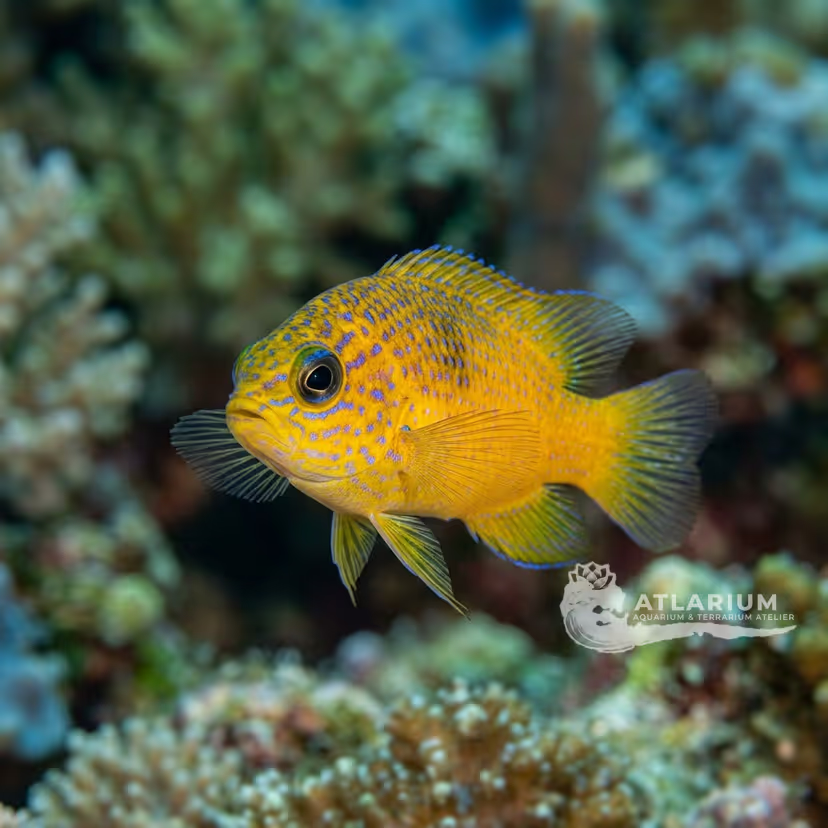
Gold-lined dottyback

Gold-lined dottyback

Pseudochromis aurulentus
View details->
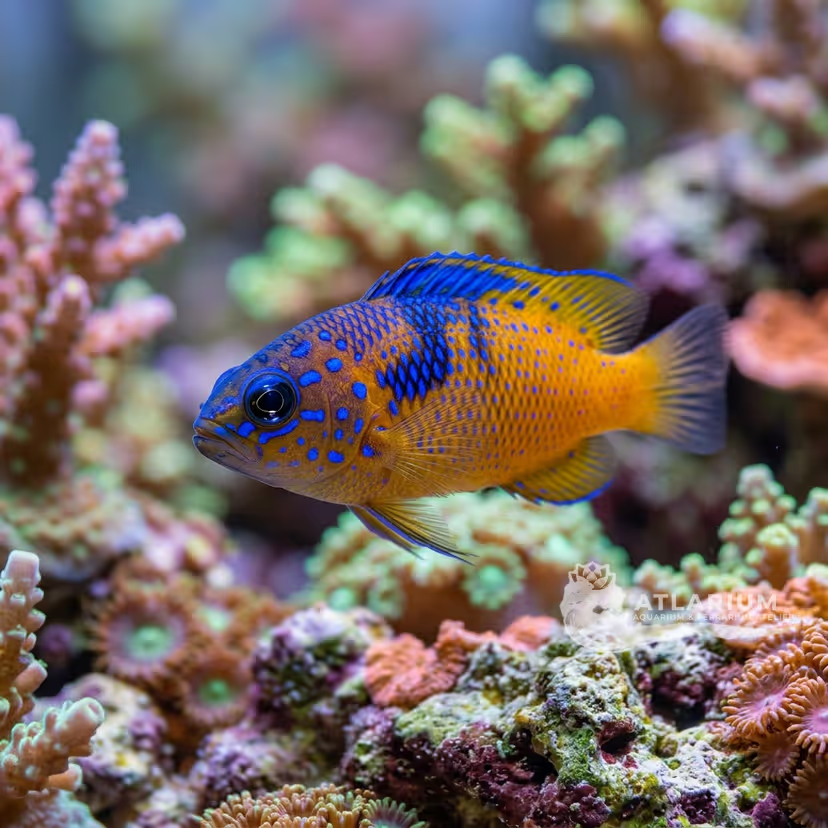
Gold-spotted dottyback

Gold-spotted dottyback

Pseudochromis chrysospilus
View details->
Spotted-tail dottyback

Spotted-tail dottyback

Pseudochromis caudalis

View details->
Blueback Dottyback

Blueback Dottyback

Pseudochromis cyanotaenia

View details->
Elongate dottyback

Elongate dottyback

Pseudochromis elongatus

View details->
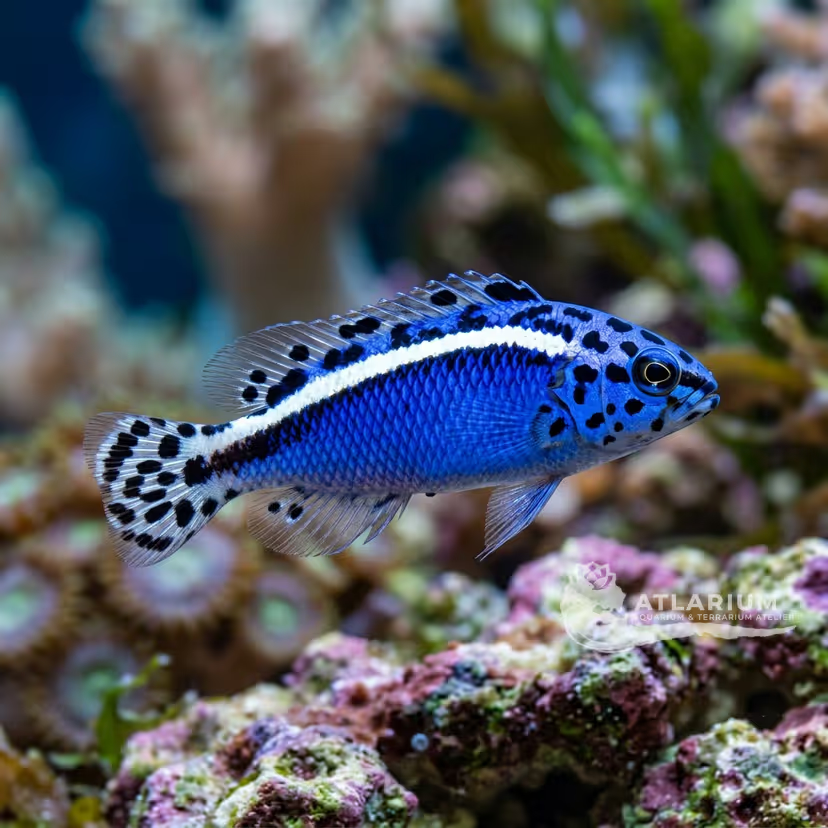
Goldline Dottyback

Goldline Dottyback

Pseudochromis aureolineatus
View details->
Sankey's Dottyback

Sankey's Dottyback

Pseudochromis sankeyi

View details->

Recommended companions

Compatible cards from coherent ecosystems with matching parameters.

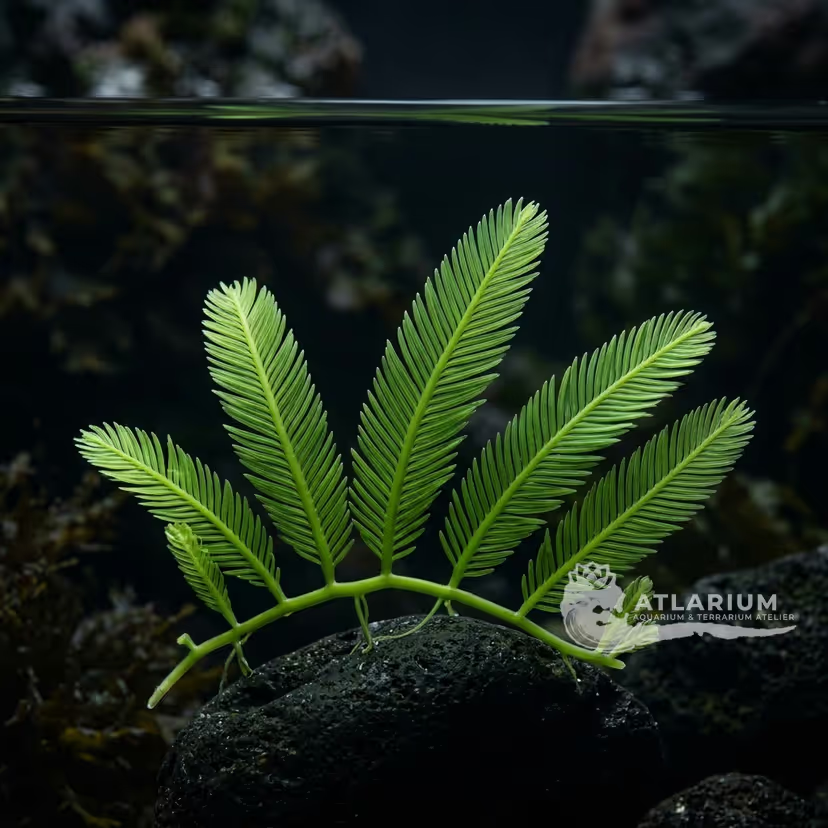
Caulerpa prolifera
Plant

Caulerpa prolifera

Caulerpa prolifera
View details->
Caulerpa taxifolia
Plant

Caulerpa taxifolia

Caulerpa taxifolia
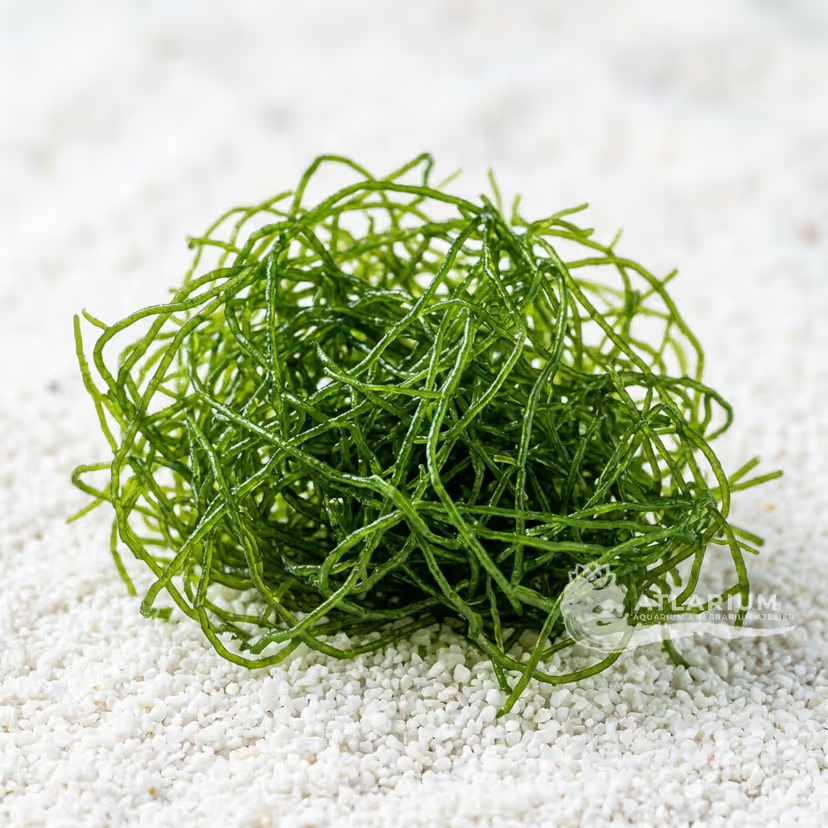
View details->
Chaetomorpha macroalgae
Plant

Chaetomorpha macroalgae

Chaetomorpha linum

View details->
Dead man fingers algae
Plant

Dead man fingers algae

Codium fragile

View details->
Grape caulerpa
Plant

Grape caulerpa

Caulerpa racemosa

View details->
Halimeda macroalgae
Plant

Halimeda macroalgae

Halimeda opuntia

View details->
Peacock tail algae
Plant

Peacock tail algae

Padina pavonica

View details->
Red gracilaria
Plant

Red gracilaria

Gracilaria parvispora

View details->
Red grape algae
Plant

Red grape algae

Botryocladia uvaria

View details->
Sea lettuce
Plant

Sea lettuce

Ulva lactuca

View details->
Red Mangrove
Plant

Red Mangrove

Rhizophora mangle

View details->

Similar care

Cards with similar requirements, difficulty, habitat, and husbandry profile.
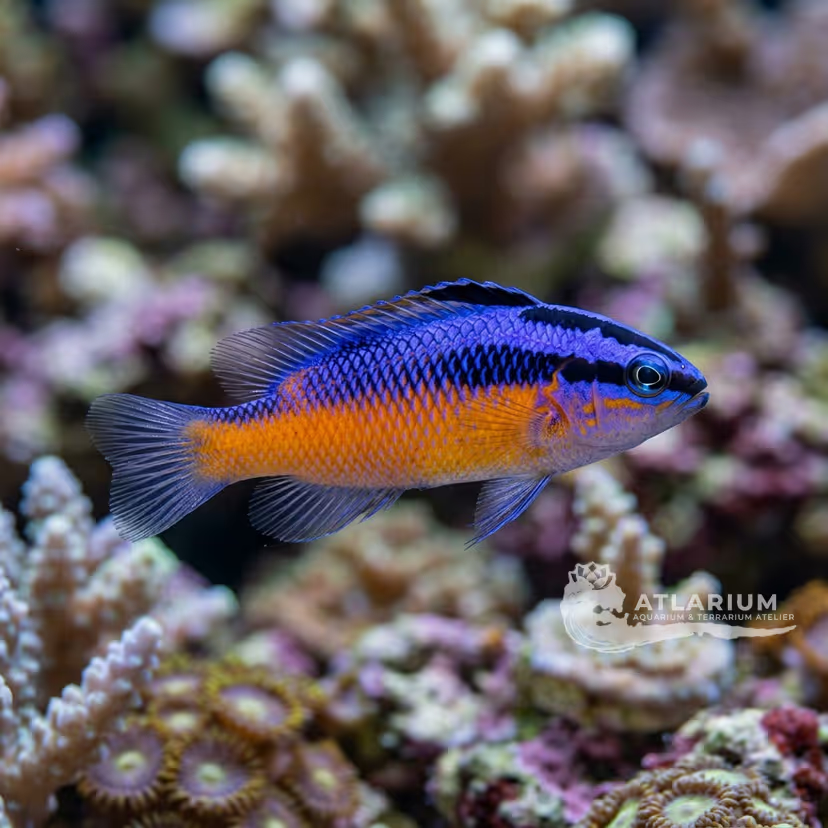
Springer's Dottyback

Springer's Dottyback

Pseudochromis springeri

View details->
Blue Dottyback

Blue Dottyback

Pseudochromis

View details->
Orchid dottyback

Orchid dottyback

Pseudochromis fridmani
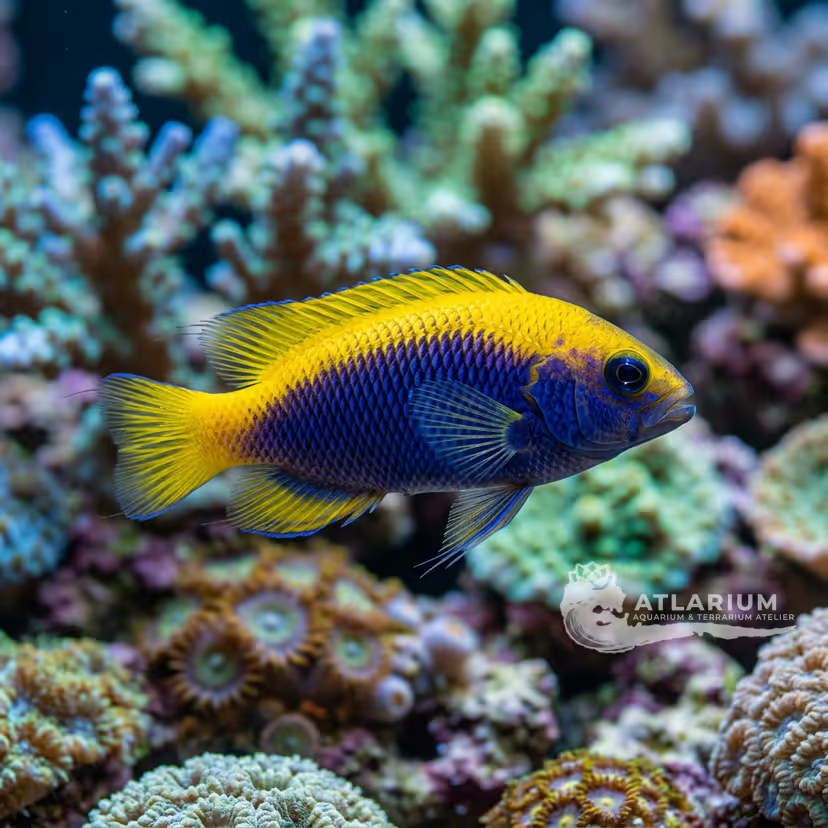
View details->
Sunrise Dottyback

Sunrise Dottyback

Pseudochromis flavivertex

View details->
Oblique-lined Dottyback

Oblique-lined Dottyback

Cypho purpurascens

View details->
Neon dottyback

Neon dottyback

Pseudochromis aldabraensis

View details->
Erdmann's dottyback

Erdmann's dottyback

Pseudochromis erdmanni
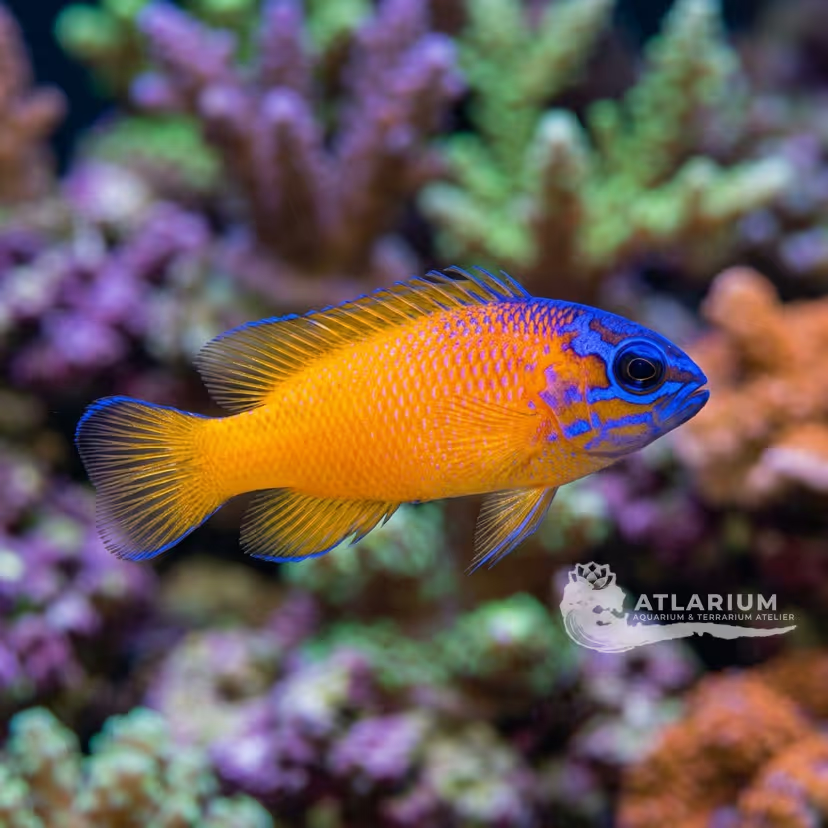
View details->
Tono's Dottyback

Tono's Dottyback

Pseudochromis tonozukai
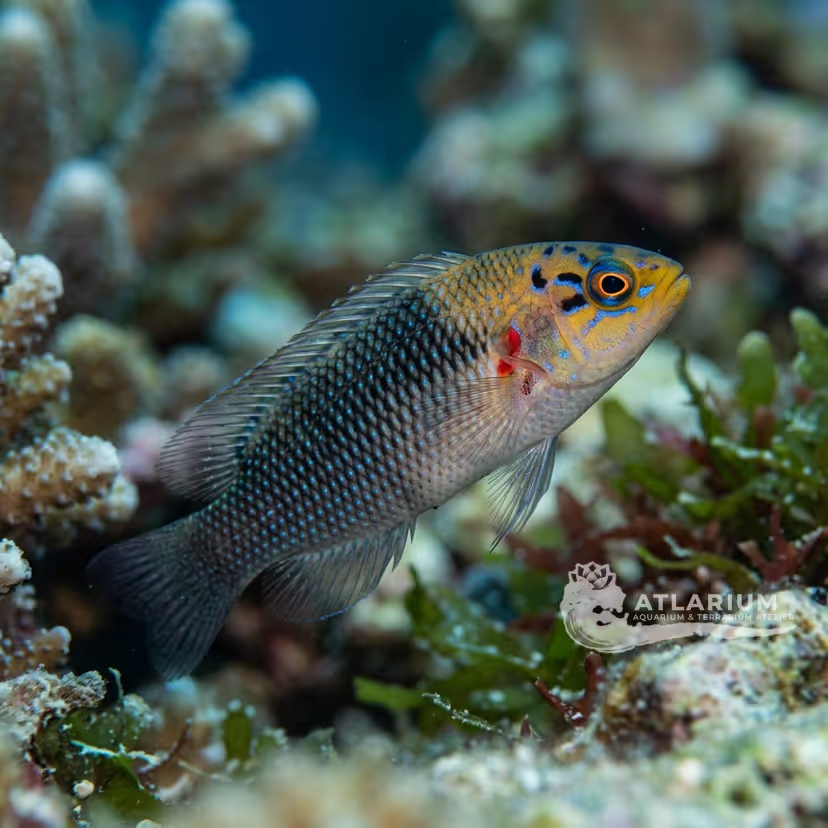
View details->
Steene's Dottyback

Steene's Dottyback

Pseudochromis steenei

View details->
Royal Dottyback

Royal Dottyback

Pictichromis paccagnellae

View details->
Dilectus dottyback

Dilectus dottyback

Pseudochromis dilectus

View details->
Red-tail dottyback

Red-tail dottyback

Pseudochromis coccinicauda

View details->
Aron's blenny

Aron's blenny

Ecsenius aroni

View details->
Spot-breast Dottyback

Spot-breast Dottyback

Pseudochromis alticaudex

View details->
Coral Hawkfish

Coral Hawkfish

Cirrhitichthys oxycephalus
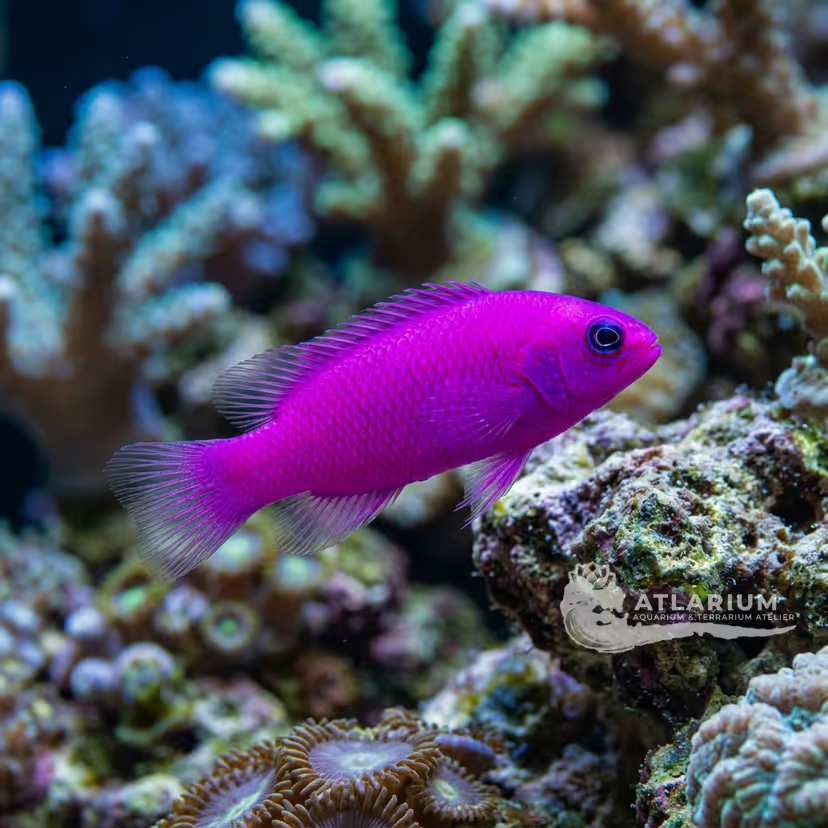
View details->
Strawberry Dottyback

Strawberry Dottyback

Pictichromis porphyrea

View details->
Last updated: 06/30/2026
Eichler's Dottyback (Pseudochromis eichleri) Care Guide & Tank Setup | Atlarium