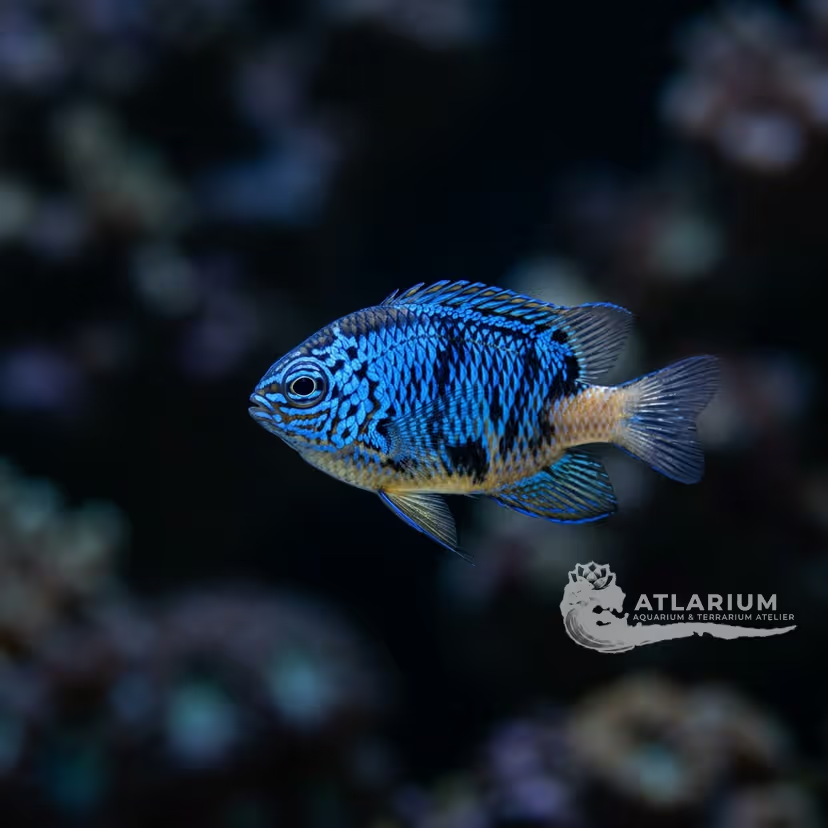
Encyclopaedia

FishMarineEasy
©AI Generated·Proprietary

Strawberry Dottyback

Pictichromis porphyrea

A small, brilliantly colored marine fish with an intense, solid magenta coloration, known for its extreme hardiness and aggressive territorial behavior.

Taxonomy
Class:Actinopteri
Order:Perciformes
Family:Pseudochromidae
Subfamily:Pseudochrominae
Genus:Pictichromis
Species:Pictichromis porphyrea
Formerly known as:Pseudochromis porphyreus

Share

Check out Strawberry Dottyback on Atlarium

PracticeRecognition quizzesPhotos, names, origins, and puzzles to review Atlas species.Open quizzes
Water Temperature

24 - 27 °C

pH Value

8.1 - 8.4

Water type

Marine

Tank level

Bottom and middle

Adult size

6 cm

Minimum tank volume

>= 120 L

Minimum group

>= 1

GH

15 - 25 dGH

KH

8 - 12 dKH

Species description

Geographical Origin and Habitat: This species is widely distributed in the tropical Western Pacific Ocean, ranging from the Philippines and Indonesia to the Ryukyu Islands in the north, and southwards toward the Great Barrier Reef, Samoa, and Palau. It inhabits seaward reefs and sheltered lagoons at depths ranging from 6 to 65 meters, closely associating with branching corals.
Taxonomy and Morphology: Belonging to the family Pseudochromidae, this fish features an elongated, moderately compressed body with large eyes suited for hunting prey in dark crevices. Its most defining morphological trait is its solid, uniform magenta-purple coloration. Adults typically reach a maximum size of 6 to 7 centimeters.
Social Behavior: Highly territorial and aggressive, this species will fiercely defend its chosen territory against any intruders. It lives a solitary life in a selected crevice or cave, showing extreme hostility toward conspecifics and other fish species that share similar shapes or coloration.
Coloration and Sexual Dimorphism: The coloration is a striking, solid magenta-purple that covers the entire body, including all fins. There is no visible external sexual dimorphism between males and females, making sexing impossible without behavioral observation or surgical biopsy.

Care, breeding and tankmates

Aquarium Setup: Requires a tank of at least 30 gallons (approx. 110-120 liters) with a significant amount of live rock arranged to create numerous caves, tunnels, and visual barriers. A tight-fitting lid is absolutely essential, as these fish are notorious jumpers when startled or during territorial chases.
Diet and Feeding: A carnivorous species that is not a picky eater. In captivity, feed a varied diet consisting of high-quality frozen foods like mysis shrimp, brine shrimp, finely chopped krill, and commercial preparations for carnivores. It will also readily accept enriched pellet and flake foods.
Water Quality: Requires stable marine water parameters: temperature 24-28°C, pH 8.1-8.4, specific gravity (SG) 1.020-1.025, and low levels of dissolved organic compounds. Efficient filtration, a reliable protein skimmer, and moderate water movement are highly recommended to simulate reef conditions.
Compatibility and Cohabitation: Do not house with other dottybacks or passive species like firefish, small gobies, or fairy wrasses. Suitable tankmates include larger, semi-aggressive fish such as tangs, damsels, hawkfish, and larger clownfish. It is highly recommended to introduce the dottyback last to the aquarium.
Aquarium Breeding: Breeding in captivity is possible but challenging due to conspecific aggression. They are egg-layers; the male coaxes the female into his cave where she deposits a sticky egg mass. The male then fertilizes the egg mass and guards it diligently, fanning it until the larvae hatch.
Risks and Diseases: Very hardy and highly resistant to most common marine fish diseases. However, stress from poor water quality or excessive territorial fighting can weaken its immune system, making it vulnerable to Marine Ich (Cryptocaryon irritans) and Marine Velvet (Amyloodinium ocellatum).

Geographic Origin and Distribution

This species is widely distributed in the tropical Western Pacific Ocean, ranging from the Philippines and Indonesia to the Ryukyu Islands in the north, and southwards toward the Great Barrier Reef, Samoa, and Palau. It inhabits seaward reefs and sheltered lagoons at depths ranging from 6 to 65 meters, closely associating with branching corals.

Origin

Tropical oceans and reefsSouth and Southeast AsiaEast Asia

Fish profile

Temperament
Aggressive
They are notoriously bold, aggressive, and highly territorial. They will not hesitate to attack and harass fish much larger than themselves. To prevent them from dominating the tank, they should always be the final fish added to the aquarium.
Diet
Carnivore
They are strict carnivores that feed on small benthic invertebrates and zooplankton. In captivity, they eagerly eat frozen mysis, brine shrimp, and high-quality meaty pellets. They are also excellent at hunting nuisance bristle worms within the rockwork.
Sex ratio
Solitary
They are highly territorial and should be kept individually in most home aquariums. Attempting to keep more than one will almost always result in deadly aggression. They will also show extreme aggression towards fish of similar shape, like wrasses or other dottybacks.
Feeding frequency
Twice daily
They require feeding one to two times per day. They are active hunters that spend the entire day searching for copepods and other microfauna. Providing a varied diet will keep their vibrant magenta coloration bright and healthy.
Bioload
The Magenta Dottyback has a very low bioload footprint. Their small size means they do not heavily impact the aquarium's filtration system. Standard reef maintenance and water changes are perfectly adequate to keep the water clean.
Flow
Moderate
They prefer moderate to strong water flow, navigating easily through the currents. This simulates the turbulent waters of their natural reef habitat. Good flow also aids in keeping the tank highly oxygenated.
Jump risk
Yes
They are highly prone to jumping, especially when introduced to a new tank or during aggressive encounters. A tightly fitted mesh screen or glass canopy is an absolute necessity. All gaps around plumbing and overflows must be securely blocked.
Reproduction
Oviparous
They are demersal spawners, laying a clutch of adhesive eggs deep within a cave. The male vigorously guards the eggs until the fry hatch. While captive breeding is possible, it is quite difficult due to the tiny size of the newly hatched larvae.
Compatibility & tankmates
Reef safe
They are reef safe and will leave corals completely alone. However, they are highly predatory toward small ornamental shrimp and will often kill them. They are extremely aggressive towards peaceful fish and should only be housed with tough, semi-aggressive tank mates.
Tank level
Middle/Bottom
They inhabit the lower to middle sections of the aquarium, staying very close to the rock structure. They require a complex aquascape with numerous tight caves, crevices, and hiding spots. They will fiercely claim a specific cave network as their exclusive territory.

Window to the official scientific data of the species

Data synced on: 06/15/2026

Scientific Parameters & Models

Trophic level
3.5 ± 0.5 se
Phylogenetic uniqueness (PD50)
0.5039
Bayesian Length-Weight
a = 0.00501, b = 3.1
VulnerabilityLow vulnerability (10 / 100)

Image gallery

Licensed images linked to the species or, when marked, to the closest representative taxon.

Related species

Recommendations grouped by close relatives, companion choices, and similar care.

Variants and close relatives

Same atlas type, nearby scientific identity, genus, or family.

Royal Dottyback

Royal Dottyback

Pictichromis paccagnellae

View details->
Neon dottyback

Neon dottyback

Pseudochromis aldabraensis

View details->
Erdmann's dottyback

Erdmann's dottyback

Pseudochromis erdmanni

View details->
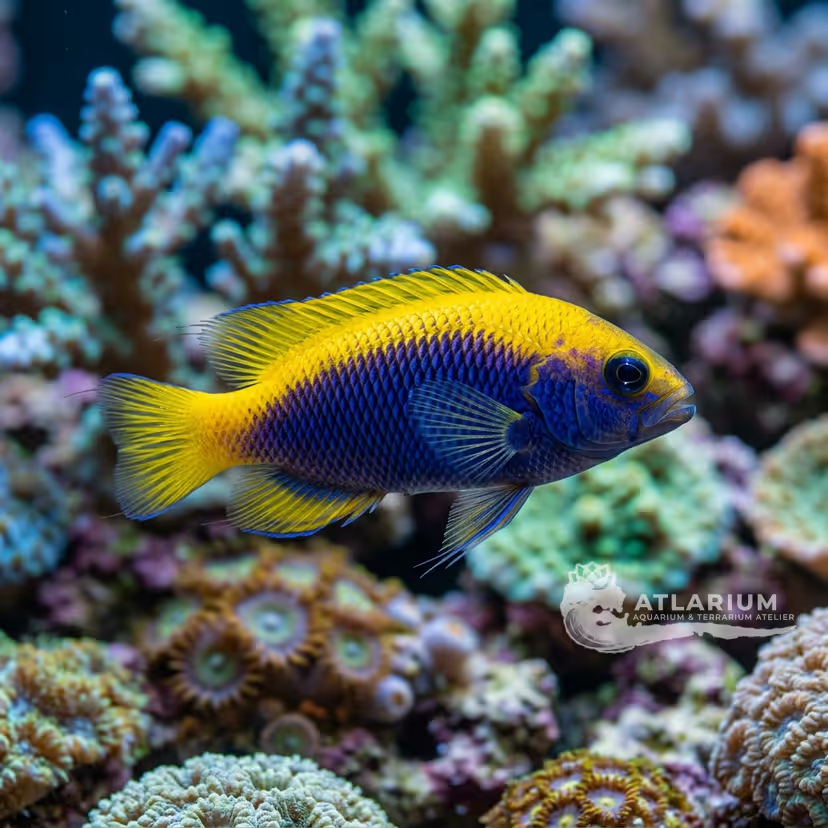
Red-tail dottyback

Red-tail dottyback

Pseudochromis coccinicauda
View details->
Sunrise Dottyback

Sunrise Dottyback

Pseudochromis flavivertex

View details->
Blue Dottyback

Blue Dottyback

Pseudochromis

View details->
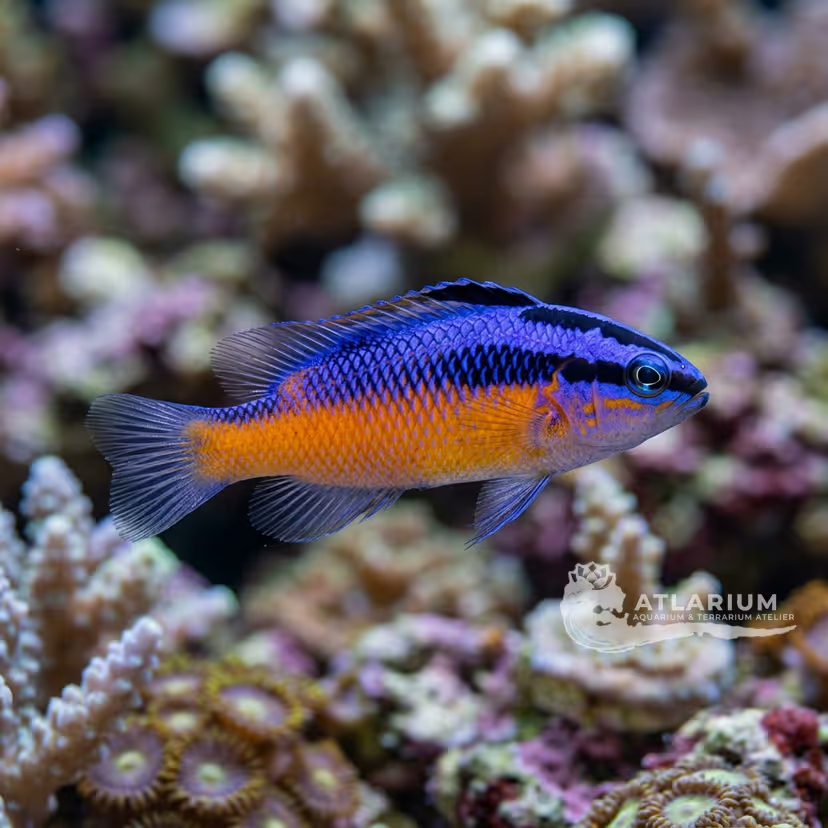
Oblique-lined Dottyback

Oblique-lined Dottyback

Cypho purpurascens
View details->
Springer's Dottyback

Springer's Dottyback

Pseudochromis springeri

View details->
Ammer's dottyback

Ammer's dottyback

Pseudochromis ammeri

View details->
Cole's Dottyback

Cole's Dottyback

Pseudochromis colei

View details->
Comet dottyback

Comet dottyback

Pseudochromis cometes

View details->
Gold-lined dottyback

Gold-lined dottyback

Pseudochromis aurulentus

View details->
Dilectus dottyback

Dilectus dottyback

Pseudochromis dilectus

View details->
Orchid dottyback

Orchid dottyback

Pseudochromis fridmani

View details->
Blueback Dottyback

Blueback Dottyback

Pseudochromis cyanotaenia

View details->
Elongate dottyback

Elongate dottyback

Pseudochromis elongatus

View details->

Recommended companions

Compatible cards from coherent ecosystems with matching parameters.

Grape caulerpa
Plant

Grape caulerpa

Caulerpa racemosa

View details->
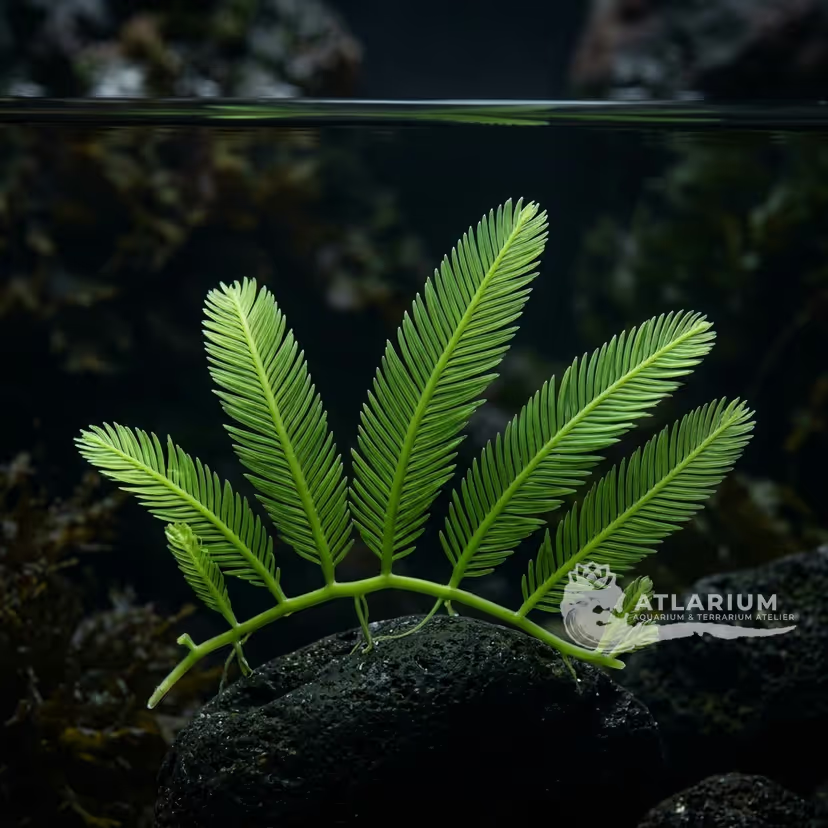
Caulerpa prolifera
Plant

Caulerpa prolifera

Caulerpa prolifera
View details->
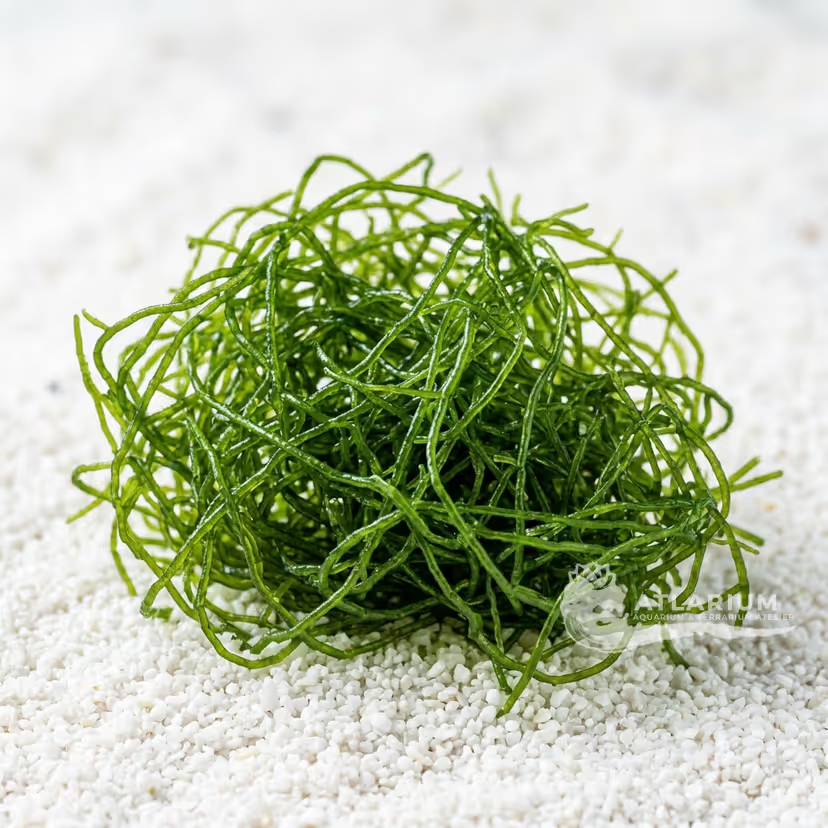
Caulerpa taxifolia
Plant

Caulerpa taxifolia

Caulerpa taxifolia
View details->
Chaetomorpha macroalgae
Plant

Chaetomorpha macroalgae

Chaetomorpha linum

View details->
Dead man fingers algae
Plant

Dead man fingers algae

Codium fragile

View details->
Halimeda macroalgae
Plant

Halimeda macroalgae

Halimeda opuntia

View details->
Peacock tail algae
Plant

Peacock tail algae

Padina pavonica

View details->
Red gracilaria
Plant

Red gracilaria

Gracilaria parvispora

View details->
Red grape algae
Plant

Red grape algae

Botryocladia uvaria

View details->
Sea lettuce
Plant

Sea lettuce

Ulva lactuca

View details->
Red Mangrove
Plant

Red Mangrove

Rhizophora mangle

View details->

Similar care

Cards with similar requirements, difficulty, habitat, and husbandry profile.
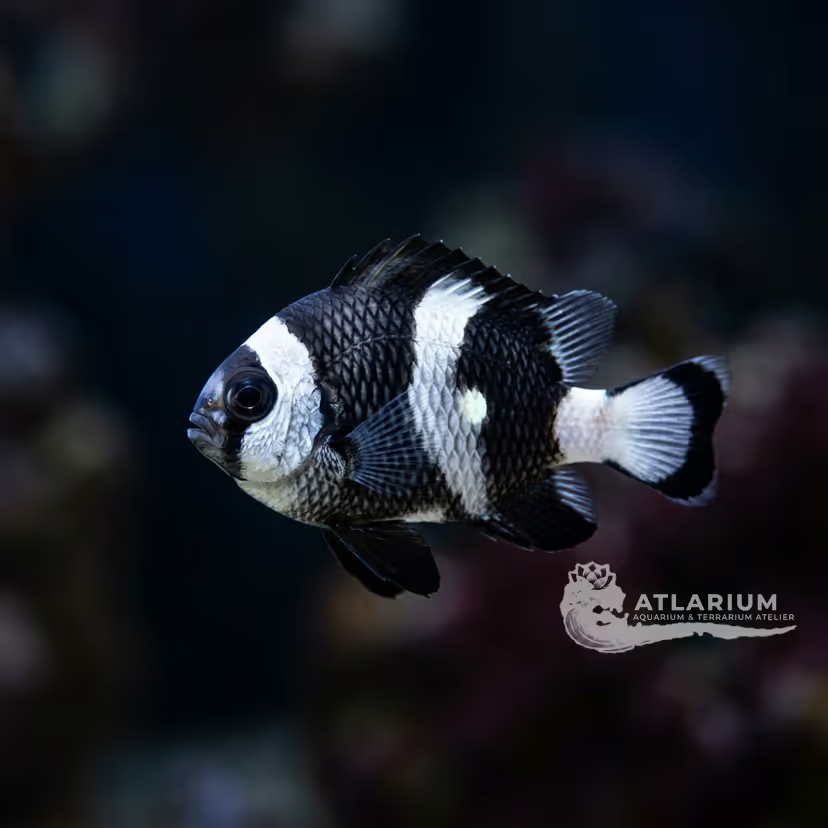
Four-stripe Damselfish / Blacktail Humbug

Four-stripe Damselfish / Blacktail Humbug

Dascyllus melanurus

View details->
Azure damselfish

Azure damselfish

Chrysiptera hemicyanea

View details->
Blue Damselfish

Blue Damselfish

Chrysiptera cyanea

View details->
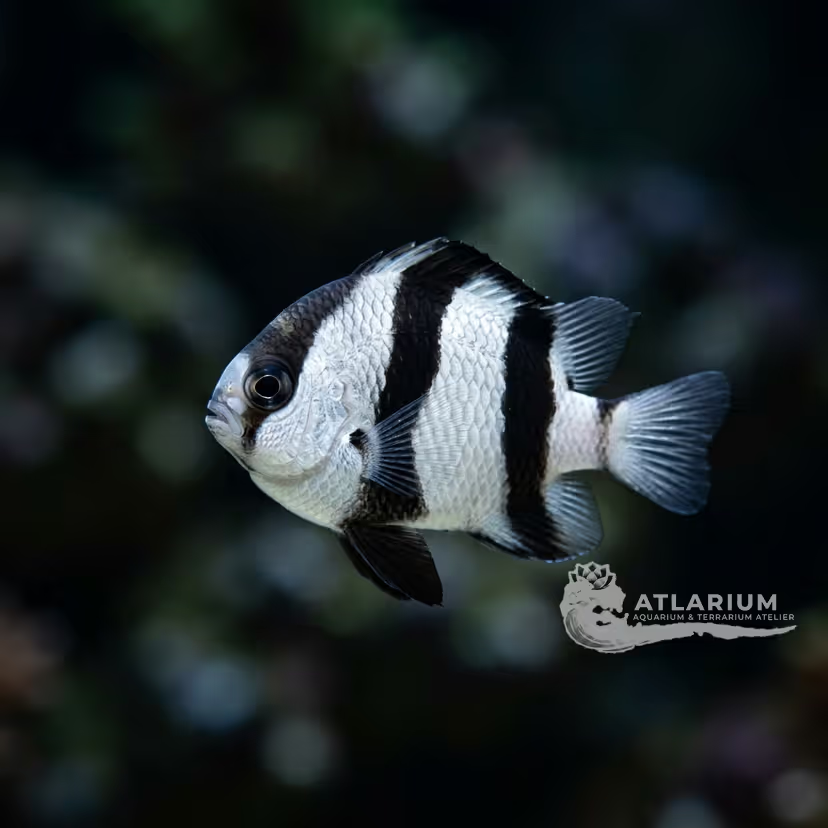
Talbot's Damselfish

Talbot's Damselfish

Chrysiptera talboti
View details->
Whitetail Dascyllus

Whitetail Dascyllus

Dascyllus aruanus

View details->
Blackcap Basslet

Blackcap Basslet

Gramma melacara

View details->
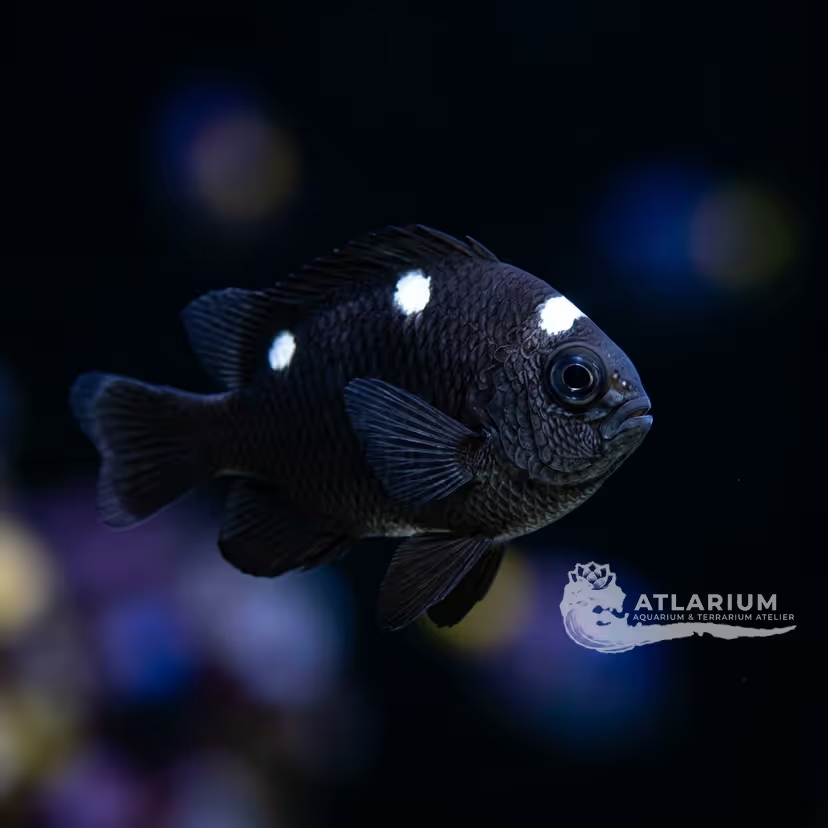
Springer's Damselfish

Springer's Damselfish

Chrysiptera springeri
View details->
Threespot dascyllus

Threespot dascyllus

Dascyllus trimaculatus

View details->
Clark's anemonefish

Clark's anemonefish

Amphiprion clarkii

View details->
Doublebar dottyback

Doublebar dottyback

Pseudochromis bitaeniatus

View details->
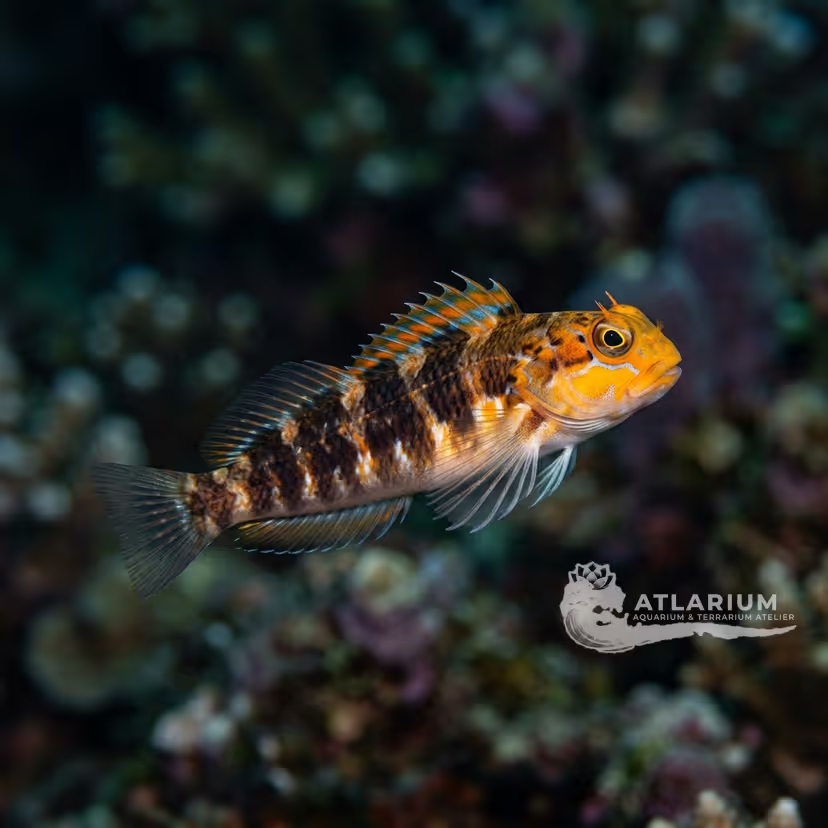
Goldline Dottyback

Goldline Dottyback

Pseudochromis aureolineatus
View details->
Yelloweye Combtooth Blenny

Yelloweye Combtooth Blenny

Ecsenius opsifrontalis

View details->
Andaman Dottyback

Andaman Dottyback

Pseudochromis andamanensis

View details->
Firetail dottyback

Firetail dottyback

Pseudochromis flammicauda

View details->
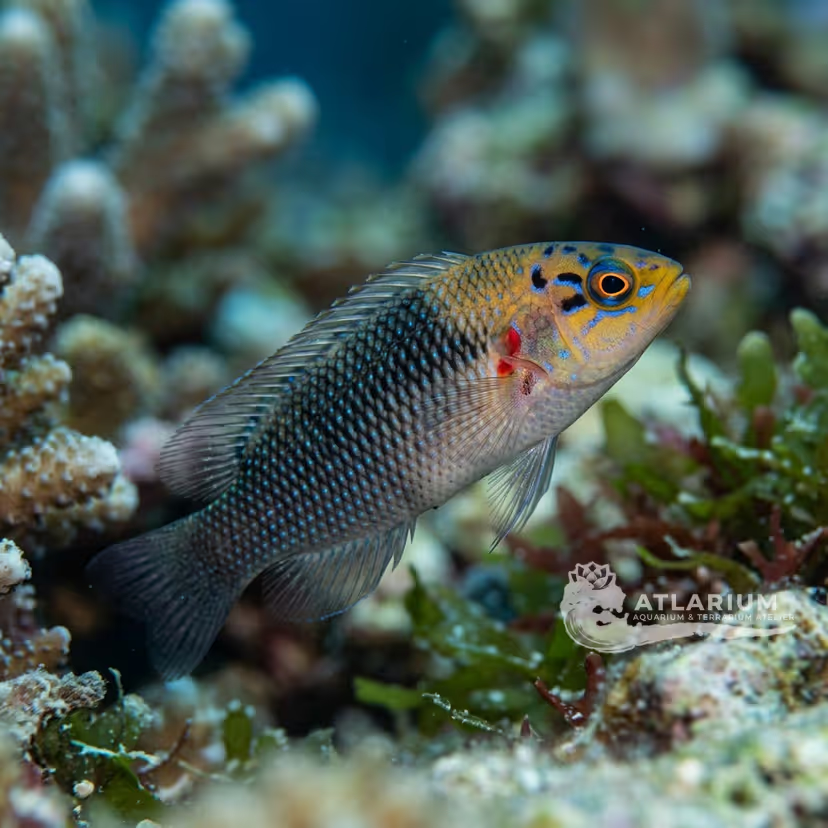
Forktail dottyback

Forktail dottyback

Pseudochromis dixurus
View details->
Steene's Dottyback

Steene's Dottyback

Pseudochromis steenei

View details->
Last updated: 06/30/2026
Strawberry Dottyback (Pictichromis porphyrea) Care Guide & Tank Setup | Atlarium