Encyclopaedia

FishMarineEasy
©AI Generated·Proprietary

Royal Dottyback

Pictichromis paccagnellae

The royal dottyback is a small, brilliantly colored marine fish with a split purple and yellow coloration, known for its highly territorial and bold nature.

Taxonomy
Class:Actinopteri
Order:Perciformes
Family:Pseudochromidae
Genus:Pictichromis
Species:Pictichromis paccagnellae
Formerly known as:Pseudochromis paccagnellae

Share

Check out Royal Dottyback on Atlarium

PracticeRecognition quizzesPhotos, names, origins, and puzzles to review Atlas species.Open quizzes
Water Temperature

24 - 27 °C

pH Value

8.1 - 8.4

Water type

Marine

Tank level

Bottom and middle

Adult size

7 cm

Minimum tank volume

>= 120 L

Minimum group

>= 1

GH

15 - 25 dGH

KH

8 - 12 dKH

Species description

Geographical Origin and Habitat: Pseudochromis paccagnellae, commonly known as the royal dottyback or false gramma, is native to the tropical waters of the Western Central Pacific Ocean. Its distribution spans across Indonesia, the Philippines, Papua New Guinea, Vanuatu, and the outer edges of the Great Barrier Reef in Australia. It typically inhabits steep coral drop-offs and vertical reef walls exposed to moderate currents, seeking shelter in small crevices, caves, and overhangs at depths ranging from 1 to 50 meters.
Taxonomy and Morphology: It belongs to the class Actinopterygii, order Perciformes, family Pseudochromidae, and genus Pseudochromis. The body is moderately elongated and laterally compressed, featuring a strong head with large, alert eyes. It possesses a single, continuous dorsal fin. In captivity, it reaches a maximum adult length of approximately 7 centimeters, which makes it a very popular choice for reef hobbyists with medium-sized tanks.
Social Behavior: Despite its small size, this species is notorious for its highly aggressive and territorial behavior. It will aggressively defend its chosen cave or territory against intruders, particularly fishes with a similar body shape or coloration, such as the royal gramma (Gramma loreto) with which it is often confused. It is generally best kept as a single specimen in a home aquarium to prevent deadly fighting.
Coloration and Sexual Dimorphism: The coloration of Pseudochromis paccagnellae is its most striking feature: the anterior half of the body is a vivid magenta-purple, while the posterior half is a solid, bright lemon yellow. The color transition is sharp, distinct, and vertical. There is no visible external sexual dimorphism; however, they are protogynous hermaphrodites, where females can change into males under appropriate social dynamics.

Care, breeding and tankmates

Aquarium Setup: Requires a well-established marine aquarium of at least 100 liters, with a rockwork arrangement that provides numerous caves, narrow crevices, and hiding spots where it can establish a secure territory. Ensure the rocks are placed securely, as the dottyback may dig around the sand bases. A tight-fitting lid is essential since they can jump when startled.
Diet and Feeding: It is a carnivore that feeds on small crustaceans and zooplankton in the wild. In an aquarium, it readily accepts frozen foods such as mysis shrimp, brine shrimp, chopped krill, and fish eggs. High-quality dry pellets and flake foods are also accepted. Supplementing the diet with vitamins and carotenoids helps maintain its intense bicolored coloration.
Water Quality: Water parameters must be kept stable: temperature between 24°C and 28°C, pH between 8.1 and 8.4, and specific gravity (salinity) between 1.020 and 1.025. Ammonia and nitrite must remain at zero, and nitrates should be managed below 15-20 mg/l through efficient filtration, protein skimming, and regular partial water changes.
Compatibility and Cohabitation: Due to its aggressive nature, it should not be kept with small, docile fishes like firefish, small gobies, or the similar-looking Gramma loreto. It is best housed with larger, robust species such as tangs, damselfishes, or large wrasses. It is reef-safe but may prey on small ornamental shrimp like sexy shrimp or anemone shrimp.
Aquarium Breeding: Breeding in captivity is possible with a compatible pair. The male will lure the female into his cave, where she deposits a spherical mass of eggs. The male then guards and fans the egg mass until hatching, which typically occurs in 3 to 5 days. The tiny pelagic larvae require live rotifers as a first food.
Risks and Diseases: This is a very hardy species that is resistant to many common diseases. However, it can contract external parasites like marine ich (Cryptocaryon) if subjected to severe stress or sudden temperature drops. Territorial battles with other fish can lead to physical injuries, which may become infected with secondary bacterial pathogens.

Geographic Origin and Distribution

Pseudochromis paccagnellae, commonly known as the royal dottyback or false gramma, is native to the tropical waters of the Western Central Pacific Ocean. Its distribution spans across Indonesia, the Philippines, Papua New Guinea, Vanuatu, and the outer edges of the Great Barrier Reef in Australia. It typically inhabits steep coral drop-offs and vertical reef walls exposed to moderate currents, seeking shelter in small crevices, caves, and overhangs at depths ranging from 1 to 50 meters.

Origin

Tropical oceans and reefsAfrica and MadagascarSouth and Southeast AsiaAustralia, New Guinea, and Oceania

Fish profile

Temperament
Peaceful
They possess an incredibly belligerent, bold, and territorial temperament. They have no fear of larger fish and will constantly boss around passive tank mates. Because of this extreme aggression, they should always be the absolute last fish added to an aquarium.
Diet
Carnivore
They are aggressive carnivores that feed primarily on small crustaceans and benthic invertebrates. They will voraciously consume frozen mysis shrimp, brine shrimp, and high-quality carnivore pellets. They also actively hunt bristle worms and copepods throughout the aquarium.
Sex ratio
Solitary
They are violently territorial and must be kept absolutely solitary in a home aquarium. Attempting to keep more than one will almost instantly result in lethal aggression. Even in very large systems, they will hunt down and kill conspecifics.
Feeding frequency
Twice daily
Feeding them one to two times daily is sufficient. They are extremely active hunters and will constantly forage the rockwork for live microfauna to supplement their diet. Ensure they are getting enough food if kept with larger, faster tank mates.
Bioload
The Bicolor Dottyback has a minimal bioload due to its small size. Their waste output is easily processed by typical biological filtration methods. Maintaining clean water parameters through regular water changes is generally very straightforward.
Flow
Strong
They are highly adaptable and do well in moderate to strong water flow. Natural reef environments provide surging currents which they navigate with ease. Good water movement also aids in oxygenation and overall tank health.
Jump risk
Yes
They are extremely prone to jumping, especially when chasing prey or fighting with other fish. A tight, secure mesh lid or glass canopy is absolutely mandatory. Even the smallest opening can result in the fish escaping and dying.
Reproduction
Oviparous
They are demersal spawners, creating a nest in a hidden cave or crevice. The male is responsible for guarding and aerating the egg mass. Captive breeding is possible, but raising the extremely tiny larvae is a complex and demanding process.
Compatibility & tankmates
Reef safe
While completely reef safe regarding corals, they are an absolute terror to small ornamental shrimp. They are highly aggressive and will actively harass, attack, and sometimes kill fish much larger than themselves. They should only be kept with large, aggressive fish like tangs or large angelfish.
Tank level
Middle/Bottom
They spend the majority of their time in the lower and middle sections of the aquarium. They are rock-dwellers that require a complex aquascape with endless tunnels and caves. They will furiously defend their chosen cave complex from any intruders.

Window to the official scientific data of the species

Data synced on: 06/15/2026

Scientific Parameters & Models

Trophic level
3.5 ± 0.5 se
Phylogenetic uniqueness (PD50)
0.5039
Bayesian Length-Weight
a = 0.00501, b = 3.1
VulnerabilityLow vulnerability (10 / 100)

Image gallery

Licensed images linked to the species or, when marked, to the closest representative taxon.

Related species

Recommendations grouped by close relatives, companion choices, and similar care.

Variants and close relatives

Same atlas type, nearby scientific identity, genus, or family.
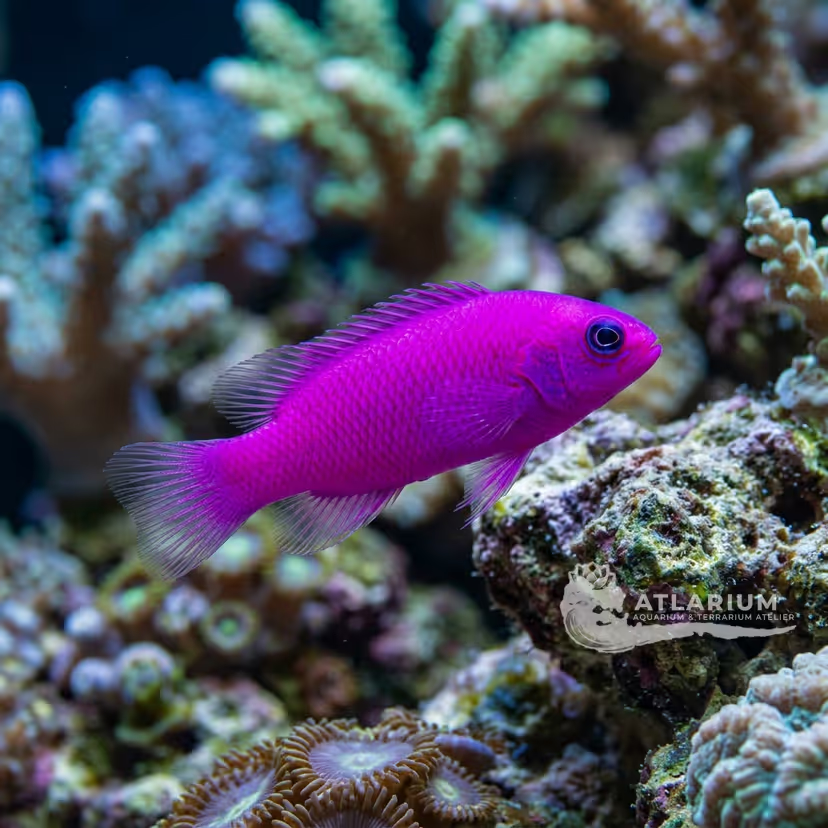
Strawberry Dottyback

Strawberry Dottyback

Pictichromis porphyrea

View details->
Neon dottyback

Neon dottyback

Pseudochromis aldabraensis

View details->
Erdmann's dottyback

Erdmann's dottyback

Pseudochromis erdmanni

View details->
Red-tail dottyback

Red-tail dottyback

Pseudochromis coccinicauda
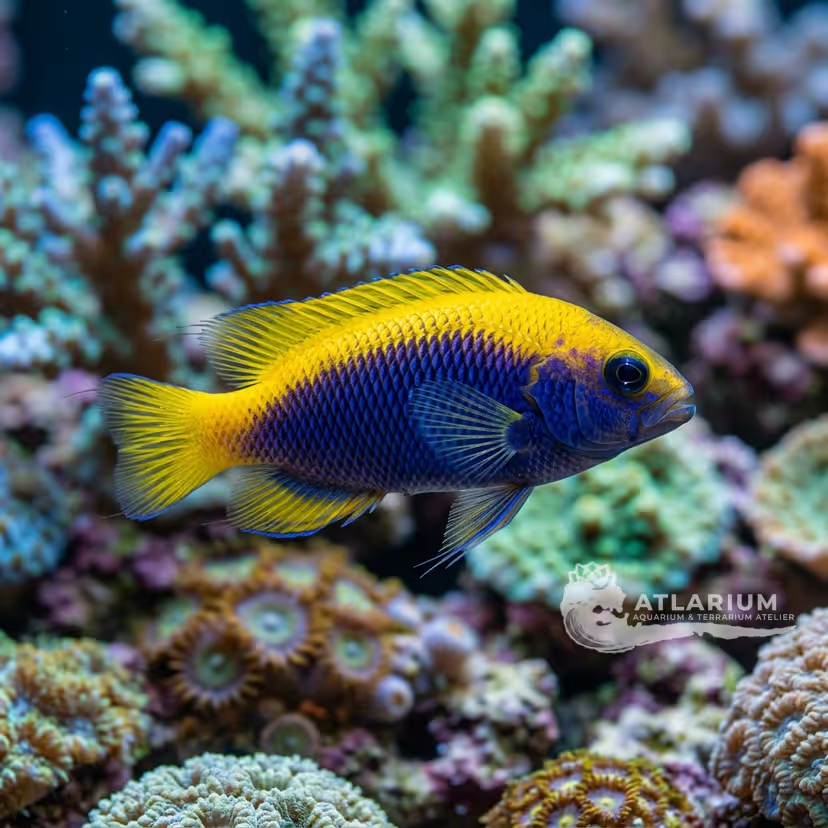
View details->
Sunrise Dottyback

Sunrise Dottyback

Pseudochromis flavivertex

View details->
Blue Dottyback

Blue Dottyback

Pseudochromis

View details->
Oblique-lined Dottyback

Oblique-lined Dottyback

Cypho purpurascens
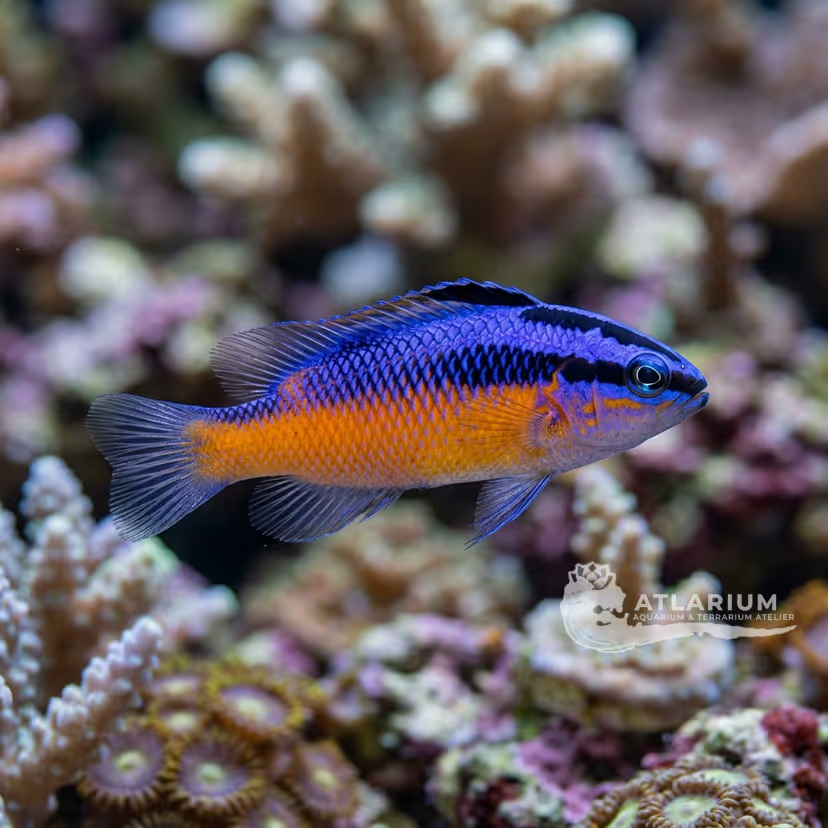
View details->
Springer's Dottyback

Springer's Dottyback

Pseudochromis springeri

View details->
Ammer's dottyback

Ammer's dottyback

Pseudochromis ammeri

View details->
Cole's Dottyback

Cole's Dottyback

Pseudochromis colei

View details->
Comet dottyback

Comet dottyback

Pseudochromis cometes

View details->
Gold-lined dottyback

Gold-lined dottyback

Pseudochromis aurulentus

View details->
Dilectus dottyback

Dilectus dottyback

Pseudochromis dilectus

View details->
Orchid dottyback

Orchid dottyback

Pseudochromis fridmani

View details->
Blueback Dottyback

Blueback Dottyback

Pseudochromis cyanotaenia

View details->
Elongate dottyback

Elongate dottyback

Pseudochromis elongatus

View details->

Recommended companions

Compatible cards from coherent ecosystems with matching parameters.

Armed Snapping Shrimp
Invertebrate

Armed Snapping Shrimp

Alpheus armatus

View details->
Grape caulerpa
Plant

Grape caulerpa

Caulerpa racemosa

View details->
Long-spined sea urchin
Invertebrate

Long-spined sea urchin

Diadema setosum

View details->
Caulerpa prolifera
Plant

Caulerpa prolifera

Caulerpa prolifera
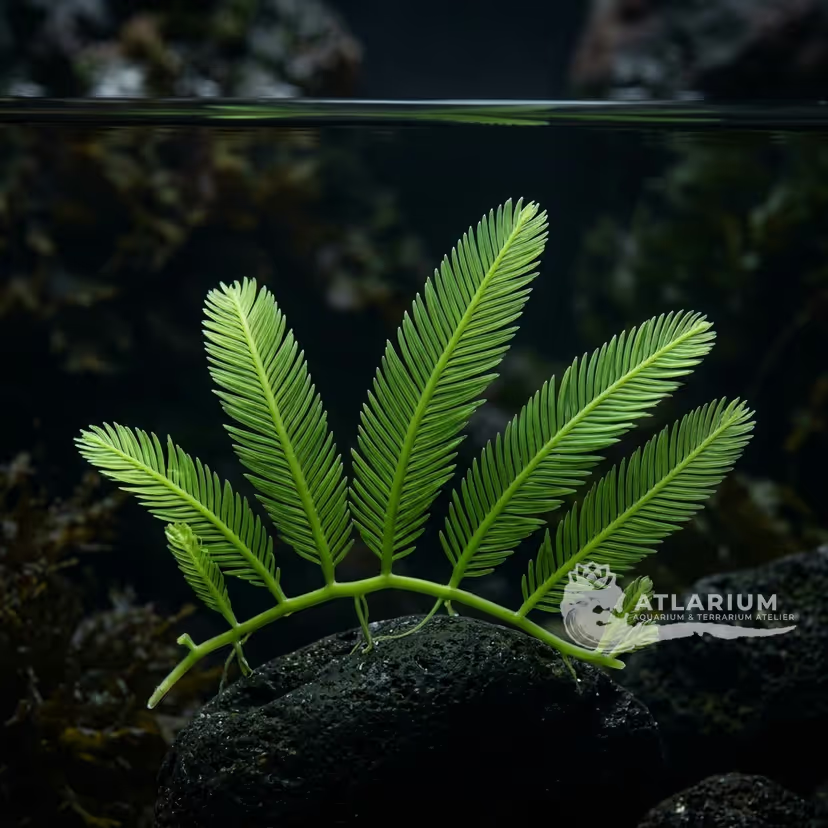
View details->
Caulerpa taxifolia
Plant

Caulerpa taxifolia

Caulerpa taxifolia
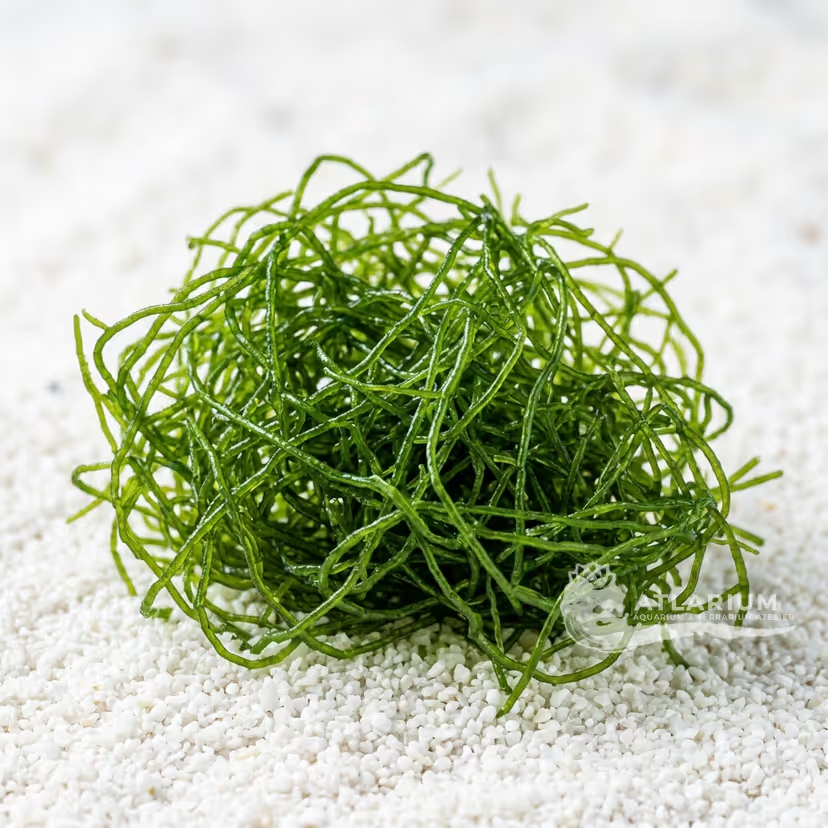
View details->
Chaetomorpha macroalgae
Plant

Chaetomorpha macroalgae

Chaetomorpha linum

View details->
Dead man fingers algae
Plant

Dead man fingers algae

Codium fragile

View details->
Halimeda macroalgae
Plant

Halimeda macroalgae

Halimeda opuntia

View details->
Red gracilaria
Plant

Red gracilaria

Gracilaria parvispora

View details->
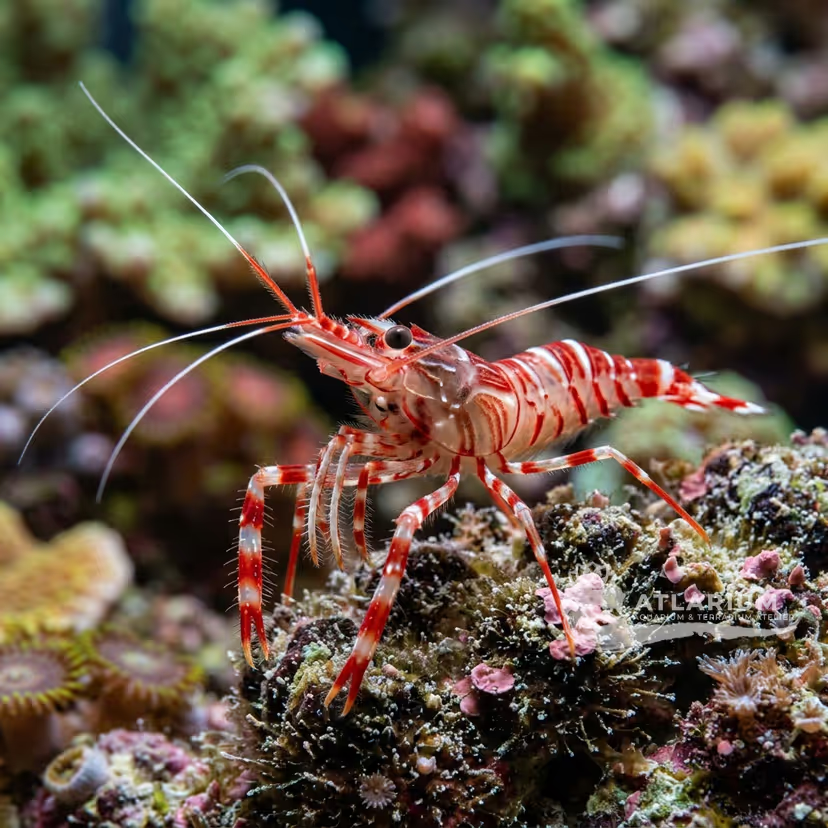
Anton Bruun's cleaner shrimp
Invertebrate

Anton Bruun's cleaner shrimp

Urocaridella antonbruunii
View details->
Anker's Cleaner Shrimp
Invertebrate

Anker's Cleaner Shrimp

Lysmata ankeri

View details->
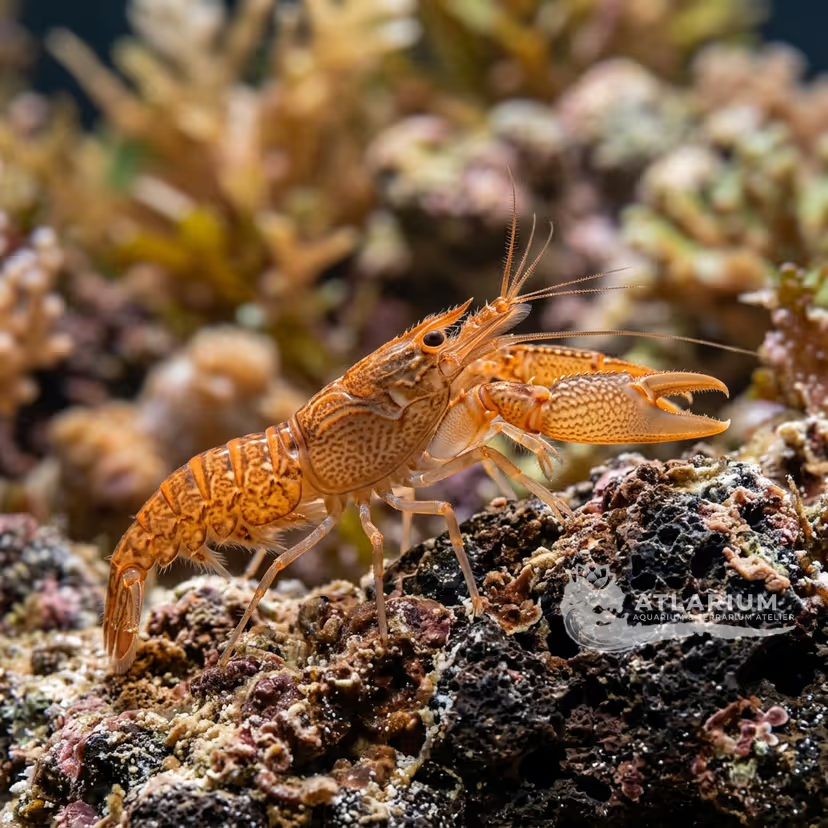
Blood-spotted Hermit Crab
Invertebrate

Blood-spotted Hermit Crab

Clibanarius cruentatus
View details->
Bouvier's snapping shrimp
Invertebrate

Bouvier's snapping shrimp

Alpheus bouvieri

View details->
Camel shrimp
Invertebrate

Camel shrimp

Rhynchocinetes durbanensis

View details->
Chapin's Hermit Crab
Invertebrate

Chapin's Hermit Crab

Clibanarius chapini

View details->
Chocolate Chip Starfish
Invertebrate

Chocolate Chip Starfish

Protoreaster nodosus

View details->

Similar care

Cards with similar requirements, difficulty, habitat, and husbandry profile.

Blackcap Basslet

Blackcap Basslet

Gramma melacara

View details->
Blue Damselfish

Blue Damselfish

Chrysiptera cyanea

View details->
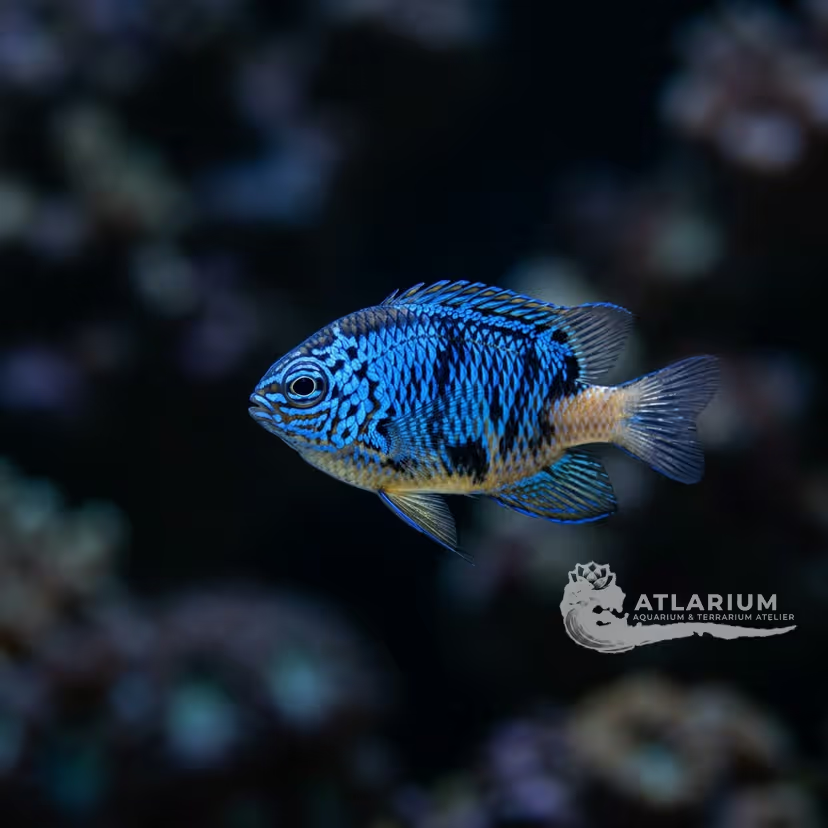
Four-stripe Damselfish / Blacktail Humbug

Four-stripe Damselfish / Blacktail Humbug

Dascyllus melanurus
View details->
Springer's Damselfish

Springer's Damselfish

Chrysiptera springeri

View details->
Azure damselfish

Azure damselfish

Chrysiptera hemicyanea

View details->
Blue Chromis

Blue Chromis

Chromis cyanea

View details->
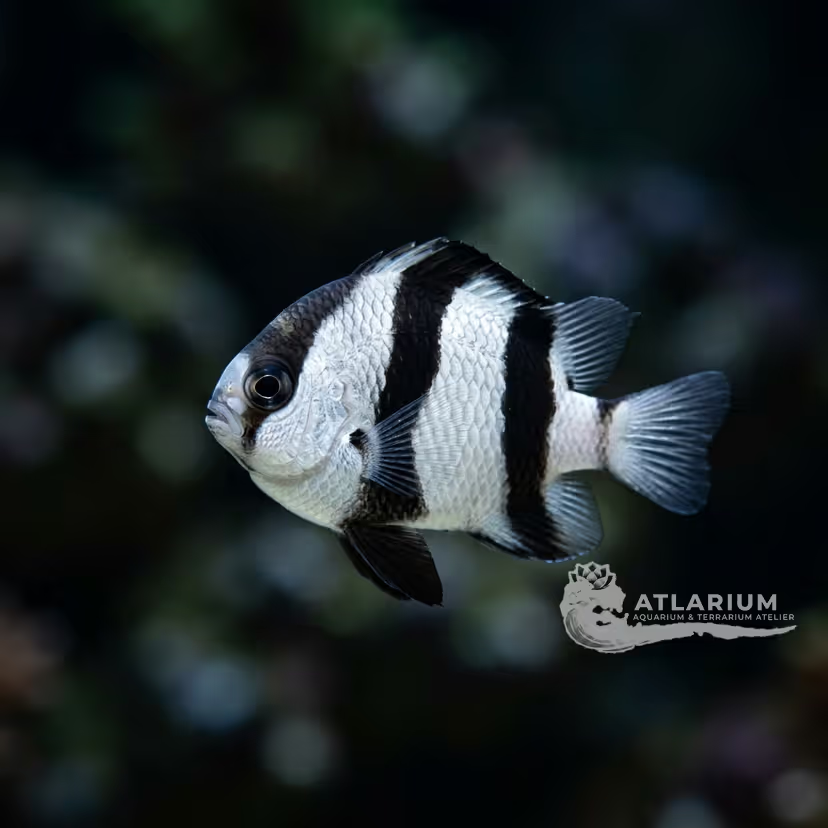
Talbot's Damselfish

Talbot's Damselfish

Chrysiptera talboti
View details->
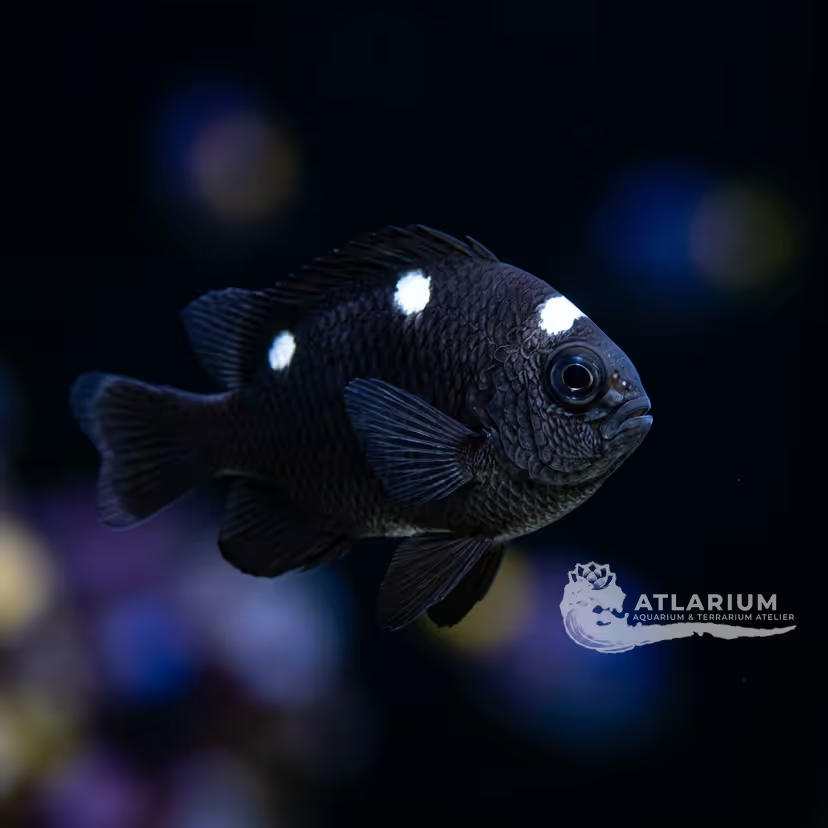
Whitetail Dascyllus

Whitetail Dascyllus

Dascyllus aruanus
View details->
Threespot dascyllus

Threespot dascyllus

Dascyllus trimaculatus

View details->
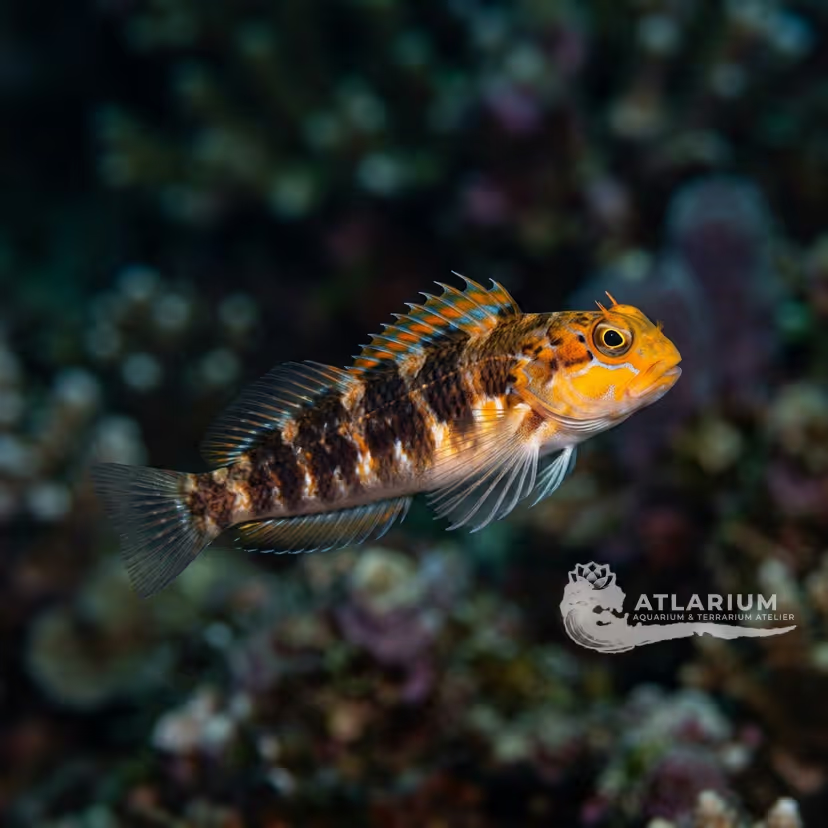
Goldline Dottyback

Goldline Dottyback

Pseudochromis aureolineatus
View details->
Yelloweye Combtooth Blenny

Yelloweye Combtooth Blenny

Ecsenius opsifrontalis

View details->
Blue assessor

Blue assessor

Assessor macneilli

View details->
Eightline flasher wrasse

Eightline flasher wrasse

Paracheilinus octotaenia

View details->
Linear Blenny

Linear Blenny

Ecsenius lineatus

View details->
Allen's blenny

Allen's blenny

Ecsenius alleni

View details->
Ambon Chromis

Ambon Chromis

Chromis amboinensis

View details->
Last updated: 06/30/2026
Royal Dottyback (Pictichromis paccagnellae) Care Guide & Tank Setup | Atlarium