Anton Bruun's cleaner shrimp
Urocaridella antonbruunii
A graceful, transparent hovering cleaner shrimp from the Indo-Pacific, celebrated for engaging in fascinating cleaning symbiosis with local reef fish.
Water Temperature
24 - 27 °C
pH Value
8 - 8.4
Water type
Marine
Invertebrate type
Marine shrimp
Adult size
4 cm
Minimum group
>= 2
KH
8 - 12 dKH
Ecological role
Cleaner
Copper sensitivity
High

Species description
Geographical Origin and Habitat:
This species is widely distributed across the tropical Indo-Pacific. It is commonly found along the coasts of East Africa, the Red Sea, the Seychelles, Indonesia, the Philippines, up to Hawaii and the Great Barrier Reef in Australia. It primarily inhabits marine caves, rocky crevices, and shaded reef walls at depths between 2 and 40 meters.
Taxonomy:
Belonging to the family Palaemonidae, Urocaridella antonbruunii is a small species of cleaner shrimp. It features a slender, highly transparent body with a long, upward-curved rostrum lined with small teeth. Its legs are extremely thin and delicate, adapted for picking parasites. It reaches an adult size of about 3-4 centimeters.
Social Behavior:
It is a social and gregarious species that lives in small groups within established cleaning stations. It exhibits a unique hovering behavior, swaying side to side to attract passing fish. When a fish approaches and signals readiness, the shrimp climbs onto its body to pick off parasites and dead skin.
Coloration and Sexual Dimorphism:
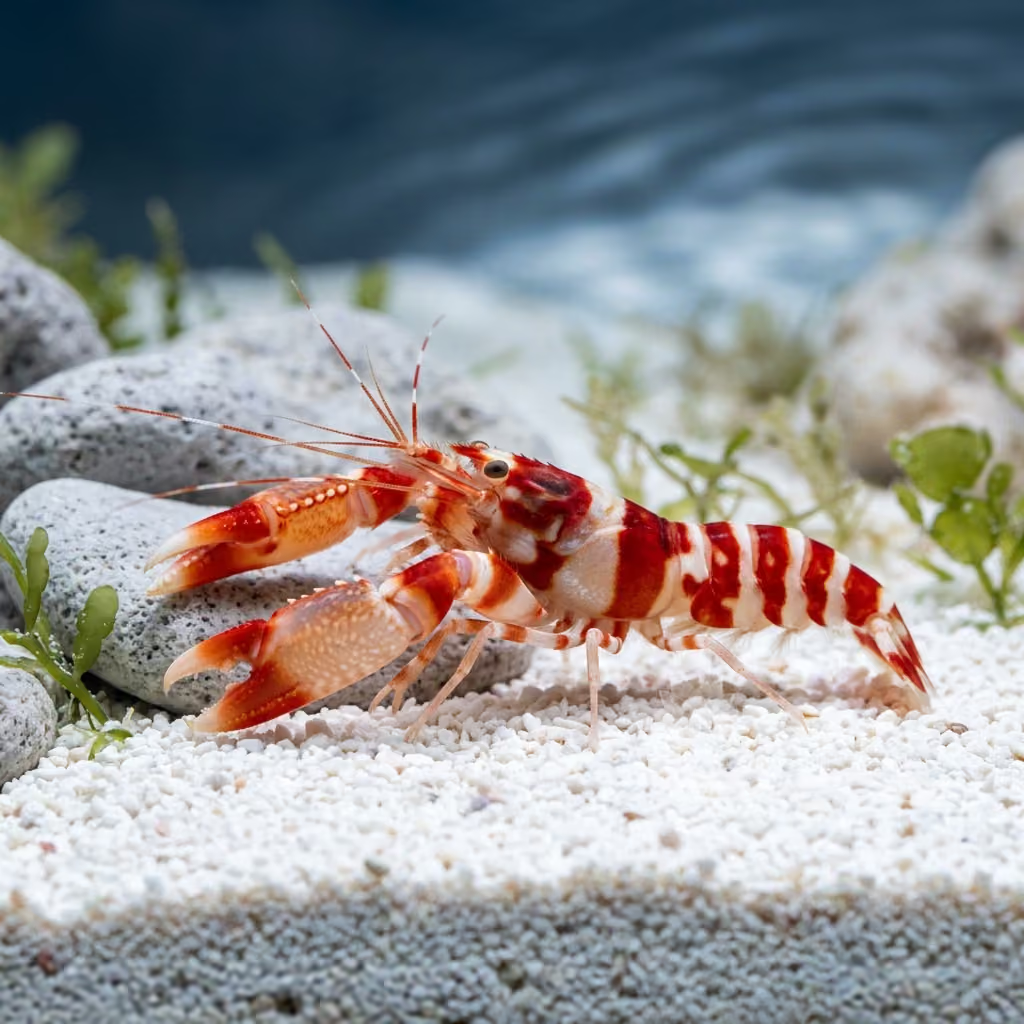
The body is almost entirely glass-like and transparent, marked with small red and yellow dots forming thin lines, and white patches on the leg joints. This transparency provides camouflage from predators while remaining recognizable to host fish. Mature females are slightly larger than males and carry eggs under their abdomen.

Care, breeding and tankmates
Tank Setup:
Requires a mature marine aquarium of at least 80 liters. The setup must feature shaded areas, caves, and rocky overhangs where the shrimp can establish its cleaning station. It is important that the water flow in these areas is moderate rather than turbulent, allowing the shrimp to hover and display naturally.
Diet and Feeding:
In addition to feeding on fish parasites, it must be offered fine frozen foods in the aquarium, such as copepods, baby brine shrimp, chopped mysis, and lobster eggs. It will also scavenge for high-quality micro-pellets that reach the bottom. Feed once daily, ensuring food reaches its shaded retreat.
Water Quality:
Requires stable, high-quality marine water: temperature between 24°C and 26°C, pH range from 8.1 to 8.4, specific gravity from 1.020 to 1.025, and KH between 8 and 12 dKH. It is highly sensitive to copper treatments (which are fatal) and requires proper iodine levels in the water to support successful molting.
Compatibility and Tankmates:
Completely reef safe and harmless to corals. It coexists peacefully with most reef fish, which actively seek out its cleaning services. However, due to its small size and fragile structure, it must never be housed with predatory fish like groupers, hawkfish, lionfish, or large wrasses that will eat it.
Aquarium Breeding:
Breeding in captivity is exceptionally difficult. Although females carry fertilized eggs under their tails until they hatch, the released larvae enter a highly delicate planktonic stage. They require microscopic live foods and are easily swept away and destroyed by standard aquarium filtration systems.
Risks and Diseases:
The main risk is associated with the molting process. If iodine, calcium, or magnesium levels are depleted, the shrimp can fail to shed its old exoskeleton and die. Sudden changes in salinity or temperature can also cause fatal osmotic shock. Slow acclimation using the drip method is mandatory.

Geographic origin and distribution
This species is widely distributed across the tropical Indo-Pacific. It is commonly found along the coasts of East Africa, the Red Sea, the Seychelles, Indonesia, the Philippines, up to Hawaii and the Great Barrier Reef in Australia. It primarily inhabits marine caves, rocky crevices, and shaded reef walls at depths between 2 and 40 meters.
Origin
Tropical oceans and reefsAfrica and MadagascarSouth and Southeast AsiaEast AsiaAustralia, New Guinea, and Oceania

Invertebrate profile
- Diet
- Omnivore
- Carnivorous scavenger and cleaner. Will pick parasites and dead tissue off fish, and readily accepts small frozen foods like mysis and brine shrimp.
- Ecological role
- Cleaner
- Sets up cleaning stations where fish come to have parasites removed. Helps maintain the health of fish in the aquarium.
- Adult size
- 4 cm
- Jump risk
- Yes
- Can dart backward and out of the water if frightened. A tank lid is highly recommended.
- Shock sensitivity
- High
- Delicate and requires an extended drip acclimation to avoid osmotic shock.
- Calcium and minerals
- Medium
- Needs standard marine levels of calcium and iodine to ensure proper molting and carapace health.
- Molting
- Yes
- Sheds its exoskeleton as it grows. Often hides during the molting process until the new shell hardens.
- Reproduction
- Oviparous
- Produces larvae in captivity, but successfully raising them past the planktonic stage is exceedingly difficult.
- Compatibility & tankmates
- Peaceful
- Peaceful. Best kept with small, docile fish that will not view it as a meal. Avoid large predatory wrasses or hawkfish.

Related species
Recommendations grouped by close relatives, companion choices, and similar care.