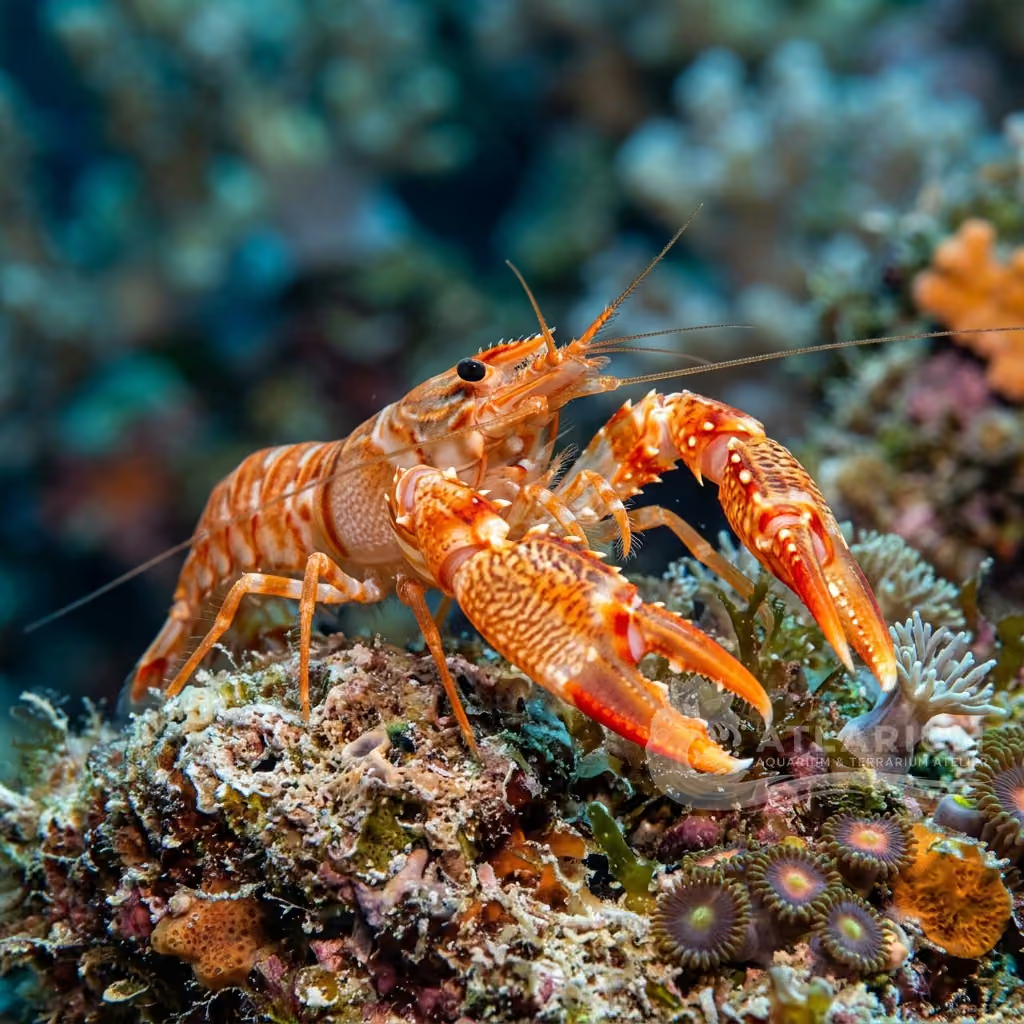
Holthuis's Anemone Shrimp
Ancylomenes holthuisi
Holthuis's Anemone Shrimp is an elegant, transparent commensal shrimp. Thriving in nano-aquariums, it requires a healthy host anemone or coral to feel secure and exhibit its natural swaying motion.
Water Temperature
22 - 28 °C
pH Value
8.1 - 8.4
Water type
Marine
Invertebrate type
Marine shrimp
Adult size
2.5 cm
Minimum group
>= 1
KH
8 - 12 dKH
Ecological role
Symbiont
Copper sensitivity
High

Species description
Geographical Origin and Habitat: Periclimenes holthuisi (scientifically reclassified as Ancylomenes holthuisi), commonly known as Holthuis's Anemone Shrimp, is widely distributed throughout the warm tropical waters of the Western Indo-Pacific. Its range extends from the Red Sea and East African coasts to Japan, Indonesia, the Philippines, and Micronesia. It lives in close mutualistic association with sessile reef organisms, particularly sea anemones (such as Stichodactyla, Heteractis, or Entacmaea), large-polyp stony corals (like Catalaphyllia and Heliofungia), or even large jellyfish, at depths ranging from shallow tidal areas down to 25-30 meters.
Taxonomy: This species belongs to the infraorder Caridea, family Palaemonidae. Previously classified within the genus Periclimenes, it was recently moved to the genus Ancylomenes, which groups together most of the symbiotic cleaner shrimps. It is a commensal shrimp that derives protection from the stinging cells of its host, in exchange for which it offers cleaning services, removing debris, mucus, and small parasites.
Social Behavior: It is a peaceful, stationary invertebrate that spends its entire life on or very close to its symbiotic host. It displays a fascinating cleaning behavior, swaying its body side-to-side and waving its long white antennae to signal and attract fish seeking parasite removal. It typically lives singly, in stable male-female pairs, or in small groups on a single large host anemone.
Coloration and Sexual Dimorphism: The body of this shrimp is almost entirely transparent, providing excellent camouflage against its host. It features delicate spots of white and purple on the carapace and abdomen, including a characteristic white chevron or V-shaped marking on the third abdominal segment. The legs and claws are also decorated with alternating white and purple bands. Adult females are generally larger than males and, when gravid, carry green or transparent eggs clearly visible under their abdomen.

Care, breeding and tankmates
Tank Setup: Being a tiny shrimp (maximum 2.5-3 cm in length), it can be housed in nano-aquariums starting from 30-40 liters. The primary requirement for its well-being is the presence of a healthy, compatible host anemone or coral. The tank should mimic a mature reef with stable live rock, low to moderate water flow, and shaded areas. All powerheads and wavemakers must be shielded with fine mesh to prevent the shrimp or its host anemone from being sucked in.
Diet and Feeding: An omnivore and detritivore. It feeds on mucus secreted by the host anemone, food particles trapped in the host's tentacles, and small parasites removed from visiting fish. In captivity, feed it indirectly by target-feeding fine foods like baby brine shrimp, cyclops, rotifers, or liquid coral food, occasionally offering tiny pieces of mysis or krill placed near its retreat.
Water Quality: Requires pristine, stable water conditions: temperature 24-28°C, pH 8.1-8.4, and salinity 1.023-1.025. Nitrate and phosphate levels must be kept extremely low. Like all small invertebrates, it is highly sensitive to copper. Regular supplementation of calcium, magnesium, and especially iodine is essential to ensure trouble-free molting of the exoskeleton.
Compatibility and Tankmates: Completely compatible with corals and other sessile invertebrates. Due to its miniature size, it should never be housed with predatory or aggressive fish such as hawkfish, puffers, triggerfish, groupers, and large wrasses. It is compatible with small, peaceful tankmates and clownfish that inhabit the same anemone, provided the clownfish are not overly territorial.
Aquarium Breeding: Breeding in captivity is extremely difficult. While pairs mate easily and the female regularly carries eggs, the planktonic larvae require specialized micro-algal and zooplankton cultures, combined with gentle, non-mechanical filtration systems to prevent them from being crushed or skimmed.
Risks and Diseases: The greatest risk is the lack of a suitable host, which leaves the shrimp highly vulnerable to stress and predation. Other major risks include molting failures (often caused by iodine deficiency or salinity shock) and exposure to copper-based medications, which are fatal to all marine crustaceans.

Geographic origin and distribution
Periclimenes holthuisi (scientifically reclassified as Ancylomenes holthuisi), commonly known as Holthuis's Anemone Shrimp, is widely distributed throughout the warm tropical waters of the Western Indo-Pacific. Its range extends from the Red Sea and East African coasts to Japan, Indonesia, the Philippines, and Micronesia. It lives in close mutualistic association with sessile reef organisms, particularly sea anemones (such as Stichodactyla, Heteractis, or Entacmaea), large-polyp stony corals (like Catalaphyllia and Heliofungia), or even large jellyfish, at depths ranging from shallow tidal areas down to 25-30 meters.
Origin
Tropical oceans and reefsAfrica and MadagascarSouth and Southeast AsiaEast Asia

Invertebrate profile
- Diet
- Omnivore
- As a omnivore/commensal, Ancylomenes holthuisi plays an active role in consuming various organic matters in its environment. Its diet in captivity should be varied, including specialized pellets, frozen foods, and natural algae or detritus depending on its specific preferences. Regular and balanced feeding is crucial for its health and longevity.
- Ecological role
- Symbiont
- The primary ecological role of Ancylomenes holthuisi is acting as a symbiotic within the aquarium ecosystem. By constantly foraging, it helps manage waste, uneaten food, or pests, contributing significantly to water quality. Its presence introduces a natural balance and mimics complex biological interactions found in the wild.
- Adult size
- 2.5 cm
- Jump risk
- Yes
- The jump or escape risk for Ancylomenes holthuisi is considered low. Like many active invertebrates, it may attempt to climb out of the water if it feels stressed, threatened, or if water conditions deteriorate. A tight-fitting lid or mesh screen is highly recommended to prevent accidental escapes.
- Shock sensitivity
- High
- Ancylomenes holthuisi is quite sensitive to sudden shifts in water parameters, particularly salinity, temperature, and pH. It is highly recommended to use a slow drip acclimation method over several hours when introducing it to a new tank. Maintaining stable conditions is vital to prevent stress-induced ailments or mortality.
- Calcium and minerals
- High
- To support healthy molting and exoskeleton growth, Ancylomenes holthuisi requires adequate calcium and trace elements like iodine in the water. Regular water changes with a high-quality salt mix usually provide sufficient levels, but specific supplementation may be necessary in heavily stocked reef tanks. Monitoring calcium and alkalinity ensures proper skeletal development.
- Molting
- Yes
- During the molting process, Ancylomenes holthuisi becomes extremely vulnerable to predators and aggressive tankmates. It will typically retreat to a secure hiding spot until its new exoskeleton hardens. It is important to leave the discarded molt in the tank, as the invertebrate will often consume it to reclaim valuable minerals.
- Reproduction
- Oviparous
- Breeding Ancylomenes holthuisi in a home aquarium is incredibly challenging due to its complex reproductive cycle. It typically involves a planktonic larval stage that requires highly specialized foods and precise water conditions to survive. In most standard setups, any spawned larvae will quickly become food for fish and corals.
- Compatibility & tankmates
- Peaceful
- When considering tankmates, Ancylomenes holthuisi is generally compatible with peaceful fish and other similarly sized invertebrates. Since its reef compatibility is rated as 'yes', careful observation is required if kept with delicate corals or smaller ornamental shrimp. Aggressive or large predatory fish should always be avoided to ensure its safety.

Related species
Recommendations grouped by close relatives, companion choices, and similar care.