Edwards' Snapping Shrimp
Alpheus edwardsii
A hardy marine snapping shrimp famous for its exceptionally loud claw snaps. It is highly valued for potential symbiotic partnerships with gobiid fishes.
Water Temperature
20 - 27 °C
pH Value
8.1 - 8.4
Water type
Marine
Invertebrate type
Marine shrimp
Adult size
4.5 cm
Minimum group
>= 1
KH
8 - 12 dKH
Ecological role
Symbiont
Copper sensitivity
High

Species description
Geographical Origin and Habitat: Edwards' snapping shrimp, Alpheus edwardsii, is widely distributed throughout the tropical and subtropical waters of the Indo-Pacific Ocean. It ranges from the Red Sea and East Africa to Australia, French Polynesia, and southern Japan. It inhabits shallow intertidal and subtidal zones, muddy or sandy lagoons, and coral rubble flats near reefs, constructing complex tunnel networks beneath rocks and dead corals.
Taxonomy: Belonging to the class Malacostraca, order Decapoda, family Alpheidae, and genus Alpheus. It is one of the hardiest and most representative members of the genus. The common name 'snapping shrimp' refers to its ability to produce a high-velocity cavitation bubble by rapidly closing its modified large snapper claw. When the bubble collapses, it produces a loud snapping sound and a shockwave used to stun prey.
Social Behavior: An industrious burrower that exhibits fascinating social behavior, particularly through its mutualistic symbiosis with shrimpgobies of the Gobiidae family (such as Cryptocentrus or Amblyeleotris). The shrimp maintains and clears the burrow while the goby serves as a sentinel; the shrimp keeps constant physical contact with the goby using its antennae to receive warning signals.
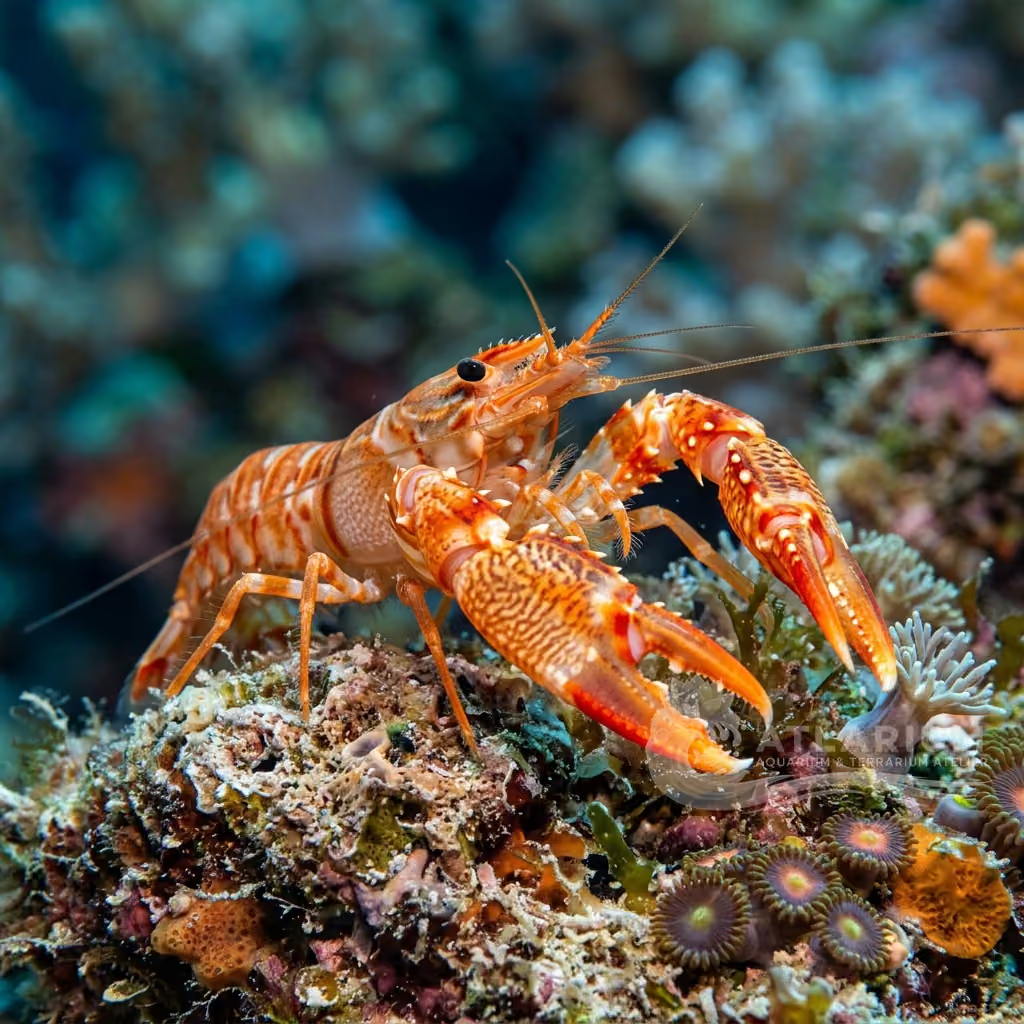
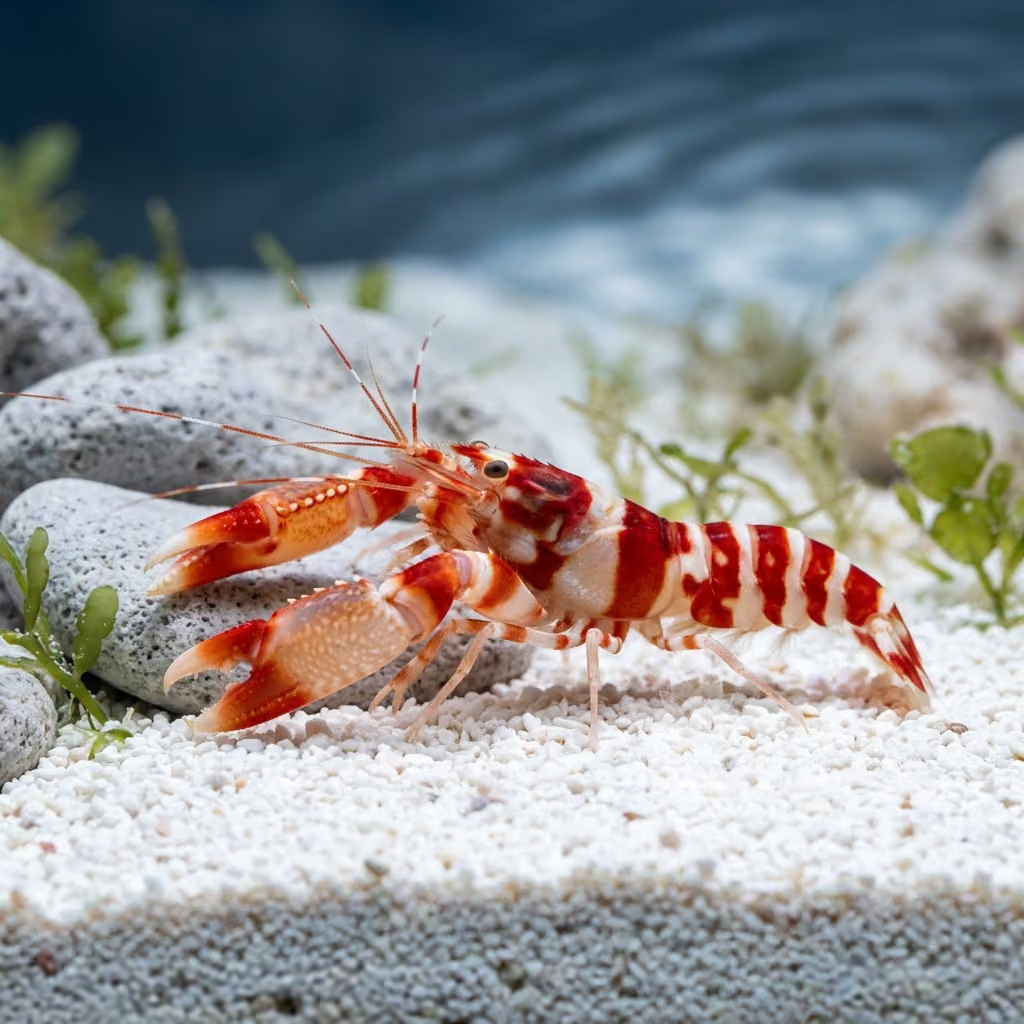
Coloration and Sexual Dimorphism: Displays a cryptic coloration consisting of olive-green, brown, or greyish tones, often marked with lighter or darker crossbands along the abdomen and blue or purple highlights on the tips of the claws. The major claw is heavily enlarged and asymmetrical. External sexual dimorphism is subtle, though egg-bearing females can be identified by the clutch under their abdomen.

Care, breeding and tankmates
Tank Setup: Requires a minimum tank volume of 80 to 100 liters. The substrate must consist of a mix of fine sand and coarse coral rubble (shell pieces or small stones) at least 6-8 cm deep, allowing the shrimp to structurally support its tunnels. Rocks must be positioned directly on the bottom glass to prevent collapses due to the shrimp's continuous excavation.
Diet and Feeding: An omnivorous scavenger. In the aquarium, it feeds on organic detritus, algae, and leftover fish food. Supplement its diet with sinking shrimp pellets, algae wafers, and frozen foods such as mysis, brine shrimp, or small pieces of fresh seafood. If paired with a goby, the fish will often help drag food items close to the shared burrow entrance.
Water Quality: Standard marine parameters must be kept stable: temperature between 22°C and 27°C, pH between 8.1 and 8.4, and specific gravity of 1.020 to 1.025. To support successful molting, maintain proper levels of calcium (400-440 ppm), magnesium (1300-1350 ppm), and trace iodine. Copper-based medications are highly toxic and must never be used.
Compatibility and Tankmates: An excellent addition to reef aquariums and completely reef-safe. It is highly recommended to pair it with a compatible symbiotic goby to witness their mutualistic relationship. It is peaceful toward corals but can be territorial toward other snapping shrimp in smaller tanks. Avoid keeping with large predatory fish (such as hawkfish or groupers) that could eat it.
Aquarium Breeding: Breeding in home aquariums is extremely difficult. The female carries fertilised eggs under her tail until they hatch. The released larvae enter a delicate planktonic pelagic stage, making them highly vulnerable to filtration systems and predation. Raising them to settlement requires a specialized nursery tank and micro-algae cultures.
Risks and Diseases: Quite hardy. The primary risk is aquascape instability; failing to place rocks securely on the glass base can cause rock slides as the shrimp digs. During the molting process, the shrimp is highly vulnerable and will stay hidden. Iodine deficiency can lead to fatal molting failures. The snapping noise is normal and will not damage the aquarium glass.

Geographic origin and distribution
Edwards' snapping shrimp, Alpheus edwardsii, is widely distributed throughout the tropical and subtropical waters of the Indo-Pacific Ocean. It ranges from the Red Sea and East Africa to Australia, French Polynesia, and southern Japan. It inhabits shallow intertidal and subtidal zones, muddy or sandy lagoons, and coral rubble flats near reefs, constructing complex tunnel networks beneath rocks and dead corals.
Origin
Tropical oceans and reefsNorth AmericaAfrica and MadagascarEurope, Mediterranean, and West AsiaEast AsiaAustralia, New Guinea, and Oceania

Invertebrate profile
- Diet
- Omnivore
- The Alpheus edwardsii is generally considered an opportunistic omnivore that will scavenge for leftover food, detritus, and small organisms. In the home aquarium, its diet should be supplemented with a variety of meaty foods such as frozen mysis shrimp, brine shrimp, and high-quality sinking pellets. Providing a varied diet ensures they receive the necessary nutrients for growth and molting. Feeding them targeted amounts helps prevent starvation while keeping the aquarium clean.
- Ecological role
- Symbiont
- In its natural habitat, the Alpheus edwardsii serves as a valuable cleaner and scavenger, helping to control detritus and organic waste. By consuming uneaten food and dead organic matter, it plays a critical role in nutrient recycling within the reef ecosystem. Some species within this group also engage in symbiotic relationships with other marine life, providing cleaning services in exchange for food. Their presence indicates a healthy and balanced marine environment.
- Adult size
- 4.5 cm
- Jump risk
- Yes
- While not notorious escape artists, the Alpheus edwardsii can be startled easily and may dart unpredictably when frightened. In open-top aquariums, this sudden burst of speed could potentially cause them to launch out of the water. It is advisable to use a tight-fitting lid or a mesh screen top to prevent any accidental escapes. Minimizing sudden movements or aggressive tank mates will also reduce the likelihood of jumping behavior.
- Shock sensitivity
- High
- The Alpheus edwardsii is quite sensitive to sudden changes in water parameters such as salinity, temperature, and pH. Rapid fluctuations can cause severe osmotic shock, leading to stress, failed molts, or immediate death. It is highly recommended to use a slow drip acclimation method over several hours when introducing them to a new aquarium. Consistent water quality and stability are paramount for their long-term survival and health.
- Calcium and minerals
- Medium
- Proper calcium levels are essential for the Alpheus edwardsii to successfully build and maintain its exoskeleton. Along with calcium, trace elements like iodine and magnesium must be kept at optimal marine levels to facilitate the molting process. A lack of sufficient calcium can result in soft shells, deformities, and ultimately fatal molting complications. Regular water changes with high-quality salt mix usually provide adequate amounts of these crucial minerals.
- Molting
- Yes
- Molting is a vulnerable time for the Alpheus edwardsii, during which it sheds its old exoskeleton to grow a new, larger one. Following a molt, the invertebrate will hide in the rockwork for a few days until its new shell hardens completely. During this period, they are highly susceptible to predation and physical damage from tank mates. It is best to leave the discarded exoskeleton in the tank, as they often consume it to reclaim valuable minerals.
- Reproduction
- Oviparous
- Breeding the Alpheus edwardsii in a home aquarium can be challenging due to the complex larval stages and dietary needs of the offspring. These invertebrates often carry their eggs under their abdomen until they hatch into planktonic larvae. Raising the delicate larvae requires specialized rearing tanks and constant supplies of specific microscopic live foods. Although spontaneous spawning is common in well-fed adults, successful rearing to maturity is rarely achieved by casual aquarists.
- Compatibility & tankmates
- Reef safe
- The Alpheus edwardsii is generally peaceful and can be safely housed with a wide variety of reef-safe fish and corals. Care should be taken to avoid keeping them with large, aggressive fish such as triggerfish, puffers, or large wrasses that might view them as a meal. They are usually tolerant of other peaceful invertebrates, though some territorial squabbles may occur with closely related species. Providing ample hiding spots among live rock will help them feel secure and reduce stress.

Related species
Recommendations grouped by close relatives, companion choices, and similar care.