Slender-billed cleaner shrimp
Lysmata gracilirostris
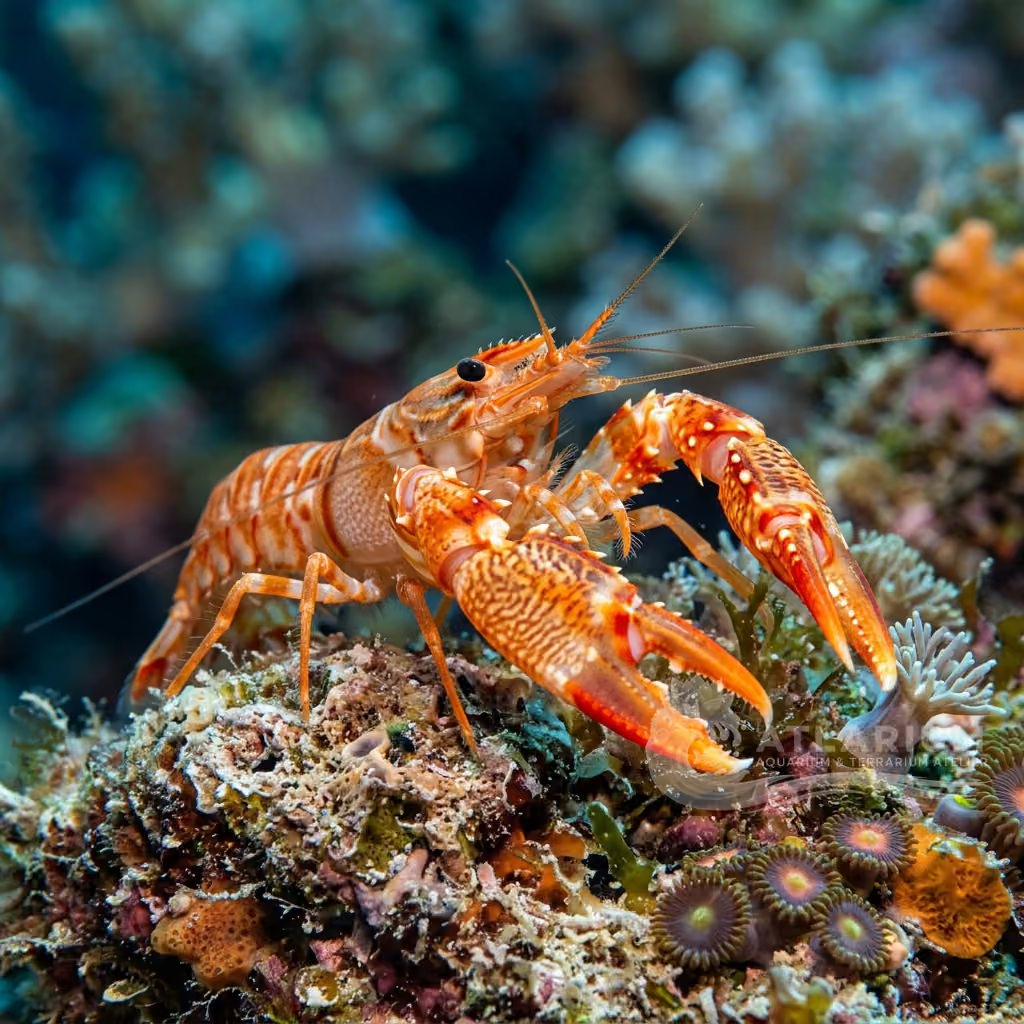
An Indo-Pacific marine shrimp characterized by an exceptionally long and thin rostrum. It is a very active scavenger and occasional fish cleaner shrimp.
Water Temperature
22 - 28 °C
pH Value
8.1 - 8.4
Water type
Marine
Invertebrate type
Marine shrimp
Adult size
5 cm
Minimum group
>= 1
KH
8 - 12 dKH
Ecological role
Cleaner
Copper sensitivity
High

Species description
Geographical Origin and Habitat: Lysmata gracilirostris is widely distributed in the tropical and subtropical waters of the Indo-Pacific Ocean. It inhabits coral reefs, rocky barriers, and shallow seagrass beds, from a few meters down to about 30 meters deep. It finds shelter inside crevices, caves, and under live rock overhangs, where it forms small colonies for protection from predators.
Taxonomy: It belongs to the class Malacostraca, order Decapoda, infraorder Caridea, family Lysmatidae, and genus Lysmata. It is clearly distinguished from other Lysmata species (such as L. amboinensis or L. wurdemanni) by its body proportions and the distinct length of its rostrum. Genetic studies confirm its position within the group of Indo-Pacific cleaner shrimps.
Social Behavior: It has mainly crepuscular and nocturnal habits, although it becomes active during the day if food is introduced into the tank. It shows a gregarious tendency and prefers to live in small groups. It occasionally displays cleaner shrimp behavior, setting up cleaning stations to remove external parasites and necrotic tissue from fish skin.
Coloration and Sexual Dimorphism: The body is semi-transparent with a yellowish or reddish base coloration, crossed by thin red or orange longitudinal stripes. The rostrum is extremely long, thin, and pointed upwards. Like many members of the genus Lysmata, this species is a simultaneous hermaphrodite: adult specimens possess both male and female functioning reproductive organs at the same time.

Care, breeding and tankmates
Tank Setup: It requires a mature marine aquarium of at least 40-50 liters for a single specimen or a small group. It is essential to provide a rich arrangement of live rocks with crevices, cracks, and small caves where the shrimp can hide during the day and during molting. The substrate can be sandy or composed of crushed coral.
Diet and Feeding: It is an opportunistic omnivore and scavenger. In the aquarium, it actively feeds on leftover fish food, organic debris, and biofilm. The diet must be supplemented with small sinking pellets for crustaceans, frozen foods (such as mysis, brine shrimp, and chopped krill), and small pieces of shrimp or fish meat. It helps keep the bottom clean.
Water Quality: It requires stable and well-balanced marine parameters. Temperature: 24-26°C, pH: 8.1-8.4, specific gravity: 1.023-1.025, KH: 8-12. It is extremely sensitive to accumulations of nitrates and phosphates, which can compromise molting. It is essential to maintain adequate iodine levels to facilitate the formation of the new exoskeleton. Copper is highly lethal.
Compatibility and Tankmates: It is a peaceful and reef-safe species that does not harm corals or other sessile invertebrates. It can coexist with small, quiet reef fish. Absolutely avoid cohabitation with predatory fish such as large wrasses, hawkfishes, pufferfishes, lionfishes, and large predatory crabs that would consider it an easy meal.
Aquarium Breeding: Despite being simultaneous hermaphrodites, they require mating with another individual for cross-fertilization. The female broods the greenish eggs under her abdomen until hatching. The released larvae are planktonic and go through numerous very delicate larval stages; their rearing in the aquarium is extremely complex and requires dedicated sterile tanks.
Risks and Diseases: The greatest risk occurs during the molting process (ecdysis), a period when the shrimp is soft and defenseless and needs secure hiding places to avoid being attacked. Iodine deficiencies or sudden salinity shifts during water changes can cause failed molts with lethal consequences.

Geographic origin and distribution
Lysmata gracilirostris is widely distributed in the tropical and subtropical waters of the Indo-Pacific Ocean. It inhabits coral reefs, rocky barriers, and shallow seagrass beds, from a few meters down to about 30 meters deep. It finds shelter inside crevices, caves, and under live rock overhangs, where it forms small colonies for protection from predators.
Origin
Cosmopolitan or introducedTropical oceans and reefs

Invertebrate profile
- Diet
- Omnivore
- Scavenges for meaty foods and may pick parasites.
- Ecological role
- Cleaner
- Acts as both a cleaner and a scavenger.
- Adult size
- 5 cm
- Jump risk
- Yes
- Strong jumper. A secure mesh lid is necessary.
- Shock sensitivity
- High
- Requires pristine water conditions.
- Calcium and minerals
- Medium
- Needs adequate calcium and iodine for frequent molting.
- Molting
- Shell growth
- This shrimp requires regular molting to grow and shed its rigid exoskeleton. Following a molt, its new shell is incredibly soft, leaving the shrimp practically defenseless. It instinctively retreats to darkness, hiding deep within caves or secure rockwork for several days until its shell has hardened completely.
- Reproduction
- Oviparous
- Like most Lysmata species, it is a protandric simultaneous hermaphrodite, meaning mature adults possess both male and female reproductive capabilities. Mating typically happens after a molt. The shrimp broods vibrant egg clutches under its abdomen and usually releases its free-swimming planktonic larvae under the cover of night.
- Compatibility & tankmates
- Peaceful
- This active shrimp is considered reef safe and extremely peaceful towards fish and other invertebrates. While generally well-behaved, its vigorous scavenging and cleaning behavior can occasionally irritate sensitive coral polyps. It must be protected from aggressive, predatory fish that would view this small shrimp as a snack.

Related species
Recommendations grouped by close relatives, companion choices, and similar care.