Anchisteus Cleaner Shrimp
Lysmata anchisteus
A peaceful and active marine cleaner shrimp from the Indo-Pacific, featuring a beautiful red and white striped pattern and acting as an excellent scavenger.
Water Temperature
22 - 28 °C
pH Value
8.1 - 8.4
Water type
Marine
Invertebrate type
Marine shrimp
Adult size
4.5 cm
Minimum group
>= 1
KH
8 - 12 dKH
Ecological role
Cleaner
Copper sensitivity
High

Species description
Geographical Origin and Habitat: Lysmata anchisteus is native to the tropical Indo-Pacific region. It is commonly found in shallow coral reefs, rocky crevices, and protected lagoons across Indonesia, the Philippines, and adjacent island groups, seeking shelter in caves and under coral ledges at depths down to 30 meters.
Taxonomy: Belongs to the family Hippolytidae and the genus Lysmata. It is distinguished from other peppermint-like shrimps by minor morphological differences in its rostrum spines and walking leg proportions. Adults reach a maximum size of approximately 4 to 5 centimeters.
Social Behavior: It is a peaceful, active, and highly beneficial reef invertebrate. While it participates in cleaning symbiotic behaviors by picking parasites off fish, it is also a highly active scavenger. It is mostly active during twilight and nighttime, spending its day in shaded rock areas.
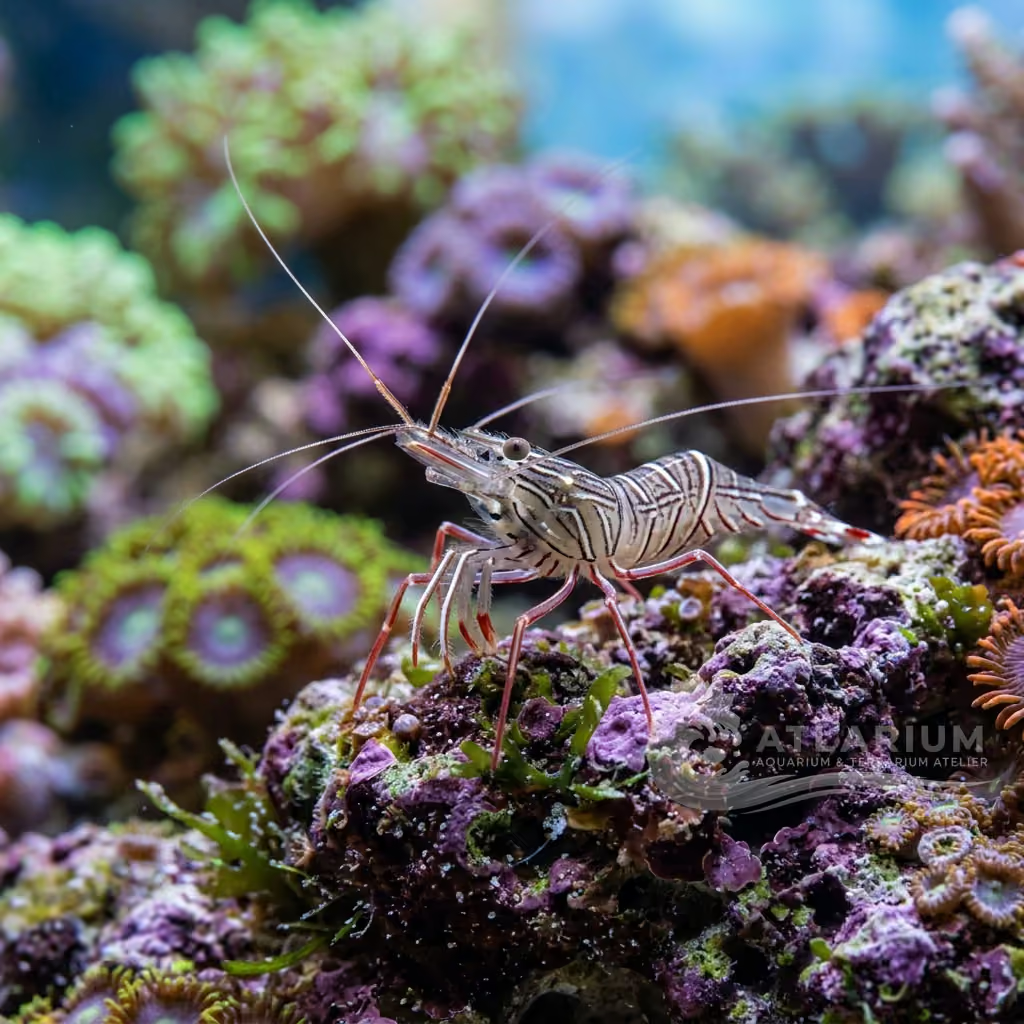
Coloration and Sexual Dimorphism: Displays a striking color pattern consisting of alternating red and translucent-white longitudinal stripes along its body. It has long, white sensory antennae. Like other Lysmata species, it is a simultaneous hermaphrodite, with each mature individual functioning as both male and female.

Care, breeding and tankmates
Tank Setup: Needs a reef-ready or fish-only marine aquarium of at least 80 liters. The setup must include plenty of stable live rock arranged to create overhangs, caves, and dark shelters. This provides the shrimp with security during the day and a safe place to hide when it sheds its exoskeleton.
Diet and Feeding: An opportunistic omnivore. It easily feeds on a wide range of aquarium foods, including leftover fish flakes, frozen foods (mysis, brine shrimp, chopped seafood), and sinking pellets. It also consumes organic detritus and may occasionally help control small glass anemones.
Water Quality: Requires stable marine parameters: temperature 22°C to 26°C, pH between 8.1 and 8.4, specific gravity between 1.023 and 1.025, and KH of 8 to 12 dKH. Regular water changes are recommended to keep nitrates low and replenish essential trace minerals.
Compatibility and Tankmates: Reef-safe and peaceful toward corals, clams, and other non-predatory tankmates. Can be kept in pairs or small groups. Do not house with predatory fish such as puffers, triggerfish, hawkfish, or large wrasses, which will quickly prey upon it.
Aquarium Breeding: Any two mature individuals can spawn, and both will carry eggs under their tail pleopods. The eggs are incubated until they hatch at night. Successfully raising the larvae is extremely challenging due to their long, delicate planktonic stage and specific feeding requirements.
Risks and Diseases: Extremely sensitive to copper and heavy metals, which are lethal. Maintain proper iodine levels in the water to support the molting process. Slow drip acclimation of at least 2 hours is highly critical when introducing this shrimp to a new tank to prevent osmotic shock.

Geographic origin and distribution
Lysmata anchisteus is native to the tropical Indo-Pacific region. It is commonly found in shallow coral reefs, rocky crevices, and protected lagoons across Indonesia, the Philippines, and adjacent island groups, seeking shelter in caves and under coral ledges at depths down to 30 meters.
Origin
Tropical oceans and reefsSouth and Southeast Asia

Invertebrate profile
- Diet
- Omnivore
- Scavenger. Eats meaty foods and detritus.
- Ecological role
- Cleaner
- Serves as a scavenger and acts as a cleaner.
- Adult size
- 4.5 cm
- Jump risk
- Yes
- Can jump if startled. A lid is highly recommended.
- Shock sensitivity
- High
- Very sensitive to rapid changes in salinity and pH.
- Calcium and minerals
- High
- Needs iodine and calcium for proper molting.
- Molting
- Periodic
- Like all crustaceans, this shrimp molts regularly to grow, shedding its restrictive exoskeleton. Following a molt, its new shell is incredibly soft and vulnerable. It will instinctively retreat and hide deep within rockwork or caves for several days until its new exoskeleton fully hardens and it is safe from predators.
- Reproduction
- Oviparous
- This species is a protandric simultaneous hermaphrodite, meaning individuals mature as males and later develop female organs. Any two shrimp can pair up to breed. Mating occurs shortly after a molt, and the shrimp carries bright egg clutches under its abdomen before releasing planktonic larvae into the water column.
- Compatibility & tankmates
- Reef safe
- This shrimp is peaceful, highly sociable, and entirely reef-safe, making it a wonderful addition to a community marine tank. They do very well when kept in pairs or groups. However, care must be taken not to house them with large, aggressive predatory fish such as triggers or puffers.

Related species
Recommendations grouped by close relatives, companion choices, and similar care.