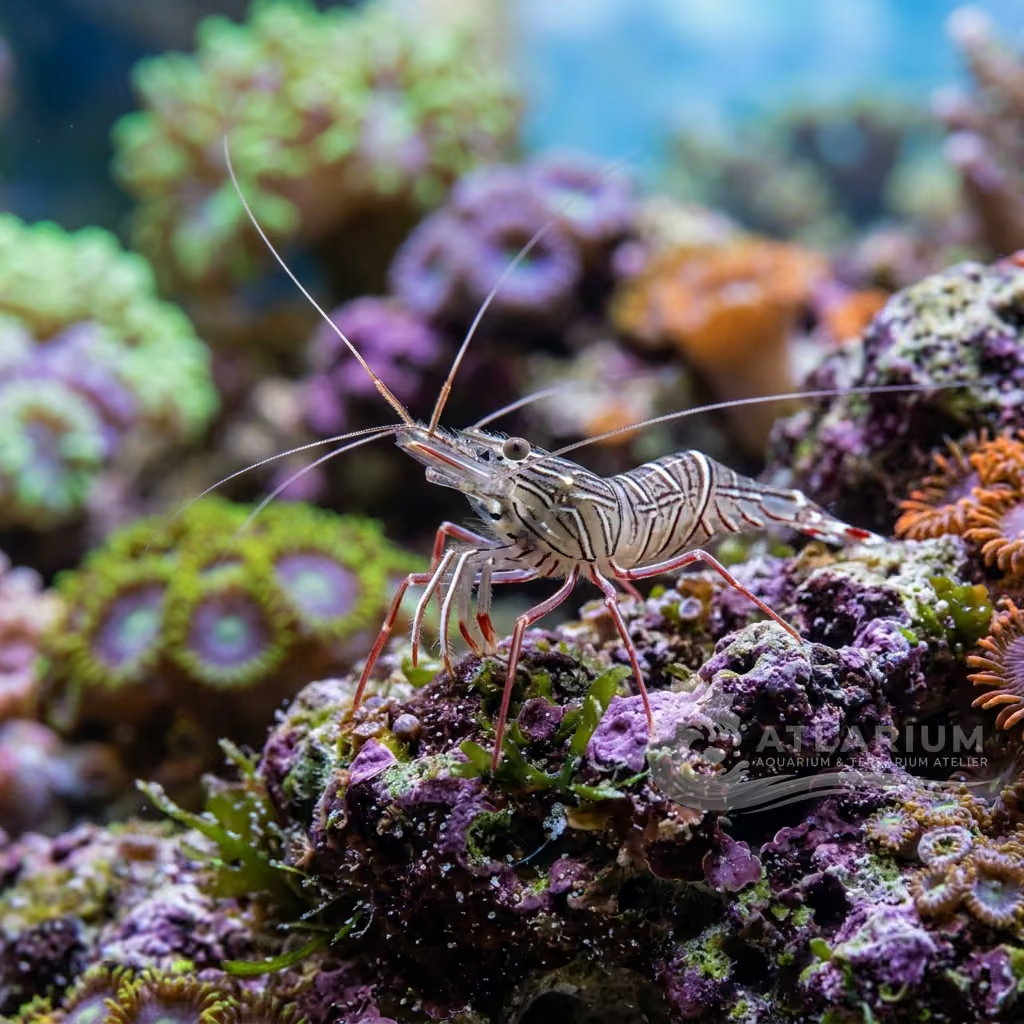
Urchin Shrimp
Gnathophylloides mineri
A tiny marine commensal shrimp of the Gnathophyllidae family, known for living exclusively on sea urchin spines, feeding on mucus and epilithic particles.
Water Temperature
22 - 28 °C
pH Value
8.1 - 8.4
Water type
Marine
Invertebrate type
Marine shrimp
Adult size
1.5 cm
Minimum group
>= 1
KH
8 - 12 dKH
Ecological role
Herbivore
Copper sensitivity
High

Species description
Geographical Origin and Habitat: Circumtropical distribution, found in tropical waters of the Western Atlantic, Caribbean, Indian Ocean, and Western Pacific. Settles in lagoons and reefs, associated with shallow urchins. This obligate relationship restricts their distribution strictly to areas with healthy echinoderm populations. They depend entirely on the presence of their hosts to survive.
Taxonomy: Member of the family Gnathophyllidae. Features a robust, compressed body with short legs ending in modified claw-like dactyli to grip calcite spines. Reaches only 1-1.5 cm. Their morphological modifications represent an extreme adaptation to a highly niche microhabitat. Their small, flattened body allows them to squeeze between dense spines.
Social Behavior: Obligate commensal. spends its entire life walking along the spines of sea urchins (particularly Tripneustes ventricosus or Diadema antillarum), blending in perfectly. They display territorial defense against other small shrimp attempting to occupy the same host urchin. They rarely venture more than a few centimeters away from their host.
Coloration and Sexual Dimorphism: Body decorated with longitudinal stripes of black, dark brown, or yellow mimicking the pattern of the host urchin. Females are slightly larger than males. Their grip is remarkably strong, preventing them from being swept away by strong reef currents. The walking legs terminate in sharp dactyli designed for calcite surfaces.

Care, breeding and tankmates
Tank Setup: Requires an established, mature reef aquarium. The presence of suitable host sea urchins (Tripneustes or Diadema) is absolutely essential to sustain this tiny shrimp in captivity. A mature reef ecosystem is mandatory, as new aquariums lack the stability required by the host urchin. Make sure the tank has plenty of live rock to support microfauna.
Diet and Feeding: Specialized commensal. Feeds mainly on host epithelial tissue, mucus, and organic detritus on the spines. Very difficult to target feed artificially without a host. Ensure the host urchin is well-fed so that it produces sufficient mucus for the shrimp. You can offer fine particulate foods near the urchin spines.
Water Quality: Stable reef parameters. Salinity SG 1.023-1.025, pH 8.1-8.4, temperature 22-28°C. Strictly zero copper levels. Highly sensitive to physical or chemical shocks. Trace elements like iodine must be monitored to ensure successful molting cycles. Maintain stable levels of calcium and magnesium for the host's spine development.
Compatibility and Tankmates: Completely peaceful. Keep only with peaceful fish and corals. Avoid predatory or curious fish (e.g. wrasses, hawkfish, puffers) that might pick at the urchin spines. Large or aggressive invertebrates should be excluded from the tank to prevent predation. Peaceful tankmates like small neon gobies are ideal.
Aquarium Breeding: Females carry eggs under their abdomen. Planktonic larval stages are highly delicate and do not survive standard home aquarium filtration systems. Larvae require specialized rearing tanks with circular water flow to prevent physical damage. Standard filters will easily suck up and destroy the larvae.
Risks and Diseases: Fast decline and death if the host sea urchin dies or suffers from spine loss. Highly sensitive to copper treatments and salinity shock. If the host urchin shows signs of spine loss, the shrimp must be monitored for potential host relocation. Environmental fluctuations can trigger premature molts.

Geographic origin and distribution
Circumtropical distribution, found in tropical waters of the Western Atlantic, Caribbean, Indian Ocean, and Western Pacific. Settles in lagoons and reefs, associated with shallow urchins. This obligate relationship restricts their distribution strictly to areas with healthy echinoderm populations. They depend entirely on the presence of their hosts to survive.
Origin
Tropical oceans and reefsCentral America and CaribbeanSouth and Southeast Asia

Invertebrate profile
- Diet
- Carnivore
- As a omnivore/commensal, Gnathophylloides mineri plays an active role in consuming various organic matters in its environment. Its diet in captivity should be varied, including specialized pellets, frozen foods, and natural algae or detritus depending on its specific preferences. Regular and balanced feeding is crucial for its health and longevity.
- Ecological role
- Herbivore
- The primary ecological role of Gnathophylloides mineri is acting as a symbiotic within the aquarium ecosystem. By constantly foraging, it helps manage waste, uneaten food, or pests, contributing significantly to water quality. Its presence introduces a natural balance and mimics complex biological interactions found in the wild.
- Adult size
- 1.5 cm
- Jump risk
- Yes
- The jump or escape risk for Gnathophylloides mineri is considered low. Like many active invertebrates, it may attempt to climb out of the water if it feels stressed, threatened, or if water conditions deteriorate. A tight-fitting lid or mesh screen is highly recommended to prevent accidental escapes.
- Shock sensitivity
- High
- Gnathophylloides mineri is quite sensitive to sudden shifts in water parameters, particularly salinity, temperature, and pH. It is highly recommended to use a slow drip acclimation method over several hours when introducing it to a new tank. Maintaining stable conditions is vital to prevent stress-induced ailments or mortality.
- Calcium and minerals
- High
- To support healthy molting and exoskeleton growth, Gnathophylloides mineri requires adequate calcium and trace elements like iodine in the water. Regular water changes with a high-quality salt mix usually provide sufficient levels, but specific supplementation may be necessary in heavily stocked reef tanks. Monitoring calcium and alkalinity ensures proper skeletal development.
- Molting
- Yes
- During the molting process, Gnathophylloides mineri becomes extremely vulnerable to predators and aggressive tankmates. It will typically retreat to a secure hiding spot until its new exoskeleton hardens. It is important to leave the discarded molt in the tank, as the invertebrate will often consume it to reclaim valuable minerals.
- Reproduction
- Oviparous
- Breeding Gnathophylloides mineri in a home aquarium is incredibly challenging due to its complex reproductive cycle. It typically involves a planktonic larval stage that requires highly specialized foods and precise water conditions to survive. In most standard setups, any spawned larvae will quickly become food for fish and corals.
- Compatibility & tankmates
- Reef safe
- When considering tankmates, Gnathophylloides mineri is generally compatible with peaceful fish and other similarly sized invertebrates. Since its reef compatibility is rated as 'yes', careful observation is required if kept with delicate corals or smaller ornamental shrimp. Aggressive or large predatory fish should always be avoided to ensure its safety.

Related species
Recommendations grouped by close relatives, companion choices, and similar care.