Carved Star Snail
Lithopoma caelatum
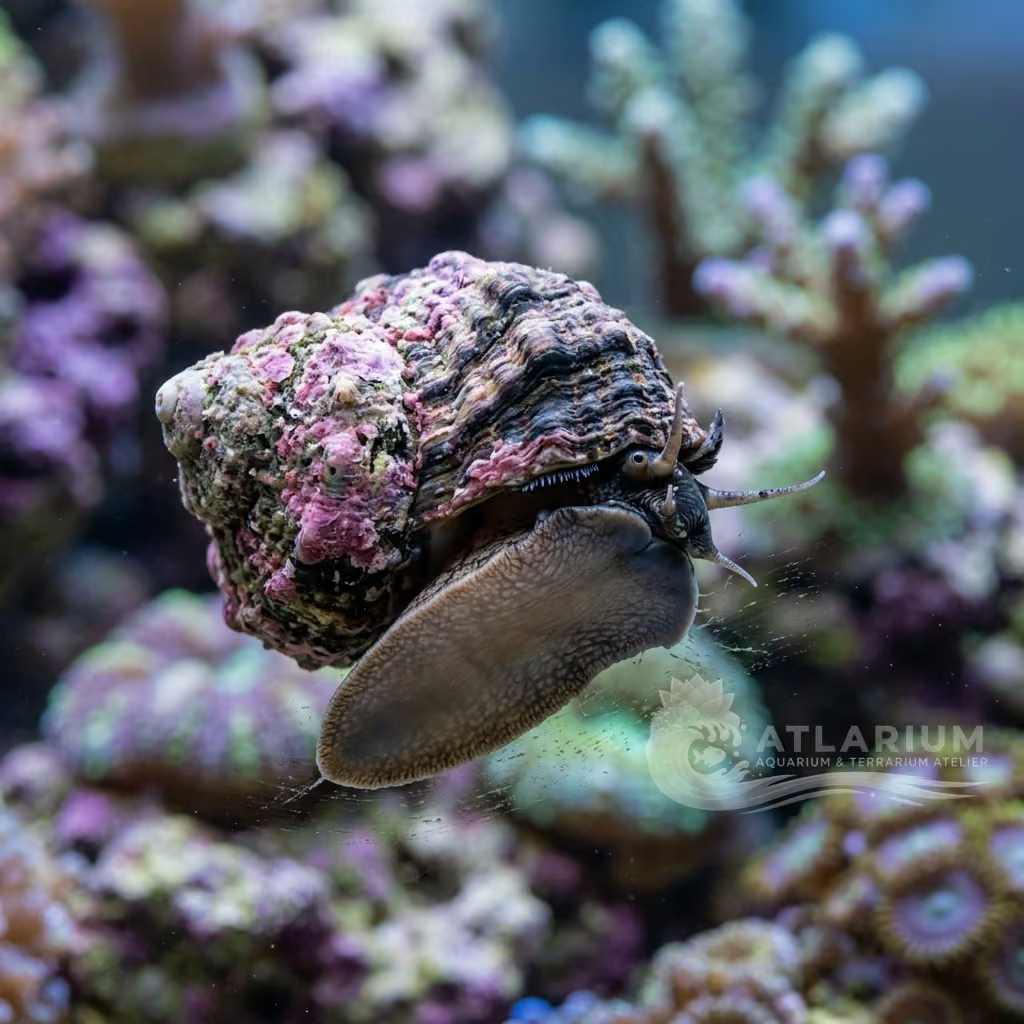
The Star Snail is a powerful, rock-dwelling herbivore. With its heavily sculptured shell, it vacuums up film and hair algae, requiring secure aquascapes due to its surprisingly strong suction.
Water Temperature
22 - 28 °C
pH Value
8.1 - 8.4
Water type
Marine
Invertebrate type
Freshwater snail
Adult size
5 cm
Minimum group
>= 1
KH
8 - 12 dKH
Ecological role
Herbivore
Copper sensitivity
High

Species description
Geographical Origin and Habitat: This species is native to the western Atlantic Ocean, including the waters of the Caribbean Sea, the Gulf of Mexico, the Bahamas, and the Lesser Antilles. It primarily inhabits shallow intertidal and subtidal zones, colonizing rocky shores, coral reefs, and rubble areas exposed to direct sunlight and constant wave action. In these habitats, it positions itself on calcareous surfaces covered with a dense algal film, feeding actively during the night.
Taxonomy: Astraea caelata has been taxonomically reclassified as Lithopoma caelatum, although it is still widely known within the aquarium trade under the genus Astraea. It belongs to the class Gastropoda and family Turbinidae. This family includes marine gastropods characterized by a thick, calcareous operculum that acts as a protective barrier against predators and desiccation during low tides.
Social Behavior: It is an entirely peaceful and strictly herbivorous species that does not interfere with other reef inhabitants. It leads a solitary and slow-paced life, spending most of its time climbing rocks and aquarium glass to scrape off algae. It displays a distinct nocturnal activity pattern, although it can also be active during the day if the lighting is not excessively bright.
Coloration and Sexual Dimorphism: The shell features a robust, conical shape with very pronounced, sculpted ridges and nodules, which gives it the scientific name 'caelata' (carved). The external coloration ranges from off-white to greenish-grey, often colonized by pink or red coralline algae that camouflage the shell structure. The interior of the shell displays a beautiful, glossy mother-of-pearl. There is no visible external sexual dimorphism between males and females.

Care, breeding and tankmates
Tank Setup: It can be housed in small aquariums starting from 50 to 80 liters, provided there are mature live rocks for grazing. It is essential that the rocks are securely placed, as the snail exerts considerable suction force and could dislodge loose fragments. The presence of open spaces and clean glass walls facilitates its movement. It is advisable to have a lid or a raised rim to prevent the snail from crawling out of the tank.
Diet and Feeding: A specialized herbivore. It feeds mainly on film algae, diatoms, and green hair algae. In very clean or newly established aquariums, there is a serious risk of starvation. In such cases, it is necessary to supplement their diet by placing dried nori seaweed sheets on the rocks or offering specific algae-based wafers containing spirulina.
Water Quality: Requires stable marine parameters: salinity between 1.021 and 1.026, temperature between 20°C and 26°C (avoid prolonged heat peaks), pH 8.1-8.4, and carbonate hardness (alkalinity) between 7 and 12 dKH. Adequate levels of calcium and magnesium must be maintained for proper shell growth and strength. This species is extremely sensitive to heavy metals, particularly copper, which is lethal even in trace amounts.
Compatibility and Tankmates: Completely reef-safe and harmless to corals and other invertebrates. It is an ideal addition to any reef or fish-only system. However, it must be protected from active predators such as large hermit crabs (which may kill it to steal its shell) and predatory fish like puffers, triggers, and some large wrasses.
Aquarium Breeding: Breeding in home aquariums is extremely rare and difficult. They are broadcast spawners, releasing eggs and sperm directly into the water column where fertilization occurs. The planktonic larvae undergo metamorphosis before settling; unfortunately, most are removed by filtration systems and protein skimmers.
Risks and Diseases: The greatest threat is its inability to right itself if it falls upside down on sand or smooth surfaces. If not manually flipped over by the aquarist, the snail will quickly starve or be attacked by scavengers. Another critical risk is osmotic shock from rapid acclimation; drip acclimation is essential.

Geographic origin and distribution
This species is native to the western Atlantic Ocean, including the waters of the Caribbean Sea, the Gulf of Mexico, the Bahamas, and the Lesser Antilles. It primarily inhabits shallow intertidal and subtidal zones, colonizing rocky shores, coral reefs, and rubble areas exposed to direct sunlight and constant wave action. In these habitats, it positions itself on calcareous surfaces covered with a dense algal film, feeding actively during the night.
Origin
Tropical oceans and reefsCentral America and CaribbeanNorth America

Invertebrate profile
- Diet
- Algae eater
- Strict herbivore. Consumes large amounts of hair algae.
- Ecological role
- Herbivore
- A relentless algae eater. Helps maintain a pristine rockscape.
- Adult size
- 5 cm
- Jump risk
- Yes
- Cannot jump. Keep rocks stable so it doesn't fall.
- Shock sensitivity
- High
- Sensitive to sudden temperature and salinity changes.
- Calcium and minerals
- High
- Needs strong calcium levels to maintain its shell.
- Molting
- Shell growth
- As a snail, this species does not molt its shell like a crustacean would. Instead, its shell grows continuously at the edges throughout its lifespan, requiring a steady supply of calcium in the water column to maintain strong, healthy growth and prevent shell degradation over time.
- Reproduction
- Oviparous
- These snails are broadcast spawners, releasing eggs and sperm directly into the water column. While breeding can occur, raising the planktonic larvae in a typical home aquarium is extremely difficult due to the specialized food requirements and the risk of larvae being removed by filtration systems.
- Compatibility & tankmates
- With caution
- This peaceful herbivore is completely reef-safe and excellent for controlling algae. However, if it falls off the glass or rockwork onto the substrate, it cannot easily right itself and may require manual assistance to prevent it from starving or falling prey to opportunistic scavengers.

Related species
Recommendations grouped by close relatives, companion choices, and similar care.