Acorn dog whelk
Nassarius glans
A highly active marine scavenging snail equipped with a long, snorkel-like siphon. It is excellent for keeping the aquarium sand bed clean and well aerated.
Water Temperature
22 - 28 °C
pH Value
8.1 - 8.4
Water type
Marine
Invertebrate type
Freshwater snail
Adult size
3 cm
Minimum group
>= 1
KH
8 - 12 dKH
Ecological role
Herbivore
Copper sensitivity
High

Species description
Geographical Origin and Habitat: This species is native to the warm tropical waters of the Indo-West Pacific, extending from the eastern coast of Africa and Madagascar to the islands of the central Pacific, including Indonesia, the Philippines, and northern Australia. It inhabits sandy bottoms, muddy lagoons, and seagrass beds at depths from 1 to 40 meters, living buried under the substrate.
Taxonomy: Belongs to the family Nassariidae and the genus Nassarius. It is a marine gastropod mollusk characterized by a sturdy, elongated shell. It is distinguished by its highly specialized scavenging lifestyle and a very acute chemosensory sense, operated through its long, trunk-like siphon which detects organic material and food from afar.
Social Behavior: Peaceful and non-aggressive. It spends most of its life buried in the sand, with only its long siphon protruding to breathe and sniff for food. When it detects fish food or decomposing matter, it emerges from the sand bed, moving across the substrate with surprising speed to consume the organic remains before burying itself again.
Coloration and Sexual Dimorphism: The shell features a cream, ivory, or pale beige background color, decorated with fine spiral lines or spots of reddish-brown, orange, or dark chocolate. The body of the snail is generally light and speckled. There is no visible sexual dimorphism between males and females; their shells look identical and cannot be differentiated by eye.

Care, breeding and tankmates
Tank Setup: Requires a marine aquarium with an established sand bed. The substrate must consist of at least 4 to 5 cm (1.5-2 inches) of fine aragonite sand, allowing the snail to burrow easily without damaging its soft muscular foot. It can be housed in aquariums of almost any size, from nano reefs of 30-40 liters (approx. 10 gallons) to large systems.
Diet and Feeding: Carnivorous scavenger and detritivore. It does not eat algae. It feeds on uneaten fish food (pellets, flakes) and frozen food like mysis or brine shrimp that settles on the substrate, as well as dead organisms. If housed in a tank with low fish stock, target-feed them with small sinking pellets or pieces of frozen food to prevent starvation.
Water Quality: Requires standard stable marine parameters: temperature 22-27°C (72-81°F), pH 8.1-8.4, specific gravity 1.020-1.025, and KH 8-12. Like all mollusks, it is highly sensitive to copper medications and high levels of nitrate. Adequate calcium and magnesium levels are necessary to maintain a strong, healthy calcium carbonate shell.
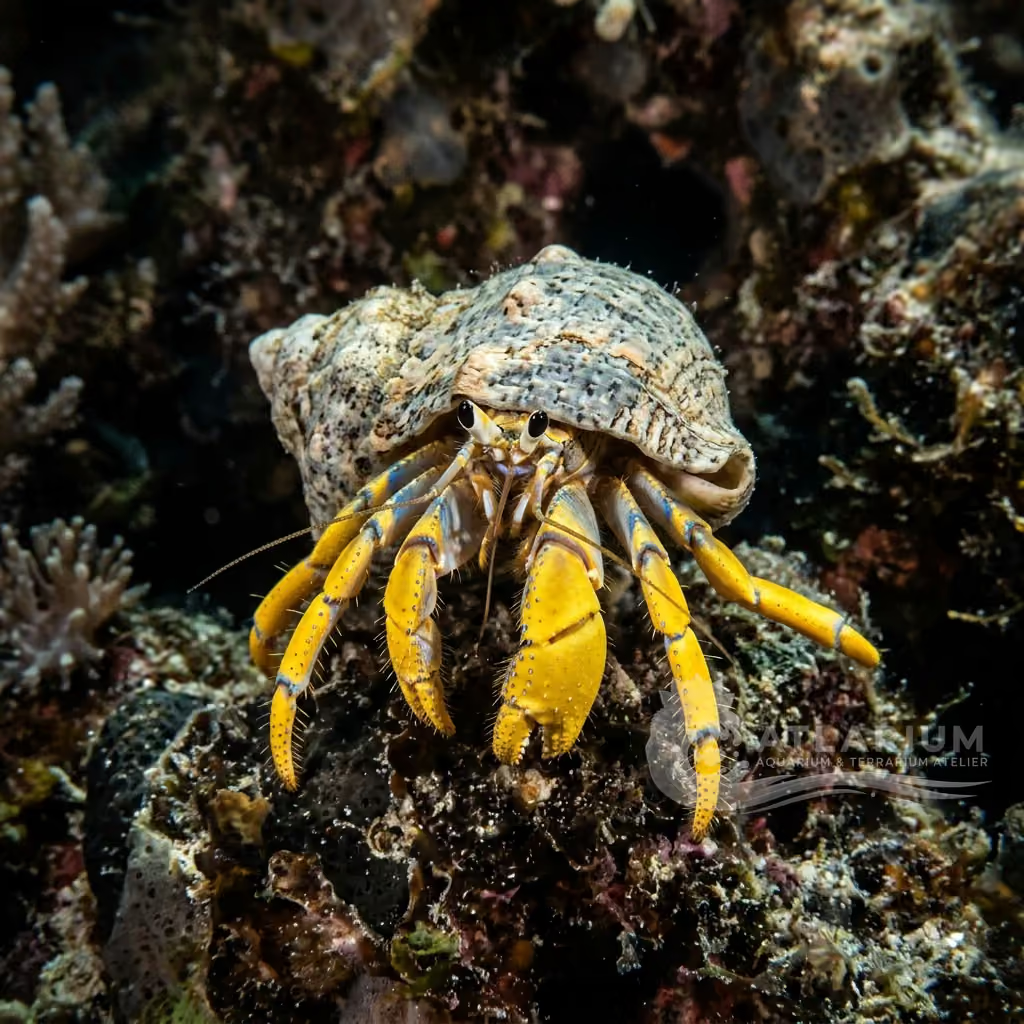
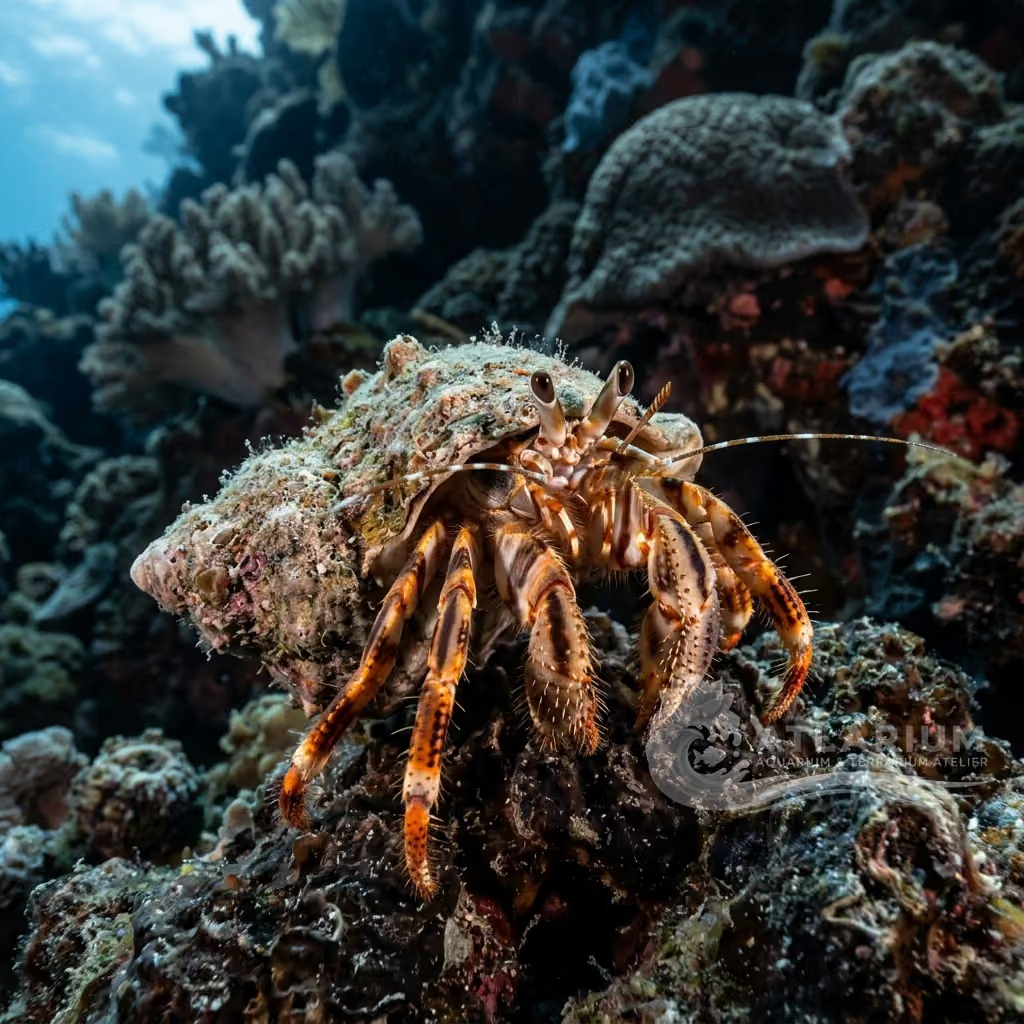
Compatibility and Tankmates: Completely peaceful and reef-safe. It does not harm corals, clams, or fish. However, it can fall prey to predatory fish such as puffers, triggerfish, and large wrasses. Aggressive hermit crabs may also attack and kill the snail to steal its shell. Otherwise, they are perfect members of a marine clean-up crew.
Aquarium Breeding: They can lay small, clear egg capsules containing multiple eggs on the aquarium glass or rocks. Once hatched, the larvae enter a free-swimming veliger stage, which is usually consumed by corals or removed by filtration systems, making successful reproduction in captive systems very uncommon.
Risks and Diseases: Starvation is the main threat in clean, underpopulated, or gravel-based aquariums. If the snail goes without food, its foot will visibly shrink, leading to death. They have no tolerance for copper-based medications or sudden salinity drops. Ensure the sand bed does not accumulate pockets of toxic hydrogen sulfide.

Geographic origin and distribution
This species is native to the warm tropical waters of the Indo-West Pacific, extending from the eastern coast of Africa and Madagascar to the islands of the central Pacific, including Indonesia, the Philippines, and northern Australia. It inhabits sandy bottoms, muddy lagoons, and seagrass beds at depths from 1 to 40 meters, living buried under the substrate.
Origin
Tropical oceans and reefsAfrica and MadagascarSouth and Southeast AsiaAustralia, New Guinea, and Oceania

Invertebrate profile
- Diet
- Carnivore
- Carnivorous scavenger. Rapidly consumes leftover foods.
- Ecological role
- Herbivore
- Stirs the sand bed, preventing detritus buildup.
- Adult size
- 3 cm
- Jump risk
- Yes
- Remains buried most of the time.
- Shock sensitivity
- Medium
- Acclimate carefully. Sensitive to poor water chemistry.
- Calcium and minerals
- Medium
- Needs calcium for shell maintenance.
- Molting
- Shell growth
- Nassarius snails are mollusks and absolutely do not molt. They grow their calcium carbonate shells continuously. If you see a hollow, translucent shell-like object in your aquarium, it is likely the discarded exoskeleton of a crustacean or shedding organic debris, but it is never a snail molt.
- Reproduction
- Oviparous
- Breeding Nassarius glans in captivity is extremely rare. While they may occasionally lay small egg capsules on the aquarium glass or rocks, these hatch into free-swimming veliger larvae. These pelagic larvae almost always perish in home aquariums due to protein skimmers, mechanical filtration, or predation by fish and corals.
- Compatibility & tankmates
- Reef safe
- These sand-sifting scavengers are entirely reef-safe and will not bother healthy fish, corals, or other mobile invertebrates. They spend their time buried in the sand waiting for meaty foods. However, use caution when keeping them with hermit crabs, which are notorious for killing Nassarius snails to steal their shells.

Related species
Recommendations grouped by close relatives, companion choices, and similar care.