Encyclopaedia

FishMarineEasy
©AI Generated·Proprietary

Blue Chromis

Chromis cyanea

The Blue Chromis is a brilliant, active schooling fish native to the Caribbean, famous for its electric-blue body and hardy nature in community reef tanks.

Taxonomy
Class:Actinopteri
Order:Perciformes
Family:Pomacentridae
Subfamily:Chrominae
Genus:Chromis
Species:Chromis cyanea

Share

Check out Blue Chromis on Atlarium

PracticeRecognition quizzesPhotos, names, origins, and puzzles to review Atlas species.Open quizzes
Water Temperature

24 - 27 °C

pH Value

8.1 - 8.4

Water type

Marine

Tank level

Surface and middle

Adult size

12 cm

Minimum tank volume

>= 150 L

Minimum group

>= 6

GH

15 - 25 dGH

KH

8 - 12 dKH

Species description

Geographical Origin and Habitat: Chromis cyanea is native to the tropical Western Atlantic Ocean. It is widely distributed across the Caribbean Sea, the Bahamas, the Florida Keys, and the Gulf of Mexico. It inhabits seaward reefs and deep slopes, usually aggregating in large schools above branchy corals (like staghorn and elkhorn corals) at depths of 3 to 60 meters.
Taxonomy and Morphology: A member of the Pomacentridae family (damselfishes) and the genus Chromis. It possesses a slender, oval-shaped body, moderately compressed laterally, with a deeply forked caudal fin that allows swift swimming against currents. Adults reach a maximum length of 12 cm, though they often remain smaller in captivity.
Social Behavior: Highly gregarious schooling fish. In captivity, it is strongly recommended to keep them in groups of 5-6 or more to encourage natural shoaling behavior and minimize hierarchy disputes. They spend their time active in the upper-middle water column and are generally peaceful toward other tankmates.
Coloration and Sexual Dimorphism: Features a stunning, uniform electric-blue coloration across the entire body, contrasted by a distinct black margin that runs along the dorsal ridge, the outer edge of the dorsal fin, and the upper and lower lobes of the tail. Visual sexual dimorphism is absent, except during nesting when males darken.

Care, breeding and tankmates

Aquarium Setup: A minimum tank size of 150 liters is suitable for a single specimen, but a group of 6 or more requires at least 300 liters. The setup should provide vast open spaces for schooling and swimming, along with plenty of live rock caves where they can hide at night or when threatened.
Diet and Feeding: An active planktivore. In the aquarium, it readily accepts almost all offered foods. A varied diet of frozen foods (mysis, brine shrimp, copepods) and high-quality flakes or pellets rich in carotenoids is essential to maintain its brilliant blue coloration. Feed multiple times a day in small amounts.
Water Quality: Requires clean, highly oxygenated water with moderate to strong flow. Maintain stable parameters: temperature 24-27°C, pH 8.1-8.4, specific gravity (SG) 1.022-1.025, and zero ammonia/nitrites. Use circulation pumps to simulate reef currents and maintain high oxygen levels.
Compatibility and Cohabitation: One of the most peaceful and reef-safe damselfishes. They coexist harmoniously with corals and non-aggressive reef fish such as tangs, anthias, gobies, and clownfish. Males might show mild territorial behavior only when guarding eggs. Do not house with large, predatory fish.
Aquarium Breeding: Breeding is possible, but raising larvae is difficult. The male cleans a flat rock or nest area to attract a female. After spawning, the male guards and aerates the adhesive eggs until they hatch. The pelagic larvae must be fed microscopic live food such as rotifers.
Risks and Diseases: Highly susceptible to the ciliated protozoan parasite Uronema marinum, which causes rapid red skin ulcers and is often fatal if not treated early. They can also contract marine ich. Quarantine new specimens carefully and avoid crowded conditions.

Geographic Origin and Distribution

Chromis cyanea is native to the tropical Western Atlantic Ocean. It is widely distributed across the Caribbean Sea, the Bahamas, the Florida Keys, and the Gulf of Mexico. It inhabits seaward reefs and deep slopes, usually aggregating in large schools above branchy corals (like staghorn and elkhorn corals) at depths of 3 to 60 meters.

Origin

Tropical oceans and reefsCentral America and CaribbeanNorth America

Fish profile

Temperament
Peaceful
Very peaceful and active, they are ideal for adding life to the top of a reef tank. As they mature, minor squabbles can occur if the tank is too small. Overall, they remain one of the most docile schooling fish available in the marine hobby.
Diet
Omnivore
These omnivores thrive on a diverse diet of zooplankton and fine meaty foods. Feed them enriched brine shrimp, cyclops, and finely crushed marine flakes. Regularly varied diets are critical for maintaining their striking, iridescent blue coloration.
Sex ratio
Solitary
A large shoal of six or more individuals balances internal aggression perfectly. There are no reliable physical differences between the sexes outside of breeding time. Odd numbers generally help establish a stable hierarchy within the group.
Feeding frequency
TWO_THREE_DAILY
They demand small feedings three to four times a day for optimal health. This frequent feeding schedule mirrors their continuous foraging in the wild. If fed too infrequently, they can lose body mass and color quickly.
Bioload
The Blue Chromis imparts a very light bioload individually, making them great for reefs. Because they are kept in schools, a high-quality protein skimmer is recommended. Consistent water maintenance ensures their vibrant blue color remains pristine.
Flow
Strong
They favor moderate to strong water currents to mimic the turbulent reef crests. Good water movement encourages schooling and keeps food suspended for easier consumption. Directional powerheads can create the perfect environment for these active swimmers.
Jump risk
Yes
Blue Chromis are notorious jumpers when startled by tank mates or sudden lights. A tight mesh cover is mandatory to keep them from jumping out of the aquarium. Careful tank maintenance also minimizes their stress-induced darting behavior.
Reproduction
Oviparous
They occasionally spawn in the home aquarium, laying eggs on the glass or rocks. The male fiercely defends the nest against all intruders until the larvae hatch. Raising the microscopic fry requires specialized rotifer cultures and is extremely challenging.
Compatibility & tankmates
Reef safe
Completely reef-safe and extremely peaceful, they will not bother corals or invertebrates. They mix perfectly with tangs, blennies, and peaceful wrasses. Avoid aggressive tank mates that might harass them or view them as prey.
Tank level
Top/Middle
They are upper-water column dwellers that swim actively in the open. They need plenty of unobstructed horizontal space to exhibit natural schooling behaviors. At night, they seek refuge in the branches of SPS corals or rocky crevices.

Window to the official scientific data of the species

Data synced on: 06/15/2026

Scientific Parameters & Models

Trophic level
3.7 ± 0.36 se
Resilience
High (less than 15 months)
Phylogenetic uniqueness (PD50)
0.501
Bayesian Length-Weight
a = 0.01259, b = 3.03
VulnerabilityLow vulnerability (10 / 100)

Image gallery

Licensed images linked to the species or, when marked, to the closest representative taxon.

Related species

Recommendations grouped by close relatives, companion choices, and similar care.

Variants and close relatives

Same atlas type, nearby scientific identity, genus, or family.

Ambon Chromis

Ambon Chromis

Chromis amboinensis

View details->
Black-axil Chromis

Black-axil Chromis

Chromis atripectoralis

View details->
Black-bar chromis

Black-bar chromis

Chromis retrofasciata

View details->
Blue-green chromis

Blue-green chromis

Chromis viridis

View details->
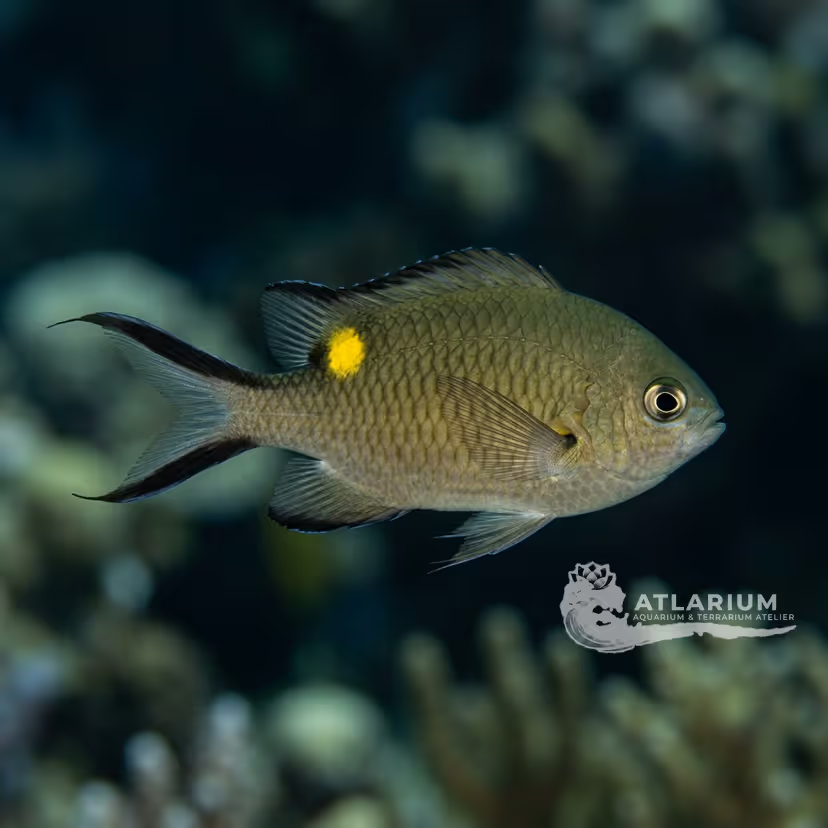
Bicolor Chromis

Bicolor Chromis

Chromis margaritifer
View details->
Brown Chromis

Brown Chromis

Chromis multilineata

View details->
Barrier Reef chromis

Barrier Reef chromis

Chromis nitida

View details->
Azure damselfish

Azure damselfish

Chrysiptera hemicyanea

View details->
Blue Damselfish

Blue Damselfish

Chrysiptera cyanea

View details->
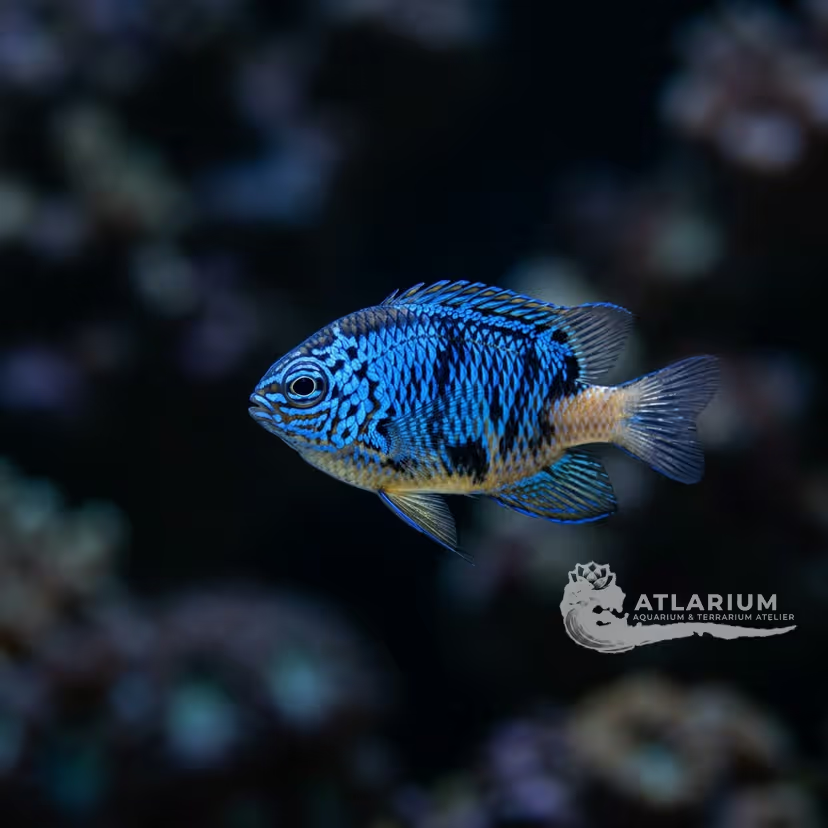
Four-stripe Damselfish / Blacktail Humbug

Four-stripe Damselfish / Blacktail Humbug

Dascyllus melanurus
View details->
Springer's Damselfish

Springer's Damselfish

Chrysiptera springeri

View details->
Talbot's Damselfish

Talbot's Damselfish

Chrysiptera talboti
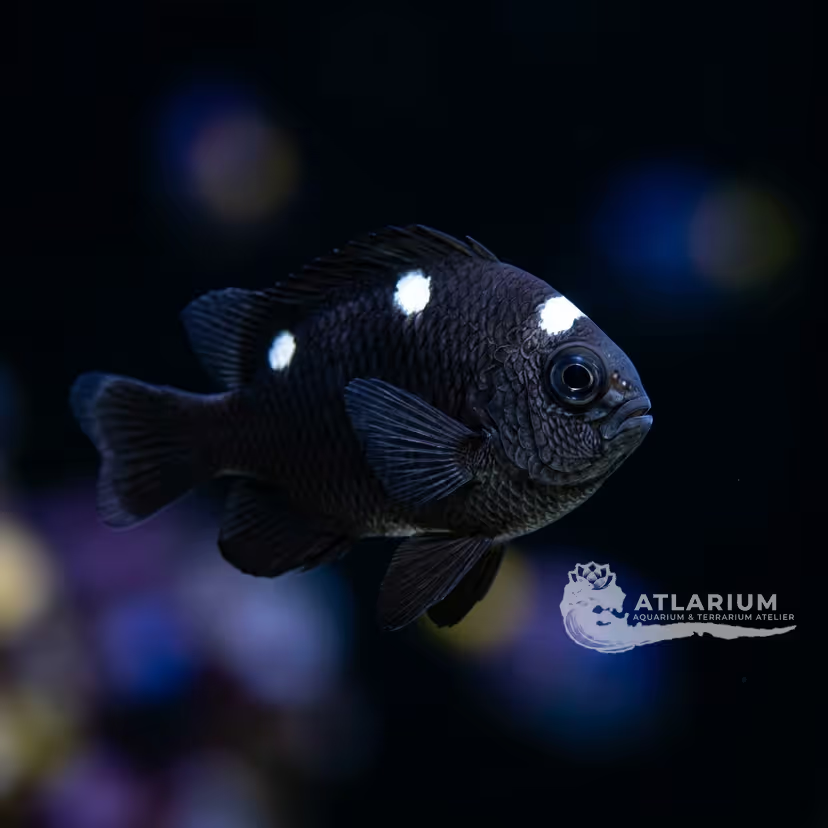
View details->
Threespot dascyllus

Threespot dascyllus

Dascyllus trimaculatus
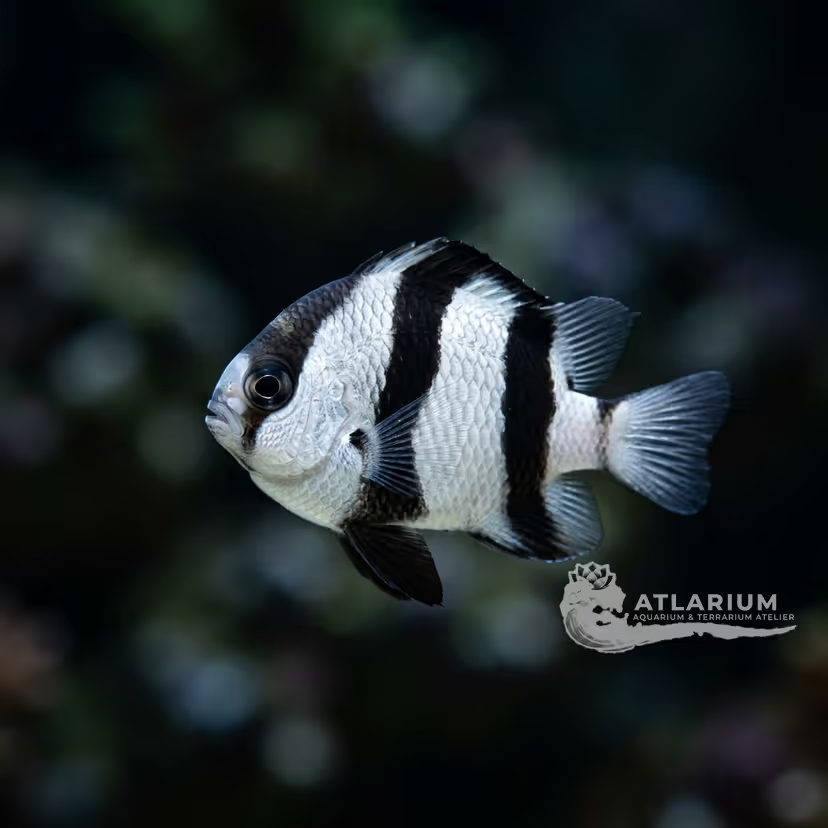
View details->
Whitetail Dascyllus

Whitetail Dascyllus

Dascyllus aruanus
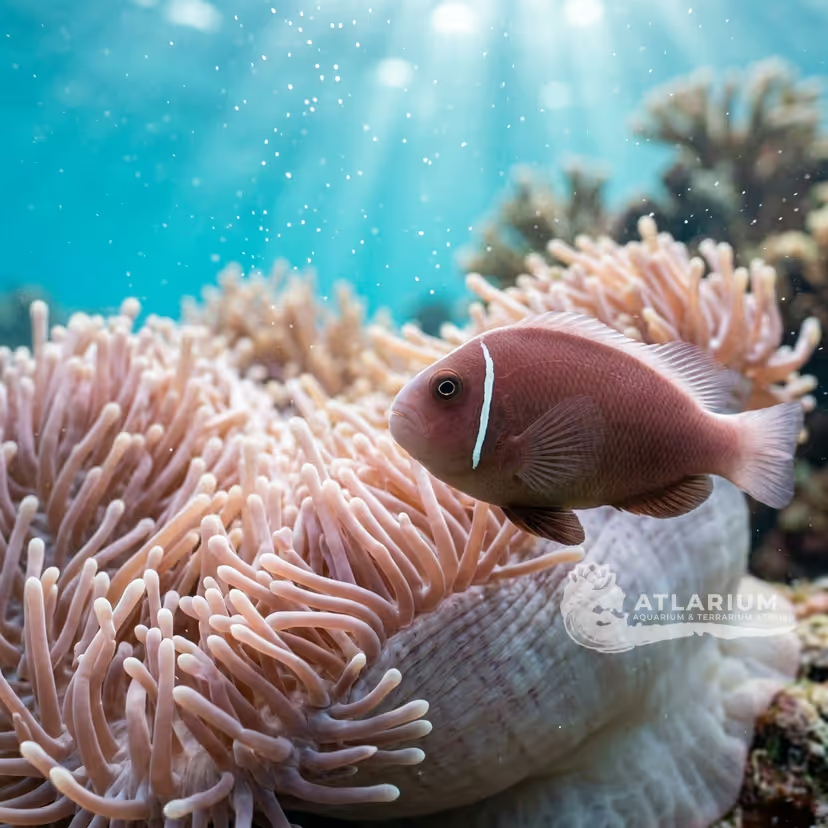
View details->
Pink Skunk Clownfish

Pink Skunk Clownfish

Amphiprion perideraion

View details->
Cinnamon Clownfish

Cinnamon Clownfish

Amphiprion melanopus

View details->

Recommended companions

Compatible cards from coherent ecosystems with matching parameters.

Armed Snapping Shrimp
Invertebrate

Armed Snapping Shrimp

Alpheus armatus

View details->
Grape caulerpa
Plant

Grape caulerpa

Caulerpa racemosa

View details->
Long-spined sea urchin
Invertebrate

Long-spined sea urchin

Diadema setosum

View details->
Caulerpa prolifera
Plant

Caulerpa prolifera

Caulerpa prolifera
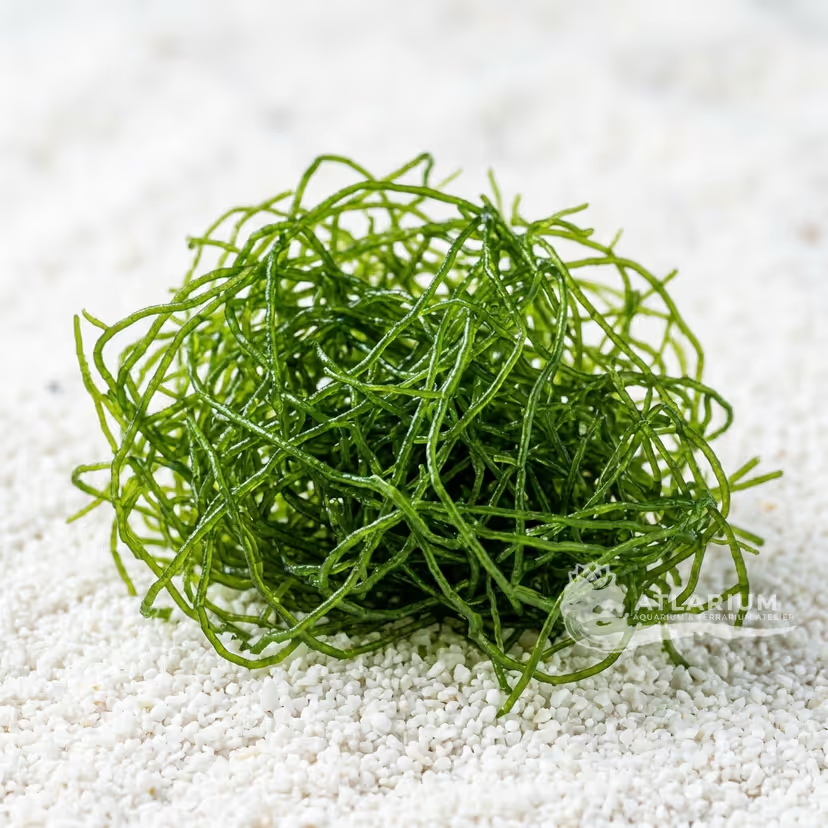
View details->
Chaetomorpha macroalgae
Plant

Chaetomorpha macroalgae

Chaetomorpha linum

View details->
Dead man fingers algae
Plant

Dead man fingers algae

Codium fragile

View details->
Halimeda macroalgae
Plant

Halimeda macroalgae

Halimeda opuntia

View details->
Red gracilaria
Plant

Red gracilaria

Gracilaria parvispora

View details->
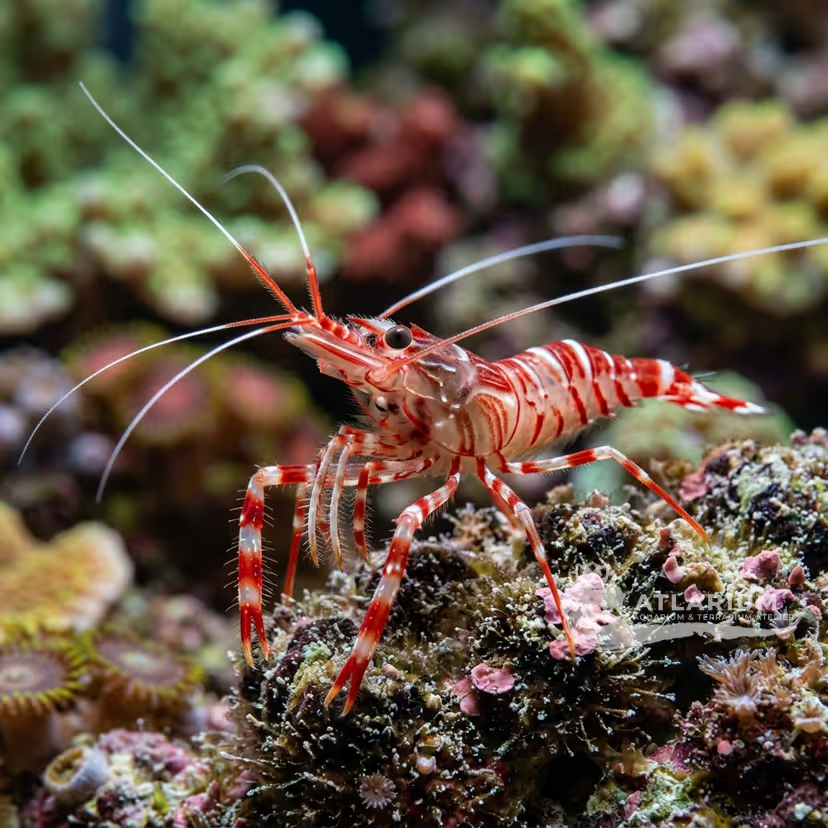
Anton Bruun's cleaner shrimp
Invertebrate

Anton Bruun's cleaner shrimp

Urocaridella antonbruunii
View details->
Anker's Cleaner Shrimp
Invertebrate

Anker's Cleaner Shrimp

Lysmata ankeri

View details->
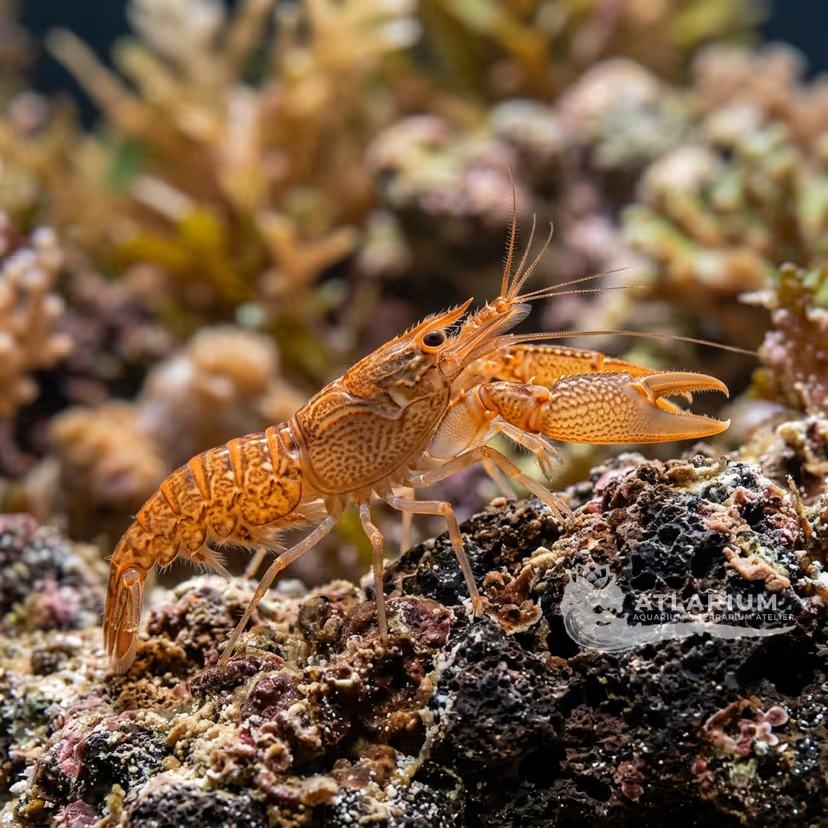
Blood-spotted Hermit Crab
Invertebrate

Blood-spotted Hermit Crab

Clibanarius cruentatus
View details->
Bouvier's snapping shrimp
Invertebrate

Bouvier's snapping shrimp

Alpheus bouvieri

View details->
Camel shrimp
Invertebrate

Camel shrimp

Rhynchocinetes durbanensis

View details->
Chapin's Hermit Crab
Invertebrate

Chapin's Hermit Crab

Clibanarius chapini

View details->
Chocolate Chip Starfish
Invertebrate

Chocolate Chip Starfish

Protoreaster nodosus
View details->
Florida Fighting Conch
Invertebrate

Florida Fighting Conch

Strombus alatus

View details->

Similar care

Cards with similar requirements, difficulty, habitat, and husbandry profile.

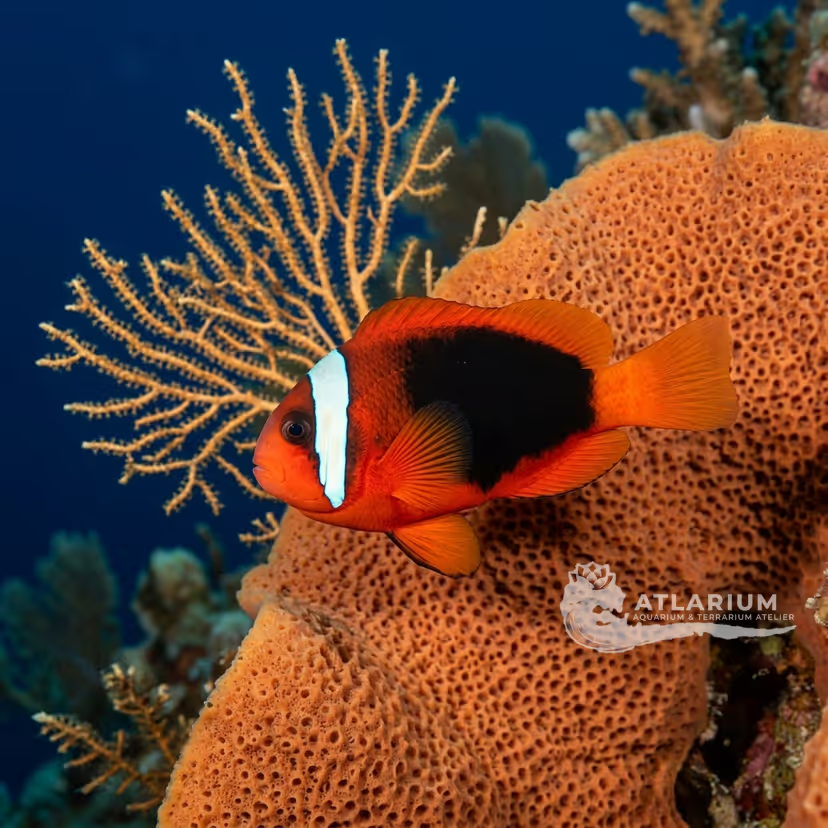
Royal Dottyback

Royal Dottyback

Pictichromis paccagnellae
View details->
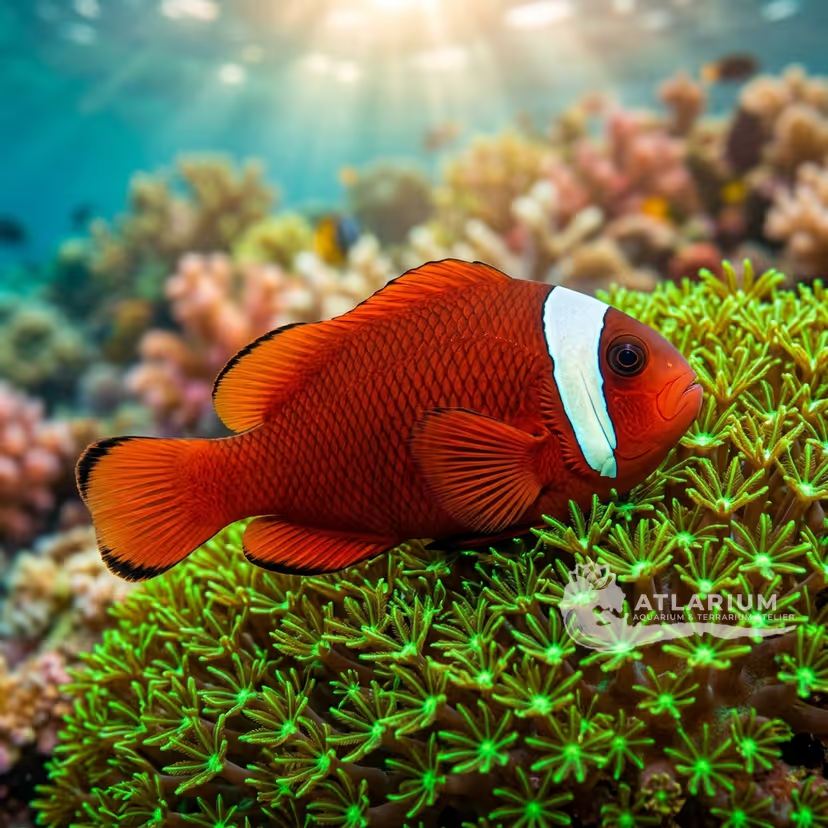
Red saddleback clownfish

Red saddleback clownfish

Amphiprion ephippium
View details->
Tomato clownfish

Tomato clownfish

Amphiprion frenatus

View details->
Blackcap Basslet

Blackcap Basslet

Gramma melacara

View details->
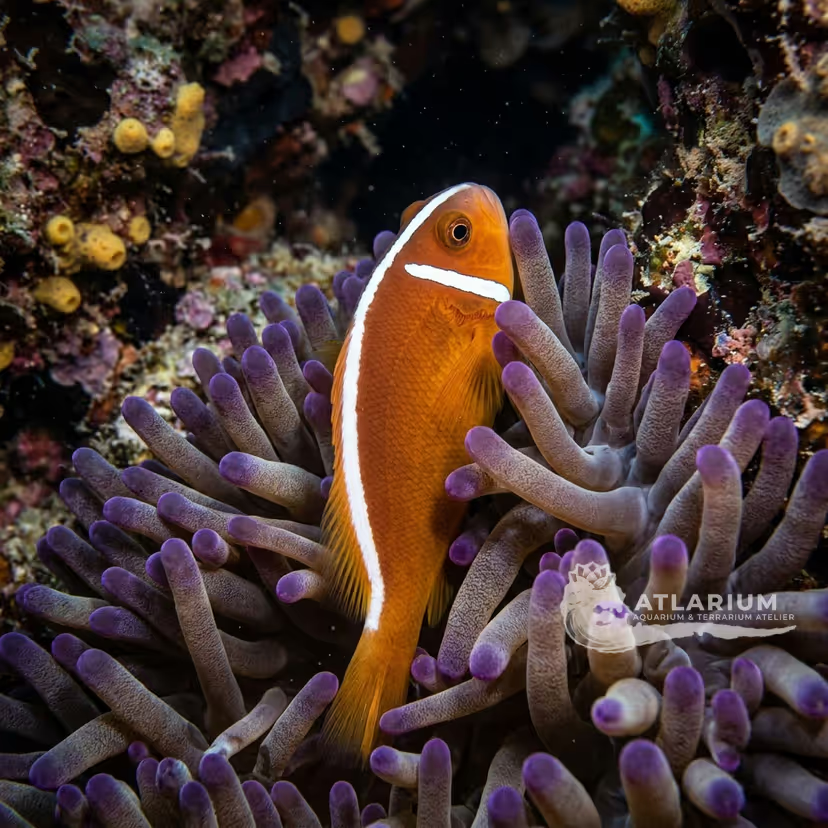
Neon dottyback

Neon dottyback

Pseudochromis aldabraensis
View details->
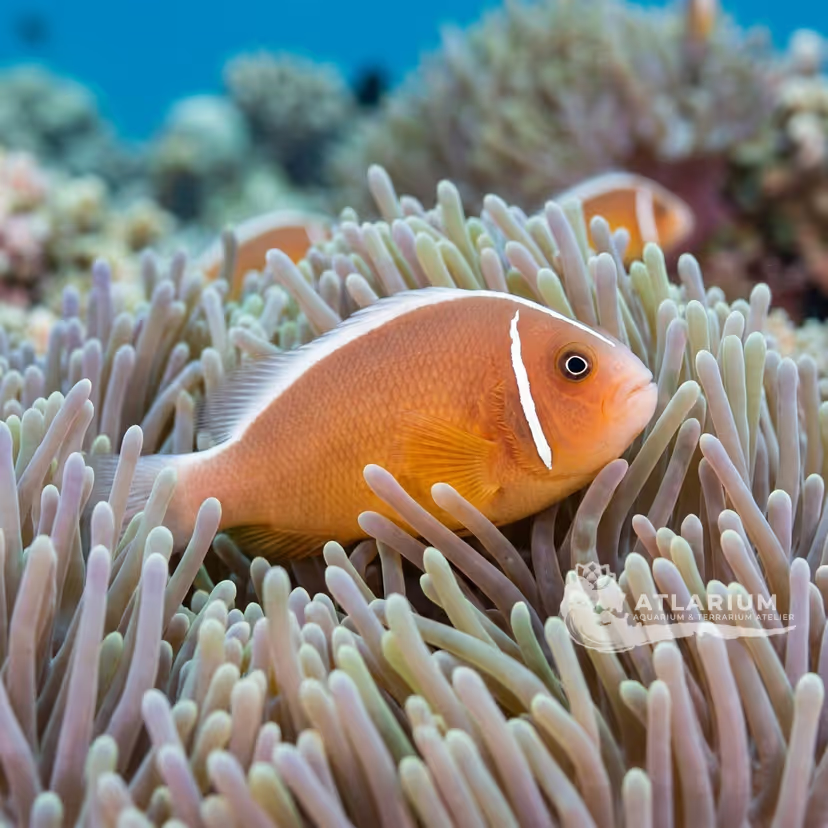
Orange Skunk Clownfish

Orange Skunk Clownfish

Amphiprion sandaracinos
View details->
Skunk clownfish

Skunk clownfish

Amphiprion akallopisos

View details->
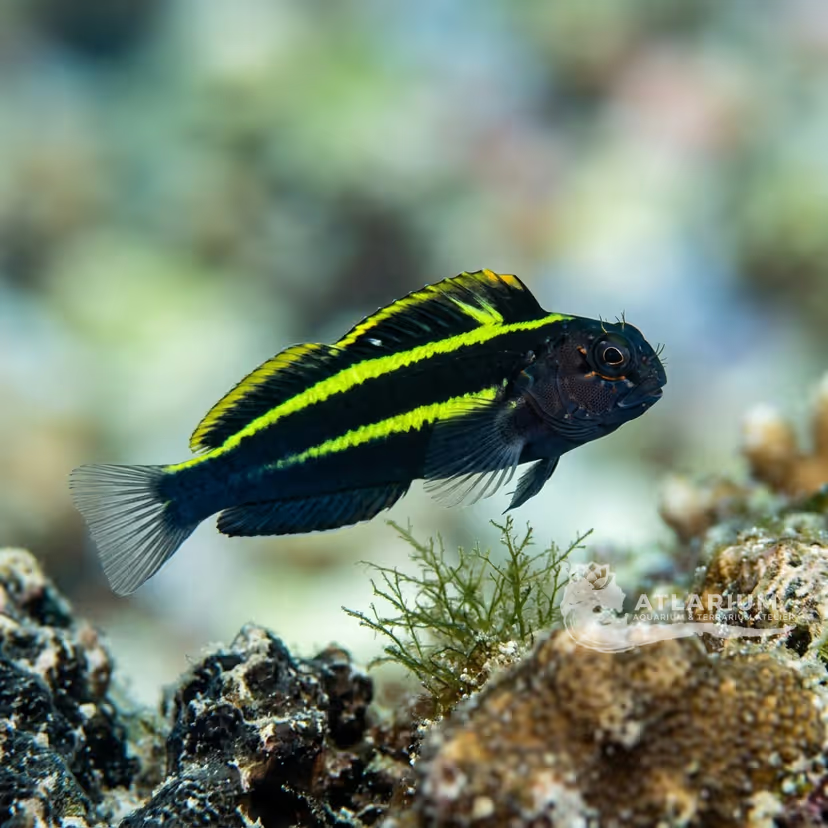
Clark's anemonefish

Clark's anemonefish

Amphiprion clarkii
View details->
Bundoon blenny

Bundoon blenny

Meiacanthus bundoon

View details->
King Damselfish

King Damselfish

Chrysiptera rex

View details->
Speckled damselfish

Speckled damselfish

Pomacentrus bankanensis
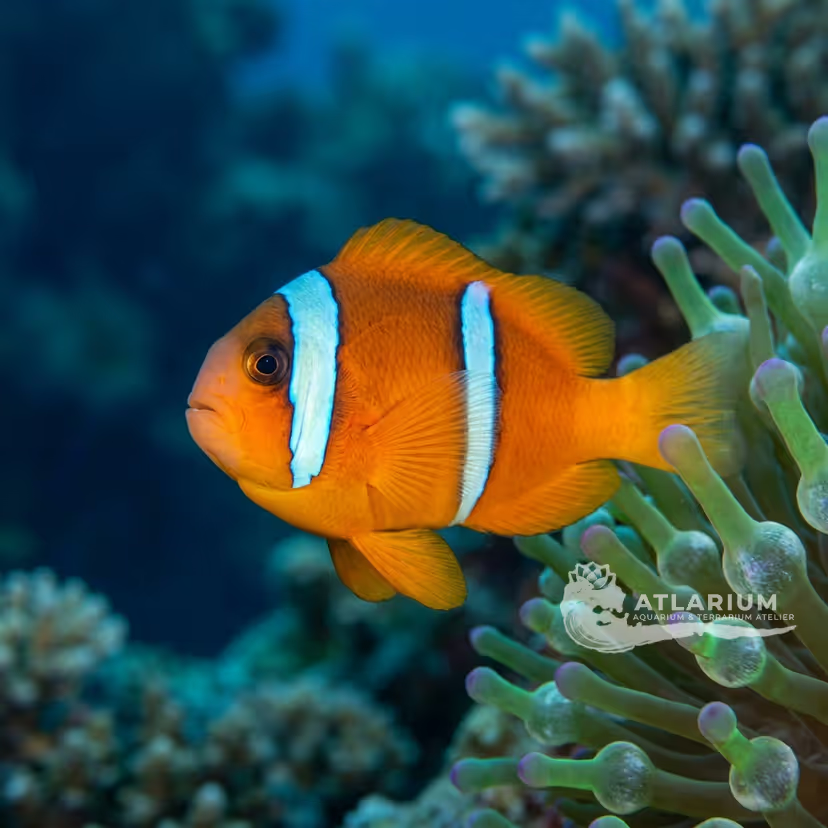
View details->
Two-band Anemonefish

Two-band Anemonefish

Amphiprion bicinctus

View details->
Jewel Damselfish

Jewel Damselfish

Plectroglyphidodon lacrymatus
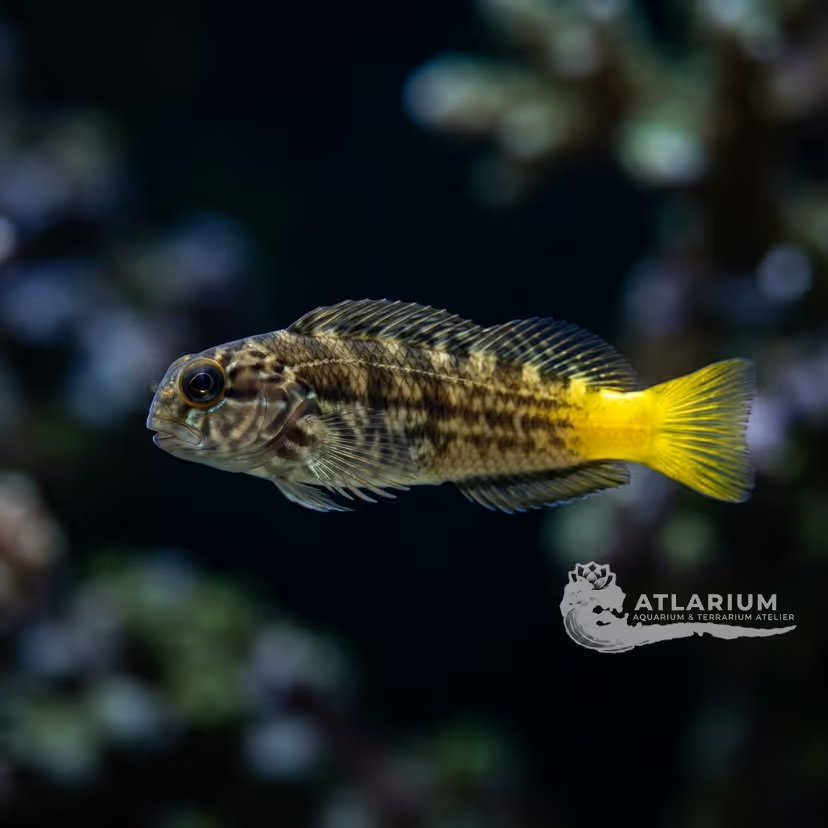
View details->
Black combtooth blenny

Black combtooth blenny

Ecsenius namiyei

View details->
Hawaiian dascyllus

Hawaiian dascyllus

Dascyllus albisella

View details->
Threeband damselfish

Threeband damselfish

Chrysiptera tricincta

View details->
Last updated: 06/30/2026
Blue Chromis (Chromis cyanea) Care Guide & Tank Setup | Atlarium