Encyclopaedia

FishMarineEasy
©AI Generated·Proprietary

Speckled damselfish

Pomacentrus bankanensis

Pomacentrus bankanensis is a small, active, and very hardy damselfish. It is generally less aggressive than other damselfish, making it suitable for beginners.

Taxonomy
Class:Actinopteri
Order:Perciformes
Family:Pomacentridae
Genus:Pomacentrus
Species:Pomacentrus bankanensis

Share

Check out Speckled damselfish on Atlarium

PracticeRecognition quizzesPhotos, names, origins, and puzzles to review Atlas species.Open quizzes
Water Temperature

24 - 28 °C

pH Value

8.1 - 8.4

Water type

Marine

Tank level

Bottom and middle

Adult size

9 cm

Minimum tank volume

>= 100 L

Minimum group

>= 1

KH

8 - 12 dKH

Species description

Geographical Origin and Habitat:
This species is widely distributed across the Western Indo-Pacific. It is commonly found from the coasts of Indonesia, the Philippines, and Taiwan to the Great Barrier Reef in Australia, the Solomon Islands, and New Caledonia. It inhabits shallow coastal reefs, lagoons, and coral rubble zones at depths between 1 and 12 meters.
Taxonomy and Morphology:
Belonging to the family Pomacentridae, it has an oval, laterally compressed body with a small, terminal mouth. Adults reach a maximum total length of approximately 9 centimeters. The posterior portion of the dorsal fin features a distinctive dark ocellus (eyespot) ringed in electric blue.
Social Behavior:
It is an active and territorial species that stays close to the reef structure. While it defends a small home range among the rocks or corals, it exhibits a much lower level of aggression compared to other damselfishes. In the aquarium, it will establish a territory but generally coexists well with other fish.
Coloration and Sexual Dimorphism:
The body coloration is golden-brown to orange, highlighted by thin lines and spots of electric blue on the head and upper body. The caudal fin is white or pale yellow. A black spot ringed with blue is present on the rear of the dorsal fin. No visible external sexual dimorphism is present between males and females.

Care, breeding and tankmates

Aquarium Setup:
Requires a marine aquarium of at least 150 liters. The layout must include plenty of live rock arranged to create caves, crevices, and swim-throughs, allowing the fish to establish its micro-territory without constantly harassing other tankmates. Leave open swimming space in the upper water column.
Diet and Feeding:
An opportunistic omnivore that readily accepts almost any aquarium food. Provide a varied diet consisting of high-quality dry flakes or pellets, supplemented with frozen foods like brine shrimp, mysis, copepods, and preparations containing marine algae. Feed once or twice daily.
Water Quality:
This is an extremely hardy and tolerant species. Ideal parameters are: temperature between 24°C and 28°C, pH range from 8.1 to 8.4, specific gravity from 1.020 to 1.025, and carbonate hardness (KH) of 8 to 12 dKH. Regular water changes and a standard filtration system are sufficient to keep it healthy.
Compatibility and Cohabitation:
It is reef safe and does not harm corals or sessile invertebrates. It is compatible with a wide range of marine fish such as tangs, wrasses, clownfish, and anthias. Although territorial, it rarely causes harm in adequately sized aquariums. Avoid housing it with large predatory tankmates.
Aquarium Breeding:
Breeding in home aquariums is possible but requires a established pair. They spawn adhesive eggs on clean, hard surfaces. The male guards and aggressively fans the eggs until they hatch. The larvae are planktonic and require microscopic live feeds, which are difficult to culture.
Risks and Diseases:
Highly resistant to common marine parasites and diseases. The main risks are associated with transport stress or severe water quality neglect, which can lead to opportunistic infections. It acclimates very quickly to the home aquarium environment, making it a robust choice.

Geographic Origin and Distribution

This species is widely distributed across the Western Indo-Pacific. It is commonly found from the coasts of Indonesia, the Philippines, and Taiwan to the Great Barrier Reef in Australia, the Solomon Islands, and New Caledonia. It inhabits shallow coastal reefs, lagoons, and coral rubble zones at depths between 1 and 12 meters.

Origin

Tropical oceans and reefsSouth and Southeast AsiaEast AsiaAustralia, New Guinea, and Oceania

Fish profile

Temperament
Aggressive
Like many damselfish, the Pomacentrus bankanensis possesses a bold and sometimes pugnacious temperament. While less aggressive than some notorious damsel species, they are fiercely territorial of their chosen nesting or hiding spots. They are known to assert themselves even against larger fish if their space is threatened. To maintain a peaceful community, they should be housed with fish of similar temperament or larger size. Careful planning of tank additions and ample rockwork can help manage their feisty nature.
Diet
Omnivore
The Pomacentrus bankanensis is an omnivore in the wild, grazing on benthic algae and consuming tiny invertebrates. In a captive environment, they are eager eaters that will accept almost any aquarium fare offered. Providing a balanced diet of meaty foods like mysis and brine shrimp, alongside high-quality herbivore preparations or spirulina flakes, is essential. Regular varied feedings ensure they receive the full spectrum of nutrition required for vibrant colors and strong immunity. Their robust appetite makes them very easy to feed in most setups.
Sex ratio
Harem
Sexing the Pomacentrus bankanensis is extremely difficult for the average aquarist, as there are no prominent physical differences between the genders. They are generally not sexually dimorphic, though males may exhibit slightly more intense coloration during courtship. In the home aquarium, keeping a small group can eventually lead to pair formation, but it may also result in significant territorial disputes. For most setups, it is often safer to keep a single specimen to avoid conspecific aggression. Understanding their sex is largely unnecessary unless a dedicated breeding project is planned.
Feeding frequency
Twice daily
Due to their active swimming and continuous foraging behavior, the Pomacentrus bankanensis benefits from being fed multiple times a day. Offering two to three small meals daily is preferred over a single large feeding. This routine helps reduce aggression, as a well-fed damselfish is generally less territorial. It also ensures that other, slower-eating tank mates have a fair chance to consume their share. Careful portion control during these frequent feedings prevents the accumulation of excess detritus.
Bioload
The Pomacentrus bankanensis has a relatively moderate bioload considering its small size, primarily due to its energetic lifestyle. They consume food enthusiastically and consequently produce a steady amount of waste in the aquarium. Ensuring efficient mechanical and biological filtration is necessary to keep water parameters stable. Regular partial water changes will help export dissolved organics efficiently. An appropriately sized protein skimmer is beneficial for maintaining the high water quality they thrive in.
Flow
Strong
The Pomacentrus bankanensis prefers areas with moderate to strong water movement, typical of the reef habitats they originate from. Good flow encourages them to stay active and mimics the natural currents that deliver food particles. Strong circulation also helps keep the water well-oxygenated, which is vital for their fast metabolism. They often dart in and out of the current while exploring the rockwork. Ensuring there are also slightly calmer areas allows them to rest when necessary.
Jump risk
No
Reproduction
Oviparous
Breeding the Pomacentrus bankanensis in captivity is relatively straightforward in terms of spawning, as they frequently lay eggs in established aquariums. The male typically selects a crevice or a flat surface, cleans it thoroughly, and courts the female. Once eggs are laid, the male becomes highly aggressive, vigorously defending the clutch from any perceived threats until they hatch. However, the subsequent rearing of the minuscule, pelagic fry is immensely difficult. It requires specialized rearing tanks, rotifers, and expert dedication to achieve success.
Compatibility & tankmates
Community
When it comes to compatibility, the Pomacentrus bankanensis can be somewhat territorial, particularly as they establish a designated home within the rockwork. While they are reef safe and will not harm corals, they may chase away smaller or similarly sized fish that encroach on their territory. They are best housed with moderately aggressive to robust peaceful community fish that can hold their own. Keeping them with shy, easily intimidated species is generally discouraged to prevent undue stress. Adding them as one of the last fish in a tank can help mitigate aggressive territorial behaviors.
Tank level
Middle/Bottom
The Pomacentrus bankanensis tends to occupy the lower to middle sections of the aquarium, closely associating with the rockwork. They require an intricate aquascape with numerous caves, overhangs, and hiding places to feel secure. They will quickly claim a specific crevice or hole as their primary residence and defend the immediate area. Providing ample live rock allows them to exhibit natural foraging behaviors and territorial displays. While they stay near the rocks, they will venture out to feed and interact.

Window to the official scientific data of the species

Data synced on: 06/15/2026

Scientific Parameters & Models

Trophic level
2.7 ± 0.3 se
Resilience
High (less than 15 months)
Phylogenetic uniqueness (PD50)
0.5
Bayesian Length-Weight
a = 0.01445, b = 3
VulnerabilityLow vulnerability (10 / 100)

Image gallery

Licensed images linked to the species or, when marked, to the closest representative taxon.

Related species

Recommendations grouped by close relatives, companion choices, and similar care.

Variants and close relatives

Same atlas type, nearby scientific identity, genus, or family.

Allen's Damselfish

Allen's Damselfish

Pomacentrus alleni

View details->
Goldbelly damselfish

Goldbelly damselfish

Pomacentrus auriventris

View details->
Neon damselfish

Neon damselfish

Pomacentrus coelestis

View details->
Ambon Damselfish

Ambon Damselfish

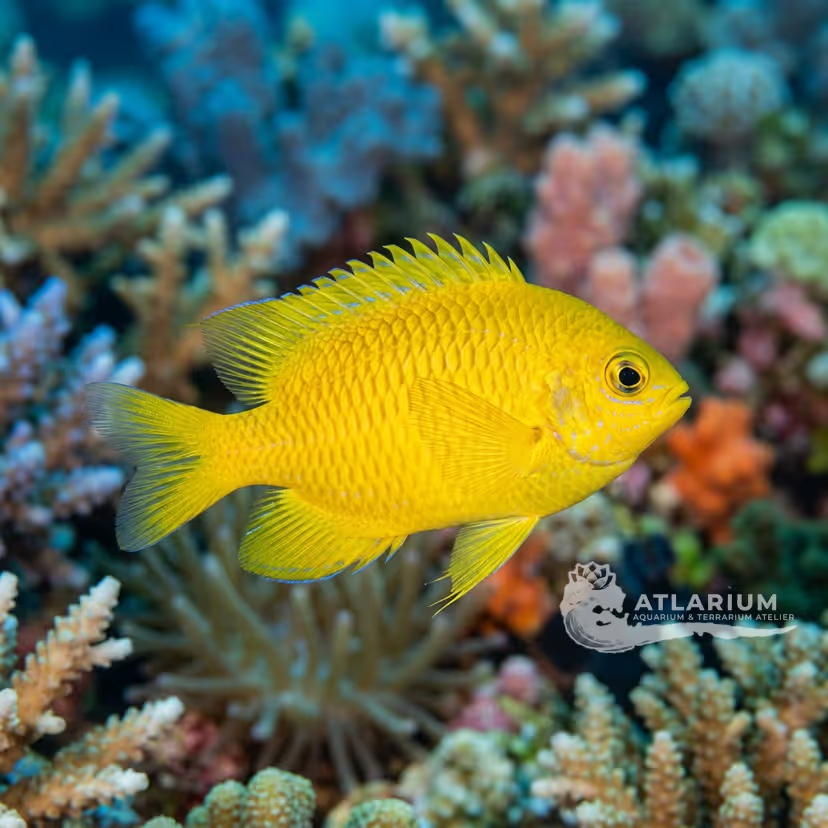
Pomacentrus amboinensis
View details->
Lemon damselfish

Lemon damselfish

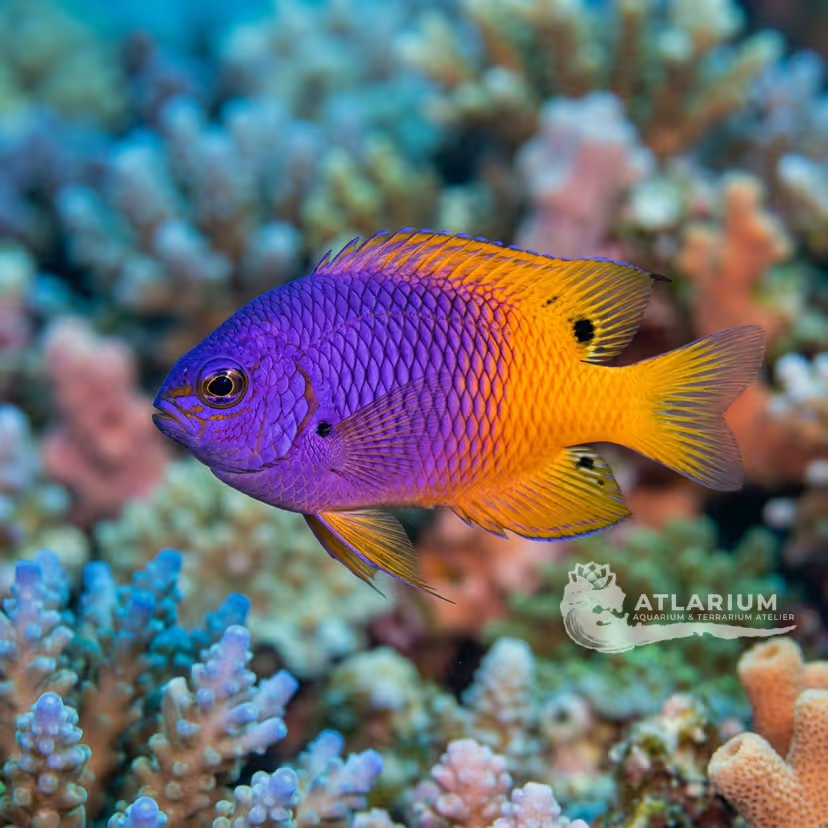
Pomacentrus moluccensis
View details->
Ocellate damselfish

Ocellate damselfish

Pomacentrus vaiuli
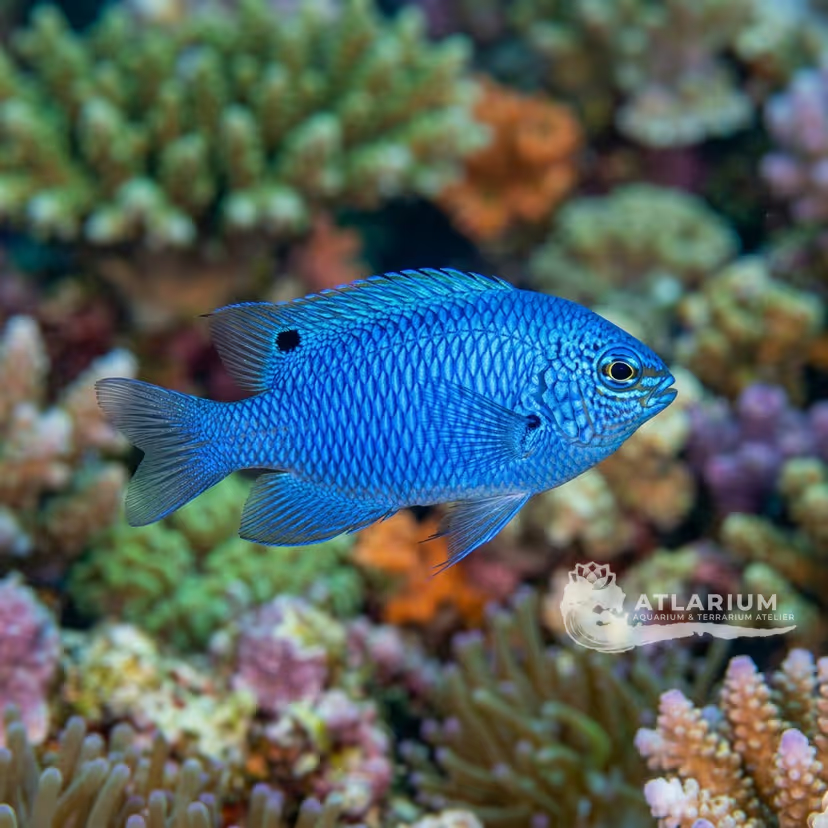
View details->
Sapphire Damselfish

Sapphire Damselfish

Pomacentrus pavo

View details->
Scaly-cheek Damselfish

Scaly-cheek Damselfish

Pomacentrus lepidogenys

View details->
Whitetail Damselfish

Whitetail Damselfish

Pomacentrus chrysurus

View details->
Ambon Chromis

Ambon Chromis

Chromis amboinensis

View details->
Pink Skunk Clownfish

Pink Skunk Clownfish

Amphiprion perideraion
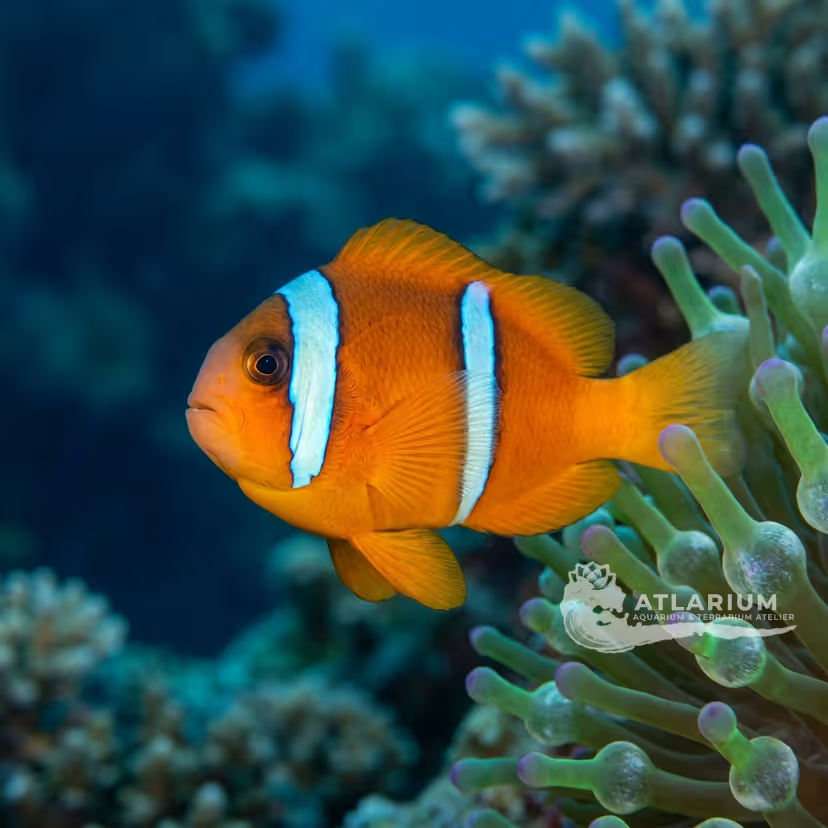
View details->
Two-band Anemonefish

Two-band Anemonefish

Amphiprion bicinctus

View details->
Rolland's damselfish

Rolland's damselfish

Chrysiptera rollandi

View details->
Azure damselfish

Azure damselfish

Chrysiptera hemicyanea

View details->
Blue Chromis

Blue Chromis

Chromis cyanea

View details->
Blue Damselfish

Blue Damselfish

Chrysiptera cyanea

View details->

Recommended companions

Compatible cards from coherent ecosystems with matching parameters.

Grape caulerpa
Plant

Grape caulerpa

Caulerpa racemosa

View details->
Caulerpa prolifera
Plant

Caulerpa prolifera

Caulerpa prolifera
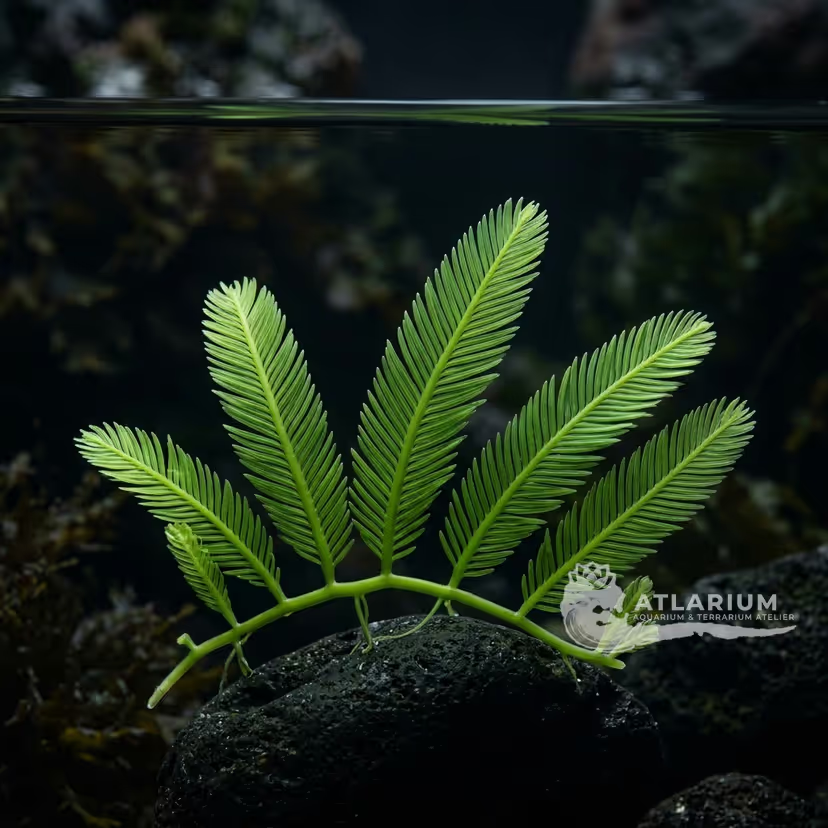
View details->
Caulerpa taxifolia
Plant

Caulerpa taxifolia

Caulerpa taxifolia
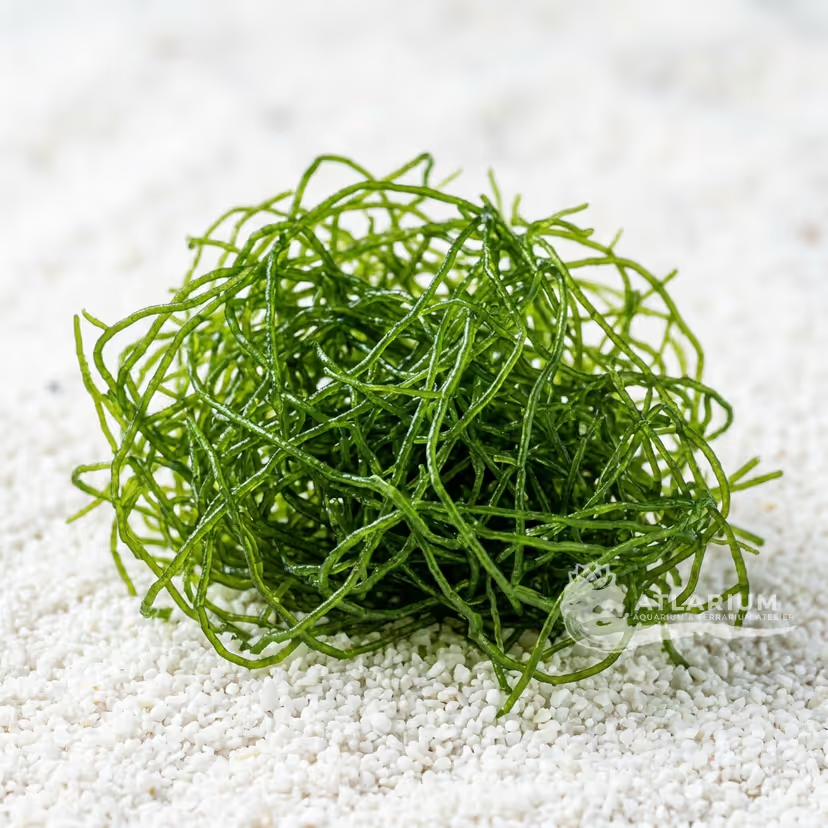
View details->
Chaetomorpha macroalgae
Plant

Chaetomorpha macroalgae

Chaetomorpha linum

View details->
Dead man fingers algae
Plant

Dead man fingers algae

Codium fragile

View details->
Halimeda macroalgae
Plant

Halimeda macroalgae

Halimeda opuntia

View details->
Peacock tail algae
Plant

Peacock tail algae

Padina pavonica

View details->
Red gracilaria
Plant

Red gracilaria

Gracilaria parvispora

View details->
Red grape algae
Plant

Red grape algae

Botryocladia uvaria

View details->
Sea lettuce
Plant

Sea lettuce

Ulva lactuca

View details->
Red Mangrove
Plant

Red Mangrove

Rhizophora mangle

View details->

Similar care

Cards with similar requirements, difficulty, habitat, and husbandry profile.
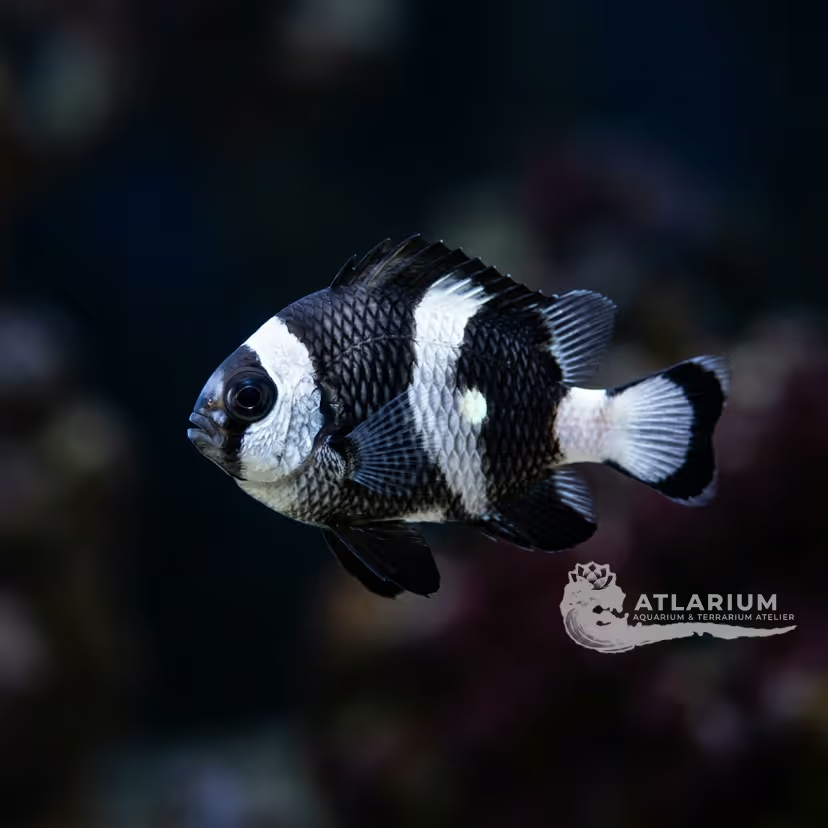
Four-stripe Damselfish / Blacktail Humbug

Four-stripe Damselfish / Blacktail Humbug

Dascyllus melanurus
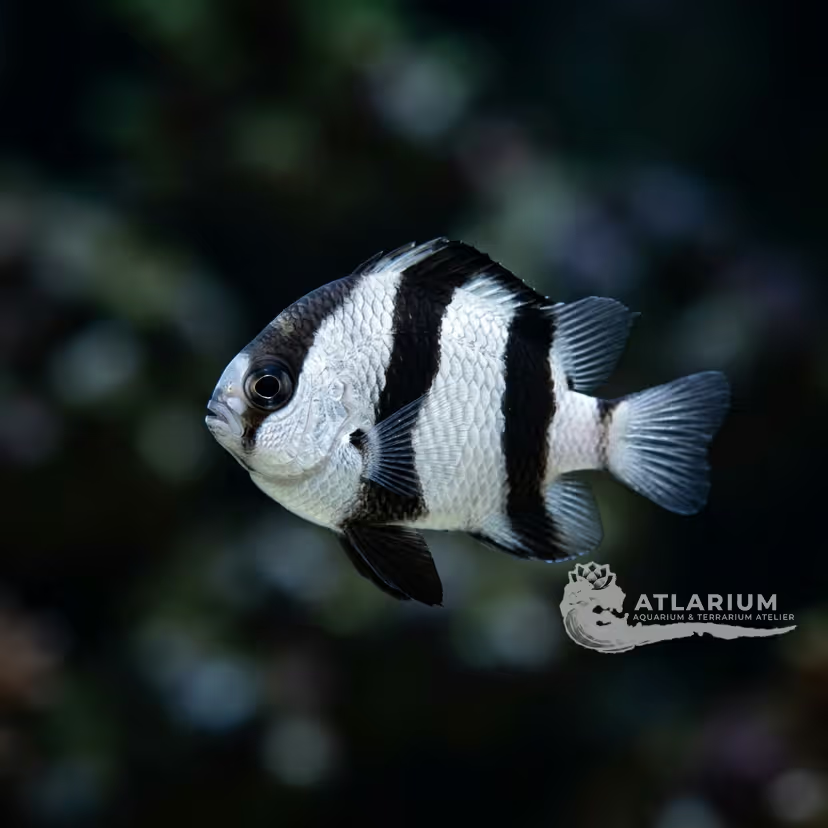
View details->
Whitetail Dascyllus

Whitetail Dascyllus

Dascyllus aruanus
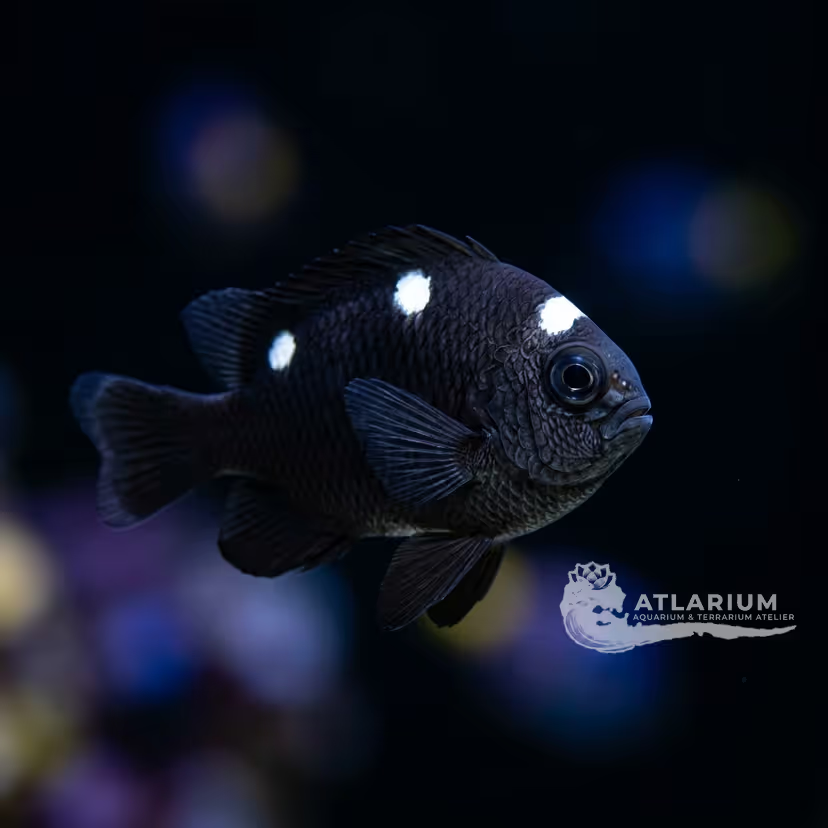
View details->
Threespot dascyllus

Threespot dascyllus

Dascyllus trimaculatus
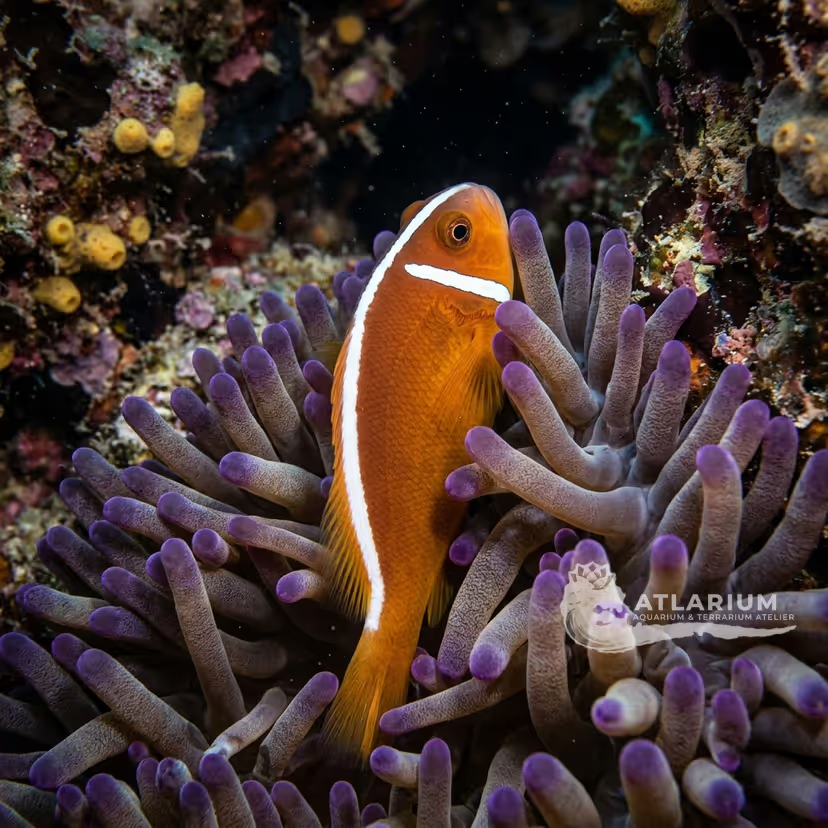
View details->
Orange Skunk Clownfish

Orange Skunk Clownfish

Amphiprion sandaracinos

View details->
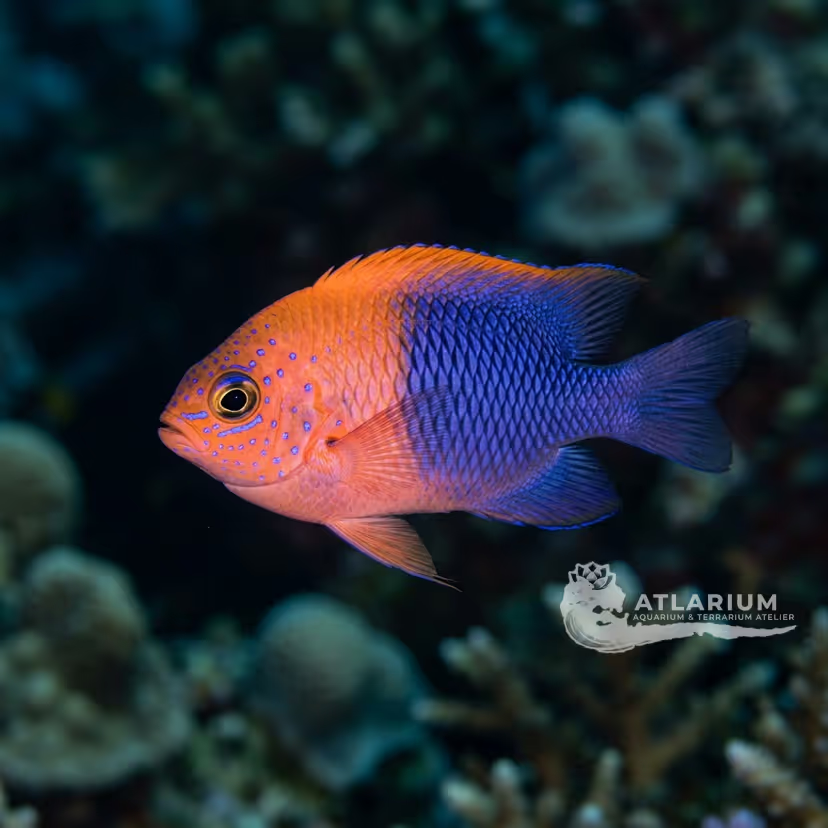
Clark's anemonefish

Clark's anemonefish

Amphiprion clarkii
View details->
King Damselfish

King Damselfish

Chrysiptera rex

View details->
Black-and-gold Chromis

Black-and-gold Chromis

Neoglyphidodon nigroris

View details->
Neon damselfish

Neon damselfish

Neoglyphidodon oxyodon

View details->
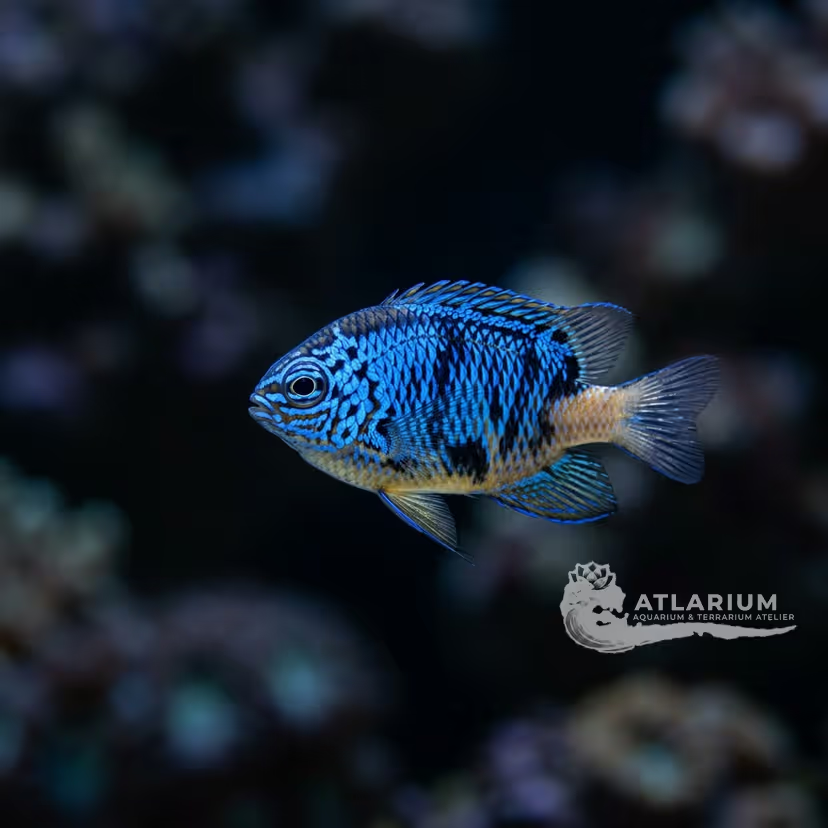
Blue-spot Dascyllus

Blue-spot Dascyllus

Dascyllus carneus
View details->
Springer's Damselfish

Springer's Damselfish

Chrysiptera springeri

View details->
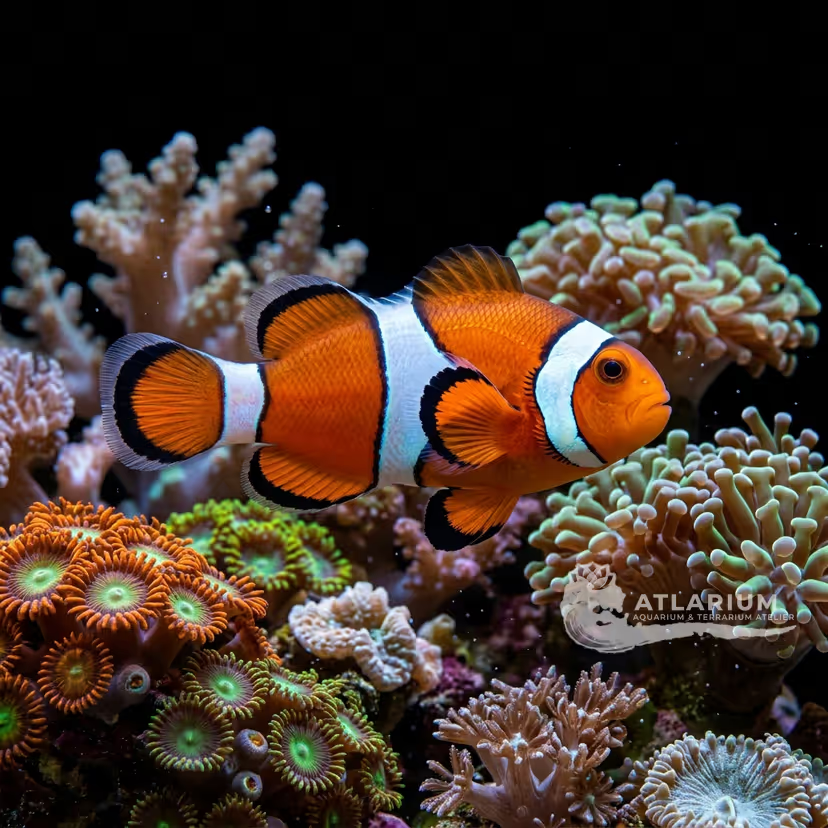
Ocellaris clownfish

Ocellaris clownfish

Amphiprion ocellaris
View details->
Percula clownfish

Percula clownfish

Amphiprion percula

View details->
Skunk clownfish

Skunk clownfish

Amphiprion akallopisos

View details->
Jewel Damselfish

Jewel Damselfish

Plectroglyphidodon lacrymatus

View details->
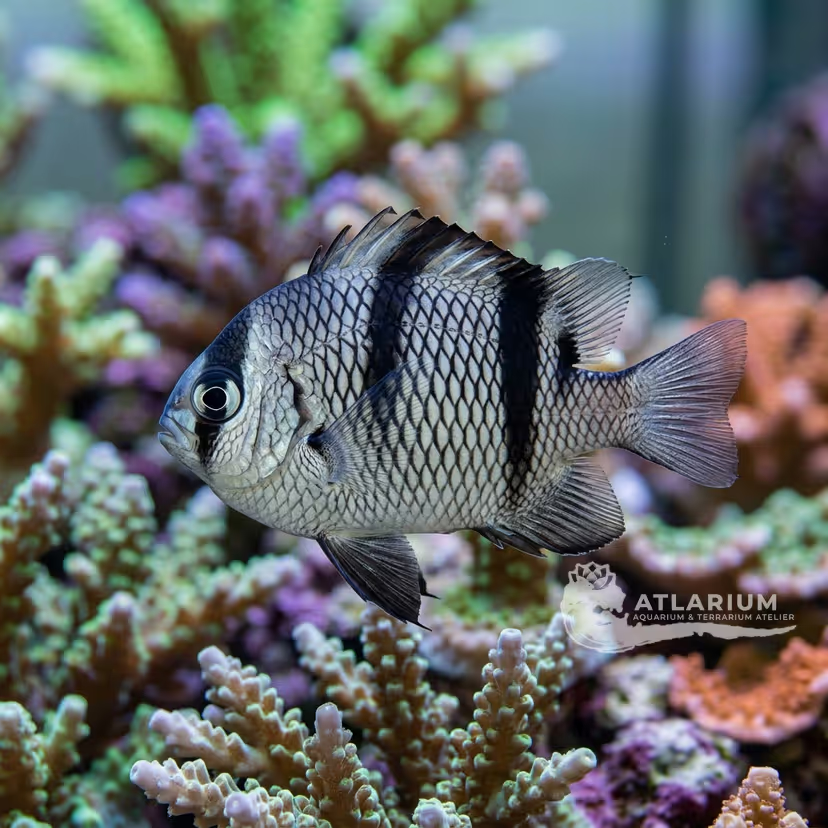
Black Bow Damselfish

Black Bow Damselfish

Neoglyphidodon melas
View details->
Reticulated Damselfish

Reticulated Damselfish

Dascyllus reticulatus

View details->
Last updated: 06/30/2026
Speckled damselfish (Pomacentrus bankanensis) Care Guide & Tank Setup | Atlarium